A pallet arrives at a cold warehouse. The obvious question is where to put it. The more profitable question is when it will leave. Place tomorrow’s shipment behind next month’s stock and a forklift spends its working life correcting your arrangement. Refrigeration keeps the food intact; judgment keeps the operation from becoming an expensive game of hide-and-seek.
- The business: storing and moving food, with software woven into the machinery.
- The trick: improve where things sit, how they travel and when cooling happens.
- The catch: buildings, energy and failures carry substantial costs.
That is a useful entrance to Lineage. Its proprietary algorithm, Sybil, uses historical deliveries to predict a pallet’s stay and assign its location. Faster-moving goods get accessible racks. The company has made a business of studying details most people happily leave inside the freezer.
A box with a memory
Adam Forste and Kevin Marchetti met early in their careers at Morgan Stanley. Through Bay Grove, they bought Seattle’s SeaFreeze warehouse in 2008. Their stated ambition was “to build a company we would want to own forever.” A freezer is an amusing choice for forever: a place where time is deliberately made to move slowly.
Cold storage offered essential infrastructure and a fragmented field of operators. The founders bought businesses, many family-owned, and assembled a network. The Lineage brand arrived in 2012. Its name nods to those inherited histories. The 2017 purchase of European operator Partner Logistics supplied international reach and experience with automated warehouses. Acquisitions brought expertise as well as addresses.
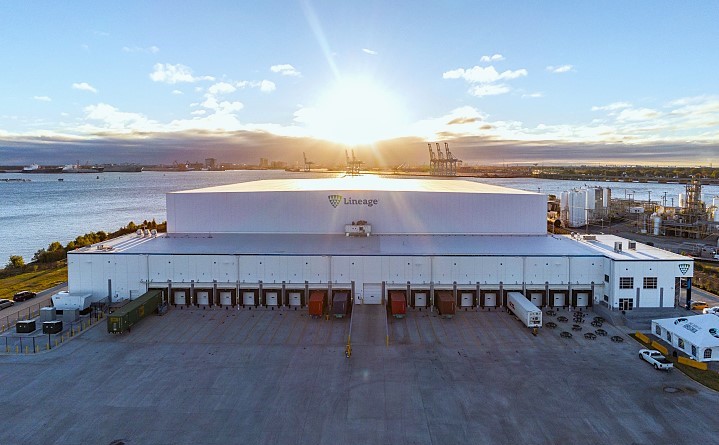
Today’s customers include food producers, importers, retailers, distributors and foodservice operators. They need temperature control, reliable inventory records and deliveries that arrive when promised. Lineage earns money from storage, handling and logistics services. It is structured as a real estate investment trust, or REIT, but the job involves considerably more than collecting rent from cold rooms.
Buying the map, then changing the route
Consider the importer whose Northeast capacity problems became supply-chain bottlenecks. In a case study published in October 2025, Lineage describes examining historical shipments, supplier and retailer locations, freight rates, manufacturing sites, warehouses and ports. The question expanded from finding space to deciding where the inventory should enter the country.
The analysis recommended four distribution centers, additional markets and different discharge ports. Lineage put potential annual transportation savings at $2 million. That number describes an opportunity identified by the company, rather than an independently verified result. Still, the mechanism is intelligible: put stock nearer its destination and stop paying to send it on an unnecessary tour.
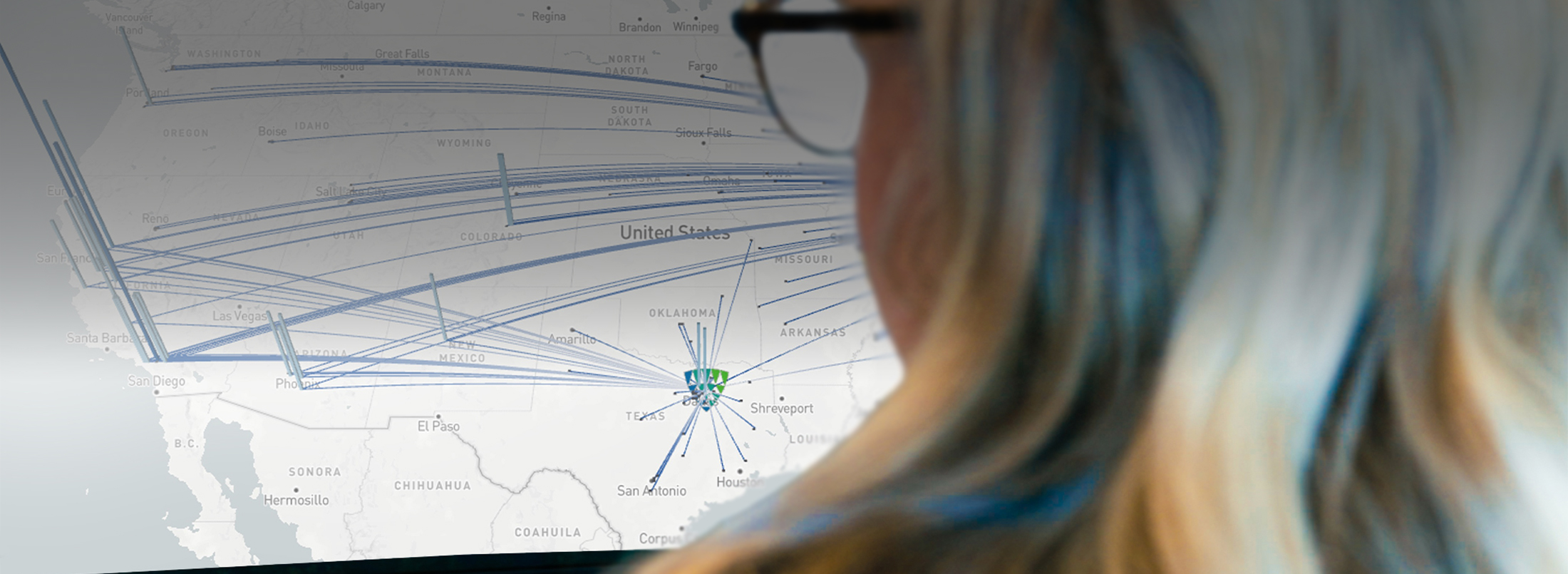
The tools operate at different scales. Lineage Eye uses computer vision to extract information during pallet receiving and flag inconsistencies. Sybil tackles placement. Lineage Link gives customers inventory visibility, scheduling and reporting across participating facilities. Blast-freezer engineering studies airflow; energy management can pre-cool a building before peak electricity periods. Each intervention attacks a particular source of friction.
Put stock nearer its destination and stop paying to send it on an unnecessary tour.
Americold offers a direct alternative in temperature-controlled warehousing and logistics. Regional operators and customers’ own facilities also compete. Lineage’s distinction is the combination of geographic reach, integrated services and proprietary operating tools. That combination matters when a shipment needs several things at once: a port, a truck, spare cold space and somebody who knows the paperwork.
The billion-dollar freezer bill
A network cannot be downloaded. Lineage raised $1.7 billion in private equity in January 2022, following a $1.9 billion raise in March 2021. Its July 2024 IPO ultimately brought in $5.1 billion in gross proceeds, including the overallotment. The company used proceeds to reduce debt by $4.9 billion. Those figures put the romance of overlooked infrastructure on a rather expensive footing.
Expected capital deployment across acquisitions and new automated warehouses, over the coming years.
Tyson Foods illustrates the model. In April 2025, Lineage announced plans to acquire four Tyson warehouses and develop two automated facilities, with Tyson as anchor customer. Expected capital deployment was roughly $1 billion. The arrangement couples construction with committed demand, a sensible precaution when your new building requires expensive machinery before the first pallet arrives.
Essential does not mean effortlessly profitable. Lineage reported $5.355 billion in 2025 revenue, essentially flat, and a $113 million net loss. In the second quarter of 2026, revenue rose 0.8%, while adjusted EBITDA fell 1.8%. Occupancy, operating costs and financing still matter. The food business may endure; any particular warehouse must earn its place.
When the cold chain becomes a neighborhood problem
The June 17, 2026 fire at the Boyle Heights warehouse exposes a harsher boundary. South Coast AQMD documented smoke and persistent odors, reporting 26 notices of violation by August 7 and an abatement order with more than 90 conditions. Lineage said September’s completed food-waste cleanup involved over 89 million pounds and more than $100 million invested. Air monitoring and other obligations continued. Efficiency claims must sit beside the consequences for residents when a facility fails.
Measure the movement before buying the machine
There is a practical lesson here for companies without warehouses. Record how long work waits and how far it travels. Distinguish a shortage of capacity from a poor arrangement of existing capacity. Model alternatives before pouring concrete. Lineage’s importer analysis began with shipment records, not a shopping list of equipment.
The conditions matter. Predictions need reliable data; automation needs volume and suitable facilities. A network response needs available space, carriers and trained people. During the October 2024 port disruption, Lineage says it mobilized multiple facilities and moved 72 seafood containers in three days. That response depended on resources already being there.
A food company can use Lineage to store product, coordinate transport or examine its distribution network. The clever part is choosing the service that addresses the actual constraint. Sometimes the answer is another building. Sometimes it is a better route. Sometimes it is giving tomorrow’s pallet a place near the door.