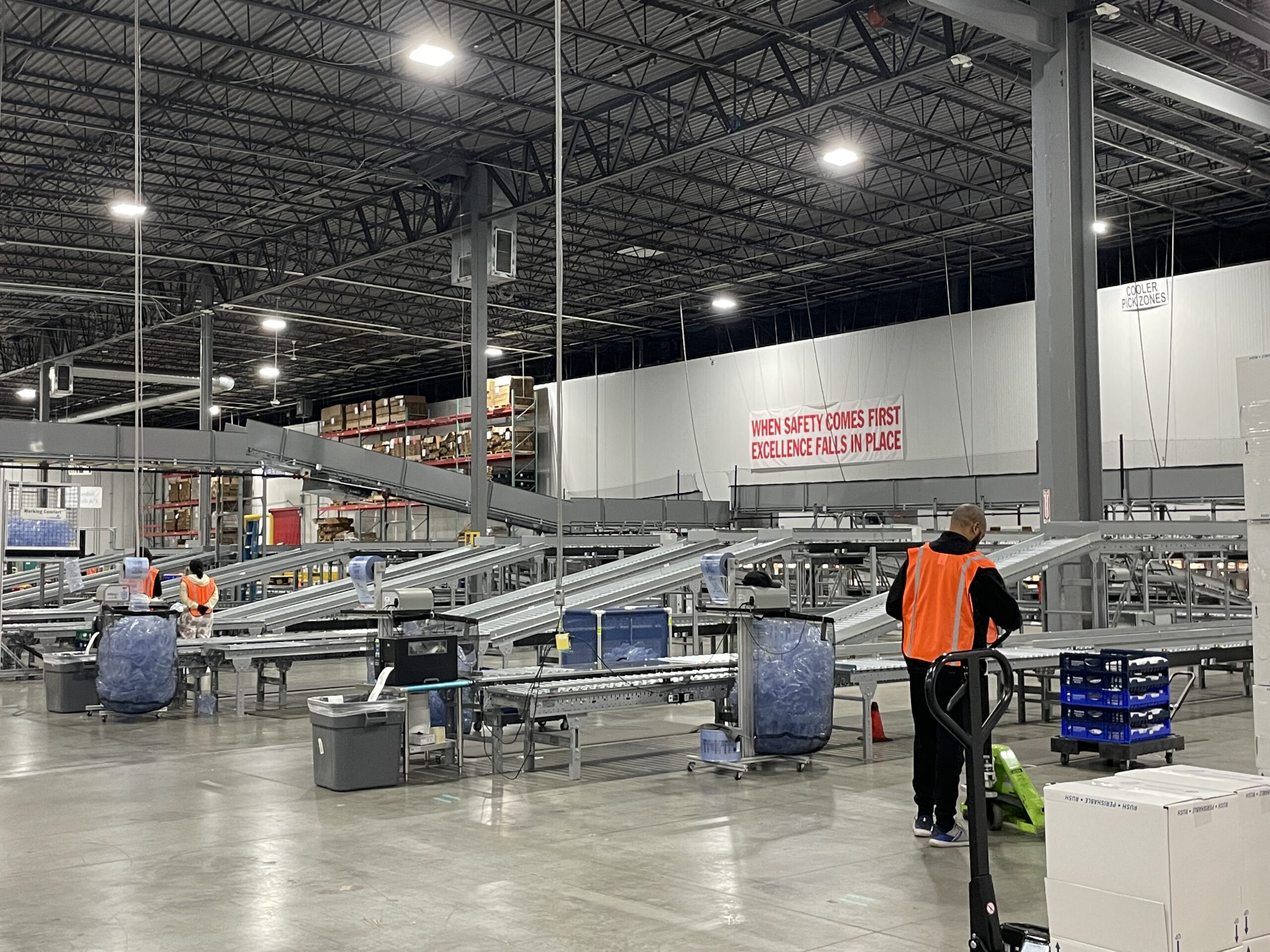
The trouble with the old conveyor was how much work it left for everybody else. At an MD Logistics pharmaceutical warehouse, employees lifted shipping boxes onto the line, walked unwanted cardboard to a recycling compactor, then moved boxes again for outbound loading. As orders increased, people supplied the missing efficiency with their bodies. A machine intended to save effort had become rather demanding company.
- The business: outsourced logistics for medicine and consumer health products.
- The evidence: a conveyor redesign reportedly cut handling touches by 50% and increased fulfillment capacity by 25%.
- The lesson: trace the work before buying the machinery.
The conveyor was asking people to do its job
In its November 2023 account, MD Logistics identified an uncomfortable mismatch: customers expected growth, while existing automation could not comfortably accommodate it. The team worked with a conveyor specialist to redesign the route through the building. The plan considered picking, packing, shipping and cardboard disposal, along with structural constraints and future volumes.
The reported results were specific: half as many employee handling touches and a quarter more order fulfillment capacity. Those measures describe different things. Fewer touches means less repeated handling; greater capacity means the operation can accommodate more orders. Neither automatically establishes a 25% increase in actual shipments. The distinction matters when a handsome percentage starts doing the selling.
A medicine has two journeys
This is the kind of problem MD Logistics is paid to handle. It is a third-party logistics provider, or 3PL: a business that takes on the warehousing, fulfillment and distribution work another company would otherwise organize itself. Its focus is life sciences, pharmaceuticals, over-the-counter medicines and consumer health. Customers buy operational services through customized arrangements, sharing infrastructure in multi-client facilities where appropriate.
A pharmaceutical shipment carries two kinds of cargo. There is the physical product, with its storage requirements. There is also the information that identifies it and records its movement. MD Logistics offers temperature monitoring, refrigerated and other qualified storage environments, packaging, inventory management and integration with customers’ business software. A medicine can arrive in the right box and still present a problem if its records have taken another route.
Protect the product’s required conditions.
Keep shipment and inventory data connected.
In 2017, a pharmaceutical client asked for a serialized solution to support Drug Supply Chain Security Act compliance. MD Logistics began by mapping the existing process, then collaborated with the client, outside vendors and its warehouse software provider. The company’s December 2025 retrospective says the initial client’s solution was implemented in 2017. The process map gave the software project somewhere sensible to begin.
Consumer health customers bring a different choreography: retailer labeling requirements, advance shipping notices, promotional bundles and individual online orders. MD Logistics offers both retail distribution and direct-to-consumer fulfillment. Its role sits between the manufacturer and the selling channel, with international forwarding available through Nippon Express. DHL Health Logistics offers overlapping services; buyers have alternatives. MD Logistics makes its case through specialization and documented adaptations to individual operations.
The initials came before the coolers
Mark Sell and Dave Kiebach founded the company in 1996, borrowing their first initials for its name. They started with seven employees and a 10,000-square-foot warehouse. Freight forwarding came first. Warehousing grew out of those customer relationships, eventually concentrating on life sciences and retail fulfillment.
“In many ways we are a reflection of our customers’ needs.”Mark Sell / co-founder / 2016
The geography followed: Reno in 2011, then an east coast expansion into Garner, North Carolina, announced in 2022. Today the company describes more than one million square feet across three US regions. John Sell, who joined in the founding year and worked in forwarding, technology and sales, now leads the business. MD Logistics describes empowered managers and direct customer access to executives. Those are useful cultural commitments for a service whose exceptions rarely wait politely.
Nippon Express USA acquired MD Logistics and sister company MD Express in September 2020. The deal connected a domestic specialist with international forwarding and pharmaceutical gateways. It also supplied an answer to the expensive question that follows every promising logistics opportunity: who pays for the next room?
Cold rooms are expensive promises
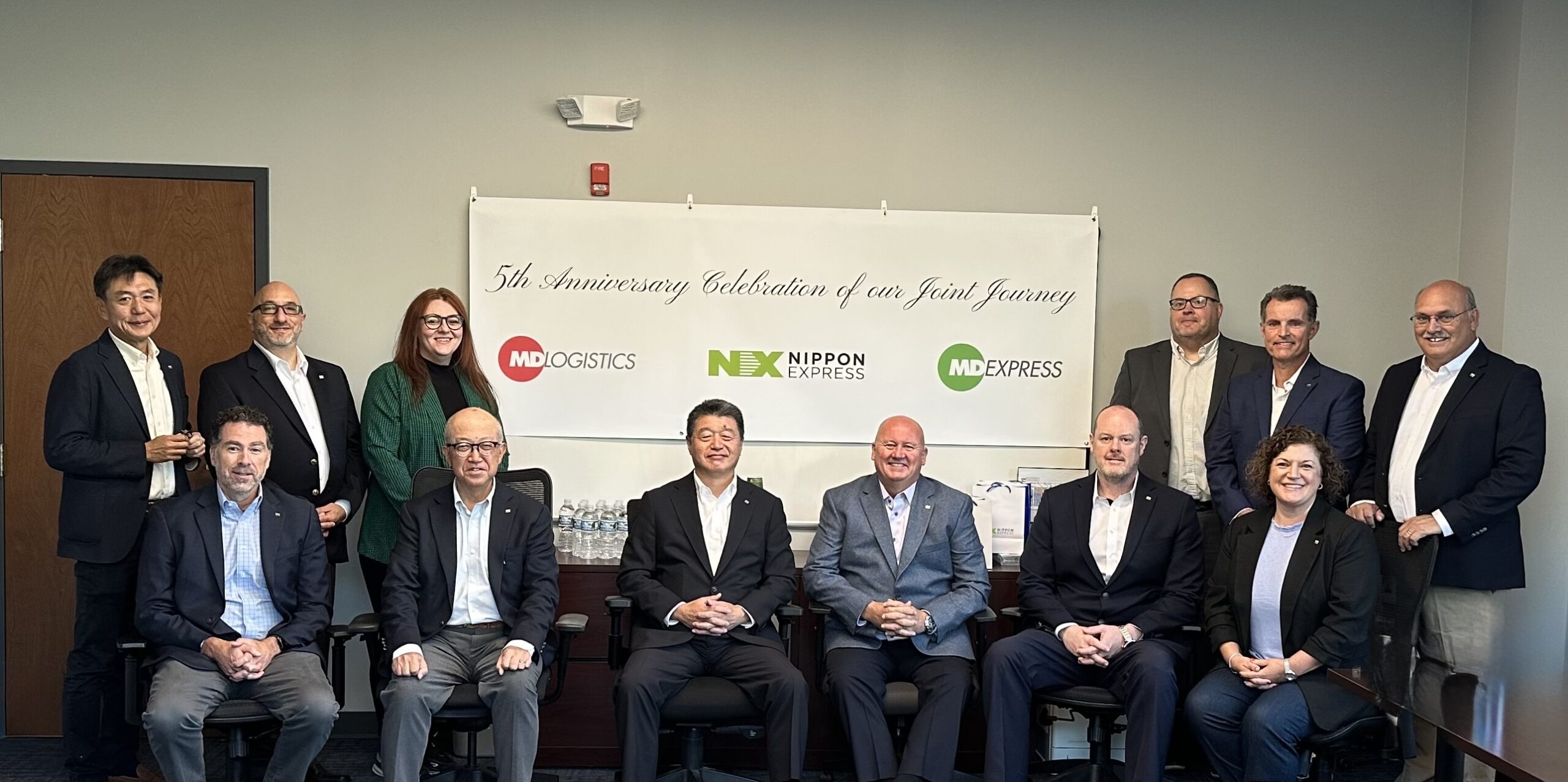
At the fifth acquisition anniversary, John Sell reported more than $25 million in investment, four cooler expansions and double-digit annual revenue growth after the deal. Those are company statements. The investment figure covers the wider expansion story; assigning it to the conveyor would manufacture precision.
There is a physical example at 700 Perry Road in Plainfield. NX announced that a July 2025 renovation completed the conversion of the approximately 37,000-square-meter facility into a dedicated pharmaceutical warehouse. Its supported environments include refrigerated storage at 2-8°C and controlled ambient storage at 15-25°C, backed by monitoring, access control and generators.
The March 2026 outlook describes a 40,000-square-foot cooler reaching capacity less than six months after completion, with another equally sized expansion being finished. It also sets a year-end target for a warehouse management system upgrade. Demand can consume an expansion remarkably quickly. Software must keep pace with the rooms it is supposed to organize.
Even a better box needs a better route
The March 2026 AeroSafe partnership account returns us to the conveyor. Reusable cold-chain shippers brought different dimensions and weight. MD Logistics adjusted warehouse flows, conveyor processes and software pack-out settings. AeroVision hardware above an existing conveyor captured shipment identifiers for visibility. A packaging decision had become an equipment and information decision.
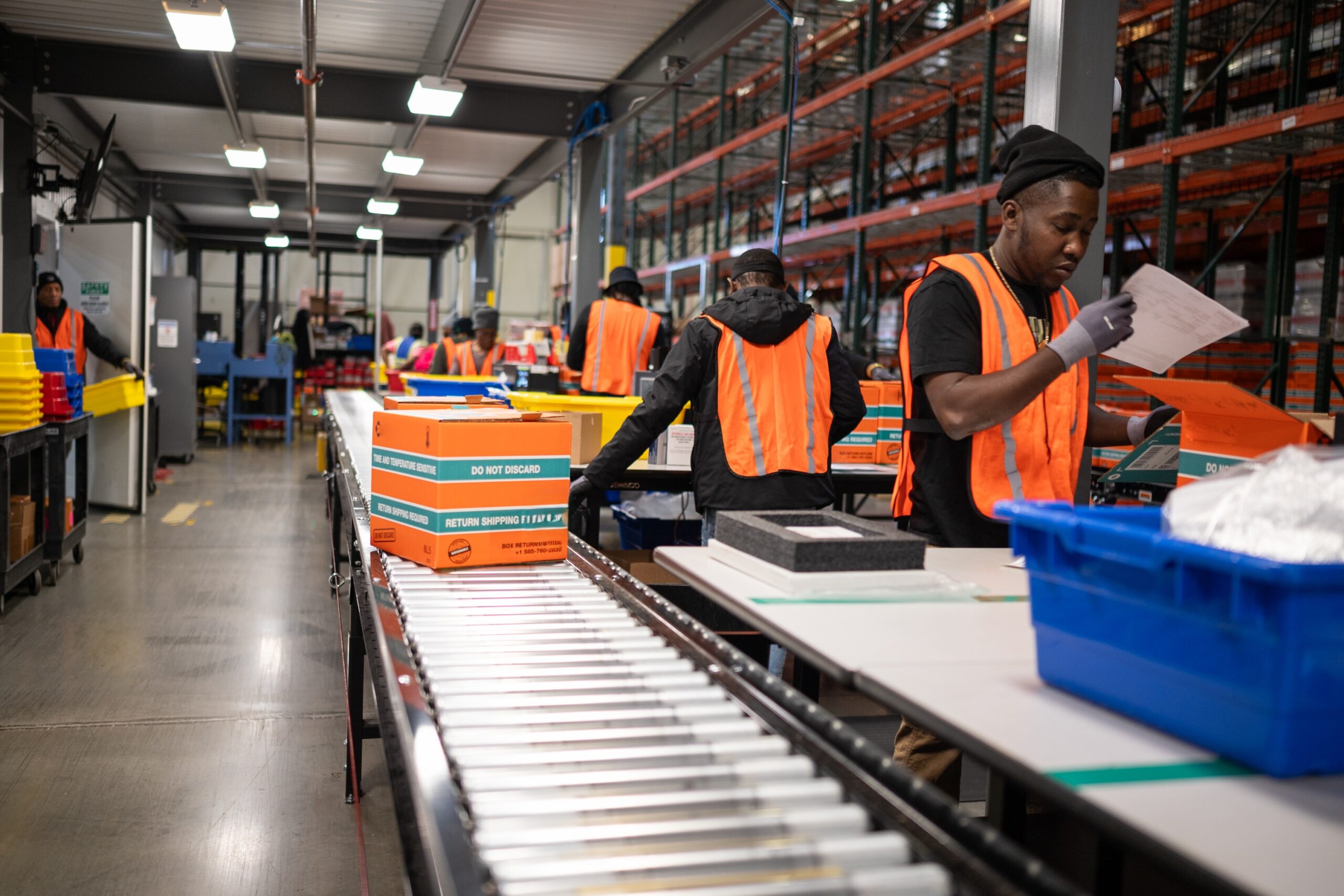
For an operations manager, the copyable method is concrete: follow a shipment, count unnecessary handling, map constraints, and design for the next volume increase. Plan construction around live orders. For reusable packaging, check equipment compatibility, temperature qualification and the return process. These are practical inferences from the cases. They require inspection of your own operation: a better conveyor cannot fix a bottleneck somewhere else, and a reusable box needs to come back.
MD Logistics is useful to manufacturers who need this work done without building every capability themselves. Its most instructive achievement is making the ordinary movements worth examining. Somewhere between a medicine and its destination, a person may still be carrying cardboard across a floor. That is a good place to look.