The problem was the forklift bill. A major U.S. appliance manufacturer was spending $19 million a year on leases and maintenance for equipment less than two years old. Kenco’s account of the assignment describes an incumbent supplier charging too much and explaining too little. The machinery was young. The arrangement already needed repairs.
Kenco inspected the equipment, listed the work required, reduced lease costs and introduced a fixed-rate maintenance program with in-house technicians. Its reported result: $21.7 million saved over four years. An invoice had become an operating problem. Solving it required somebody willing to look underneath the tidy columns.
- Kenco runs warehouses, fulfillment, transport and equipment services for businesses.
- Its customer cases put numbers on wasted travel and opaque equipment spending.
- A vendor-neutral lab tests automation before customers commit capital.
01 / The expensive art of standing still
Kenco occupies the territory between a company’s sales promise and the physical delivery. Its customers make pet food, consumer goods, industrial products and other things that must arrive somewhere, intact and on time. Blue Buffalo is one documented customer: Kenco supports its distribution and eCommerce fulfillment. Nobody buys a bag of pet food because they admire the warehouse. They notice when the bag fails to arrive.
The offer is broad because the interruptions are broad. Dedicated warehousing suits businesses needing an operation built around their requirements. Shared facilities offer space without requiring a whole building. Picking, packing, returns, kitting and cross-docking sit alongside transportation management. A customer can hand over several connected jobs rather than coordinate a procession of contractors.
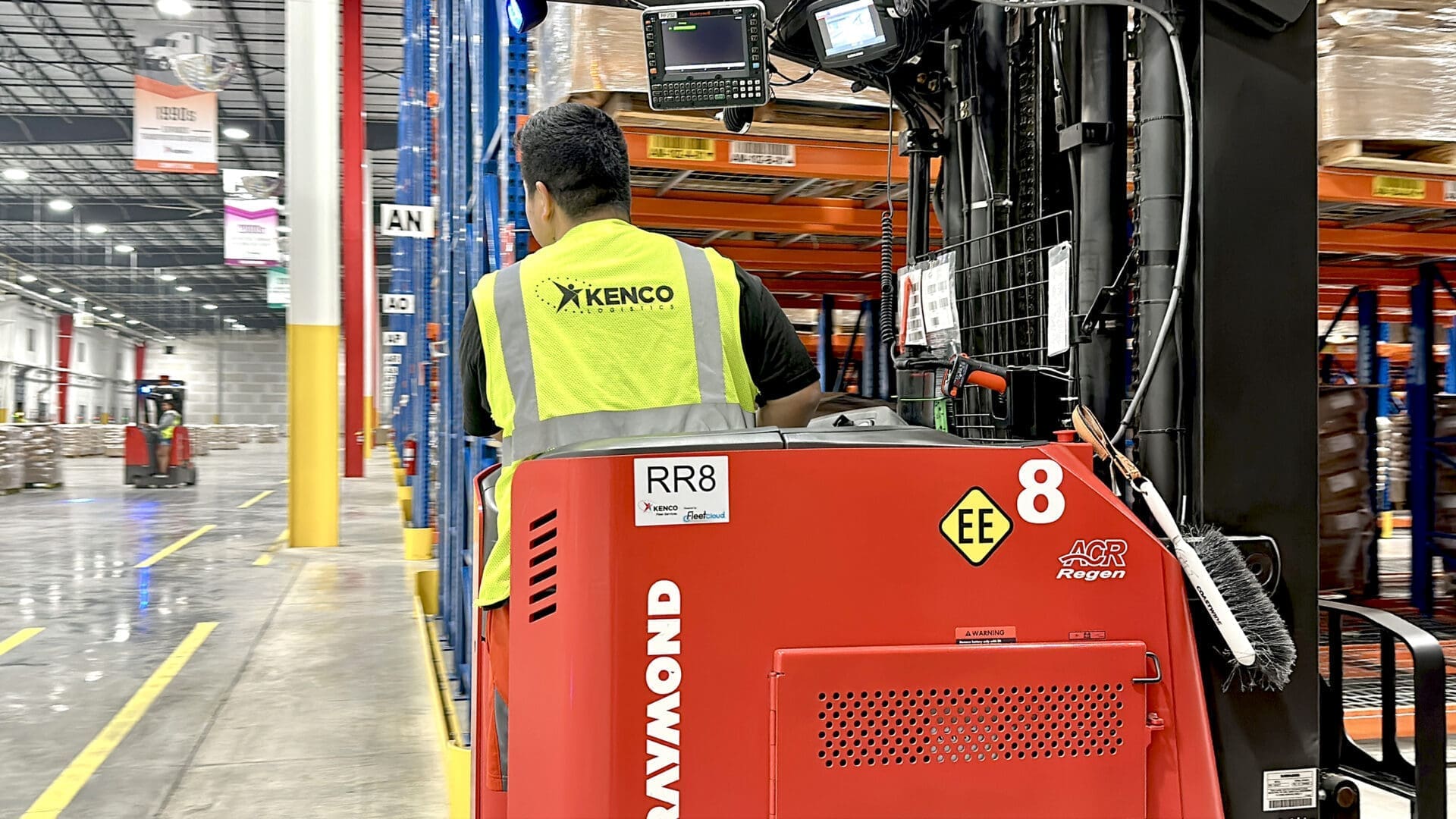
This is a contracted B2B service business. The economics depend on the operation being run: products, storage, order volume, handling and transport. Shared space and dedicated management answer different needs. The appeal is practical: a brand can concentrate on selling its goods while an operator manages the infrastructure that makes those sales deliverable.
02 / First, change where the goods live
Consider another Kenco customer, this one running a distribution operation with many SKUs and constantly changing activity. Manual zoning and slotting could not keep up. Yesterday’s sensible shelf assignment became today’s unnecessary walk. The first thing to fail was the method of deciding where inventory belonged.
Kenco applied SLOT DC, its proprietary tool for recommending slotting, zoning and picking changes. It uses AI, picking heat maps and cost-benefit analysis. The reported annual cost reduction was $247,000, or 26%. Travel per case pick fell 27%; travel per pallet pick fell 15%. The improvement came from rearranging the work, an idea less photogenic than a robot and rather easier to appreciate on payday.
One SLOT DC customer case. Indexed distances, not a forecast for other warehouses.
There is a copyable habit here. Before shopping for automation, measure what people repeatedly do. Which journeys recur? Which products attract the most activity? What changes with the season? A warehouse map records where things are. A useful operating map records how often somebody must go and get them.
03 / A laboratory with loading-dock manners
Kenco established its Innovation Lab in 2015 and expanded it into a 10,000-square-foot test facility in 2019. In August 2026, it announced a replacement three times that size, with a planned September debut. The stated purpose is to test larger, more complex systems under conditions resembling a working warehouse.
The lab is intentionally vendor-neutral. That detail matters. A demonstration staged to flatter one machine asks whether the machine can perform. A customer needs to know whether it can perform their work. Ainsley Williams, Kenco’s vice president of automation and innovation, describes the opportunity for “customers to explore product and value without having to invest in them.”
“customers to explore product and value without having to invest in them”Ainsley Williams / August 2026
Kenco’s portfolio ranges from packaging systems to rack-to-person robots and autonomous trailer-loading technology. Equipment care remains part of the proposition: onsite maintenance, asset planning and lifecycle support. The engineering question survives installation. A system that works beautifully until it stops is still a maintenance assignment.
Automation also has a scale problem. Kenco’s September 2026 AutoStore case describes shared automated fulfillment in Jeffersonville, Indiana, giving multiple brands access to technology in one operation. Sharing infrastructure changes the buying decision. The brand can buy fulfillment service instead of building the entire automated environment itself.
04 / The suit, the jeans and the outside money
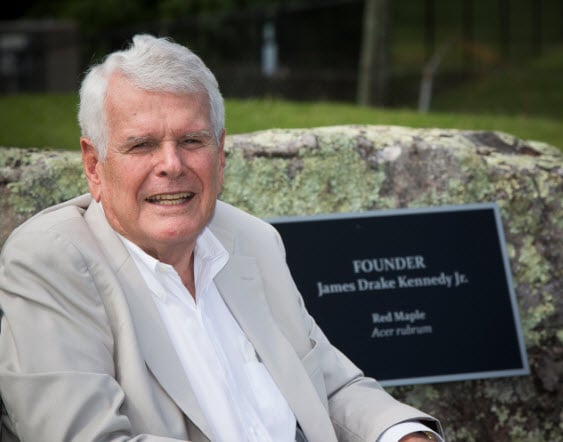
The founding story offers a pleasingly modest origin for all this machinery. Jim Kennedy Jr. and Sam Smartt Sr. began in 1950 with one 100,000-square-foot Chattanooga warehouse. According to Kennedy’s daughter’s account, the two alternated between sales and warehouse duties. When a customer suddenly requested a meeting, Kennedy was wearing work jeans. Smartt exchanged his suit for them.
The company eventually acquired a more substantial wardrobe of capabilities. Material handling began as a forklift dealership in 1961. Its official timeline dates a dedicated contract warehousing agreement to 1966. Proprietary warehouse execution software followed in 1987. The pattern is expansion around the practical needs of customers already being served.
In 2022, Pritzker Private Capital announced an investment agreement alongside management. The public rationale was growth capital, wider geographical coverage and new capabilities. Kenco reported more than $1 billion in revenue then; that figure belongs to that announcement. The investment terms were undisclosed. The story establishes the reason for taking outside capital without inventing a private conversion scene.
05 / More warehouses, fewer handoffs
The subsequent acquisitions made the strategy tangible. The Shippers Group added eight sites and 3.8 million square feet in 2024, along with co-packaging expertise. In 2025, Drexel Industries’ 3PL business brought four warehouses in London, Ontario, and 100 associates. Kenco’s expansion bought places, people and services together.
Its market includes alternatives such as DHL Supply Chain and GXO, which also operate contract logistics and pursue automation. Kenco’s specific case rests on combining warehouse operations, equipment care and testing under one commercial relationship. A buyer should judge that combination against their actual needs. Small volumes, incompatible products or expensive integration can spoil an attractive automation calculation.
The sensible lesson is wonderfully unglamorous: inspect the fleet, measure the travel, test the equipment and price the whole operation. A warehouse contains goods, but also decisions made long ago. Kenco’s interesting work begins when somebody asks whether those decisions are still worth paying for.