Consider the truck coming home. In 1923, Herman Buske drove a Model T Ford from Litchfield, Illinois, to St. Louis with livestock aboard. He brought freight back. The town’s centennial history records one trip a week and calls two tons a large load. There is something pleasingly economical about that arrangement: a journey with a customer at both ends. A hundred years later, the interesting part of Buske Logistics is still what happens between one customer’s need and the next.
- Buske runs storage, fulfillment, packaging and manufacturing logistics.
- Its automotive work puts parts in production order, not merely in stock.
- Digital inventory systems helped it escape a paperwork bottleneck.
- Its fees make sense only when you price the whole operation.
The truck that came back full
Buske now occupies the third-party logistics business, usually shortened to 3PL. A manufacturer or brand hires it to receive goods, manage inventory, prepare orders and coordinate their departure. The customer keeps making or selling the product; Buske handles the physical middle. That middle can include a promotional display, an online parcel or a component headed toward an assembly line.
The original truck offers a useful way into this modern business. Transport alone tells only part of the story. The load must make sense at its destination. Buske’s present services extend that logic into labeling, inspection, kitting and component sequencing. The company sits where a product changes custody, configuration or purpose. Those are awkward places to discover that everyone has a slightly different version of the instructions.
The paperwork reached its limit
Made4net’s Buske case study describes paper-based inventory tracking that produced inaccuracies and duplicate work. After a six-month software search, Buske selected Synapse 3PL Expert. It automated putaway and picking and improved customer inventory visibility. The vendor reports that Buske doubled its business while increasing labor by 25%; it does not define the business measure or reporting period. Treat that as a reported result, rather than an audited productivity ratio.
“In the past, we were limited to running warehouses smaller than 200,000 square feet.”Larry McGriff, in Made4net’s Buske case study
McGriff said the system subsequently enabled multiple facilities of 300,000 to 400,000 square feet. Here is the revealing detail: the constraint had been information as well as space. A larger building would not, by itself, have corrected an unreliable inventory record. The decision to change systems followed an operational problem, giving the technology a specific job to do.
Vendor case study. “Business” is not defined; these indices illustrate the stated changes.
A factory cares about the order
Automotive sequencing makes the value of those instructions unusually clear. Imagine a production line building vehicles with different specifications. Having the required parts somewhere in a warehouse leaves another problem: getting the correct component to the correct vehicle at the correct moment. Sequencing arranges the supply to match the manufacturing schedule. A plentiful shelf can still be a useless shelf if the next part is wrong.
Insequence says Buske began supplying sequenced parts to Ford with its software in 2004. In its twentieth-anniversary account, the software company reported 18 Buske sequencing clients and shipments to seven original-equipment-manufacturer locations. Those figures belong to that 2024 account. They describe a service whose repeatability has been tested across years and destinations, rather than a new offering awaiting its first production run.
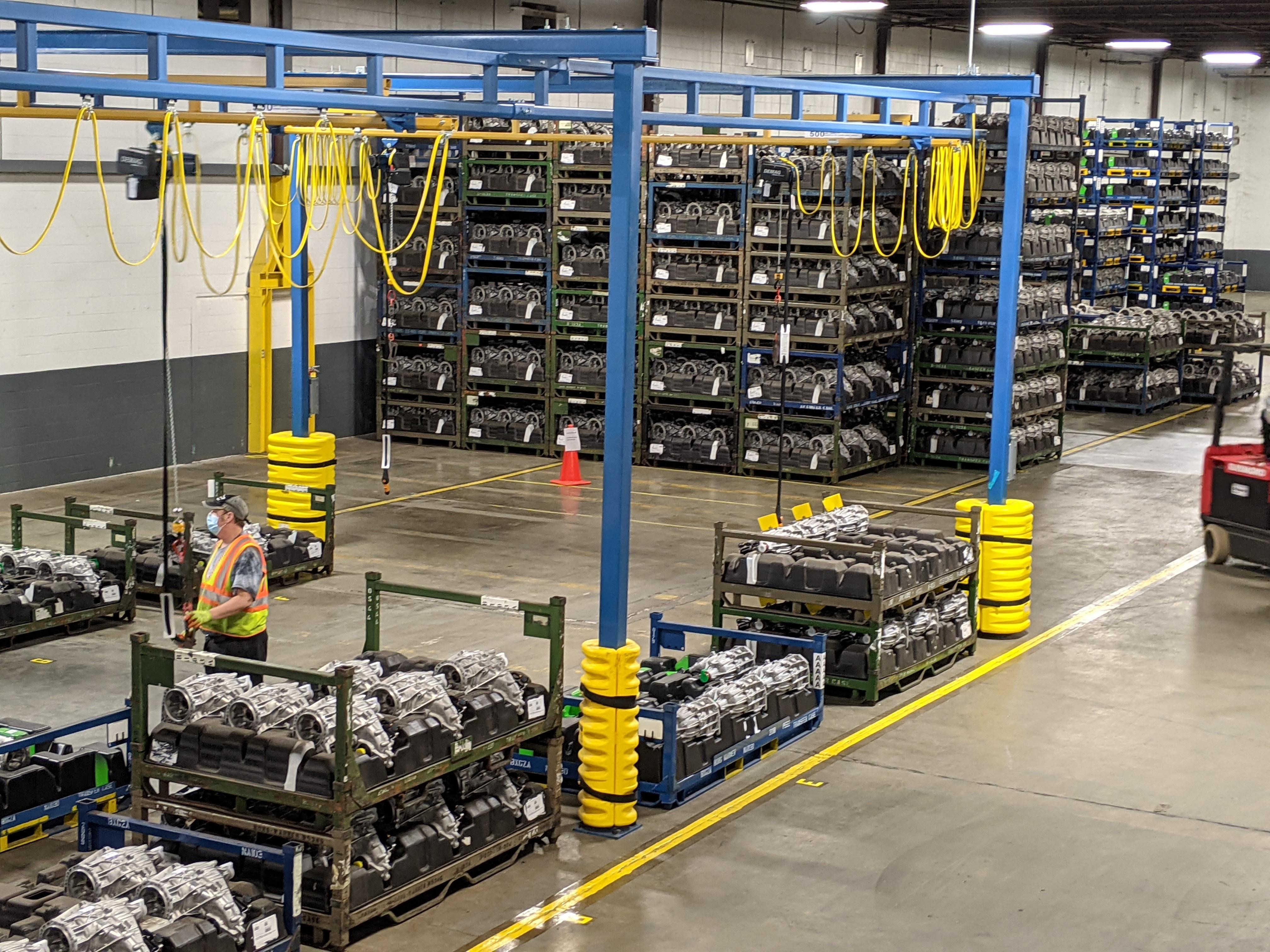
Buske lists kitting, labeling, line-side delivery and just-in-time replenishment among its automotive services. It locates sequencing operations near manufacturing hubs including Louisville, Brownstown, Indianapolis and Springfield. Geography matters here because a production schedule is an unforgiving appointment book. Buyers are purchasing the coordination of parts, data and delivery, with the warehouse serving as the meeting place.
Bourbon, boxes and the invoice
The same attention to preparation appears in food and beverage work. Buske describes lot-code tracking, expiration-date visibility and stock rotation, along with retail-ready repacking and display assembly. Its publicly named customers include Pepsi and Molson Coors. These tasks are less theatrical than a factory stoppage, but a mislabeled pallet or poorly rotated batch can create its own unwelcome drama.
In September 2024, Buske acquired Hydra Warehouse and Transportation, adding five warehouses totaling nearly 1.5 million square feet in Kentucky and southern Indiana. Hydra brought expertise serving bourbon and food-processing customers. The acquisition expanded both the footprint and the kind of work Buske could perform. Buying another company’s operating knowledge is a different proposition from renting another empty room.
Ecommerce adds another destination to the mix. Buske offers storefront integrations, pick-pack-ship, returns processing and Amazon preparation. Its pricing guide names AB InBev and PaddleSmash as clients, a useful glimpse of the range. A consumer parcel and a manufacturer’s replenishment shipment require different handling. The attraction of a broader provider is access to several workflows, provided each actually fits the customer’s requirements.
What does that cost? Buske’s September 2026 pricing guide gives industry benchmarks of $1.50 to $3 for a single-SKU ecommerce fulfillment operation and $0.50 to $2.50 per kit. These are indicative handling ranges, not a Buske quote or a delivered-order total. Storage, freight, extra work and program fees can change the invoice substantially.
The useful lesson is at the handoff
In November 2025, Wind Point Partners announced its investment alongside Buske management, which retained a meaningful stake. The announced plan combines technology and infrastructure investment with acquisitions, especially in food, beverage and consumer goods. CEO Nick Heinz remained in charge. Growth now has another financial sponsor behind it, and the practical question is how consistently the enlarged operation executes.

Buske calls its philosophy “Play big, feel small,” and says it gives local employees authority to make responsible decisions. The useful thing to copy is the pairing of clear information with someone empowered to act. Map the handoffs, measure repeated work, define exceptions and compare complete invoices before adding capacity. That is an editorial lesson from its operations, not a promise of equivalent savings.
For a buyer, the fit depends on location, handling requirements, compatible systems and volumes that justify the contract. A small, simple operation may gain little from a dedicated arrangement; a fragile production schedule needs more than spare floor space. The old return journey remains a good test. Know what the customer needs at the other end before congratulating yourself on the size of the truck.