Six People in Auburn, Alabama Ran a Drug Company That Owned No Factory
They spent 20 years learning how the big pharmaceutical companies work, then built a lean generics shop in a college town - no factory, six people, and a strategy of copying the drugs everyone else found too hard.
Most people assume you cannot make prescription drugs without a factory the size of a shopping mall. Vitruvias Therapeutics spent a decade quietly proving that wrong. From an office on North Dean Road in Auburn, Alabama, a team of roughly six people ran a business that developed, licensed and sold generic medicines across the United States - without owning the plants that stamped out a single pill.
The trick was not scale. It was selection. Vitruvias did not try to make the easy generics, the ones where a dozen manufacturers pile in the moment a patent lapses and the price collapses to pennies. It went after the hard ones - sterile injectables, extended-release formulations, products with manufacturing headaches that scared off competition. Difficulty, in this business, is a moat.
01 / THE STRATEGYCopy the drugs nobody else wants to
A generic drug is a legal copy of a medicine whose patent has expired. Companies file an Abbreviated New Drug Application - an ANDA - with the FDA to prove their version is equivalent to the original. For simple tablets, the path is well-trodden and crowded. For complex products, the science and the manufacturing are unforgiving, and far fewer companies bother. Vitruvias built its business in that second lane.
The company described its focus plainly: to develop, manufacture and market technically difficult generic products, with an early emphasis on the generic sterile injectable market. These are exactly the medicines where shortages happen and where a reliable second or third supplier is worth real money. It is an unglamorous corner of healthcare, and that was the point.
Consider what "technically difficult" buys you. A sterile injectable has to be manufactured under conditions most contract plants cannot maintain, and an extended-release capsule has to dissolve on a precise schedule inside the body. Get either slightly wrong and the FDA does not approve it. That barrier keeps the field small - which means the companies that do clear it face fewer competitors and steadier pricing than the makers of ordinary tablets ever see. Vitruvias treated regulatory and manufacturing difficulty as a feature to be sought out, not an obstacle to be avoided.

02 / THE MODELA drug company shaped like a network
Here is the part that reads like a startup case study. Instead of sinking tens of millions into a plant, Vitruvias behaved like a general contractor. It identified a niche generic, then licensed and coordinated the development, manufacturing and distribution through partners - some domestic, some on the other side of the world. The capital-heavy work sat on someone else's balance sheet.
Diagram: the Vitruvias asset-light generics loop.
The clearest example arrived in December 2018. Vitruvias licensed Potassium Chloride Extended-Release capsules - a treatment for hypokalemia, or low blood potassium - in 10 and 20 mEq strengths, to be manufactured at Bora Pharmaceutical's Zhunan facility in Taiwan, a plant Bora had recently acquired from Impax. It was the two companies' first manufacturing agreement, and it pointed a small Alabama operation at a category that moved on the order of 1.66 billion tablets a year.
Who actually buys from a company like this? Not patients directly. Vitruvias sold into the plumbing of American healthcare - the wholesalers, distributors and pharmacy networks that stock and dispense generic equivalents. In industry shorthand it sat among the drugs and druggists' sundries merchant wholesalers. Its customers cared about two things above all: consistent supply and a competitive price. A small developer that could reliably deliver a hard-to-source medicine was, to them, worth keeping on speed dial.
03 / THE PEOPLECompany number three
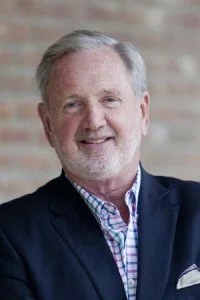
The reason a six-person shop could pull this off is that the people had done it before - twice. Chairman and CEO Carl L. Whatley spent around two decades at Pfizer before going out on his own. He and his team went on to found and build ProEthic Pharmaceuticals, later acquired by Japan's Kowa Company, and Midlothian Laboratories, later acquired by Mayne Pharma. Vitruvias, co-founded with Bryce Harvey in 2013, was the third act.
That history is the actual asset. In a business built on partnerships, the moat is not a building - it is knowing which contract manufacturer runs a clean facility, which regulatory filing will hold up, and which niche is about to open. Vitruvias bought expertise before it bought equipment, and the equipment it mostly rented.
Location helped too. Auburn is a university town, and the company sat within reach of Auburn University and its pharmacy school - a steady, local source of technical talent that a small operation could tap without competing against coastal salaries.
It is worth being clear about where Vitruvias sat on the map of drugmakers. The giants of generics - Teva, the old Mylan lines now under Viatris, Amneal, Hikma, Sun Pharma - run their own factories and file hundreds of applications a year. Vitruvias was never trying to out-scale them. Its edge was the opposite: a short list of carefully chosen products, no fixed manufacturing overhead to feed, and a decision speed that only a six-person company can have. Where a large filer spreads bets across a catalog, a small niche developer lives or dies on a handful of good calls - which is why the founders' judgment mattered more than any spreadsheet.
04 / THE MONEYInvestors who liked boring
In September 2017, Vitruvias received its first FDA ANDA approval, with a commercial launch planned for early 2018. That milestone unlocked the next one: in January 2018 the company closed an $11.5 million Series A preferred financing, co-led by JW Asset Management and Perceptive Advisors. Total reported funding sits around $12.45 million.
The round came with a board that knew the terrain: Jason Wild of JW Asset Management, Michael Altman of Perceptive Advisors, and Ed Schutter, then CEO of Arbor Pharmaceuticals. These are healthcare investors who understand that a portfolio of dull, hard-to-make generics can throw off cash while everyone else chases the next headline molecule.
05 / THE ARCBuilt, run, handed off
Vitruvias followed the pattern its founders knew best: build a functioning generics portfolio, then let it find a larger home. The company's operations have since wound down, and its products are now owned and/or distributed by H2-Pharma LLC of Montgomery, Alabama. The medicines keep moving; the corporate shell that assembled them has passed the baton.
06 / THE TAKEAWAYWhat a founder can actually steal
The lesson from Vitruvias is not "move to Alabama," though the cost base clearly helped. It is a sharper idea: define your market by difficulty, not novelty, and let partners carry the capital. The team picked a lane where experience mattered more than a factory, then used decades of relationships to rent everything else.
It does not work everywhere. Asset-light only pays if you genuinely have the know-how to pick winners and manage partners who can execute - and if the niche is narrow enough that giants ignore it. Get either wrong and you are just a middleman with regulatory risk. Vitruvias had the first part in the bank before it started, which is the whole reason company number three looked so calm.