The refresh button is an odd place to look for a pharmaceutical problem. Yet in PSC Software’s account of Thermo Fisher Scientific’s Viral Vector Services division, a shared Microsoft OneNote file was doing a surprisingly consequential job. Staff recorded inspection requests, numbered them and refreshed the file to follow progress. The familiar tool left notes disorganized and communication difficult.
- PSC Biotech supplies the specialists who test and document regulated operations.
- PSC Software sells quality and inspection systems, including ACE and AuditUtopia.
- BioTechnique adds sterile injectable contract manufacturing.
- The common thread: make work repeatable, traceable and easier to examine.
The VVS team sometimes faced two inspections a month. It adopted AuditUtopia, replacing manual coordination with live request status and shared written accounts. Training included recordings for future and off-site employees. The case is vendor-published, but the friction it describes is wonderfully ordinary: several capable people trying to answer one question with several imperfectly connected tools.
“The overall flow of the audit is smoother”
Kayla Harris · Quality Assurance Project Manager
PSC Software’s Thermo Fisher customer case
A medicine must have a memory
PSC Biotech occupies the part of life sciences where a scientific claim acquires an operational history. A facility needs evidence that its systems work as intended. A production process needs documented support for consistent results. A laboratory calculation needs scrutiny when it determines whether a result passes or fails. Someone has to connect those requirements to the actual machinery, software and people doing the work.
That is the company’s territory. Founded by chemical engineer John Clapham in 1996, PSC provides consulting and technical services for pharmaceutical, biotechnology and medical device organizations. Its reach extends from project planning to manufacturing support and ongoing compliance. The company reports operations in 52 countries and more than 1,000 clients served. Those are company-reported measures of reach, rather than a count of simultaneous projects.
Clapham’s biography supplies a useful clue to the business. He studied chemical engineering at the University of Rhode Island and worked in organizations including the Department of Defense, Johnson & Johnson and engineering firms before founding PSC. The company’s subject is practical execution: systems, specifications, tests, records. Discovery gets a celebration. A sound qualification report usually gets an approval signature.
The three businesses behind the answer
PSC’s structure is the interesting part. Professional services sit alongside PSC Software and BioTechnique. Each addresses a different layer of a regulated operation: people who establish the evidence, systems that organize it, and a manufacturing business that handles sterile injectable products.
PSC Biotech
Engineering · CQV · quality
PSC Software
ACE · AuditUtopia
BioTechnique
Sterile injectables
On the service side, commissioning, qualification and validation - CQV - covers facilities, utilities, equipment, cleaning, manufacturing processes and analytical methods. Commissioning checks whether systems are installed and function according to their design. Qualification examines suitability for the intended use. Validation supplies documented evidence of consistent performance. PSC’s offering runs through planning, risk assessments, testing, reports and eventual decommissioning.
Other assignments cover computer system validation and software assurance, audits, calibration, quality remediation, regulatory affairs and technical writing. A client might need temporary specialists for a new site, an examination of an existing quality system, or help bringing a computerized laboratory application under control. PSC’s homepage includes testimonials from people at Illumina and Takeda. The buyers are organizations with operational responsibilities, budgets and deadlines.
The humble spreadsheet gets its day in court
PSC’s published project summaries offer a better picture than a catalogue of acronyms. One describes validating spreadsheets whose calculations generated laboratory results and determined pass-or-fail criteria. Another describes migrating quality data and training records from MasterControl to Veeva. A manufacturing science and technology laboratory project involved commissioning alongside the final stages of construction.
These are small windows into the work, but revealing ones. Quality can depend on an ordinary formula, the completeness of a migrated training record, or whether a utility is ready when the rest of a building is finished. PSC can work inside systems supplied by other vendors. Its commercial usefulness extends beyond installing its own products.
That helps explain its place in the market. For consulting, the alternative may be an internal quality or engineering team, supplemented by another specialist provider. For software, it is a quality platform or inspection tool. For manufacturing, it is another sterile injectable contractor. PSC spans those buying decisions; the scope of a particular contract still matters more than the breadth of the group’s brochure.
Software for the question after the question
ACE stands for Adaptive Compliance Engine. It brings documents, training, quality events and approvals into a configurable quality management platform. Permissions determine who can see or change information. Audit trails preserve a history of actions. Dashboards and notifications give staff ways to follow records and overdue tasks.
Its packaging reflects how much process complexity a buyer wants to manage. PSC Software describes Starter as a limited set of preconfigured workflows, Essentials as roughly 25 connected workflows, and Enterprise as fully configurable with unlimited workflows. Essentials was launched in 2019; ACE’s mobile app followed in 2022. The practical attraction is being able to carry work through several stages without losing its history between applications.
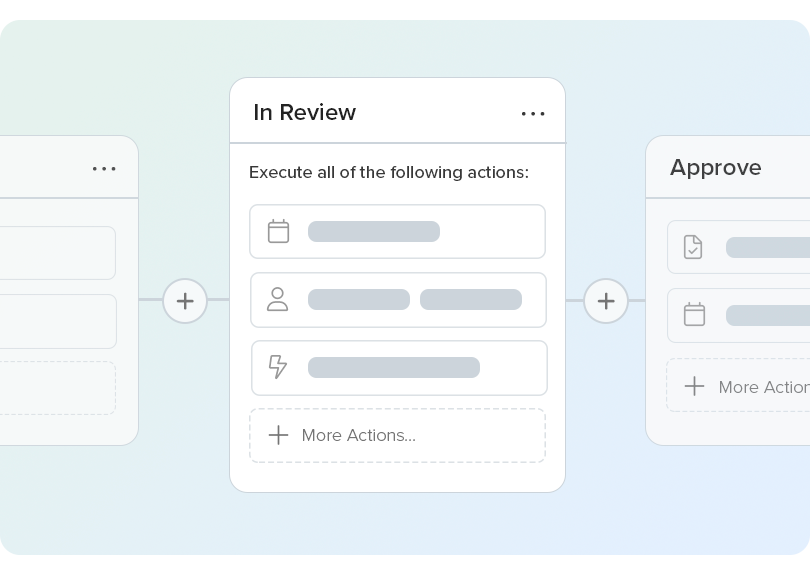
AuditUtopia concentrates on inspection requests and live scribe notes. ACE Inspection adds features such as regulatory profiles, API access and document sharing with inspectors. The value proposition is coordination under scrutiny. It becomes useful when people in different rooms must know what was asked, who owns the response and whether it has arrived.
The business model combines professional project services with cloud software subscriptions and implementation work, equipment rentals and sales, and contract manufacturing. AuditUtopia and ACE Inspection invite buyers to request pricing. A sensible comparison therefore includes configuration, migration, validation and training alongside the software license. The appropriate package follows the work that must be managed.
Then the consultant bought production space
BioTechnique makes PSC’s manufacturing connection tangible. In May 2021, the subsidiary announced a York, Pennsylvania facility of 163,885 square feet, including 42,000 square feet of ISO 7 and ISO 8 cleanrooms. It replaced a former Madison site divested in 2018. The stated aim was to support clinical and commercial sterile injectable work, including formulation, fill-finish and lyophilization - freeze-drying.
Reported planned investment in relocation, facility updates, equipment and staff.
Pennsylvania Business Report described a planned investment exceeding $22 million. The proposed public support included a $2 million industrial development loan, a $500,000 Pennsylvania First grant and a $200,000 workforce development grant. This was a facility investment story. Treating the proposal as a venture capital round would give the reader quite the wrong idea.
The manufacturing rationale was continuity. BioTechnique’s announcement argued that customers could move from clinical to commercial production in the same facility with the same staff. That is an ambition about reducing disruption during scale-up, rather than proof that every transfer will be simple. Product suitability, capacity and technical requirements remain questions for each engagement.
Start with the handoff
PSC continues to add connections around its core work. Its Kneat partnership brings another vendor’s digital validation technology into consulting services. In May 2026, PSC announced exclusive distribution and local service responsibilities for De Lama’s life sciences sterilization portfolio in the United States, Canada, Singapore and Australia. Equipment delivery, implementation and qualification become parts of the same commercial conversation.
The transferable lesson is to examine the handoff before buying a solution. Who defines the requirement? Who tests it? Who approves the result? Where does the record go? PSC’s June 2026 guidance on building management and environmental monitoring systems makes this concrete: monitoring introduced late, unfinished commissioning and mismatched control settings can create readiness problems.
A tool helps when responsibilities are clear and people use it consistently. It cannot resolve an undefined requirement merely by recording it. Preconfigured workflows are useful when they fit the operation; more unusual processes demand configuration and judgment. A manufacturer still needs to assess whether a contractor can handle its particular product. PSC’s own stated emphasis on training and promotion from within recognizes how much this business depends on practiced people.
The useful question for a prospective customer is precise: which part of our operation is hardest to demonstrate? It could be a laboratory spreadsheet, a new cleanroom, an inspection request or a manufacturing transfer. PSC Biotech has built a business around those particulars. A promising molecule gives a company something to pursue. A dependable operation gives it something it can explain.