Imagine the least glamorous object in a factory: a measuring tool with a due date. It has no launch party. Nobody queues overnight to buy it. Yet when its calibration expires, a production team has a question to answer before relying on its measurements. The grand machinery of manufacturing can become remarkably interested in a small sticker.
This is the territory of SIMCO Electronics. Its work happens around the inventions that attract attention: checking instruments, repairing them and keeping their histories intelligible. The company’s particular wager is that the physical job and the administrative job belong together. A trustworthy measurement is useful. Being able to establish when, how and with what evidence that instrument was checked makes it usable inside a regulated business.
- SIMCO calibrates and repairs test and measurement equipment used in regulated manufacturing.
- CERDAAC connects equipment records, due dates, certificates and maintenance workflows.
- Lab, onsite and exchange services address different kinds of downtime.
- The buying question includes service scope, record quality and equipment availability.
01 A calendar with consequences
Korry Electronics makes human-machine interface products, including cockpit controls. In SIMCO’s published 2021 customer case, the company described implementing CERDAAC in 2010 to replace spreadsheets and handwritten records. By the time of that account, 137 users were managing more than 6,000 equipment assets.
Shannon Younger, Korry’s director of quality and compliance, put the problem plainly:
“Tracking and scheduling calibration and maintenance on all these different tools is a huge job.”Shannon Younger · Korry Electronics
The account describes manual tracking that could let maintenance dates slip. CERDAAC gave staff a shared view of what required service; advance scheduling also helped onsite technicians arrive prepared. The change was practical: equipment readiness became visible before production needed the equipment.
There is a lesson here for businesses far beyond aerospace. A spreadsheet can record a date perfectly while leaving responsibility for that date obscure. The useful question is who sees the approaching deadline, who acts on it and who can check that the action happened.
02 Silicon Valley’s less showy inheritance
SIMCO dates its beginnings to 1962, when it supported NASA and emerging Silicon Valley technology companies. Its present customers work across life sciences, aerospace, defense, electronics and advanced manufacturing. These are businesses where measurement errors and missing records can have consequences well beyond an inconvenient afternoon.
The company supplies calibration, repair and program management across North America and Asia. That places it in the supporting infrastructure of innovation: the organization checking the tools that another organization uses to build, test or maintain a product.
SIMCO’s current website reports more than 15 million calibrations performed. It also says its customers include 16 of the top 20 biomedical device manufacturers and 14 of the top 20 aerospace and defense manufacturers. Those are company-reported measures of reach. They help explain why its vocabulary is full of certificates, traceability and uptime rather than consumer excitement.
Checks on the tools behind other people’s products.
03 The bench is only half the business
CERDAAC is SIMCO’s cloud software for the equipment-management side of the job. Calibration Cloud holds service histories and certificates, schedules work, sends upcoming and overdue notifications, and supports out-of-tolerance case management. Dashboards give different team members a view of the work they need to oversee.
The attraction is easy to understand. A quality manager wants evidence. An operations manager wants equipment available. A technician wants to know what needs attention. If each person keeps a separate version of the answer, ordinary service work acquires an unnecessary detective component.
The platform also includes maintenance, facilities, workforce, partner and product traceability modules. SIMCO’s December 2022 release expanded the suite with four new cloud solutions. Customers can implement clouds separately or combine them. That lets the relationship grow from one equipment process into several related operational processes.
Crucially, CERDAAC can also manage an internal calibration laboratory or other vendors. The software’s usefulness extends beyond displaying the work SIMCO itself performs. A manufacturer can use it as the shared record around a mixed service program.
04 Where the tool goes matters
SIMCO offers in-lab calibration with controlled conditions and specialized resources. Equipment can move through pickup, delivery, shipping or drop-off arrangements. For qualified urgent instruments, its Next-On-Bench option provides priority in the calibration queue.
Moving the instrument is not always sensible. SIMCO also offers onsite calibration for suitable equipment, including assets that are installed, difficult to move or closely integrated with production. High-volume operations can use embedded support, with dedicated resources at the customer’s facility.
Field service introduces another variation. The C.A.R.E. exchange program delivers pre-calibrated replacements before instruments reach their due dates. The appeal is the sequence: a usable tool arrives before the existing one needs to leave service.
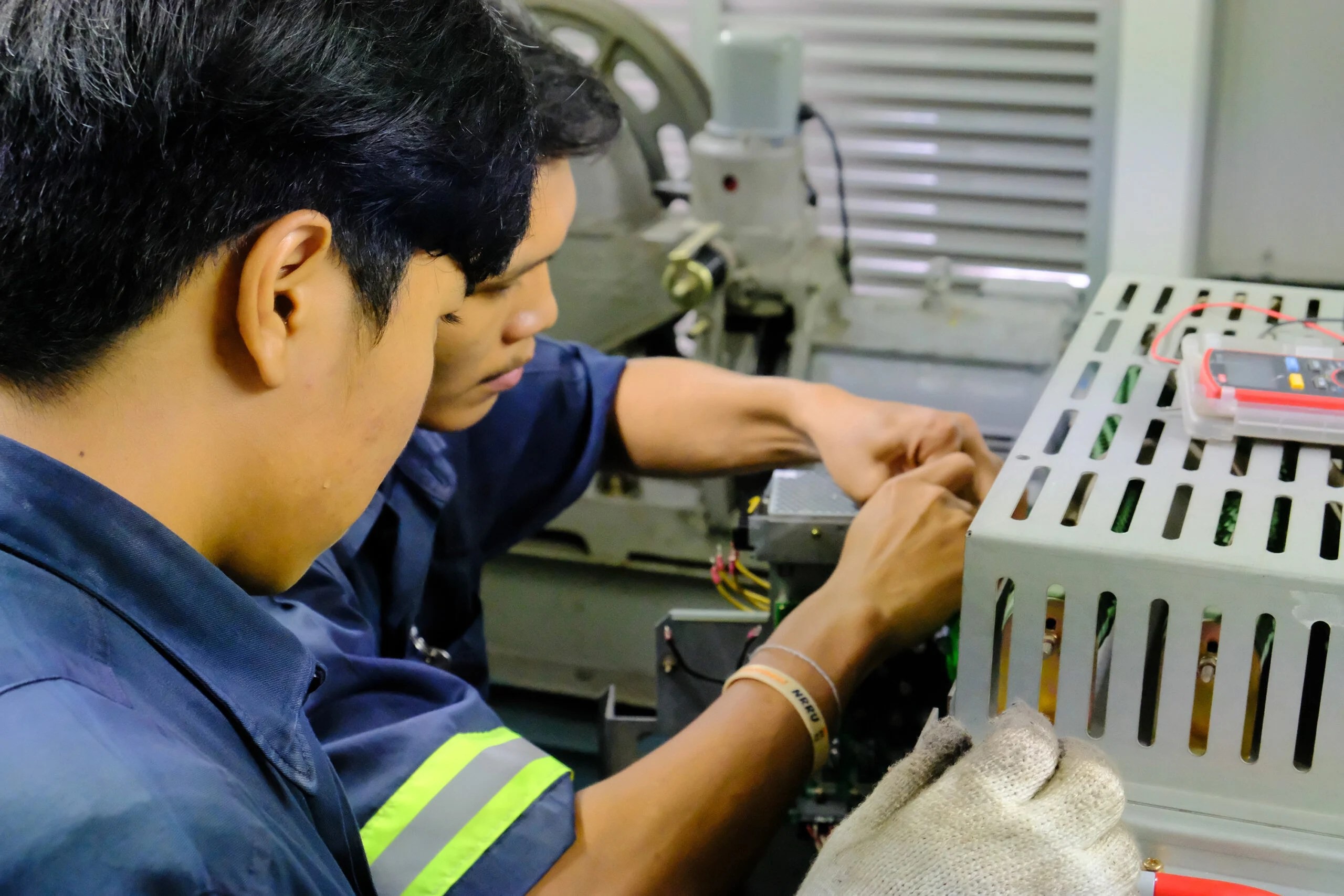
These choices make calibration a logistics decision as well as a technical one. Buyers should agree the service path around the instrument’s requirements and production schedule. An onsite visit cannot be assumed to cover every capability available in a laboratory; the scope of the work still governs the choice.
05 The bill includes more than the bench
SIMCO earns money through business services and cloud software, with implementation and support around the platform. Calibration engagements are quoted for the requested work. The useful comparison begins by making sure competing quotes describe the same service.
SIMCO’s calibration levels illustrate why that matters. One option includes out-of-tolerance measurement data. Another includes the full set of measurements before and after adjustment. Its ISO/IEC 17025-accredited offering includes measurement uncertainties, with different decision-rule options. These are differences in what the customer receives and how conformity is assessed.
Repair offers another way to control equipment spending. SIMCO describes flat-rate pricing, evaluation fees credited toward repairs and the ability to pre-authorize minor work. Its Harvest Program uses parts from nonfunctional instruments to restore working units, using customer-owned parts or authorized sources.
The economic logic is more interesting than a cheaper invoice. A repair may preserve useful equipment; a well-timed calibration may reduce an interruption; an accessible certificate may save administrative effort. For a buyer, those are separate benefits to measure rather than roll into a magical savings percentage.
06 Evidence has to travel with the answer
SIMCO’s emphasis on accreditation sits beside CERDAAC’s emphasis on records. The software includes digital signatures, searchable audit trails and access controls intended to support regulated workflows. CERDAAC describes itself as pre-validated and supplies documentation including qualification protocols, a traceability matrix and a validation summary report.
That is a useful starting point for a customer’s implementation. Teams still need to establish their intended use, responsibilities and approval process. A record system becomes useful through the work people put into it: identifying the assets correctly, setting appropriate requirements and keeping the history current.
The same discipline shapes SIMCO’s stated culture. Its Mission In Service framework centers on trust, empathy and innovation, with lean improvement and ownership of outcomes. Brian Kenna leads the company as chief executive. SIMCO reported further Bay Area workplace recognition in 2026, following number-one rankings in 2024 and 2025.

07 Buy the handoffs carefully
SIMCO competes in a market that includes providers such as Transcat, Tektronix and Trescal, alongside original equipment manufacturers and internal calibration laboratories. Its distinctive offer is the combination of multivendor service, delivery options and its own equipment-management software. Whether that combination wins depends on the customer’s actual instruments and processes.
The approach is particularly relevant when equipment is distributed, documentation is demanding and several departments share responsibility. A small operation with few assets may need a simpler arrangement. Specialized equipment may require an OEM or another qualified provider. Existing software may already handle the records adequately. Those are reasons to inspect the fit.
What can another business copy? Start with one instrument and follow every handoff. Who identifies it? Who notices that service is due? Who arranges the work? Who checks the result? Who makes the record accessible? Then repeat the exercise across the equipment fleet.
SIMCO has made a business out of those unromantic questions. Manufacturing will always have room for the next remarkable invention. It also needs somebody to check the instrument that says the invention works.