aerospace-and-defense
(14)
Tom Hennessey Makes the Factory Floor Legible
The iBASEt CMO has spent a career turning factory complexity into plain language. His recurring argument is simple: reliable work begins when the right information reaches the right person at the right moment.
The Factory Software Behind Fighter Jets Has a New Assignment: Make AI Auditable
iBASEt spent four decades turning aerospace shop-floor paperwork into a digital record. Now it is betting that the same governed data can make factory AI useful without asking engineers to trust a black box.

The Liverpool radar shop that turned a $151 billion missile-defense door into an open one
A 58-person shop in upstate New York builds software-defined radar - and just landed on a defense contract worth up to $151 billion.

Zero-Error Systems (ZES) Pte Ltd
Zero-Error Systems (ZES) is a Singapore deeptech semiconductor company and Nanyang Technological University spin-off that builds radiation-hardened integrated circuits, radiation-tolerant system-on-modules, and irradiation testing services. Its patented radiation-hardened-by-design technology protects low-cost commercial-off-the-shelf (COTS) electronics from radiation effects such as single-event latchup, letting satellite and space-system makers achieve space-grade power reliability and data integrity at a fraction of traditional rad-hard cost.
Canvas Envision
Canvas Envision (Canvas GFX) is a Boston-based enterprise software company that turns 3D CAD data, documents and video into interactive, model-based digital work instructions for frontline manufacturing workers. Its cloud platform serves as the visual execution layer of the digital thread, connecting engineering systems (PLM, MES) to the factory floor so assembly, maintenance and repair teams get accurate, up-to-date guidance instead of outdated PDFs and tribal knowledge. Building on 40 years of Canvas graphics heritage, the company serves aerospace, defense, automotive, medical device and industrial machinery manufacturers.

3D Glass Solutions, Inc.
3D Glass Solutions (3DGS) is an Albuquerque, New Mexico advanced-packaging company that turns its patented photosensitive APEX glass-ceramic into precise 3D microstructures for chips. Its wafer-level glass substrates, interposers and integrated passive devices serve RF, photonics, high-performance computing and defense customers who need low-loss, high-frequency, thermally stable packaging. Spun out of technology developed at Sandia National Laboratories and led by semiconductor veteran Babu Mandava, the ISO 9001 / AS9100 certified foundry has raised more than $54 million, counts Intel Capital, Applied Ventures and Lockheed Martin Ventures among its backers, and is a partner in DARPA's Next-Generation Microelectronics Manufacturing (NGMM) program for U.S.-based 3D heterogeneous integration.
Airspace Defense
Airspace Defense (formerly Airspace Systems) is a Silicon Valley company that secures the low-altitude airspace where drones increasingly operate. Its patented Airspace Spatial platform fuses Remote ID, RF and electronic sensing, radar and AI analytics to detect, identify and track unauthorized drones and their operators at city scale. Founded in 2015 by a team from Apple, Google and Cisco, the company serves public safety agencies, national defense and major enterprises, and its autonomous Interceptor drone is held in the Smithsonian National Air and Space Museum.
ANELLO Photonics
ANELLO Photonics is a Santa Clara, California semiconductor and navigation company that builds SiPhOG, described as the world's smallest high-precision silicon photonic optical gyroscope. By shrinking fiber-optic-class gyroscope performance onto a chip, ANELLO delivers inertial measurement units (IMUs) and full inertial navigation systems (INS) that keep vehicles, drones, ships and robots positioned accurately when GPS/GNSS signals are jammed, spoofed or simply unavailable - across land, air and sea. Founded in 2018 by silicon-photonics pioneer Dr. Mario Paniccia and MEMS/inertial-sensor veteran Mike Horton, the company serves defense, maritime, aerospace, agriculture, construction, mining and autonomous-vehicle markets.

Visure Solutions
Visure Solutions is a specialized requirements management and Application Lifecycle Management (ALM) software company founded in 2002. Its all-in-one Visure Requirements ALM Platform helps teams in safety-critical and business-critical industries - aerospace and defense, automotive, medical devices, railways, energy and finance - capture, trace, verify and manage requirements alongside test management, risk management, change management and standards compliance. In recent years Visure has layered AI across the platform, launching the Vivia virtual assistant and an 'Engineering Intelligence' MCP server that lets AI agents work inside governed engineering workflows.
Pasteur Labs & ISI
Pasteur Labs & ISI is a New York-based public-benefit deep-tech company building 'Simulation Intelligence' - the systematic merger of AI, physics simulation, and scientific computing. Its AI-native, GPU-accelerated, end-to-end differentiable physics platform gives engineers and scientists an in-silico playground to run thousands of what-if scenarios and shrink the gap between digital models and physical reality. Founded in 2021 by AI researcher Alexander Lavin and staffed by veterans of DeepMind, NASA, CERN, Tesla, Nvidia and Ansys, the company targets industrial R&D, energy, climate, and space & defense, and stewards the open-source Tesseract framework for differentiable scientific computing.
Valtec
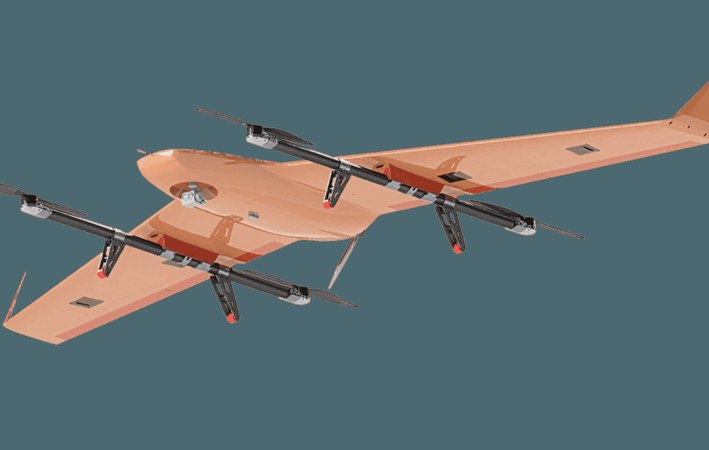
Valtec is a San Diego-founded maritime intelligence company turning ocean data into real-time decisions. Its Larus VTOL fixed-wing hybrid drone launches straight off moving fishing vessels - no runway, no shore infrastructure - and its Fulcan AI vision stack reads the water below for fish, vessels and threats. Built first for commercial tuna fleets in Taiwan and the Philippines, Valtec's pitch is blunt: cut a month at sea down to two weeks, burn less fuel, and see what's happening in waters no one else is watching.
CX2
CX2 (CX2 Industries) is an El Segundo, California defense-technology startup building AI-enabled hardware and software for the electromagnetic spectrum. Its systems detect, classify, geolocate, and disrupt hostile RF emitters in jammed and GPS-denied environments, aiming to give allied forces an edge in electronic warfare at a fraction of the cost of legacy systems. Founded in 2024 by a team including Nathan Mintz, Porter Smith, Lee Thompson, and Mark Trefgarne, CX2 has raised about $46M, led by a $31M Series A from Point72 Ventures, and launched its Wraith airborne EW platform in December 2025.

DUST Identity
DUST Identity authenticates physical objects with a thin coat of engineered diamond dust. Each randomly oriented constellation of microscopic diamonds forms a fingerprint that cannot be copied, and that fingerprint is bound to a tamper-evident digital record. The result is an unbroken chain of trust from raw material to final delivery, used across aerospace, defense, electronics, luxury goods, and sports memorabilia.
Quilter
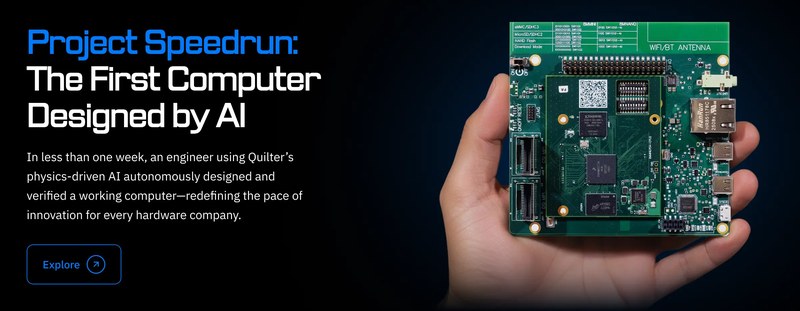
Quilter is a Los Angeles-based company building the first fully autonomous, physics-driven AI for printed circuit board (PCB) layout. Founded in 2019 by former SpaceX avionics engineer Sergiy Nesterenko, Quilter trains reinforcement-learning agents on the laws of physics - not human design patterns - to place components, route traces, and physics-validate complete board designs in hours instead of weeks. The company positions itself as the 'compiler for hardware,' aiming to make manual PCB layout as obsolete as hand-compiling code.