Company • Aerospace & Defense
The Liverpool radar shop that turned a $151 billion door into an open one
A 58-person shop in upstate New York builds software-defined radar - and just landed on a defense contract worth up to $151 billion.
Most people picture cutting-edge radar coming from a sprawling prime contractor with a campus the size of a small town. C Speed is 58 people in Liverpool, New York, a Syracuse suburb better known for its history in the salt trade. And in January 2026, that shop won a place on the Missile Defense Agency's SHIELD program - a contract vehicle worth up to $151 billion over a decade. The size of the door and the size of the company are not supposed to match. They do anyway.
C Speed, LLC designs and builds radar systems, subsystems, and engineering services for defense, border security, and intelligence, surveillance, and reconnaissance - the work the industry shortens to ISR. It was founded in 2006 by David Lysack and has spent most of its life as a quiet supplier: the company behind the receiver, the exciter, or the signal processor inside someone else's bigger system. That is a decent business. It is also an easy one to stay small in. What changed is a single technical bet the company made about how radar should be built.
01 / THE IDEARadar you upgrade with code, not steel
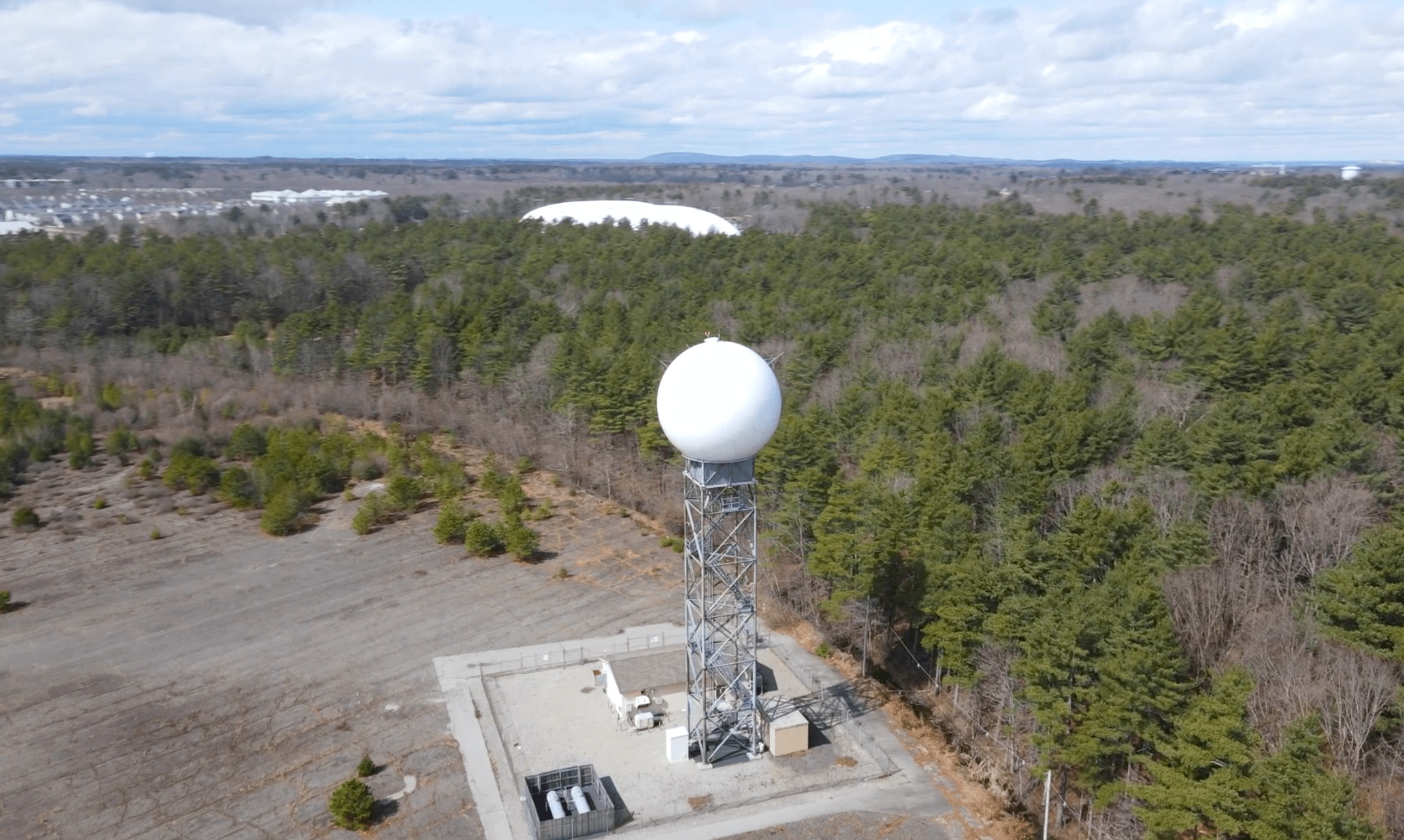
The bet is called software-defined radar, and C Speed's version is branded LightWave. The plain-English version: instead of hard-wiring a radar to do one job - watch this slice of sky, at this frequency, for this kind of target - you build a flexible hardware core and let software decide what it does. One platform can be reconfigured for air surveillance, drone detection, or missile early warning. And a radar already in the field can sometimes be improved with a software update rather than a forklift and a new antenna.
That reframing - treat a hardware problem as a software problem - is the most valuable thing here for anyone building in a hardware-heavy industry. The defense market runs on aging equipment and constrained budgets. A company that can extend the life of what customers already own, instead of asking them to replace it, is selling into a very different, and much friendlier, buying conversation. C Speed positions LightWave explicitly as the low-cost, high-performance alternative for legacy radar modernization. That is not a tagline. It is the whole go-to-market.
One software-defined core, many missions
02 / THE CUSTOMERSWho is actually buying this
C Speed is a long-term supplier to several major prime defense contractors, and it has worked directly with the US Air Force, Army, Navy, and the Department of Homeland Security, as well as NATO and international military and civilian customers. Those are demanding buyers with long procurement cycles and zero tolerance for a sensor that quits in the field. The company's stated principles - reliability, innovation, operational excellence, integrity - read like boilerplate until you remember the setting: these systems get deployed in harsh environments where "it usually works" is not a passing grade.
03 / THE PROBLEMSSmall drones, cruise missiles, and wind farms
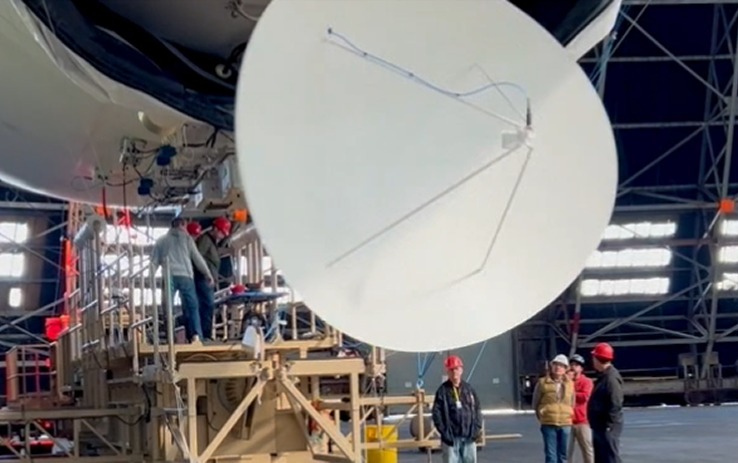
The threats radar has to catch keep getting smaller, lower, and faster. Cheap drones with tiny radar cross-sections. Cruise missiles hugging the ground. C Speed's elevated sensors, the ESR family, are built for exactly this - very early warning of low-flying, small radar-cross-section targets - and are light enough to fly on an aerostat, a tethered balloon, deployable at sizes as small as 34M/74K. Getting the sensor up high buys precious early-warning time against things designed to stay under the horizon.
Then there is a problem most people never think about: wind farms. Spinning turbine blades throw back radar returns that look enough like moving aircraft to clutter a display and hide real targets. As wind development spreads, it quietly degrades civilian and military radar coverage. C Speed builds for wind turbine interference mitigation - the ability to see past the clutter - which is the kind of unglamorous, specific capability that wins procurements precisely because the big generic systems handle it poorly.
04 / THE DIFFERENCEHow it competes with the giants
C Speed shares a market with Raytheon, Lockheed Martin, Northrop Grumman, SRC, Leonardo, Saab, and Thales - companies many multiples its size. It does not try to out-scale them. It competes on three things a small, technical team can actually deliver: cost, flexibility, and a design-services DNA that means it will build to a customer's specific mission rather than sell a fixed box. The software-defined approach is the multiplier - it lets one engineering team address ground-based, elevated, and modernization work without maintaining a separate product line for each.
Where C Speed plays: cost vs. flexibility
Relative emphasis, illustrative - based on C Speed's stated positioning, not measured benchmarks.
05 / THE PRODUCTSThe ladder from subsystem to platform
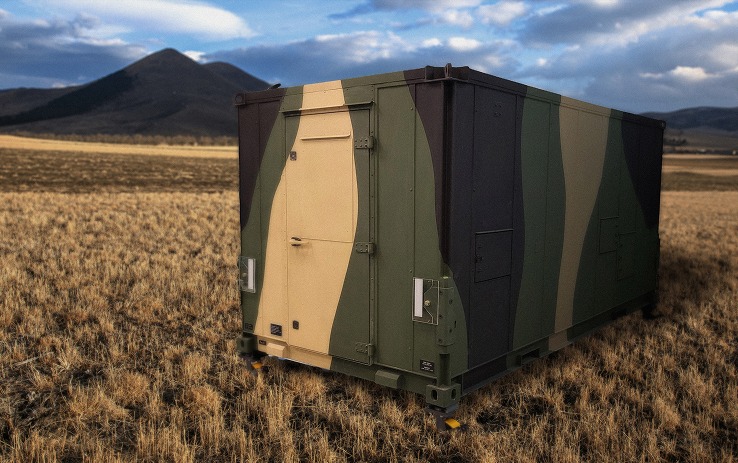
The product line reads like a company that climbed a ladder. At the base: radar subsystems - receivers, exciters, and signal processors - sold to primes. Above that, integrated systems built on LightWave. The LSR/1000 is a 360-degree solid-state, S-band primary surveillance radar for precision air surveillance and flexible deployment, suitable for defense, homeland security, and air traffic control. The ground-based GBR/TR10 and GBR/TS10 handle medium-range detection of higher-flying threats like fighters, missiles, and UAS. The elevated ESR family - SR40, TR10, TS10 - covers the low, small, and fast. Outputs follow ASTERIX and STANAG standards so the data drops into existing command-and-control networks, and the systems integrate with ELINT, IFF, and third-party sensors.
On top of the hardware sits the service layer that keeps the revenue recurring: integrated surveillance solutions, design engineering, radar modernization and upgrades, and sustainment. For a company this size, that services tail is what smooths out the lumpy, feast-or-famine rhythm of hardware procurement.
06 / THE MONEYBusiness model and the NewSpring era
C Speed's model is B2B and B2G: sell systems and subsystems, then earn recurring revenue from modernization, software upgrades, and sustainment. Reported annual revenue sits around $6.5 million - small, but the trajectory changed hands in October 2024 when NewSpring Holdings acquired a majority stake. NewSpring did not just write a check. It installed a federal-focused bench: Andy Maner, a former Avantus CEO, as Executive Chairman, and Lt. Gen. Kevin McLaughlin (USAF, Ret.), with more than four decades in space and cyberspace, as senior advisor and board member. That is the profile of an investor building a company to chase much bigger contracts.
The chase worked fast. In January 2026, C Speed won a spot on the Missile Defense Agency's SHIELD - Scalable Homeland Innovative Enterprise Layered Defense - an IDIQ vehicle worth up to $151 billion over ten years. A spot on an IDIQ is a hunting license, not a guaranteed payday; the real money comes from winning task orders under it. But for a firm C Speed's size, simply being eligible to compete at that altitude is the story. In May 2026, Dave Abel took over as CEO, succeeding McLaughlin, brought in specifically to scale the company for the demand it had just unlocked.
07 / THE TIMELINEFounder to general to scale-up CEO
08 / THE CATCHWhere the playbook could stall
None of this is guaranteed. A spot on SHIELD is a license to compete, and the competition includes the largest defense firms on earth, many of them on the same vehicle. Scaling from roughly 58 people to task-order execution at MDA scale is a hard operational problem, and it is exactly the problem a new CEO was hired to solve - which is another way of saying it is not solved yet. The software-defined pitch also depends on customers valuing upgradeability over the perceived safety of buying new from a household-name prime. In defense procurement, incumbency and risk-aversion are real forces, and they do not always reward the cheaper, cleverer option. The bet is sound. The execution is still being written.
Still, the shape of the story is worth copying if you build anything physical: find the ugly, specific problems the giants handle badly, turn as much of your hardware into software as you can, and sell customers on extending what they already own. C Speed did that from a building in upstate New York for twenty years before anyone in the $151-billion room noticed. Now they have.