A hospital dispensing cart sounds like furniture until its drawers need to open individually, its electronics need to obey software, and the whole assembly needs to move from room to room. In Design Catapult’s engineering portfolio, a cart for Stinger Medical becomes precisely that kind of problem: an object whose usefulness depends on several disciplines agreeing with one another. The wheels are only the beginning.
This is the territory occupied by the California product development firm. Design Catapult works on physical products, bringing industrial designers, mechanical and electrical engineers, software developers and manufacturing technicians into the same development process. Its customers range from startups to established companies. The proposition is practical: help turn a product brief into something that can be built, operated and eventually delivered.
Its portfolio has an appealing lack of snobbery about what deserves design attention. A pool cleaner appears alongside a prosthetic device. A cold-brew coffee maker shares space with medical equipment. Look across those objects and the connecting thread becomes clearer. Each needs a shape, a means of working and a way of being made. Design Catapult sells expertise across those decisions.
A scanner needs somewhere to put your hand
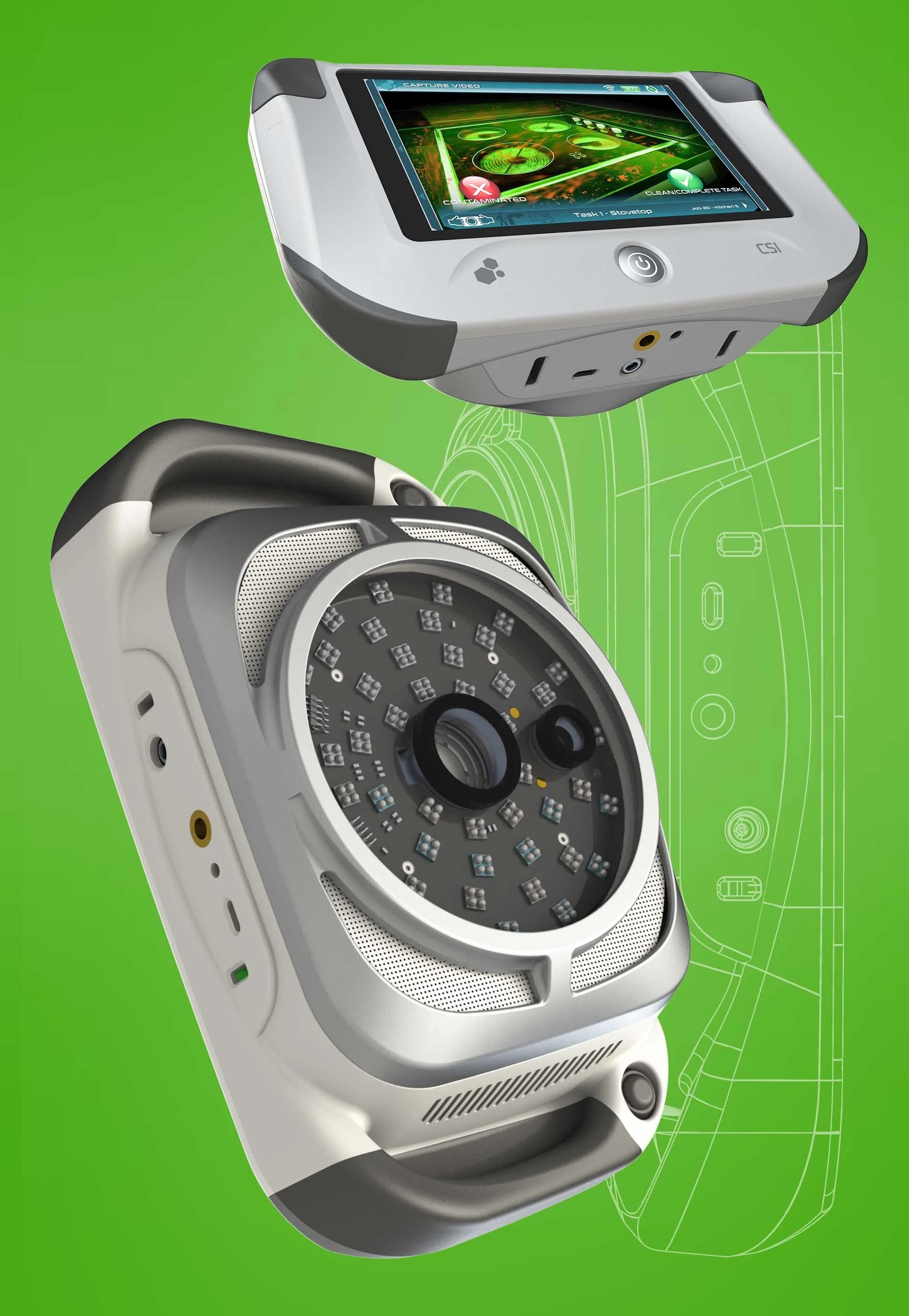
SafetySpect offers a compact illustration of the job. Design Catapult describes integrating the company’s spectroscopy technology into an ergonomic handheld enclosure, with a custom graphical interface giving access to its functions. That description is more revealing than a glamour shot. The assignment connects the technology inside the device to the person expected to use it.
The industrial designer’s concerns and the engineer’s concerns meet at the handle and screen. Where does a user grip it? How does the device communicate? How do the components fit inside the form? Those are useful questions to take away from the project, even without being in the scanner business. A technical capability becomes a product through decisions about how somebody encounters it.
The same portfolio credits the firm with an X-ray source developed for SkinCure Oncology’s image-guided superficial radiation therapy system. A dispensing cart, a handheld scanner and an X-ray source demand different engineering work. Their presence together helps explain the company’s emphasis on having multiple technical specialties available for a project.
The factory became part of the brief
The clearest explanation for Design Catapult’s manufacturing expansion comes from the manufacturing business itself. Design Catapult Manufacturing says clients requested a service that extended from ideation through production. It describes itself as a subsidiary of Design Catapult, with its own focus on making the products developed through that relationship.
There is a small but useful business lesson in that account. Customer demand changed how far the company followed a project. The next sale could involve helping an existing client get further along the development journey. In this case, the request reached beyond design into the work of producing finished devices.
Design Catapult’s earlier history places the manufacturing expansion in 2016, while the manufacturing company describes serving medical-device innovators since 2017. The direction of travel is consistent: a design-and-prototype operation added dedicated production capability. That makes the manufacturing relationship central to understanding the company’s position in the market.
“Think. Create. Launch”
Design Catapult’s company motto
As a service-business strategy, the appeal is easy to understand. Knowledge acquired while developing a product can remain useful when it is assembled. For a customer comparing providers, continuity becomes something concrete to investigate: who will answer the factory’s questions, and what information will accompany the design?
Five phases, with paperwork in the middle
Design Catapult’s current website lays out five phases: onboarding, engineering, prototyping, design for manufacturing and manufacturing. The sequence starts with requirements and an estimated project budget. It proceeds through CAD, electronics and software planning to functional assemblies. Before production comes a package of manufacturing information, including assembly instructions, a bill of materials and engineering specifications.
- 01DefineRequirements + budget
- 02EngineerCAD + electronics + code
- 03PrototypeBuild + integrate + test
- 04PrepareParts list + assembly instructions
- 05ManufactureTooling + assembly + packaging
A guide to the firm’s published process, not a schedule or a guarantee of project duration.
The fourth stage deserves attention. A bill of materials records what goes into the product; assembly instructions explain how those parts come together. A finished design must be understandable to the people responsible for making it. The process gives those deliverables an explicit place between a prototype and production.
For a founder, that is a useful habit to copy. Ask what each phase leaves behind. A model, a functional assembly and a production release package serve different purposes. Agreeing on the deliverable gives both customer and supplier a more precise way to discuss progress than simply asking whether the product is nearly finished.
When the brief was a ventilator shortage
One of Design Catapult’s better-documented collaborations emerged during the COVID-19 pandemic. In a May 11, 2020 announcement, CorVent Medical named the firm as the design partner behind its first single-use ventilator. CorVent was developing the device to address shortages and extend access to critical-care ventilation.
CorVent co-founder John O’Mahony later described the venture’s origin to Emerging Prairie. With experience in mechanical ventilation, he wanted to respond to the shortage. Mark Gelfand of Coridea contacted him, and O’Mahony said the two formed CorVent with Sam Iravantchi from Design Catapult. The account puts Design Catapult’s involvement close to the beginning of the venture.
“At the onset of the pandemic, I wanted to help with the shortage in ventilatory products,” O’Mahony said. His explanation ties the collaboration to a specific unmet need. It also shows why a development firm’s value may involve assembling relevant experience around a sharply defined problem.
The 2020 announcement reported a $4.5 million seed round for CorVent, led by Sofinnova Partners, to support commercialization and related work. That figure belongs to CorVent’s financing. It does not establish Design Catapult’s development fee. The distinction matters when judging what a partnership demonstrates: here, a named role in developing a specific medical product.
The unglamorous work earns its place
At Design Catapult Manufacturing, the published quality program describes a quality assurance unit independent of operations, procedures for traceability, employee training and a system for reviewing and releasing documentation. Its About page states that the business holds ISO 9001 and ISO 13485 certifications for manufacturing. These are claims about the manufacturing operation and its quality systems.
The revealing detail is organizational. The company gives quality assurance a role separate from production operations. For a buyer, that suggests a useful line of inquiry: how are records reviewed, responsibilities assigned and changes documented? The visual finish of a device cannot answer those questions.
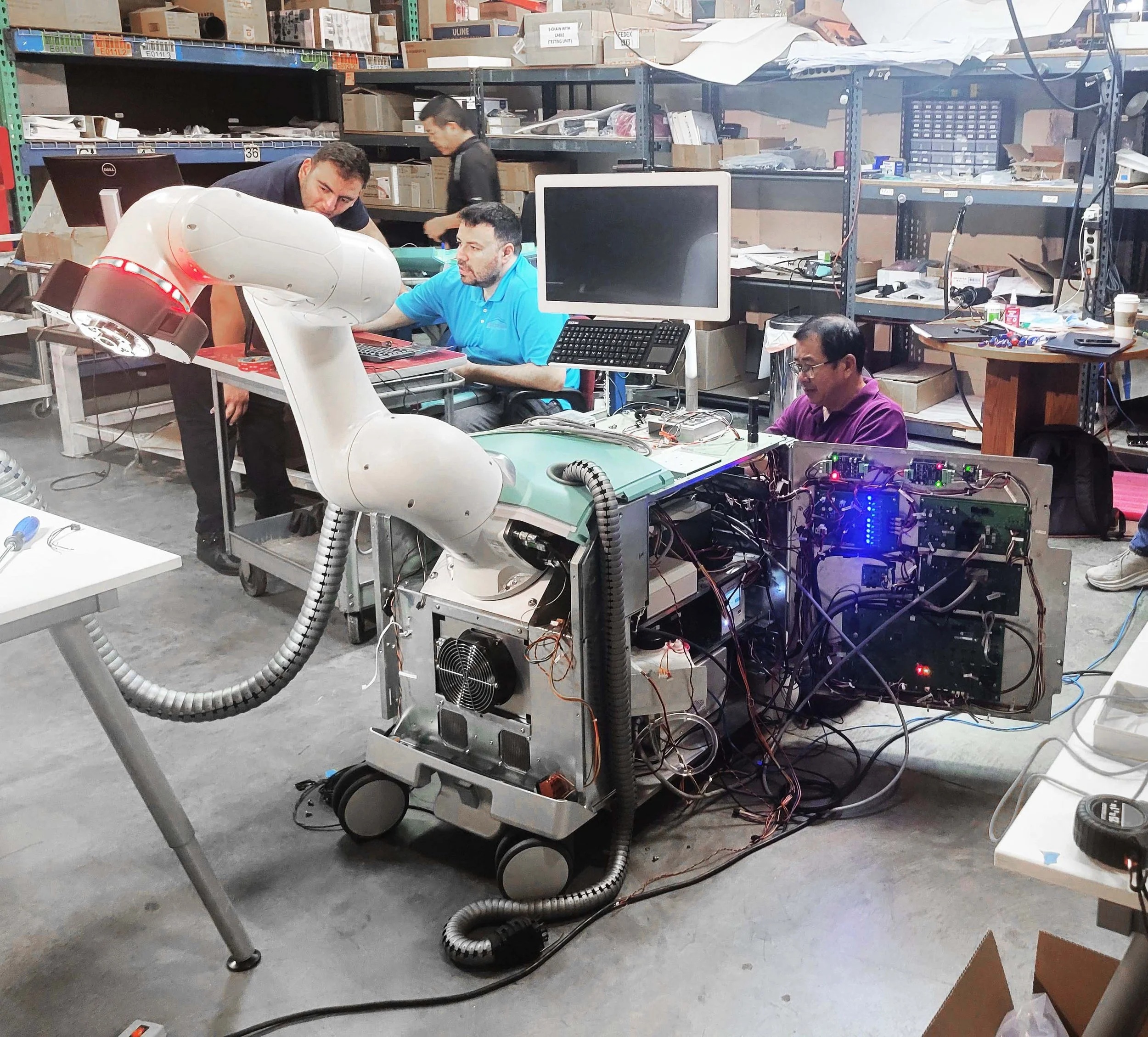
The affiliate’s testing menu gets more specific still: ground continuity, high-potential voltage tests, vacuum testing, optical inspection and X-ray inspection of circuit boards are among the listed capabilities. It says testing follows each project’s specifications. Those details describe the kinds of faults the work is meant to catch, from pressure leaks to problems in electrical assemblies.
That makes a useful purchasing distinction. A prototype can demonstrate a function; a testing plan defines what will be examined and against which requirements. A customer should know which tests belong to its project and what records it receives. The relevant question is whether the agreed work addresses the product’s actual requirements.
Buying the right slice of the workshop
Design Catapult’s business model is built around contracted services. Its published FAQ says pricing depends on scope and that clients can engage it for particular phases after an evaluation. It describes enterprise customers using engineering help, while smaller businesses may outsource a broader stretch of development. The commercial offer can therefore change with the customer’s existing capabilities.
That flexibility helps locate the firm among the alternatives. A company could hire internally, commission a design studio, retain an engineering specialist or work with a contract manufacturer. Design Catapult’s proposition brings several of those functions into one development relationship. Buyers should compare the responsibilities included in each proposal, alongside the price.
My reading of that offer is that it fits best when a physical product needs several disciplines to work together and the client wants help across their boundaries. A team that already has a settled production package may have a narrower manufacturing brief. A business needing only a small graphic-design assignment should weigh how much of this broader capability it actually requires.
A useful opening brief would identify the intended user, the product’s essential functions, the work already completed and the next decision the customer needs to make. It would also distinguish prototype spending from tooling and production spending. Those are practical ways to make a scope-based quote easier to assess.
There is room for a little personality
The company’s recent public updates include its work with Empyrean Medical Systems on the Artemis 320 preclinical irradiation platform. Another looks back at graphics for a Freedom Innovations prosthetic running foot, describing artwork intended to follow its curved geometry. These posts show different scales of contribution, from an equipment collaboration to a specific visual-design assignment.
That running-foot example is a pleasing detail. A functional object still has a public face, and somebody has to decide what it looks like in motion. Set it beside the cold-brew machine and the hospital cart, and Design Catapult’s work becomes easier to picture: a succession of distinct briefs, each requiring its own mix of form, function and production decisions.
For prospective customers, the portfolio offers a place to begin that conversation. Pick a relevant project. Ask which parts the firm handled. Then ask what the next stage of your own product needs to produce. Somewhere between the handle, the circuit board and the shipping box, the assignment starts to become specific.
Explore the work
Visit the company website, browse its design portfolio and engineering projects, or follow Design Catapult on LinkedIn. For production capabilities, explore Design Catapult Manufacturing. Read CorVent’s collaboration announcement and John O’Mahony’s account of the venture.