There is a useful little mystery hiding inside a Pelican case. Pelican was already very good at making containers that could survive indignities. The problem was not toughness. The problem was that a rugged box, left to its own devices, looks like a rugged box. It waits for a camera operator, a field scientist or someone carrying equipment with a federal inventory number. Lifestyledesign was asked to widen the invitation.
The Santa Barbara studio did not begin by rounding a corner or choosing a latch. It studied what it calls personal gear management: what people carry, how they sort it, where they take it, and what makes protective equipment feel at home in daily life. Out came two products, the Ruck and the Go Case, aimed at distinct users. One shell acquired a removable tray, a flexible wall and a web of loops and straps. The object was still unmistakably Pelican. The audience was no longer quite so predictable.
That move - broaden the question before narrowing the form - explains a surprising amount about Lifestyledesign. Founded in 2002 by Marc Tappeiner, previously a director of product design at BMW Designworks in California, the company sits in the seam between a strategy consultancy, an industrial-design shop and a product-development department. Its clients have included Pelican, House of Marley, Serengeti, Costa, Scosche, Vuzix, FluidStance and Bureo. The studio says it has delivered more than 500 products to market.
Its product is continuity
Design agencies usually describe themselves with nouns: strategy, branding, engineering, packaging. Lifestyledesign is more intelligible as a verb. It follows. The studio can enter upstream, while a company is still deciding what opportunity deserves investment, then remain through research, product roadmaps, industrial design, color and material work, prototypes, engineering coordination, sourcing and factory liaison.
The distinction matters because the vulnerable moment in physical product development is often not the grand presentation. It is the handoff after it. The strategist's useful insight becomes the designer's elegant rendering, which becomes the engineer's compromised housing, which becomes the supplier's interpretation. Every transfer sheds context. Lifestyledesign's commercial proposition is that one cross-disciplinary group can carry more of the original intent through those transfers.
That does not make the studio the manufacturer, nor does it make the journey cheap. Industrial design accumulates costs in specialist time, models, tooling, testing and iteration. The company does not publish project fees. What it sells is a way to spend that budget with fewer contradictions between brand promise and manufactured reality. The model is B2B and project-led, serving both established brands and startups. A client can hire a slice of the process, but the studio plainly prefers to arrive while the question is still soft.
The brief before the brief
House of Marley is the best example because, at first, there was barely a conventional brief. An academic case study based on an interview with Tappeiner recounts that entrepreneur Alon Kaufman and Rohan Marley arrived with the idea for a new brand and effectively asked what the designer wanted to do. Lifestyledesign answered by covering walls with an immersive visual world built around Bob Marley.
This was not decoration. It was a decision engine. Research into music, fashion, audio and the Marley legacy produced a market position, then a family of speakers and headphones, packaging and identity. Bamboo faces and the studio's specified REWIND fabric gave the products a material grammar. The Get Together speaker did not need a paragraph on a shelf to explain natural warmth, music and environmental intent. It could do that with its face.
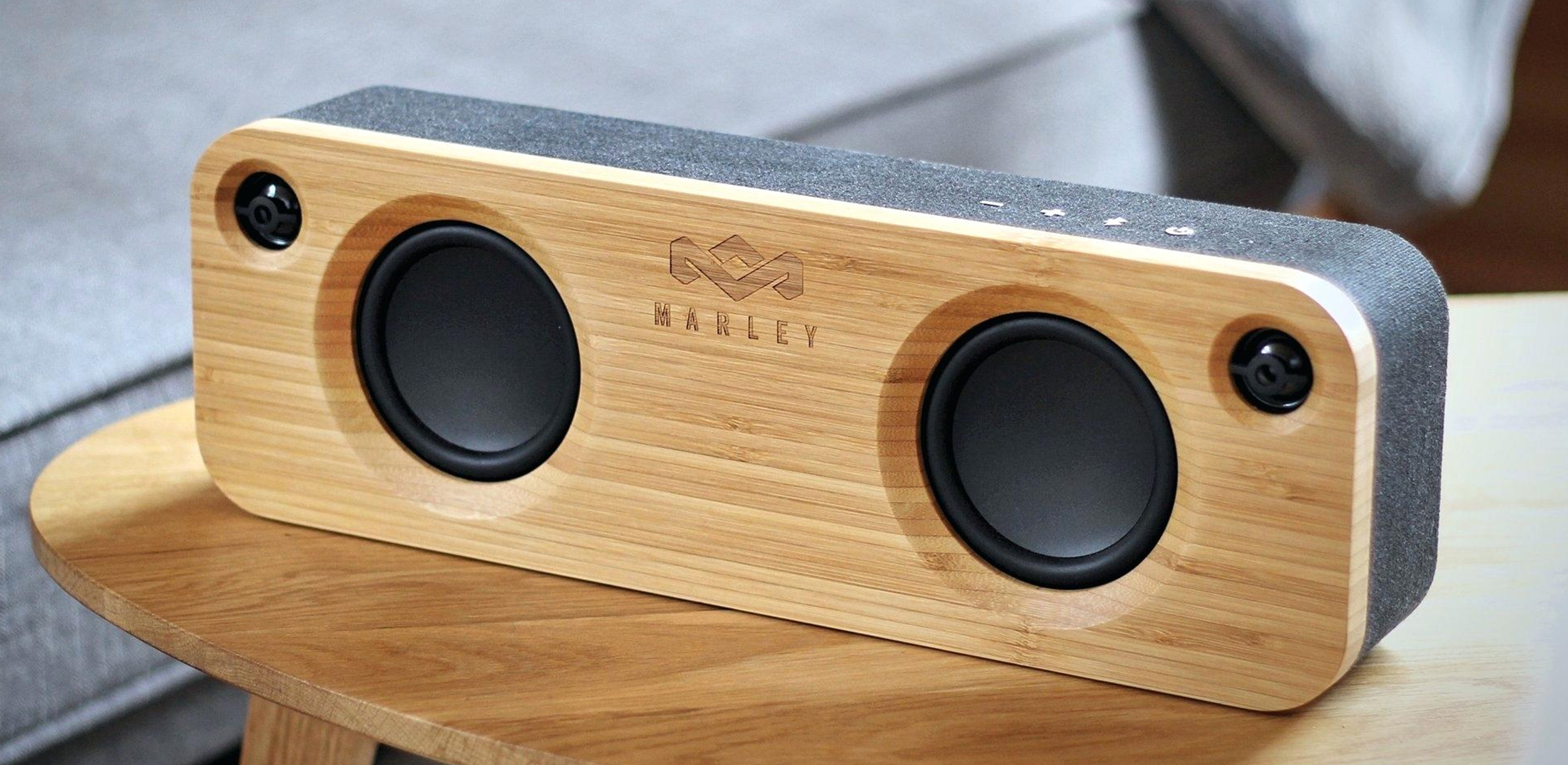
The useful thing about a strong product language is not that every object matches. It is that dozens of small decisions stop arguing with one another.
The earliest thing to fail in this sort of work is often the assumed frame of the problem. Pelican did not merely need another box. House of Marley did not merely need a speaker skin. Vuzix did not merely need smaller smart glasses. Its Blade 2.0 project had two kinds of bulk: actual mass and perceived mass. Reconfiguring electronics addressed the first; familiar eyewear proportions, surfaces and details addressed the second. The studio changed the argument from “How do we display the technology?” to “How do we make the technology acceptable on a face?”
Make this object look more desirable.
What must change for this product to belong in someone's life?
Materials are allowed to argue back
Bureo brought a different resistance. Its sunglasses were to be made from discarded fishing nets, a recycled material with stubborn color and texture. Pretending it behaved like pristine plastic would have made sustainability a manufacturing headache hidden behind marketing. Lifestyledesign instead used bold linear textures and a contrasting metal insignia. The limitation became the visual signature.
FluidStance posed another version of the same test. Its Plane Cloud balance board had to keep a standing worker moving without becoming a distraction, while using recycled materials. The team researched ergonomics, rigid recycled plastic for the base and softer recycled material for the deck, then iterated with engineers, material suppliers and tooling partners. The final product uses a post-industrial HDPE base and a top made from recycled low-emitting tire rubber. Sustainability here is neither a leaf icon nor a sermon. It is an argument settled among geometry, feel, supply and tooling.

The laboratory is outdoors
Santa Barbara is more than an attractive return address for this portfolio. Much of the studio's work lives where equipment meets a body under pressure: sunglasses for anglers, ski goggles, cases in rain and dust, speakers around water, wearable technology on a face. The studio has worked in eyewear for more than 20 years. In 2024, Serengeti announced that Lifestyledesign would lead design of new collections, extending a relationship that had produced frames such as Geary, Boron, Spello and Tellaro.
This market position is narrower than “we design anything,” but wider than a category boutique. The connective tissue is lifestyle hardware: products whose technical credibility and cultural credibility must arrive together. Competitors include large industrial-design consultancies, specialist brand firms, engineering houses and internal design teams. Lifestyledesign's defense is not a recognizable house shape. It is fluency across the borders those alternatives sometimes preserve.
That approach has limits. It depends on access to users, decision-makers, engineers and suppliers. It works best when a client can commit early, share constraints and tolerate discovery before convergence. A late cosmetic rescue, a fixed specification with no room to move, or a procurement system that splits strategy, design and manufacturing into isolated bids will erase much of the advantage. The method also cannot make weak unit economics or an indifferent market disappear. Better continuity reduces self-inflicted mistakes; it does not suspend physics or demand.
What another team can steal
The copyable lesson is procedural, not aesthetic. Start by writing the behavior before the object. Name the person, setting and awkward moment. Keep the research visible enough to judge later choices. Make a material confront the prototype early. Ask engineers which millimeters are real and designers which millimeters merely look heavy. Give one person or one small group custody of the intent across handoffs. Then test every clever detail against the business case that is supposed to pay for it.
This sounds less thrilling than “invent the future,” which is why it is useful. The studio's portfolio is full of modest evidence: the loop that makes a case adaptable, the bamboo that makes a speaker legible, the side shield that lets fishing eyewear change conditions, the bottle opener that admits where an outdoor speaker will actually go. A category is rarely created by one grand gesture. More often, it is created when enough small decisions agree on the same customer.
That may be Lifestyledesign's most persuasive achievement after 24 years. Five hundred products do not prove that every bet worked, and the company does not publish the economics of individual engagements. They do show repeated passage through the unglamorous gates between an idea and a thing somebody can buy. The sketch matters. The discipline is knowing what must be true before the pencil touches the page, and staying around after it lifts.