A diagnostic instrument can have promising science inside and an unhelpfully wobbly chassis outside. When Cambridge Design Partnership helped QuantuMDx develop its Q-POC testing system during the pandemic, parts of the existing structure could flex and twist. One answer was decidedly physical: replace them with a single machined block.
CDP also simplified electronics and assembly, removed functionality unnecessary for the immediate COVID-19 test, and preserved room for future additions. Its case study describes more than 30 specialists working across disciplines, making over 100 core design changes and delivering 45 instruments in five months. The achievement was a system that could be built, tested and documented under pressure.
That is a useful introduction to a company whose name might suggest an elegant chair or a handsome brochure. CDP works on the awkward business of making products usable, technically sound and manufacturable. Its customer list crosses diagnostic equipment, folding bicycles, kitchen utensils and electric-vehicle infrastructure. The common problem is the distance between a good idea and something another person can reliably use.
A business born before the drawing board
Mike Cane and Mike Beadman founded CDP in 1996 after their employer rejected a proposed team organized around users’ needs. Matt Schumann joined in 1998. Their early work included a skin-diagnostics prototype assembled with a borrowed tank gunsight. Schumann later recalled: “It looked like some form of Frankenstein’s monster, but it worked”.
The project became Astron Clinica, a spin-off that taught the founders how slowly medical markets can develop. Their retrospective describes a small, single-product company struggling to build a market quickly enough. CDP sold it in 2001. The experience reinforced the value of early clinical work and helped shape a consultancy that could spread its expertise across multiple clients.
Today, CDP’s services extend from opportunity research to electronics, software, mechanical engineering, human factors and production support. It can join an existing program at a troublesome stage. A client does not have to arrive with a blank sheet, or surrender its own engineering team, to make use of the company.
The wrong knife was the right clue
Consider a decidedly unglamorous research venue: somebody else’s kitchen. DKB Household wanted a knife range that could compete in the US market. CDP researchers and designers watched people prepare meals, looking at the tools they chose and the grips they actually used.
One observation changed the brief. Some women preferred a small knife because it felt more manageable, even when a larger blade would have handled the task more easily. The company followed its observations with quantitative research, testing how widely needs were shared. Confidence and control became design requirements.
The resulting Zyliss Control range incorporated four patented control points in the blade and handle. Production was scheduled three months after the project began, according to CDP. The transferable lesson is wonderfully ordinary: watch the decision before redesigning the object. A person choosing an unsuitable tool may be telling you something the specification has missed.
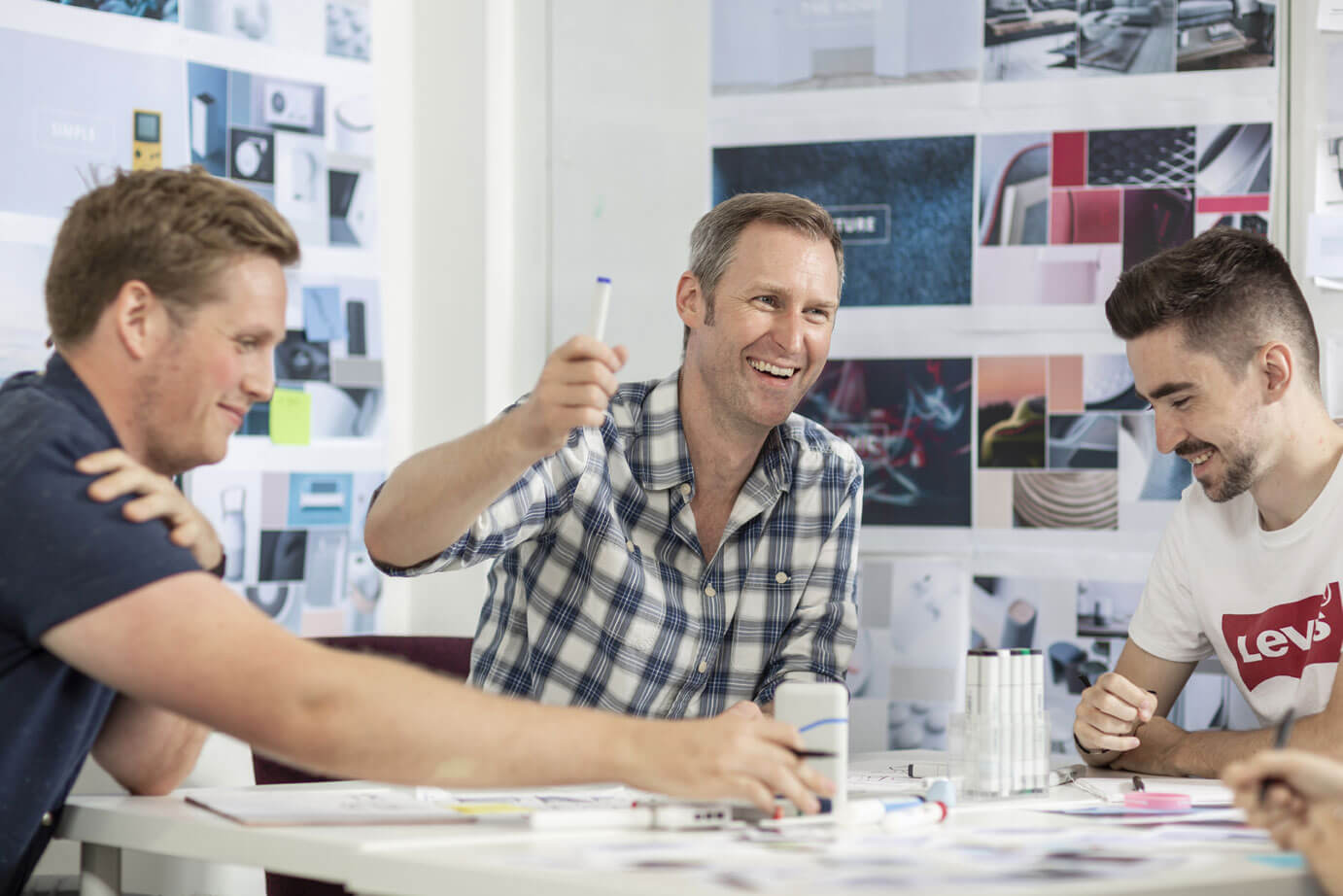
CDP’s human-centered design practice includes packaging, digital interfaces and usability engineering. In healthcare, that work also feeds formal assessments of how people interact with devices. It gives the company a way to connect the experience of opening, holding or operating a product with the technical decisions buried inside it.
Sometimes the breakthrough is a better sheath
MysteryVibe’s Crescendo faced a different obstacle. Manufacturing quality problems threatened the flexible vibrator’s launch. CDP investigated the causes, concentrating on its silicone sheath. Using 3D-printed mold tools and production materials, the team could try changes quickly, then extend testing with a prototyping supplier.
The material and construction had to let the product bend and keep its shape, feel right and remain suitable for contact with the body. Manufacturing planning included preventing contamination. CDP transferred the resulting process knowledge to the initial manufacturer while permanent tooling was developed, helping MysteryVibe fulfill early orders without depending on a single supplier.
It is a revealing assignment because the attractive idea already existed. The commercial obstacle lived in the relationship between geometry, material and process. The practical move was to make that relationship testable before committing to the next manufacturing step.
- 01ObserveFind the real difficulty
- 02TestChallenge the assumption
- 03RefineUse realistic materials
- 04TransferMake the method repeatable
Editorial synthesis of CDP’s project examples.
A bicycle gets cross-examined
Brompton asked CDP to examine a new prototype for safety, reliability and performance with launch approaching. The team dismantled and reassembled the bikes, carried them, folded them and rode them. It then worked alongside Brompton’s designers on a Design Failure Mode and Effects Analysis: a structured examination of what could go wrong and what the consequences would be.
The review considered demanding situations, including heavy braking on long descents in hot climates. Its output helped Brompton direct design changes, testing and discussions with suppliers. This was specialist engineering capacity brought into an established product organization. The outsider’s contribution included questioning assumptions that familiarity can make difficult to see.
For Vortex Biosciences, the object under examination was a disposable cartridge used in a system that isolates circulating tumor cells. CDP studied possible failures and tested design and manufacturing improvements, including changes for laser welding. The assignment connected the cartridge’s laboratory function with its prospects for reliable production.
Together, these examples explain the consultancy’s place in the market. Companies buy additional technical judgment and the means to act on it. The work can be a focused review, a component redesign or a larger development program. The appropriate unit of purchase is the problem to be solved.
A car park in a container. Warmth in a wall.
For 3ti Energy Hubs, CDP helped turn a concept into Papilio3, a pop-up solar charging hub launched in May 2022. Workshops established requirements; engineers combined custom components with available parts and selected partners to build, assemble and test the prototype.
The design uses a recycled shipping container as its base and provides 12 charging points, combining solar generation, mains electricity and battery storage. The first unit was installed at Surrey Research Park. Its deployment logic matters as much as its silhouette: ordinary freight transport and limited site work were part of the product proposition.
CDP’s Antarctic hackathon entry shows the same willingness to inspect the brief. British Antarctic Survey asked for energy-storage ideas for Rothera. The team’s analysis found that heat accounted for much of the station’s demand, directing attention toward keeping people warm.
The winning proposal included phase-change panels to store heat in buildings, controlled temperature variation and prompts to shift flexible activities toward periods of energy surplus. These were proposed measures from a 2021 challenge, rather than a claim that CDP had retrofitted the station. Reliability and repairability in a remote environment favored established technologies over speculative ones.
The useful habit here is to name the service people need before choosing the equipment. “Energy storage” leaves many possible answers. “Keep this building comfortable through a supply interruption” supplies a much sharper test.
The factory is part of the design
CDP sells commissioned development work. Clients own the showcased brands and products; the consultancy supplies research, specialist staff, engineering and manufacturing support. Its manufacturing service explicitly includes cost-of-goods estimation, supplier selection and process development, with clients retaining the process intellectual property.
Cost therefore enters the design conversation through materials, assembly, tooling and the route to volume. CDP’s offer includes short production runs for testing and trials, allowing teams to learn before arranging larger-scale manufacture. The financial question for a buyer is whether the next piece of evidence justifies the next commitment.
Potential alternatives include an in-house development team or the broader Cambridge contract-R&D market, represented by businesses such as Cambridge Consultants, TTP and Sagentia Innovation. The useful comparison is project-specific. CDP’s combination of user research, engineering and pilot production is particularly relevant when a problem crosses those boundaries.
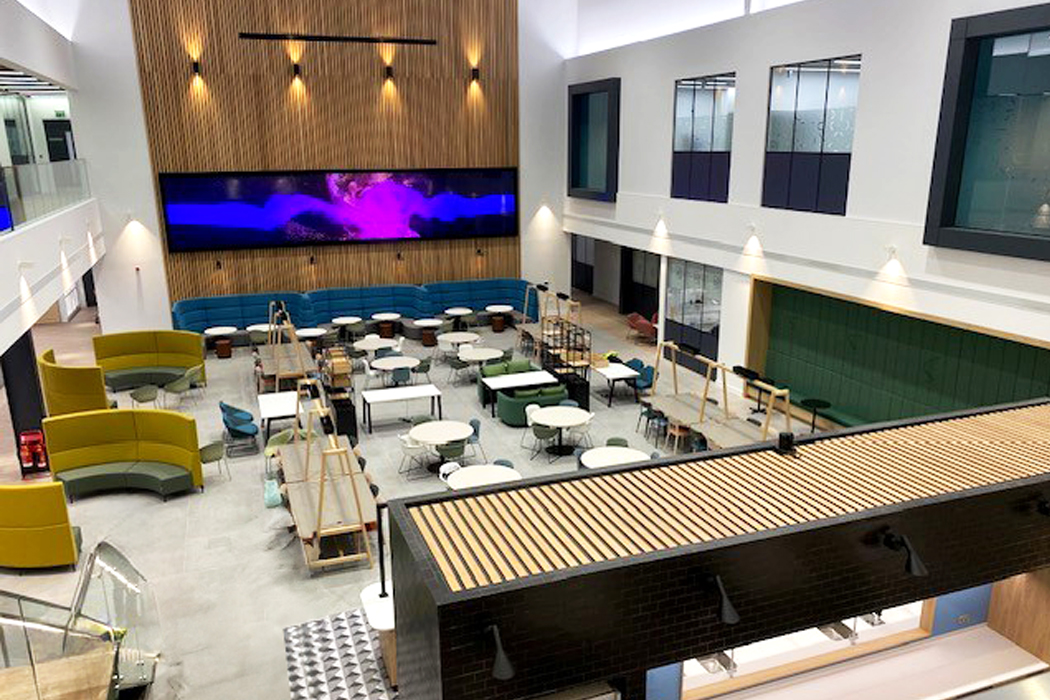
The facilities support that proposition. CDP describes observation suites, workshops and laboratories in the UK and a Raleigh R&D center with a machine shop and pilot manufacturing space. It reports certified systems for medical-device quality, general quality management and information security. Those arrangements support disciplined development; they do not substitute for the evidence a particular product needs.
The employees own the next chapter
In 2018, CDP placed its shares in an employee ownership trust. The founders presented the decision as a way to preserve control, involve staff and expand without external shareholders. An elected employee council formed part of the announced arrangement. Ownership gave the word “partnership” a concrete institutional meaning.
The structure remains in place as leadership changes. In July 2026, CDP announced Nigel Hall as Chair, effective July 6, following appointments that included Wade Tipton as CEO and Chris Jones as CFO and Board Director. In August, it announced James Harmer as Head of Consumer Packaged Goods, emphasizing the pressures on product and packaging businesses.
The method is less dependent on a particular leadership name. Observe a real difficulty. State the uncertain assumption. Test it with enough realism to change the decision. Bring manufacturing knowledge into the room while the design can still move.
“the clock is ticking, and the meter is running”
Ben Strutt, discussing product development in a 2019 Red Dot interview
That sequence requires access to users, candid collaboration and a business willing to alter its plans. It loses its value when research merely decorates a predetermined answer. Strutt’s interview also argues for stopping when user need, enabling technology and commercial value cannot be reconciled. Some problems reward another experiment. Others deserve an early, well-supported decision to spend the money elsewhere.
Inside the workshop
Explore CDP’s website, its project portfolio and news and analysis. Follow the company on LinkedIn, X or Facebook.
Watch The Innovation Stream interviews, or read Ben Strutt on design and work culture.