The box is the easy part to see. A hard drive arrives, a retailer updates its stock, a reseller sends an invoice. Less visible is the work that made the sale possible: deciding whether the equipment fits, persuading somebody to buy it, arranging payment and answering the phone when something goes wrong. CMS Distribution has built its business in that busy space between the manufacturer and the customer.
Its catalogue spans enterprise storage, software, cybersecurity and consumer electronics. Its customers are the businesses that sell or manage technology for others: corporate resellers, managed service providers and retailers. The trade-only model puts CMS one step behind many familiar purchases. That position can look expendable until someone has to perform all the jobs attached to it.
The interesting question is how much of that work a distributor can take on. CMS’s answer includes technical specialists, Amazon account support, credit and delivery. The evidence is more revealing than the label “value-added”.
01The floppy disk that opened a sales channel
Frank Salmon founded the business in London in 1988 as CMS Peripherals. One early product, Megalink, tackled a problem familiar to anyone who has ever owned the wrong adapter: desktop computers and portable machines were using different floppy-disk formats. The solution helped move data between the 5.25-inch and 3.5-inch worlds.
A useful piece of hardware also became an introduction. Recalling the beginnings in 2019, Salmon said Toshiba approved the product and started connecting CMS with its resellers. The opportunity expanded from making something work to helping other businesses sell it.
“Following Toshiba’s approval, they started introducing us to their resellers.”
Frank Salmon · Recalling Megalink’s early reception, 2019
By 1990, CMS had shifted from systems integration toward storage distribution. There is a lesson here for founders with an unglamorous product: an awkward compatibility problem can put you in the right room. The next opportunity may come from the people who need to recommend, demonstrate or deliver your fix.

02A storage sale, with Tesco at the other end
Consider a customer account published by CMS. Computacenter’s Gary Cannon describes the distributor’s contribution to a Tesco network-attached storage project using Synology technology. CMS arranged a proof of concept and helped with technical discussions, including work at Computacenter’s Hatfield configuration centre. Cannon credits both the commercial and solutions teams.
That is a useful distinction in a business full of partner logos. Computacenter was the customer-facing provider; Tesco was the end customer. CMS helped the provider establish that the proposed technology could do the job. A distributor’s value can begin well before anyone checks warehouse availability.
CMS offers free access to presales technical expertise, alongside design, demonstrations and validation. Deployment and support extend the relationship beyond the quotation. For a smaller reseller, that can mean bringing a specialist into a deal without first building an entire specialist department.
- 01VendorMakes the technology
- 02CMSHelps prove and supply it
- 03PartnerServes the end customer
The practical move is to start with a customer requirement and ask for validation before quoting. A demonstration should answer the buyer’s actual question. Buying access to expertise is useful only if somebody knows what needs proving.
03The Amazon listing needs a back office
On the consumer side, the obstacles look different. A brand can have a good product and still struggle with listing content, advertising, purchase orders and fulfilment. CMS’s Amazon services cover both Vendor Central, used in selling to Amazon, and Seller Central, used by marketplace sellers. It offers content optimisation, advertising support, account administration and several fulfilment routes.
The menu illustrates how distribution has absorbed jobs from elsewhere. A warehouse does not write a persuasive product page by itself. An advertising campaign does not resolve a shipment discrepancy. Bringing those tasks together gives a brand one place to discuss how a product will reach a shopper.
CMS also maintains a channel marketing operation for vendor launches and campaigns. The useful question for a potential client is specific: which missing capability will this team supply? Content production, a launch plan and customer follow-up are different purchases, even when one company offers all three.
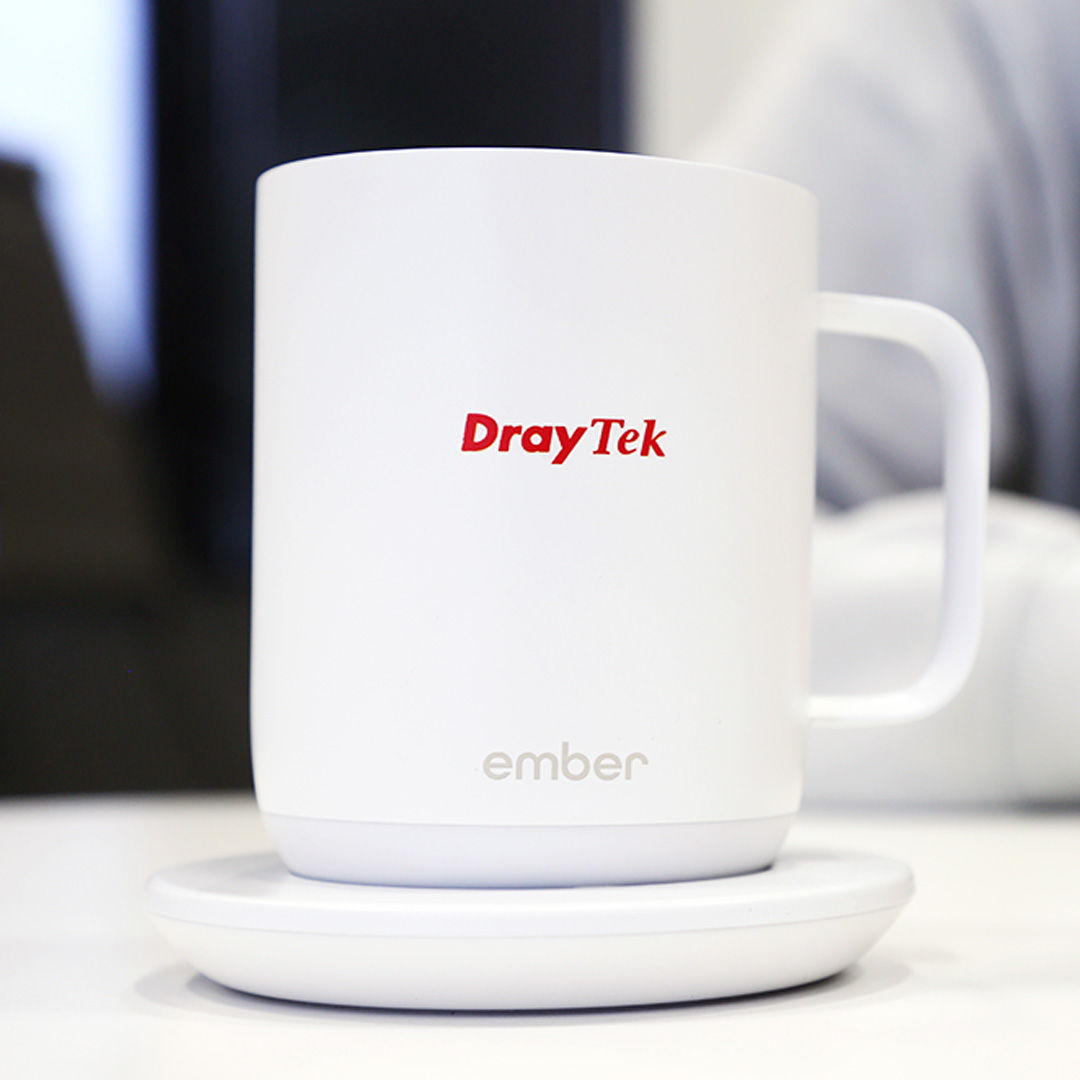
Then there is the mug. CMS’s branding service can print, engrave or embroider selected retail products for corporate gifts and events. One example is a DrayTek-branded Ember temperature-controlled mug. A business capable of discussing enterprise infrastructure can also help keep the coffee warm.
04A big turnover, a narrow margin
CMS sits within privately held Storit Limited. For 2025, the parent group reported turnover of £594.997 million and EBITDA of £23.899 million. Those are consolidated group figures. Revenue grew 4.2%; EBITDA grew 29.8%. The group attributed its progress to disciplined pricing, supply-chain work and operating efficiencies.
The resulting EBITDA margin was roughly 4%. There is little room in such arithmetic for sloppy execution. Large sales totals need to be read alongside the earnings retained from them.
For a reseller, the immediate cost questions are closer to the order. CMS’s store has no minimum order quantity or value, according to its FAQ. Buyers need an account; credit is subject to approval. A quotation still needs to account for delivery, product pricing and any additional services. No minimum order is an invitation to buy, not a promise that every small transaction is equally economical.
Returns deserve the same attention as the purchase. CMS requires a return merchandise authorisation, and its FAQ says the authorised goods must be returned within 14 days of the number being issued. That is a deadline within its returns process, rather than a general promise to take anything back. For a reseller, knowing the procedure before a customer calls is part of protecting the margin on the original sale.
Salmon was discussing this pressure years earlier. In a 2016 CRN profile, he pointed to declining margins and their effect on channel credit. Distribution’s commercial challenge was already tied to the money needed to keep products moving.
05Buying the company is only the beginning
Acquisitions have widened CMS’s reach. In 2016, its Widget purchase brought an interest in Sweden’s Newgen; CMS subsequently increased that holding above 50%. Newgen was to remain separately managed. By September 2025, the business had adopted the CMS Distribution Nordics name.
That nine-year interval is a reminder that ownership, operating integration and branding can run on different clocks. CMS describes its approach as “glocal”: international scale with local knowledge. The word is awkward. The operating question behind it is sensible: which decisions benefit from a shared system, and which need someone who knows the customers?
Cables Direct supplies a more physical answer. Acquired in 2023, the cabling and connectivity specialist completed integration into CMS in June 2026. Its fulfilment moved to the central logistics operation in Castleford. A broader product range is useful; getting those products through the same operation is another piece of the work.
CMS has also bought tools to improve the warehouse itself. Balloon One announced a HighJump Edge warehouse-management project intended to reduce fulfilment time and costs. The aim underlines a recurring theme: the company selling technology must keep investing in how it handles technology orders.
06The catalogue keeps changing shape
The 2026 agreements show CMS selling into several different customer problems. In April it expanded its relationship with Legrand into uninterruptible power supplies, building on an existing Raritan offering. A reseller buying rack infrastructure could also discuss the backup power needed to protect it.
In July, CMS signed BigPanda for the UK and Ireland. The enterprise software company targets the fragmented information and manual coordination surrounding IT incidents. CMS’s promised contribution includes recruiting partners, training them and developing demand. Getting software into a catalogue is only the first step toward getting a reseller comfortable selling it.
September brought eSentire. The partnership makes managed detection and response available through CMS’s UK and Irish network, with round-the-clock security operations expertise, threat hunting and incident response capabilities. It gives partners access to a service that requires substantial specialist resources behind the scenes.
These deals place CMS among distributors serving increasingly complicated combinations of hardware, software and ongoing services. Alternatives include Ingram Micro, TD SYNNEX and Westcon-Comstor. A buyer’s comparison needs to reach beyond catalogue size: vendor authorisation, local availability, relevant expertise and the terms of a particular account all matter.
07The people between the promises
CMS packages its internal values into the acronym POPE: People, Operational Excellence, Profitable Growth and Exceeding Expectations. It describes an emphasis on personal development plans and in-house learning specialists. In this business, the connection to the customer is direct. Product knowledge has to survive the handoff from a vendor to a salesperson to a reseller.

Service scope matters just as much as product knowledge. CMS advertises on-site support packages and, for certain vendors, four-hour response times. The qualification is the point: a reseller needs to know which products, locations and contracts a promise covers. Put those boundaries into the customer conversation early. An impressive response time on a services page is useful only when it applies to the equipment being sold.
The approach has limits. A company that already has direct vendor access, strong engineers and dependable fulfilment may gain less from an additional intermediary. That is a commercial inference, not a verdict on any particular CMS account. Equally, a reseller should establish the scope of technical support and territorial availability before promising either to a customer.
What another business can copy is the attention to the unfinished job. Find the obstacle between a product and its buyer. Demonstrate the answer, assign responsibility for delivery and support, and price the work. CMS began with data trapped on the wrong kind of disk. Its catalogue has changed; customers still need somebody to make the next step possible.