Before a business can sell a bag of candy, several parts of that business must agree that the candy exists. The warehouse needs a location. Sales needs availability. Finance needs a price. In 1999, Hershey discovered the consequences when those connections falter. Its enterprise software rollout ran into trouble ahead of Halloween. The candy was real. Getting orders through the system was the problem.
- SAP Americas brings SAP’s enterprise software to customers across the region.
- The pitch: connect finance, people, suppliers, production, and orders.
- The hard part: changing data and working habits while business continues.
The Halloween test
The project cost roughly $112 million, according to contemporary reporting. That covered a multi-vendor implementation, including SAP R/3 and companion applications, rather than a SAP license alone. Order-processing difficulties interfered with shipments during a crucial selling period. A software purchase had become an operational problem, with retailers waiting at the other end.
Then came the less familiar sequel. Hershey stayed with SAP. Working with Accenture, it began another upgrade in July 2001 and completed it in May 2002. The company reported that the resulting system handled more than 95% of its revenue and business transaction processing. The lesson is narrower than either a victory lap or a warning against ERP: implementation changes the outcome.
“It’s a long-term implementation”
James Dever, SAP spokesman, discussing Hershey in 2002
The sequel gives buyers something concrete to examine: a retained supplier, a new implementation effort, and a reported operational result. Taken together, the two rollouts show why the same software brand can appear in accounts of both disruption and recovery.
One purchase, several departments
SAP Americas occupies this territory between a contract and a working business. It is SAP’s regional operation across North America, Latin America, and the Caribbean. SAP SE is the German parent. SAP America, Inc. is the U.S. legal entity listed at the Newtown Square address. Those names overlap in everyday conversation, but their financial figures should not.

The underlying idea goes back to 1972. Five former IBM employees founded SAP around standard software that could connect business processes and make information available in real time. They worked alongside their first customer, Imperial Chemical Industries’ German subsidiary. The useful insight was practical: accounting and materials management become more valuable when their records connect.
- 01Order
- 02Stock
- 03Delivery
- 04Finance
A shared record has to survive every handoff.
Today, ERP - enterprise resource planning - applies that logic across more functions. A manufacturer can coordinate production, purchasing, inventory, and financial reporting. HR teams use SAP SuccessFactors. Procurement teams use Ariba. Travel and expense teams use Concur. Business Technology Platform supplies tools for integration and extensions. The appeal is the connection between jobs that departments often treat separately.
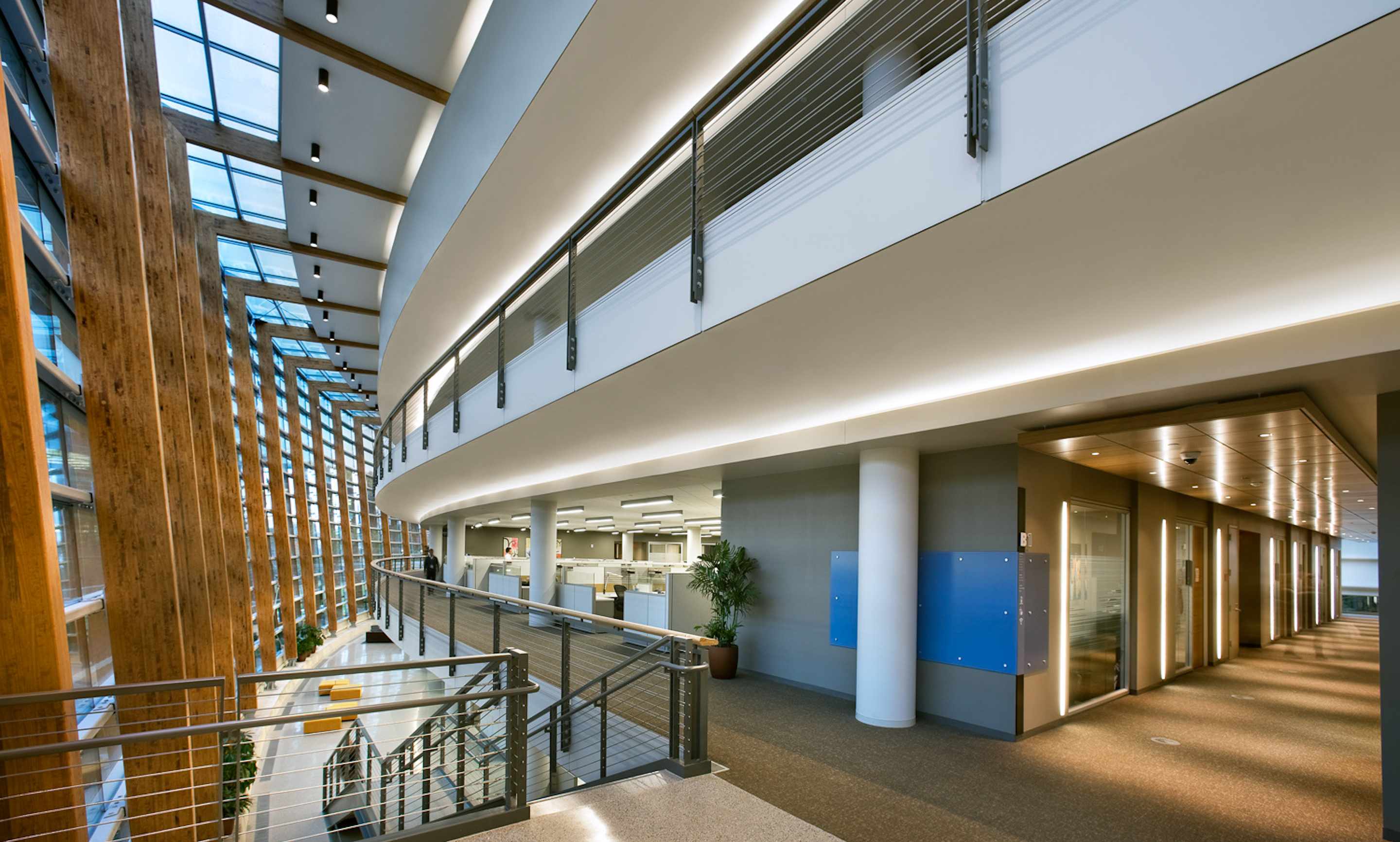
There is a local expression of that expertise. The Newtown Square Experience Center offers interactive showcases, use cases, and demonstrations. It gives customers somewhere to explore a process before committing to a project. A demonstration earns its keep when the visitor brings an awkward question: what happens when an order changes after production has started, or a supplier sends the wrong quantity?
The cloud is a contract, too
The regional customer list is pleasingly unglamorous. In its Q2 2025 Americas update, SAP said flooring manufacturer Mannington Mills selected private cloud ERP, Business AI, and SuccessFactors. Delta selected supply-chain applications for logistics visibility, process controls, and freight-cost management. These were selections, not independently verified claims of savings.
RISE with SAP helps existing ERP customers modernize and move toward cloud operations. SAP GROW emphasizes cloud adoption with standardized processes and partner support. The distinction matters to a buyer: preserving an intricate existing operation and starting with a standard operating model create different projects. Neither path removes the need to decide how the business should work.
SAP earns money from cloud subscriptions, software licenses, support, and services. Implementation partners contribute another layer of work and contracts. A serious budget therefore includes data migration, integrations, testing, training, and internal staff time alongside the software. Hershey’s historical bill is a case study, not a current price list. Buyers should ask which party owns each integration and who pays when requirements change. A subscription can be predictable while the work surrounding it expands.
Cloud revenue, € billions
SAP Group, reported annual results. These are global totals, not SAP Americas revenue.
Oracle Fusion and Microsoft Dynamics 365 offer alternative ERP paths; Infor also competes in industry applications. Workday overlaps in HR and finance. SAP’s case rests on connecting extensive operational functions and industry processes. That breadth can reduce disconnected systems. It can also make the decision bigger than a department expected.
AI meets the invoice
SAP’s AI pitch follows its original logic. Joule assistants and agents use business context to help answer questions and execute workflows. An invoice belongs to a supplier, a purchase order, and an approval process. Useful automation needs those relationships and the permissions governing them.
In February 2025, SAP announced Business Data Cloud with Databricks, combining enterprise data with engineering and analytics capabilities. In October, Databricks announced generally available connectivity for live, bidirectional data sharing without copying the data. The commercial argument is that business meaning should travel with the records.
Rehearse the handoffs
For a buyer, the copyable move is to follow one transaction all the way through. Include the exceptions: a return, a stock discrepancy, a blocked invoice. Assign an owner to each decision. Rehearse with the people who will do the work. Protect the busiest trading periods. These are editorial lessons from the case, not guaranteed deployment instructions.
A broad ERP program is difficult to justify when a company has simple needs or cannot commit people to cleaning records and changing processes. SAP publishes a culture of teamwork, transparency, and ownership; customers need comparable habits around their own rollout. The purchase becomes useful when the warehouse, finance team, and sales desk can finally trust the same answer.
Follow the work
Explore the products, people, and demonstrations.