The trouble with a roadmap is that everyone likes it once the road is obvious. Michael DiGiandomenico has built a career in the less comfortable interval, when an enterprise knows it must move but has not decided what deserves to come along. The old system is dense with history. The new system arrives wrapped in possibility. Between them sits a budget, a workforce and the awkward fact that a business cannot stop being a business while its operating spine is replaced.
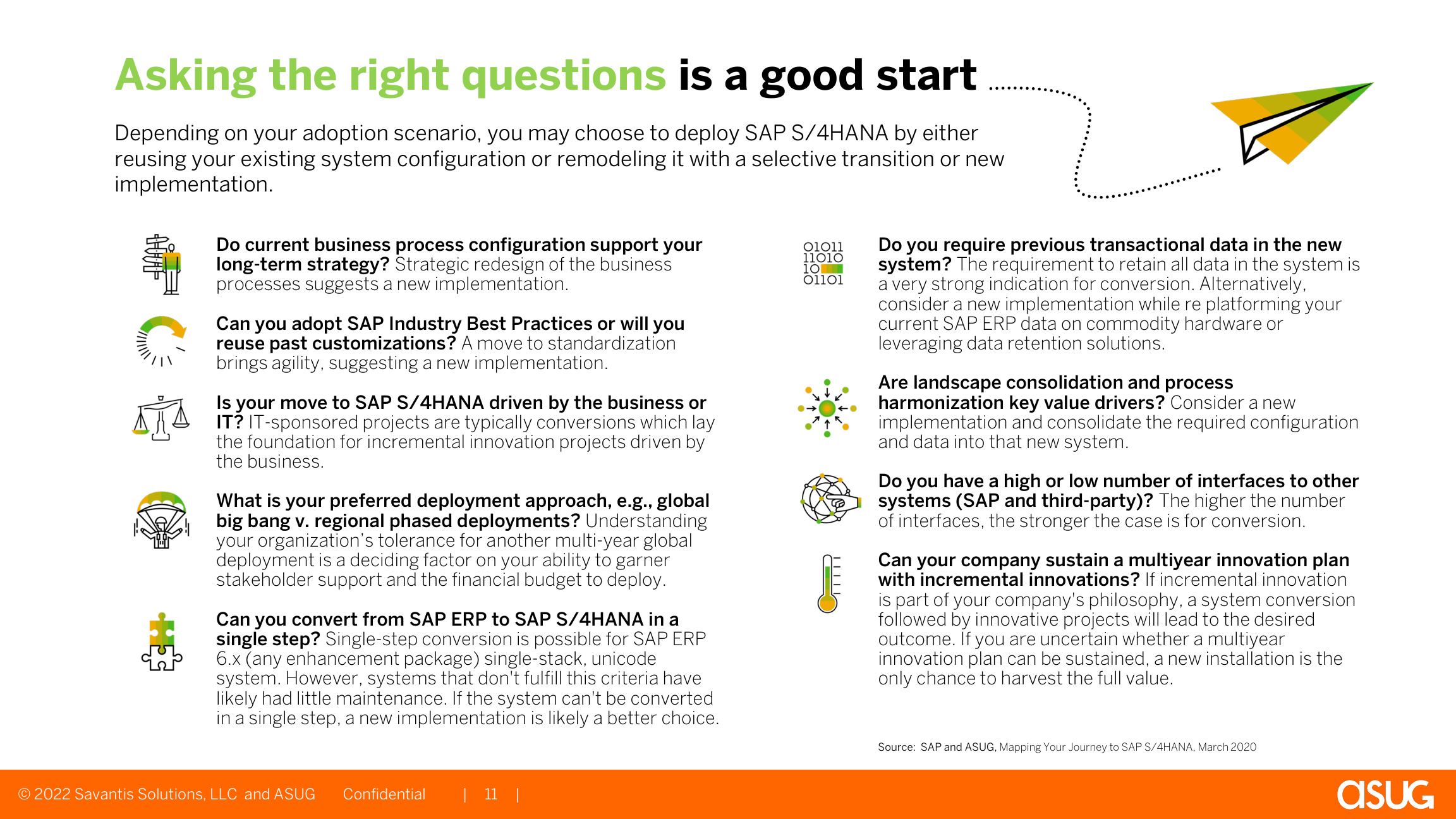
DiGiandomenico's answer is rarely a slogan. It is a sequence of questions. Does the current configuration still support the company's long-term strategy? Can the organization accept standard practices, or must it preserve years of customization? Is the move driven by technology or by the business? How much disruption can the institution actually tolerate? In his public presentations on SAP S/4HANA, these questions come before the diagrams. They are the diagrams, in human form.
That temperament suits a career that began in finance rather than computer science. At Temple University's Fox School of Business, DiGiandomenico studied finance and international business management. By 1993 he was working as a business analyst at CSC. Three years later he had moved into SAP financial consulting at Plaut Consulting. The early sequence matters. Before he was asking companies to redesign their systems, he learned to read the ledgers those systems were meant to serve.
A career written in software generations
Enterprise software ages in public. Each generation promises to repair the compromises of the last, while carrying just enough of its ancestry to reassure the people who must approve the invoice. DiGiandomenico's résumé reads like a compact history of that bargain. He earned an SAP finance and controlling certification in 1996. Around the turn of the millennium he moved into e-commerce and customer relationship management, working as a program manager and principal consultant at Perot Systems. Then came SAP itself.
From 2003 to 2012, he held roles at SAP that stretched from e-commerce and CRM practice leadership to senior delivery and the North American program management office. Those jobs put him at the junction where a product company's ambitions meet a client's installed reality. A demonstration can be immaculate. A real organization has quarter-end close, warehouses, customer records, regional variations and one indispensable person who remembers why a strange field was added in 2007.
Accenture followed, where he was a partner focused on consumer goods and services. At IBM, he worked as a partner on SAP S/4HANA digital transformation. He later operated through Dome Management & Digital Consulting, a name that gives his compact LinkedIn handle - “dome” - a second life. The organizations changed, but his territory broadened in a coherent way: finance, sales, distribution, marketing, CRM, mobile service, e-commerce, analytics, supply chain and the executive choreography required to make those functions agree.
“When you embark on a long journey, you usually don't pack heavy!”Michael DiGiandomenico, on cleaning legacy data before an S/4HANA conversion
It is an unexpectedly charming line in a presentation full of compatibility checks and migration mechanics. It also reveals the practical imagination behind his work. Legacy data is not abstract technical debt. It is luggage. Some of it is valuable, some sentimental, some inexplicably present, and every piece costs something to carry. Open transactions that span fiscal years, unused document types and accumulated custom code all make a move heavier. The metaphor makes the technical argument without pretending the decision is easy.
Three roads, and no magic signpost
By the time DiGiandomenico joined Savantis in 2020, first as chief operating officer and global head of SAP delivery, managed services and cloud, he had occupied most of the seats around a transformation program. He had been the finance specialist, the practice builder, the delivery executive, the consultancy partner and the independent adviser. In October 2021, he became CEO and president.
Savantis sells consulting, managed services and technology staffing to large and midsize enterprises. Its public language stresses industry knowledge and a position between boutique attention and global delivery. DiGiandomenico's own range fits that proposition. His speaker biography lists work in consumer products, retail, manufacturing, life sciences, chemicals, professional services, financial services, mill products and high technology. A system may be called the same thing in each sector. The reasons for changing it seldom are.
Convert
Reuse configuration and history when the existing model still serves the business.
Select
Carry chosen processes and data into a cleaner, consolidated landscape.
Rebuild
Start anew when strategy demands redesigned processes and standardization.
His framework presents three broad routes. A technical conversion preserves configuration, historical data and many established processes. A selective transition carries chosen pieces into a cleaner landscape. A new implementation allows an organization to redesign around current practices. None is automatically virtuous. A conversion can be prudent rather than timid; a rebuild can be necessary rather than extravagant. The intelligent choice depends on what the company is trying to become and what it can withstand on the way there.
This is where his finance background quietly returns. Every route converts uncertainty into a different kind of cost. Preserve the old system and the company may preserve its clutter. Start again and it may pay for data migration, testing, retraining and a long interruption of familiar work. Move selectively and the elegance of compromise can become its own complexity. Technology strategy, stripped of its conference vocabulary, is capital allocation under operational pressure.
The operator behind the adviser
Public biographies describe DiGiandomenico as hands-on, persistent and demanding of high performance. Awards on his LinkedIn profile include SAP Transformation Awards in 2007 and 2011, a 2007 Service Excellence Award and recognition as an SAP Brand Ambassador in 2010. He spoke at SAPinsider project-management conferences in 2011 and 2012, returned as a SAPinsider speaker in 2023, and has presented to regional ASUG groups. In March 2024, an ASUG Northern California agenda placed him on a session about intelligent enterprise asset lifecycle management.
The speaking record is not merely an ornamental line beneath an executive title. It tracks the way his subject kept expanding. Finance became customer relationships. Customer relationships became digital commerce. Delivery became transformation. Transformation became a question of how an entire enterprise chooses, sequences and absorbs change. His certifications tell the same story in miniature: SAP finance in 1996, CRM in 2000, enterprise portals in 2005, S/4HANA cloud in 2019, system conversion in 2020 and SAP Activate project management in 2023.
There is also a revealing difference between arriving as a founder and arriving as an operator. DiGiandomenico did not invent Savantis around his own mythology. He entered an existing firm, took responsibility for delivery, managed services and cloud, and then moved into the chief executive role. The distinction is useful. A founder can shape a company from its first habits; an operator must learn the habits already there, decide which ones deserve protection and change the rest without bringing the machinery to a halt. It is the organizational version of the migration problem he describes to clients.
Savantis itself makes that problem tangible. Its work crosses consulting, infrastructure, applications, cloud operations and talent, with teams serving customers beyond the United States. Each line of business runs on a different clock. A consulting project ends; managed service commitments continue. Staffing demand can rise before delivery capacity catches up. New technology attracts attention while older systems still require care. The CEO's task is to make these tempos coexist. DiGiandomenico's route through program offices, delivery organizations and partnerships gives him a vocabulary for that less visible part of leadership: turning promises into staffed, governed work.
The real product is not the roadmap. It is the agreement a company reaches while drawing it.
A roadmap can look like an engineering artifact, all boxes and arrows, but its hidden material is consent. Finance must believe the return warrants the disruption. Operations must believe the proposed future will survive contact with a normal Tuesday. Technology teams must believe the architecture can be built and supported. Executives must decide which cherished exceptions are truly strategic and which are merely old. DiGiandomenico's long apprenticeship across these constituencies is what makes the map credible.
There is no tidy ending to a career built around systems that are never finished. Savantis continues to work across SAP transformation, managed cloud services and staffing from its Scottsdale base, while DiGiandomenico remains involved in strategic client initiatives. The software changes names. The diagrams acquire brighter colors. The essential work remains stubbornly human: deciding what to preserve, what to abandon and how much change an organization can carry without losing its footing.
That may explain why the journey metaphor keeps returning. It is less grand than “reinvention,” and more accurate. A journey has weather, baggage, wrong turns and companions who do not always agree. It also has a destination that looks different after the travelers have moved. DiGiandomenico's particular skill has been to stand at the fork, ask the impolite practical questions, and make the route visible before the caravan begins.