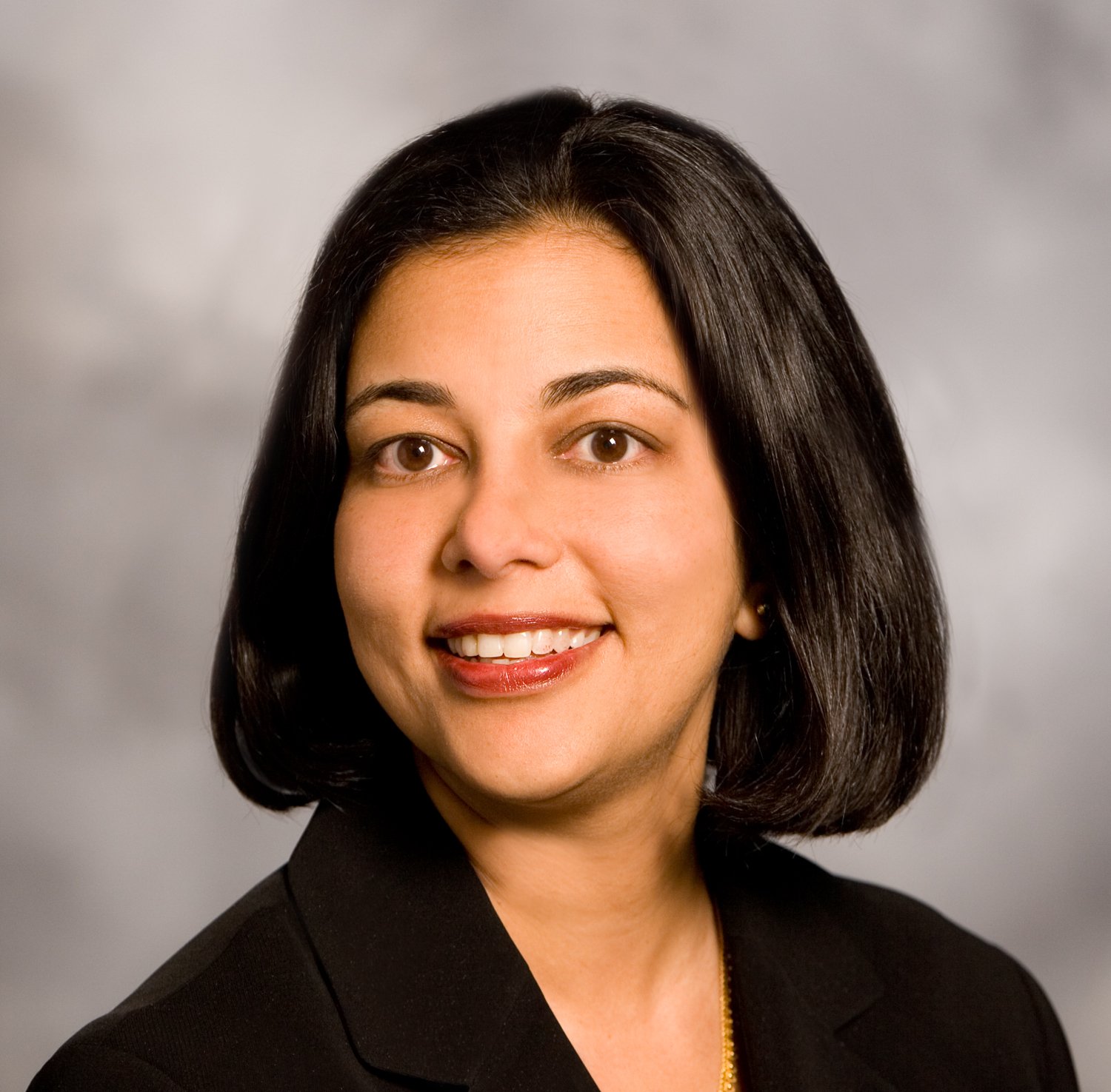
The Full Story
From Mumbai to Massachusetts
The scholarship that brought Mala Anand to the United States for her senior year of high school was a Rotary Youth Exchange - the kind of program that sends teenagers across oceans with optimism and a vague plan. She arrived in the US, enrolled at UMass Amherst for a Computer Science degree, then continued to Brown University for a Master's. The immigrant's arc she traces - Mumbai, New England, Silicon Valley, Redmond - is also the arc of the software industry she has helped shape.
Early career stops included product roles at CoroSoft (later BMC), Rapt (subsequently acquired by Microsoft), and Beyond, Inc. These were not the places anyone writes case studies about, but they are where a technologist learns what enterprise software customers actually need, as opposed to what vendors think they need. That distinction became the throughline of her career.
Cisco: Building the Billion-Dollar Portfolio
In 2007, Mala Anand joined Cisco Systems as Vice President and General Manager of the Services Product Group. The smart services portfolio she built there exceeded $1 billion in bookings. She launched more than 15 market-leading software offerings and moved the organization toward real-time analytics, machine learning, cloud platforms, and distributed computing at a moment when most enterprise technology companies were still treating analytics as a back-office function.
By 2014, she had been promoted to Senior Vice President of Data & Analytics and the Automation Software Platform Group - a title that reads like a forecast of the industry's next decade. She left Cisco in 2016, having turned a services organization into a revenue engine that the rest of the company could not ignore.
SAP's Leonardo and the Venture Capital Detour
After Cisco, Mala Anand took a path that reveals something about how she thinks: she spent time as Entrepreneur in Residence at Kleiner Perkins Caufield and Byers, one of Silicon Valley's most storied venture capital firms. Being an EIR at a VC firm is essentially an invitation to look at a hundred companies' problems and decide which ones are worth solving. She then joined SAP as President of Intelligent Enterprise Solutions and Industries, managing Leonardo - SAP's digital innovation system and one of its largest product lines.
The pattern is clear in hindsight: every role has been about turning data and automation into measurable business outcomes. Not the research. Not the demo. The outcome.
Microsoft: Redefining Customer Experience at Scale
In November 2019, Mala Anand joined Microsoft as Corporate Vice President of Customer Experience & Success. The timing was not incidental - Microsoft was deep into its cloud transformation under Satya Nadella, and customer success had become a genuine strategic priority, not a support cost to be minimized.
She spent five years building the division before her promotion to Executive Vice President in February 2026, as Microsoft reorganized to accelerate enterprise AI adoption. She now partners with Scott Guthrie on Microsoft's Quality Excellence Initiative, which focuses on engineering rigor and customer experiences at global scale - the kind of cross-functional mandate that only goes to people trusted at the highest level of an organization.
The AI metrics her organization has produced are not pilot-program numbers. They are operational. The difference between 30-40 minutes of case summarization and 15 minutes is not a research finding - it is what thousands of agents experience every shift. That is the work Mala Anand's organization is doing.
The Patents Nobody Mentions
Mala Anand holds multiple technology patents, including patents for supporting multiple-request operations and processing transactions in stateless environments. In the technology executive biography, the word "patents" usually means someone signed off on an application years ago. Here it means she was writing code and solving architectural problems directly. The distinction matters when evaluating how she talks about AI and customer systems: she knows what the plumbing looks like.
What She Is Actually Building
In a September 2024 Microsoft Cloud Blog interview, Mala Anand described a vision where AI doesn't replace the human interaction in customer service but makes it possible. When agents spend less time summarizing and routing, they spend more time actually solving problems. When misrouting drops 20%, the customer who calls with a real issue gets to the right person while still in a frame of mind to be helped.
The 2026 promotion to EVP is Microsoft's bet that this is the right approach - and that Mala Anand is the right person to scale it. She reports to Judson Althoff. She coordinates with Scott Guthrie. She runs executive sponsorship for Women at Microsoft. For someone who came to the United States on a scholarship at 17, that is quite a lot of operational surface area to hold.