managed-service-providers
(29)
Coro makes security a smaller job.
Small IT teams have plenty of security tools. Coro is betting they need fewer things to operate - and more of their day back.

Arnie Bellini and the problem of disconnected things
He spent decades connecting the moving parts of IT businesses. After ConnectWise, Arnie Bellini began applying the same instinct to Florida’s talent, digital defenses and disappearing wild places.

Nick Recker and the business of letting go
He started an IT services business in 2002. Now the Blue Alliance CEO works with founders on a harder question: how to grow beyond the company they built without losing the people who made it work.

Philip Kaczmarczyk and the business of staying familiar
Philip Kaczmarczyk has built AYCE Capital around a delicate transaction: buying an IT business while preserving the relationships that made it worth buying. His growing network stretches across Canada and the United States.

Greg Bilazarian wants to step inside the story
From local television to an Armenian newsroom and Amazon Web Services, Greg Bilazarian has spent his career learning how organizations work. At NextGen Growth Partners, he is looking for a business whose next chapter he can help run.

ElectroNeek and the case for bots without a meter
A second-hand clothing seller needed fewer clicks, not a grand AI strategy. ElectroNeek’s answer reveals why the economics of automation matter as much as the software.

Ternary wants your cloud bill to explain itself
A spreadsheet with more than 20 tabs offers a clue to Ternary’s appeal: technology spending gets easier to govern when the people making it can see what they are doing.

Vembu’s best sales pitch: get your data back
A backup is a promise. A restore is the receipt. Vembu has built its business around affordable recovery, flexible storage, and the service providers who have to answer when something goes wrong.

Unitrends and the trouble with a green checkmark
A backup can finish perfectly and still leave a business stranded. Unitrends sells the machinery, rehearsals and human help needed to get from saved data to a working day.

AppRiver and the value of picking up
The Florida email-security company found a way to sell the cloud through people. Its $275 million sale tells a story about spam filters, small IT shops, and the price of being useful.

Webroot and the art of doing less
The antivirus company made a business out of taking work off your computer. Its history shows why the harder job is deciding what deserves your trust.

Joe Sykora Bet Coro’s Future on the People in Between
The former MSP owner spent nearly three decades learning what technology partners want. As Coro’s CEO, he made that memory the company’s operating model.

DNSFilter has to block the bad stuff. And let the work through.
An early customer walked away because the filtering was not ready. His return explains the appeal of DNSFilter - and the balancing act behind its expansion into a broader security platform.

Ingram Micro’s $52.6 Billion Battle With Busywork
The technology distributor wants to make buying business IT feel less like chasing paperwork. Xvantage is the bet - and the economics of the middleman explain why it matters.

CMS Distribution sells what the box can’t do
A technology distributor that started with floppy disks now helps sell everything from storage to managed cybersecurity. Its real product is the work between a vendor’s promise and a customer’s purchase.

Stephanie Weagle Makes Cybersecurity Speak Human
Liongard's chief marketing officer built her career by listening closely, translating technical complexity, and rolling up her sleeves. Now she is helping a small team carry asset intelligence into a crowded cybersecurity market.

Carl Koussan-Price Is Teaching the SaaS Growth Machine to Listen
After building pipeline engines at Genesys, Freshworks and ZoomInfo, Syncro’s CMO is betting that the next era of software marketing will be more conversational, more automated and considerably less impressed by its own hype.

Rewst’s Bet: The MSP’s Next Hire Is a Workflow That Never Sleeps
Managed service providers built businesses on other companies’ messy software. Rewst wants to turn that sprawl into a programmable operating system - without asking every MSP to become a software company.

Pax8 Put the Cloud on One Invoice. Now 47,000 IT Firms Have to Decide How Much Control That Convenience Is Worth.
Pax8 turned cloud distribution from a spreadsheet sport into a software product. The payoff is scale for small IT providers; the price is trusting one more company with every license, renewal and invoice.

Liongard’s Bet: The MSP Tool That Turned Stale Documentation Into a Living Map
MSPs used to document a client’s network and watch the truth expire. Liongard built a business by turning that slow leak of accuracy into a continuously updated asset-intelligence layer - useful when the rollout discipline is as good as the software.

Cynet’s Bet: Sell the SOC, Not Just the Software
Small and midsize companies are told to buy enterprise-grade cyber defense, then handed an enterprise-sized assembly problem. Cynet’s answer is one platform, one agent and a human security team that stays awake after the customer goes home.
N-able
N-able built a half-billion-dollar subscription business by helping managed service providers do the unglamorous work that keeps small businesses running. Now it is stitching monitoring, security and recovery into one open system - while learning that resilience is a promise tested in public.

Arcserve
Arcserve has spent more than four decades preparing for the day a company cannot open its own files. Its latest bet is that lean IT teams want one recovery system - with immutable storage, broader virtualization support and a little AI - more than another sprawling security console.

Arvind Parthiban
After selling Zarget and leading marketing at Freshworks, Arvind Parthiban returned to the unglamorous world of IT support. His SuperOps playbook pairs customer archaeology with theatrical marketing and a stubborn preference for software people use every day.

MontyCloud
MontyCloud is a Redmond, Washington-based software company behind DAY2, a no-code autonomous CloudOps platform that helps IT teams, enterprises, and AWS managed service providers govern, secure, and cut the cost of running cloud infrastructure without writing code or hiring large cloud engineering teams. Founded in 2018 by Venkat Krishnamachari and Kannan Parthasarathy and led by CEO Walter Rogers, the company pairs deep AWS integration with generative and agentic AI to automate routine cloud operations, enforce best practices, and give teams a single dashboard for visibility across multiple accounts and tenants.
The Only Agent in the Room: Fabrix.ai Joins AWS's MSP Inner Circle
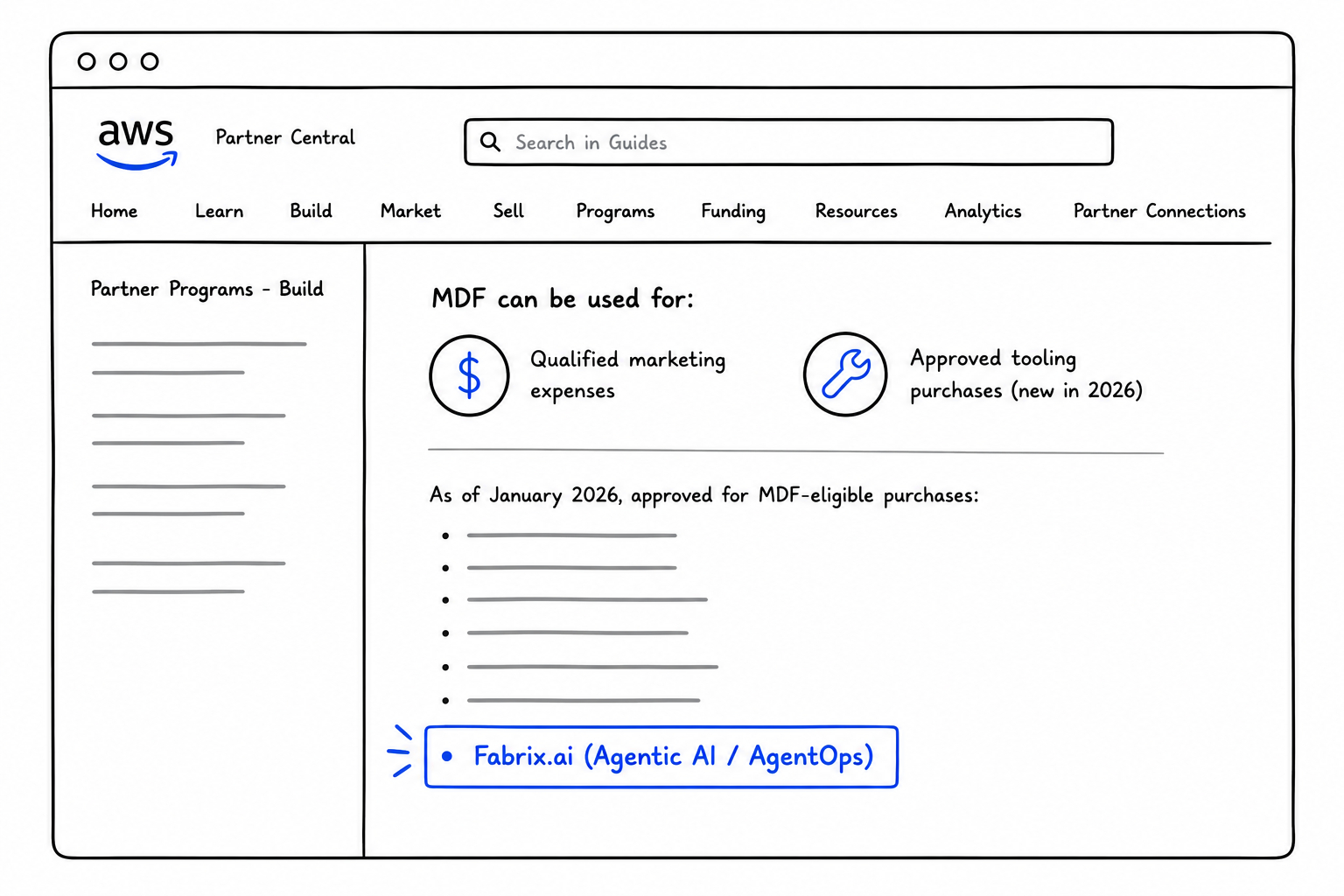
Fabrix.ai has been selected as the sole purpose-built agentic AI platform in the AWS Managed Service Provider (MSP) Recommended Toolkit, one of just ten approved solutions. The designation qualifies 295+ AWS Validated MSPs — including NTT Data, Capgemini, IBM, Wipro, Tech Mahindra, SHI, and Telefónica — to receive up to $50,000 annually in AWS Marketing and Tooling Development Funds to adopt the platform. Fabrix.ai gives MSPs an operational context layer to deploy, govern, and scale AI agents across hybrid multi-cloud environments, accelerating the industry's shift from reactive, labor-driven operations to autonomous, self-healing infrastructure.

Relay2 Inc.
Relay2 Inc. is a Milpitas, California networking company that builds Wi-Fi access points with computing and storage baked in. Its patented ServiceEdge Platform and Service Point devices let businesses and managed service providers run applications at the network edge - on-premises, close to where data is created - instead of shuttling everything to the cloud. Founded in 2011 by Eric Chen, Relay2 targets retail, education, manufacturing, transportation and MSPs that want to lower the total cost of deploying enterprise-class WLAN while unlocking new edge services.

FlexPoint
FlexPoint is a payments and billing automation platform built specifically for managed service providers (MSPs) and the small-to-mid-sized businesses they serve. It automates the entire billing lifecycle - syncing with accounting and PSA tools, sending branded invoices and reminders, collecting payments via AutoPay, processing card and ACH transactions, and reconciling deposits - so technology partners get paid faster with far less manual work. Founded in 2023 by Victor Lopez, Sam Kushner, and Alex Kushner, FlexPoint has raised $19.5M and is trusted by more than 40,000 businesses.

NinjaOne
NinjaOne is an Austin-based software company that makes an automated, cloud-native endpoint management platform used by IT teams and managed service providers to monitor, secure, patch, back up and control laptops, servers, mobile devices and SaaS data from a single console. Founded in 2013 as NinjaRMM, it now serves more than 30,000 customers and manages over 5 million endpoints, and in 2025 raised $500 million in Series C extensions at a $5 billion valuation while remaining founder-led and debt-free.