At the Linux Foundation, Rudy Grigar had a spreadsheet with more than 20 tabs. He was tracking budgets for over 50 projects. Each new project added another little jurisdiction of accounts, credits and questions. The cloud could expand almost effortlessly; explaining its bill demanded a person’s afternoon. A spreadsheet is a wonderfully democratic invention until everyone needs its author.
- Connect cloud costs to the teams spending the money.
- Give finance, engineers and MSPs a shared view.
- Extend the ledger to AI and SaaS consumption.
- Budget for the platform as well as the cloud.
Ternary’s customer account describes what happened next: the foundation gave project teams their own views of spending, forecasts and recommendations. Its IT team reported more than a 30% decline in cloud spend-related inquiries. That measures administrative relief, rather than a 30% reduction in the cloud bill. The distinction is the story. Making costs visible can save the time spent explaining them.
Decline in cloud spend-related inquiries reported by the Linux Foundation’s IT team.
Customer-reported result · 2024 case study01The expensive habit of building it yourself
Ternary began in 2020 with Sasha Kipervarg, Patrick Raymond and Joshua Kwan. Their early roles divided neatly into chief executive, product chief and technology chief. In a 2021 SADA interview, Kipervarg described a familiar sequence: ignore the cost problem, examine the cloud provider’s tools, then decide to build a solution using the available APIs. The homemade answer soon becomes a permanent job.
The turning point was a question from the Broad Institute’s Lukas Karlsson: were they asking about these problems because they intended to build a product? Kipervarg recalled that they had been trying to solve their employer’s difficulties. The suggestion made the commercial possibility visible. They left secure jobs during the pandemic and built Ternary.
That origin gives the company a practical bias. Its engineers had felt the pain they were selling a remedy for. Kwan’s public launch post described an engineering process organized around understanding users’ problems.
“an API to spend money”
Sasha Kipervarg · SADA interview, 2021
02Give every dollar an owner
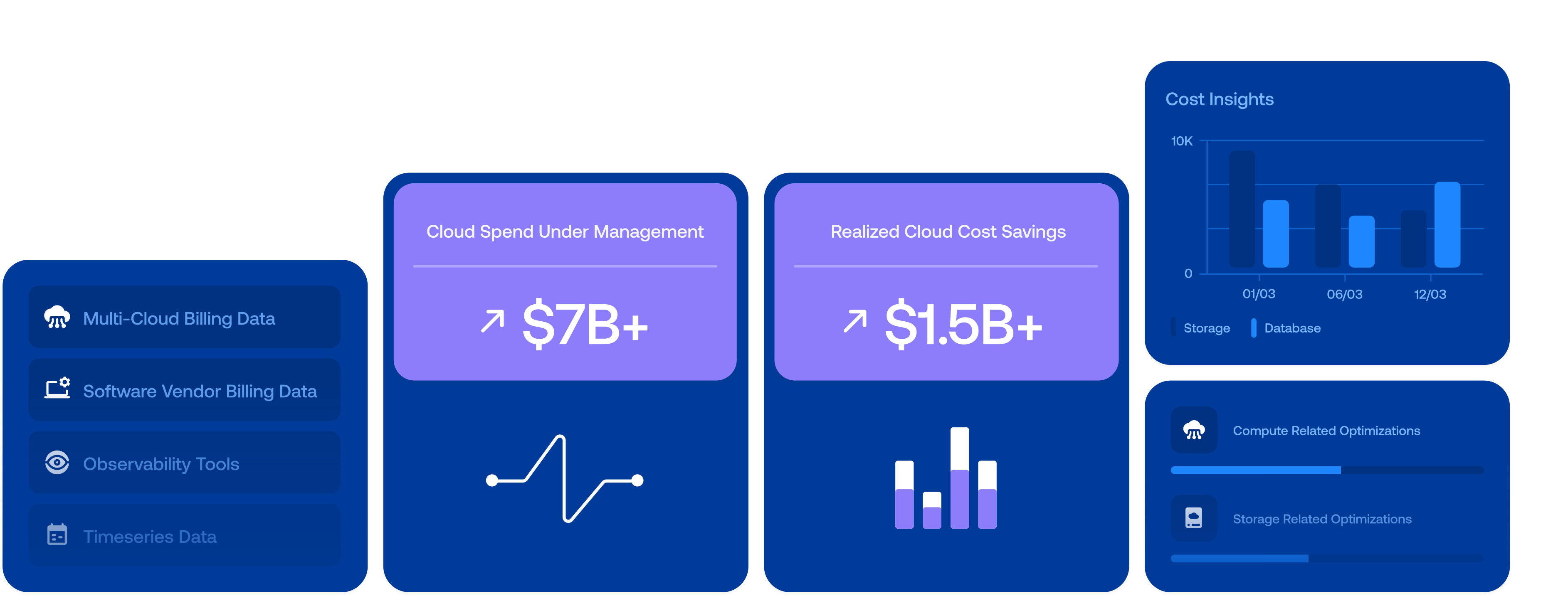
The product belongs to FinOps: the discipline of making technology spending accountable across finance, engineering and business teams. Ternary combines billing information from multiple cloud providers, assigns costs to meaningful groups and gives people reports they can use. AWS, Azure and Google Cloud are central to its cloud offering; custom data extends the picture beyond those bills.
Its reporting documentation shows the everyday machinery. Teams can start with system reports, copy them, choose dimensions and date ranges, and embed the results in dashboards. Native labels and Ternary Custom Labels supply ways to group spending. A project ID may satisfy an engineer; a cost center may satisfy an accountant. Both need to describe the same expenditure.
The useful test is whether a report changes a decision. An anomaly alert should reach someone who can investigate. A recommendation to resize a resource needs an owner who understands performance requirements. A prettier chart, left unattended, remains an unusually well-dressed receipt.
03One platform, many customers
Ternary also sells to managed service providers, whose problem repeats across customer accounts. Its MSP platform adds tenant administration, access controls and billing configuration above the core reporting product. Customer environments remain isolated, while the provider administers them centrally. The billing rules engine accommodates adjustments such as markups, credits and negotiated rates.
Rackspace Technology is a documented partner and customer. Its customer story emphasizes approachable reporting and responsive support. Kipervarg explained the initial partner-first strategy in his SADA interview: service providers already had trusted customer relationships. Distribution followed the people who were already helping customers run their clouds.
04Now the accountant wants the tokens
The current pitch reaches further. Ternary calls its offering technology investment intelligence and addresses CFOs and financial planning teams alongside FinOps practitioners. Cloud, SaaS, AI and on-premise expenses belong in a common ledger, mapped to financial accounts. The March 2026 FinOps Weekly interview with Kipervarg discusses that expansion beyond cloud spending.
AI makes the need particularly easy to understand. A prepaid contract can look orderly in accounting while its credits disappear faster than planned. Ternary’s AI governance offering tracks consumption and credit burn, with advertised support for OpenAI, Anthropic, Bedrock, Vertex AI and Azure OpenAI. Seeing who uses a model is a starting point for deciding whether its cost is justified.
The company also advertises access through Model Context Protocol, so an enterprise AI assistant can query the ledger. This changes the route to an answer. It still depends on the underlying allocation rules and business data. A conversational interface cannot decide what a customer, product or successful outcome means for your organization.
05Even the savings tool has a bill
Ternary earns money through software contracts. Its AWS Marketplace listing publishes annual prices: $25,000 for up to $1 million in yearly multicloud spend, $67,500 for up to $3 million, and $100,000 for up to $5 million. Those are listed contract tiers, rather than a promise that every customer receives those terms. The listing says professional services and data overages do not attract extra charges.
Self-hosting adds another expense. Ternary’s documentation places that deployment in the customer’s Google Cloud environment and estimates retail infrastructure costs of roughly $1,000 a month or less for organizations spending up to $1 million monthly on cloud. Higher-volume examples reach approximately $3,000 or $5,000-plus. These operating estimates depend on billing volume and complexity; the software contract is a separate consideration.
Jump Capital led a $12 million Series A in 2023. The competitive neighborhood includes CloudZero, Finout and Vantage, as well as cloud providers’ native tools. Buyers should compare allocation, workflows, deployment and total cost against their own needs. Ternary’s combination of MSP controls, self-hosting and finance-oriented accounting supplies a concrete shortlist of things to test.
The tool has a price tag
06Copy the habit before buying the software
The transferable lesson is to organize spending around people who can act on it. Start with a shared naming system. Give each team a view it understands. Assign responsibility for alerts. Review commitments with finance and engineering together. Ternary’s own getting-started guide makes taxonomy, cross-team communication and repeated operating cycles central to the work.
For a small, simple cloud estate, native tools may meet the need at lower cost. For a larger estate, reliable billing access and maintained allocation rules still matter. Teams must also have permission and time to act on recommendations. The satisfying ending is mundane: fewer requests for explanations, earlier decisions, and an invoice whose meaning survives the meeting.