The cruel joke of IT documentation is that finishing it is the moment it begins to lie. A technician records a firewall rule; someone changes it. A user leaves; an account survives. A cloud subscription appears on a corporate card, a backup job quietly stops, and a diagram that looked responsible on Monday becomes archaeology by Friday. Liongard built its company around this decay. Instead of asking managed service providers to take better notes, its software repeatedly inspects the systems themselves.
The result is less a digital binder than a flight recorder. Liongard collects asset, identity, configuration, and activity data across cloud services, business applications, networks, endpoints, backups, and security products. It keeps the state, spots the difference, and routes useful changes into the places an MSP already works - a ticket queue, IT Glue, ConnectWise, Autotask, HaloPSA, Hudu, a dashboard, or an awkward quarterly meeting where a client wants to know exactly what happened.
That distinction matters. There are plenty of tools that discover devices, monitor networks, store passwords, or manage tickets. Liongard’s claim is that the missing layer is a cross-system record that stays current and remembers the past. In 2025 the company gathered that idea under LiongardIQ, shifting its language from “automated documentation” and “attack surface management” toward “asset intelligence.” The nouns changed. The original complaint did not.
Two MSP owners leave themselves a better toolbox
Joe Alapat and Vincent Tran founded Liongard in Houston after operating and selling their own managed service provider. That biography explains the product more efficiently than most positioning decks. MSPs earn recurring revenue by keeping many unrelated customer environments working. Every customer has a different pile of vendors, inherited settings, exceptions, and forgotten administrator accounts. The work does not scale neatly because knowledge lives in technicians’ heads, tickets, spreadsheets, and dashboards that disagree.
Liongard’s first answer was Roar, an automation platform built around “Inspectors.” Some connect by API; endpoint versions require an agent on each system. They collect structured information on a schedule, populate documentation, record configuration changes, and generate metrics or alerts. A PSA integration can turn a meaningful change into a ticket. A documentation integration can refresh an asset record after every inspection. The MSP gets a common evidence layer without asking its best engineer to perform a scavenger hunt.
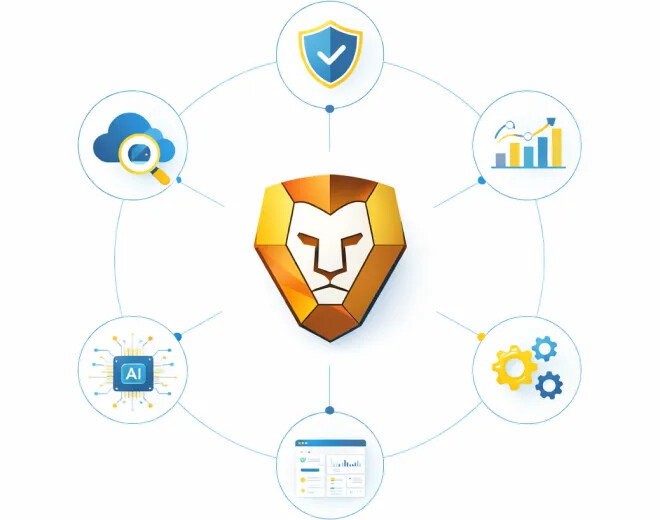
The operating loop
Connect APIs and agents across customer systems.
Normalize the current state and preserve change history.
Filter changes into alerts, metrics, and posture views.
Send evidence to tickets, documentation, reports, and AI.
The outage that explains the product
Doberman Technologies, a Michigan MSP, had a healthcare client suffer a two-day outage across 20 locations. A third-party vendor had worked on a line-of-business database server. The vendor denied responsibility. Liongard’s historical timeline let the MSP identify the login, time, source, and changes connected with the corruption. The evidence did more than shorten an investigation: according to Doberman’s former CEO, Ian Richardson, it preserved a $15,000-a-month account that later grew to $20,000.
Liongard preserved a $15,000/month account, and turned that account into a $20,000/month account.Ian Richardson, Doberman Technologies
This is the cleanest answer to “what did they do?” They gave an MSP a rewind button. The product did not prevent that outage, repair the database, or replace the human conversation. It supplied a non-editable record when memory, blame, and money collided. In quieter weeks the same machinery supports onboarding, license reconciliation, compliance reviews, cyber-insurance evidence, security-gap checks, and faster ticket research.
Other customer claims give the pattern some scale, though they remain customer-reported results. ES Consulting says the platform saved $75,000. TeamLogic IT Memphis reported $40,000 in operational savings in under a year. 5th Gear Technology Concepts said onboarding time fell by half and engineers saved roughly an hour to an hour and a half a day. Complete I.T., with hundreds of managed customers, described Liongard as “an RMM for the bits that RMM can’t touch.” The recurring benefit is not glamour. It is fewer minutes spent proving reality.
What it costs - and what fails first
Liongard does not publish a standard price card. Buyers receive contract pricing, and endpoint Inspectors are billed by unit according to the agreement. Public terms say usage beyond committed units can carry a 20 percent premium. The API is included, but agents and Inspectors still have to be installed and maintained; their queries can also increase fees from third-party services. Network Monitoring became a separate premium offering in 2025 while discovery remained part of the platform. The honest budget is therefore subscription plus deployment, ownership, and attention.
What fails first is usually not discovery. It is adoption. A technically successful rollout can still become one more portal if nobody decides which system owns customer records, where documentation should land, which changes deserve tickets, and who tunes the alerts. Liongard’s own integration guidance warns about duplicate data when ConnectWise and IT Glue sync in both directions. A single Liongard instance also supports only one integration of each platform type; an MSP with multiple ConnectWise or IT Glue instances may need multiple Liongard instances.
There is a product lesson in a feature that disappeared. Microsoft 365 auto-remediation reached beta, then Liongard removed it in 2026 along with its supporting metrics and alert rules. Detection and documentation are comparatively safe: describe what exists and what changed. Remediation closes the loop by changing a customer system, where permissions, exceptions, and unintended consequences become sharper. Liongard has continued to talk about automation, but the removal is a useful reminder that a trustworthy map and an autonomous driver are different products.
From documentation company to data layer
Liongard has raised at least $36 million in publicly announced equity and growth investments since 2018, followed by a reported $3.5 million debt round in May 2026. A $1.25 million seed round funded the early product; a $4.5 million Series A accelerated Roar; a $17 million Series B in 2020 expanded the team and platform; and existing investors added $10 million in 2022. Updata Partners and TDF Ventures have been the most visible institutional backers.
Leadership changed in 2023 when Michelle Accardi became CEO and Alapat moved from chief executive into technology and later strategy roles. The repositioning since then has been conspicuous. Liongard was on Deloitte’s Technology Fast 500 in 2023 and 2024, reporting 246 percent growth for the latter ranking period. It also widened its ambition: not merely keep MSP notes current, but provide the trusted data under security decisions, operational dashboards, automation, and AI.

Documentation
IT Glue and Hudu store operational knowledge. Liongard can feed them automatically rather than asking technicians to update everything by hand.
Network visibility
Auvik and Domotz specialize in network discovery and monitoring. Liongard reaches across networks, SaaS, cloud, identity, and configurations.
Asset intelligence
Axonius, JupiterOne, Lansweeper, and runZero overlap in inventory, relationships, exposure, or discovery, often with a stronger enterprise-security center of gravity.
MSP operations
PSAs and RMMs remain the workbench. Liongard’s best position is behind them, supplying history and context rather than forcing every technician into a replacement workflow.
In 2026, that data-layer pitch became literal. Liongard added Roar Assistant for natural-language questions and an MCP server that lets external AI tools query its asset intelligence. It launched beta Inspectors for OpenAI and Anthropic environments, tracking organizations, projects, API keys, users, usage, spending, and service accounts. The move is nicely circular: companies adopt AI, creating another system full of identities and configurations, so the inventory vendor builds an AI inventory and lets AI query it.
The defensible part is not the chat box. Any software company can attach a conversational interface. Liongard’s advantage, if it holds, is the accumulated and continuously refreshed context underneath: which device belongs to whom, whether MFA is missing, what changed yesterday, whether a backup agent disappeared, and how a setting differs across 200 customers. An assistant grounded in stale data merely produces faster fiction.
The playbook worth stealing
The copyable idea is a four-part operating habit. First, collect facts automatically from the systems that create them. Second, preserve history instead of overwriting yesterday with today. Third, separate meaningful drift from harmless motion. Fourth, deliver the evidence inside the workflow where someone can act. This applies beyond MSPs: finance teams reconciling subscriptions, operators tracking vendor settings, compliance teams preparing audits, and product teams monitoring customer configurations can all borrow the loop.
It will not work when the monitored estate is too small to justify the machinery; when APIs are shallow or blocked; when agents cannot be deployed; when the organization refuses to name a source of truth; or when every detected change becomes an alert. Nor does visibility equal security. A pristine inventory can expose risk, but someone still has to prioritize, approve, and perform the work. Liongard is strongest as evidence and coordination, not as a substitute for judgment.
That leaves Liongard in a productive middle of the market. It is more active than a documentation cabinet, broader than a single-purpose network monitor, more MSP-shaped than many enterprise CAASM products, and less complete than an all-in-one service-management suite. Its buyers do not need every tool to disappear. They need those tools to stop arguing about reality.
Two former MSP operators start Liongard
The founding problem is stale, scattered knowledge across customer systems.
Seed, Series A, and Series B
Roar grows from automated documentation into a unified visibility platform.
Michelle Accardi becomes CEO
Joe Alapat moves from the chief executive role toward product and strategy.
LiongardIQ arrives
The company reframes continuous inspection as asset intelligence for security and operations.
The map becomes conversational
Roar Assistant, MCP access, and AI-platform Inspectors make the collected data queryable in new places.
The company’s original insight remains the useful one. In complex IT, a snapshot is a souvenir. The valuable object is a record that notices when the world stops matching the picture. Liongard has spent a decade making that record more comprehensive, more portable, and lately more conversational. Whether the software pays off still comes down to an unfashionable question: will the customer redesign the work around what the system knows?
Keep exploring