The first useful thing to know about Axonius is that it does not begin by distrusting your people. It distrusts your lists. The endpoint tool has one count. The cloud console has another. The identity provider knows about accounts the HR system forgot. A vulnerability scanner flags a machine the company cannot locate. Everybody owns a fragment of the truth, and the spreadsheet labeled FINAL_v7 is already lying by lunch.
Axonius built a large enterprise-software business in that gap. Its Asset Cloud connects to the products a company already runs, ingests their records through more than 1,400 adapters, normalizes the fields, correlates duplicates and conflicting observations, then produces one continuously updated model of devices, identities, software, SaaS apps, vulnerabilities, cloud infrastructure and, increasingly, medical, industrial and AI assets. The system can query that model, expose missing controls, assign owners and push actions back through connected tools.
That sounds like inventory because it is inventory. The twist is that modern inventory is no longer a tidy cupboard list. It is the operating context for incident response, vulnerability work, compliance, software spend and automation. In May 2026, Axonius said it had crossed $200 million in annual recurring revenue, doubled ARR in two years, and was approaching 1,000 customers. More than 100 Fortune 1000 companies and 90 U.S. federal agencies were in the count. Boring questions can become excellent businesses when nobody can answer them.
The failure came before the product
The founding story has the right amount of embarrassment. Dean Sysman's first startup was not doing well. During a proof of concept at a large company, his security product found an advanced attacker but the customer could not identify the machine producing the alert. Detection had worked. Organizational memory had failed.
Sysman took the idea to two close friends from Israel's military-intelligence world, Ofri Shur and Avidor Bartov. The pitch happened on a bench outside Shur's apartment. Sysman told them this was his second and possibly final startup attempt. They joined. In 2017, investor YL Ventures moved from introduction to a signed term sheet in 16 days, leading a $4 million seed round even though the founders had not been actively fundraising.
The original move was disciplined: do not deploy another endpoint agent and create yet another partial inventory. Use the APIs and management interfaces already inside the customer. Early Axonius could be running in less than an hour and aggregate data from roughly 100 sources. By 2019 that number was above 270; by 2024, above 1,000; by 2026, above 1,400. The adapter network became both the product's plumbing and its moat.
“It doesn't replace your tools, it reconciles them.”Axonius's neatest one-line product description
A referee for expensive software
Here is the practical version. Suppose CrowdStrike reports 9,200 endpoints, Microsoft Intune reports 10,100, ServiceNow lists 8,700 and AWS adds a rotating population of short-lived instances. Axonius does not merely stack those rows. It uses identifying properties and observations across sources to decide which records describe the same asset, preserves where each fact came from, and lets a team ask questions such as: Which internet-facing Windows devices have a critical vulnerability, no endpoint protection and an owner in the finance group?
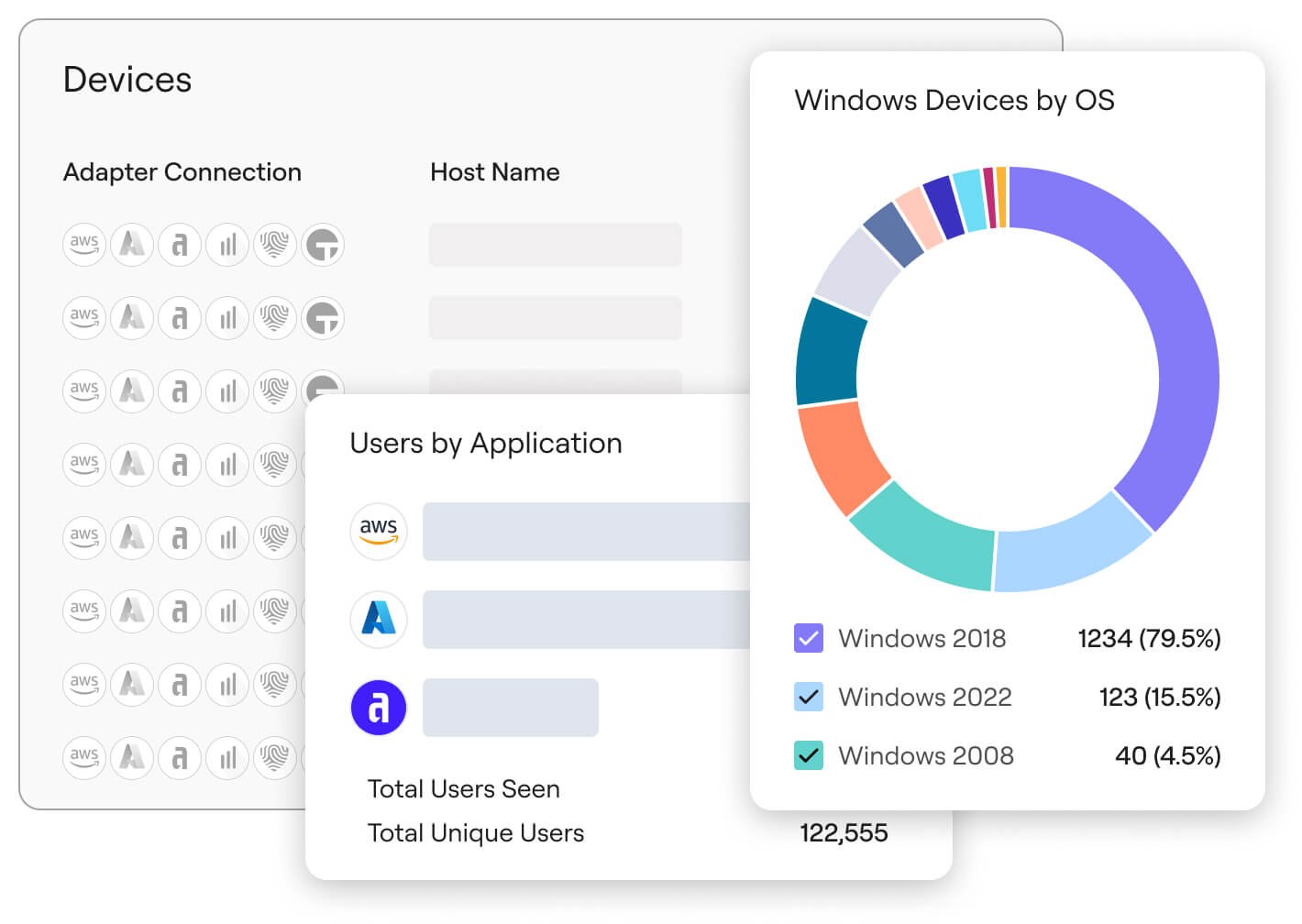
The answer can feed a dashboard, a ticket, a notification, a CMDB update or an enforcement action through another system. That bidirectional element matters. Pure visibility creates a prettier backlog. Axonius has spent the past few years moving from “what exists?” toward “what matters, who owns it and what should happen next?” Its Exposures product folds vulnerability and security findings into the model. Axonius AI recommends steps and supports natural-language questions. Verified Assets, previewed in 2026, is designed to label records trustworthy enough for downstream automation.
The company's argument about AI is refreshingly architectural. Do not ask an agent to assemble high-stakes context from scattered systems during an incident. Prepare and verify the context first, then let the agent reason over it. That is less cinematic than an autonomous cyber defender. It is also how grown-ups tend to handle important data.
Customers are buying back the scramble
The best customer stories are about minutes, not magic. At one global specialty retailer, a major zero-day investigation could consume up to 50 hours of staff time and an estimated $60,000 a month in lost work. The company had funding for a contractor to build custom correlation code and a database that would feed ServiceNow. Then its CISO heard about Axonius at a conference. The proof of concept changed the plan. The retailer said one person could answer in minutes what had taken the team days, while improved equipment recovery added an estimated $120,000 in annual savings.
A global energy-management company connected its data sources and assembled an inventory during the first 10 days of a pilot. Incident investigations that had taken three to five days fell to three or four hours. Texas A&M moved away from manually entered, sometimes months-old asset information and eventually put more than 300 employees into the environment, allowing colleges and teams to examine their own devices against a shared view.
Those examples explain who buys it: security operations teams, CISOs, vulnerability managers, IT operations, GRC groups, software-asset managers and federal agencies with sprawling environments. Named customers have included AB InBev, Schneider Electric, News Corp, The New York Times, BlueLinx and Texas A&M. Axonius Federal Systems supports agencies with a separate governance structure and was selected to help modernize the Department of Defense's continuous-monitoring and risk-scoring program.
The price of finding the truth
Axonius is sold as custom-priced enterprise subscription software, with commercial scope shaped by products, asset counts, deployment and services. A commissioned Forrester study offers the clearest public economic frame: its composite organization carried $2.1 million in risk-adjusted costs over three years and received $5.3 million in benefits, for a $3.2 million net present value, 156 percent return and six-month payback. Those figures are a model assembled from four interviewed customers, not a universal invoice.
The company itself has cost plenty to build. Seven disclosed equity rounds from 2017 through 2024 total $595 million: $4 million seed, $13 million Series A, $20 million Series B, $58 million Series C, $100 million Series D, $200 million Series E and a $200 million Series E extension. The 2022 round valued Axonius at $2.6 billion. When the 2024 extension kept the valuation flat, Sysman said he did not feel a need to mark it higher. That is a more credible sentence than most unicorn chest-thumping.
One model keeps swallowing new worlds
Axonius began with devices, then followed the recurring pattern wherever it appeared. SaaS apps created shadow IT, wasted licenses and configuration drift. Identities created stale accounts and privilege gaps. Exposure tools produced overlapping findings without business context. Each category offered more partial views to reconcile.
The biggest leap came in July 2025, when Axonius spent more than $100 million in cash and stock to acquire Cynerio. Hospitals contain infusion pumps, imaging systems, monitors and clinical devices that traditional IT tools often do not understand. Axonius for Healthcare combined Cynerio's passive discovery and medical-device context with the wider asset model. In 2026, the company extended that expertise into Cyber-Physical Assets for manufacturing, energy, utilities and critical infrastructure.
AI became another inventory problem almost immediately. A June 2026 Anthropic integration used the Claude Compliance API to identify enterprise Claude assets, including unmanaged use. The product question is familiar: Who is using it? Under which account? With SSO? On which device? Connected to what data? Axonius did not need to invent a new thesis. It only needed to add a new noun.
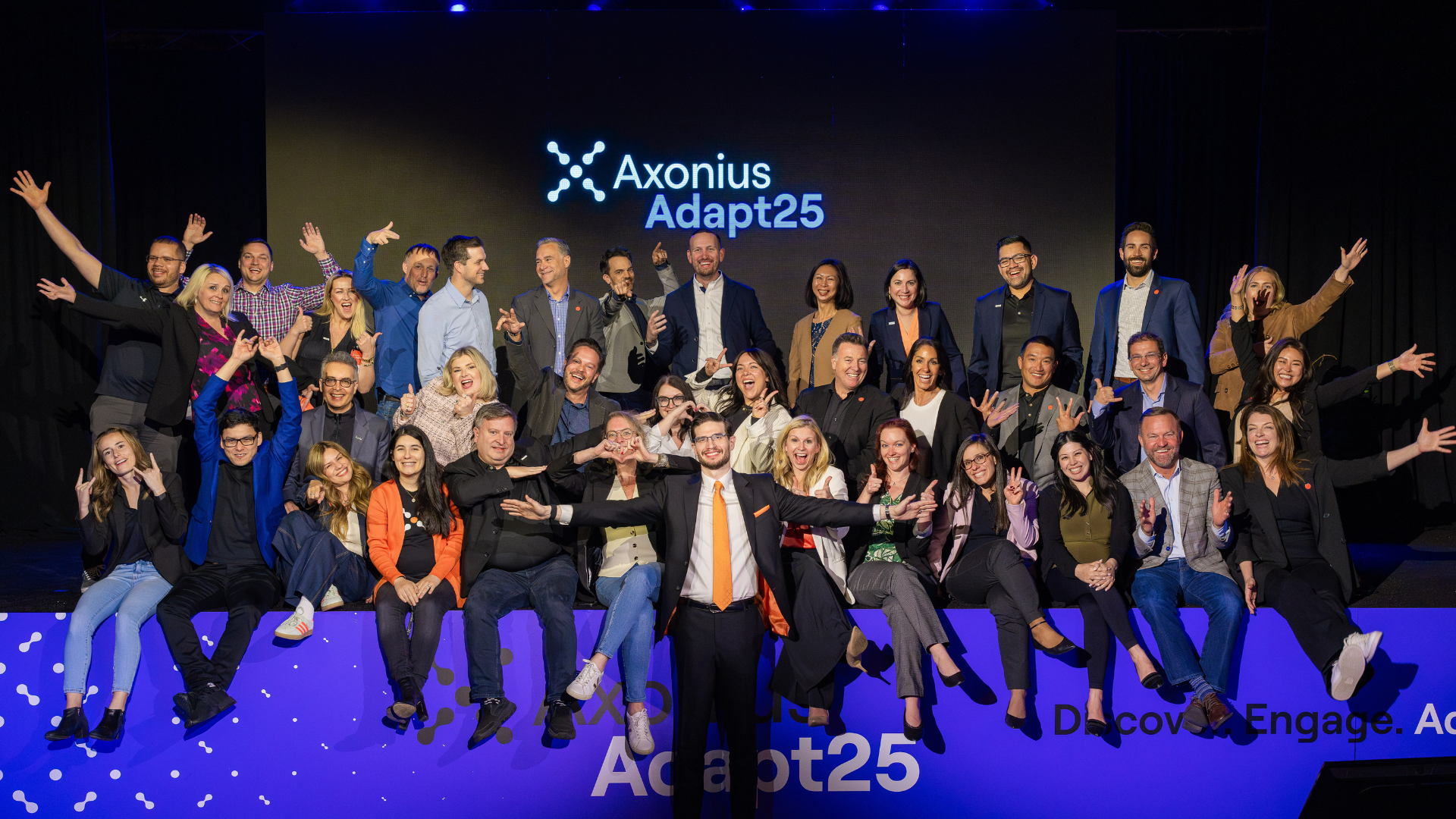
The culture around that expansion is direct by enterprise-software standards. Axonius advertises “less talk and better security” with a strategically placed expletive. It describes itself as flexible and remote-first, offers stock options to full-time employees, development budgets, employee groups, volunteer time and global weekends set aside to recharge. In 2026, Sysman moved to executive chairman and Joe Diamond, previously president and interim chief executive, became CEO. Ofri Shur remains CTO; Avidor Bartov is chief architect.
Where Axonius wins - and where it breaks
The competitive map depends on the job. JupiterOne and Sevco also reconcile cyber-asset data. Armis and Claroty are strong when unmanaged OT, IoT and physical devices dominate. runZero begins with active, unauthenticated network discovery. Qualys, Tenable and Rapid7 bundle asset context with broader vulnerability suites. ServiceNow and BMC sit closer to IT operations and the CMDB. CrowdStrike and Palo Alto Networks can appeal when a company wants to consolidate around a large security platform.
| Condition | What it means |
|---|---|
| Strong fit | Many tools, clouds, identities and business units produce contradictory records; manual reconciliation delays decisions. |
| Weak fit | A small, homogeneous environment already has a trustworthy inventory and few source systems. |
| Watch closely | The primary need is raw network discovery. An API-led reconciliation layer depends on useful source telemetry. |
| Fails socially | No one owns the finding after the platform identifies it. Better context cannot substitute for authority and workflow. |
That last row is the important one. Axonius can reveal that 3,500 machines are missing endpoint protection. It cannot settle a budget fight, make a business unit accept downtime or persuade an application owner to patch. Its newer ownership and remediation features reduce the handoff, but an organization still needs accountable people and safe change processes. Automation built on trusted data is powerful. Automation without permission is a dashboard wearing running shoes.
The part worth copying
Axonius offers a practical playbook beyond cybersecurity. Find a painful decision trapped between systems. Connect to the installed base instead of demanding replacement. Preserve provenance, normalize the records and make disagreement visible. Earn trust with queries first. Automate only after users believe the model.
- Start with the contradiction. The best demo is often two trusted systems disagreeing about the same object.
- Turn integrations into product. An adapter library is not glamorous, but every useful connection shortens time to value.
- Prove the model before the workflow. Users will not automate a finding they must manually verify.
- Measure time returned. “Three days to three hours” travels farther inside a budget meeting than another severity chart.
- Know the complexity threshold. A reconciliation layer earns its rent only when fragmentation costs more than the layer.
The company has changed shape, but not argument. Devices became SaaS, identities, exposures, hospital equipment, factory systems and AI agents. Through every expansion, Axonius has sold the same promise: before a security team protects, prioritizes or automates anything, it should know what is actually there. Nine years and $200 million in recurring revenue later, inventory no longer looks like the boring part. It looks like the control plane.
Keep digging
Website · Company blog · Newsroom · Documentation
LinkedIn · X · Facebook · GitHub · YouTube
Platform preview · Asset intelligence interview · CIS controls demo