The revealing detail about Stephanie Weagle is not printed on an org chart. It happened on a trade-show floor in Orlando, with booths humming around her and people moving tables in the background. The chief marketing officer of Liongard was working the stand. Asked whether a CMO ought to have graduated from booth duty, she laughed and allowed that she would like to someday. Then she returned to the practical arithmetic: a small marketing team, roughly 80 events on the calendar, and work that still needed doing.
Her phrase for it was plain: roll up your sleeves. It is the kind of expression that can become weightless in an executive biography. Here, it had a lanyard and a flight itinerary. Weagle had already traveled through seven of the year's first eight weeks. Some colleagues were leaving the show midway to catch the next one in London. She was heading home to the Northeast, where more snow was arriving, before turning around for Tampa.
This is the operating reality beneath marketing language about reach and community. Somebody has to learn the room, notice the mix of managed service providers and internal IT teams, study where foot traffic bends, and decide whether the next gathering should be larger or more selective. Weagle does not float above those details. She collects them.
Industry shows, activations, and co-sponsored appearances spread across a small Liongard marketing team. The number came from Weagle's conference-floor interview.
The useful detourShe meant to make things beautiful
Weagle's route into cybersecurity began with a different ambition. She set out to become a digital designer and creative professional, interested in brands and consumer campaigns. After studying advertising and marketing at Franklin Pierce University, where she also played women's soccer, she spent her early career on the agency side. Her clients included large high-tech companies around Boston.
The work changed her destination. Collaborating with corporate marketing teams exposed her to the way technology companies thought about building products that mattered to customers. After a couple of agency years, she crossed to the client side. The creative impulse survived, but the canvas became a go-to-market system: product positioning, demand generation, brand, events, partner programs, customer advocacy, and communications.
It was less a rejection of design than an expansion of it. A good campaign arranges words and images. A good technology marketer must also arrange understanding. She has to take a product built from infrastructure, analytics, or encryption and locate the sentence that helps a busy buyer care. Cybersecurity makes the exercise especially unforgiving. Its vocabulary is dense, its warnings are urgent, and every vendor would like the microphone.
“It is important to listen.”Stephanie Weagle on breaking through a crowded cybersecurity market
That short instruction has become her answer to the noise. Listen to customers and partners. Listen to colleagues and the people studying the market. A category may reward volume in the short term, but durable positioning begins with attention. The marketer has to hear which problem is actually felt, not merely which feature is easiest to promote.
A career in increasingly complex things
The apprenticeshipEight companies, one recurring assignment
The résumé between those points is a long apprenticeship in B2B technology. Weagle moved from multimedia project management at CGI Interactive to marketing at IntelliCorp and Tizor Systems. She managed field marketing for Novell across the Americas, then led demand generation at Lionbridge Technologies. At Corero Network Security, she advanced through four posts in less than six years, from senior manager to vice president of marketing.
Each stop added a new technical dialect. Corero sold defenses against distributed denial-of-service attacks. BriefCam applied deep learning to video analytics. Atakama worked in encryption and data protection. Liongard began with automated documentation and expanded toward continuous asset intelligence, attack-surface visibility, and AI-assisted operations.
The public subjects of her own writing show the range. She has explained the scale of DDoS attacks, the use of video analytics in transportation and corrections, and the role of data in understanding activity inside physical spaces. These pieces are product-adjacent, but their structure is instructive: begin with a recognizable operational problem, explain what the technology can see, and end with what a person can do next.
At BriefCam, Weagle led an international marketing team during a period later described by Liongard as producing about 50 percent year-over-year growth. At Atakama, her remit covered the full commercial repertoire: go-to-market strategy, lead generation, positioning, and product messaging. When she joined Liongard in May 2024, she arrived with more than two decades of experience and responsibility for marketing strategy, lifecycle programs, demand, events, and community.
A market in motionFrom documentation to intelligence
On that Orlando podcast set, Weagle gave an unusually compact account of how Liongard's story was changing. Automated documentation remained foundational, she explained, but the platform had spent the previous year making asset inventory more central. Visual reporting, network monitoring, AI-supported summaries, and search were becoming part of the pitch. The evolution asked marketers to connect technical features to the way an MSP runs a business.
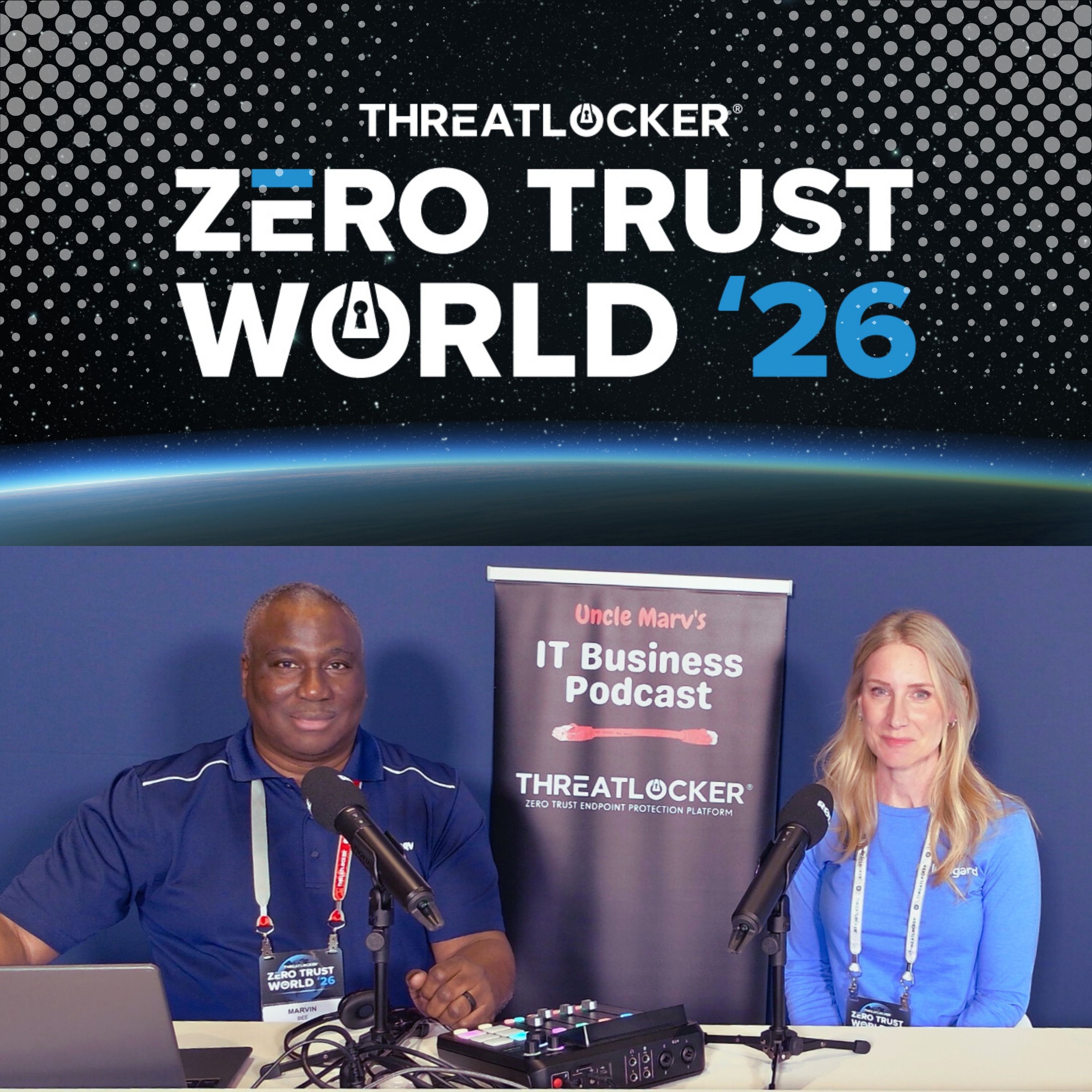
The conversation is revealing because it never stays in the clouds for long. Asked about AI, Weagle acknowledged the hype and moved directly to uses: asset summaries, search, automated ticket routing, workflow automation, and customer sentiment. Asked about events, she talked about audience composition and the decision to rebuild Liongard's RoarCon as a smaller hosted gathering for about 100 MSPs. Asked about conference quality, she evaluated food, traffic flow, and the welcome abundance of water.
There is comedy in the sudden debate over almond milk. Weagle, a tea drinker, clarified that a colleague was the enthusiast. She described herself as a two-percent-milk person. Then both speakers noticed how far the discussion had wandered. “This is very random, but I like it,” she said. The line carries a small clue about presence: she can discuss the platform, watch the tables move, and let the conversation be a conversation.
That flexibility matters because Liongard's addressable audience is not one tidy persona. MSPs manage many customer environments. Internal IT teams speak more organically about asset management. Security practitioners arrive with another set of anxieties. A single platform story must remain coherent without pretending those listeners are identical.
Quiet authorityThe leader without every answer
Weagle's most thoughtful public comments concern leadership. Early managers and colleagues gave her opportunities, foundations, and some difficult lessons. She also watched people build careers while raising families, observing both the balance and the sacrifice. Yet she reserves special attention for the people she has managed.
New managers often feel obliged to provide an answer to every question. Weagle reached a different conclusion. Clear goals matter. Consistent support matters. Guidance matters. Once those conditions exist, a leader can leave room for the team to solve the problem. Not knowing can become useful when it distributes agency instead of creating confusion.
The best evidence of authority may be a team that no longer needs to borrow yours.A lesson visible across Weagle's public leadership philosophy
Her advice to women entering technology follows the same practical optimism. Cybersecurity offers technical and commercial routes, and intimidation need not get the final vote. She has argued that every woman in the field becomes a role model through both successes and failures. It is a generous interpretation of visibility: leadership is not a polished state one reaches, but a record other people can learn from.
Colleagues have supplied their own evidence. In 2026, Liongard co-founder Joe Alapat publicly singled out Weagle and design co-founder Vincent Tran as quiet force multipliers whose work raises the level of the company. Weagle redirected the praise toward mission and team. The exchange fits the pattern. She is comfortable at the microphone, but she appears most interested in what the room can accomplish after everyone has spoken.
The work underneath the wordsVisibility as a human concern
“Visibility” can sound bloodless in a software brochure. In Weagle's career, it has appeared in remarkably human settings: finding a threat in a network, locating a moment inside hours of video, revealing an unmanaged asset, or helping a team understand what changed overnight. Her work has repeatedly occupied the distance between unseen complexity and practical action.
That may explain why the creative student stayed in technology. Design is also the art of making relationships visible. At Liongard, the raw materials happen to be assets, configurations, identities, vulnerabilities, dashboards, and integrations. The job is still to find order, establish hierarchy, and guide the eye toward what matters.
The career is easy to summarize as a climb toward the C-suite. It is more accurate to see a succession of rooms: an agency table in Boston, field-marketing programs across the Americas, a global video-analytics team, an encryption startup, a Houston company's executive meetings, and a booth in Orlando. Weagle has carried the same habit through all of them. Listen first. Translate carefully. Then help the team move.