There is a particular kind of sentence that flourishes inside technology companies. It begins with a noun nobody outside the building uses, acquires three acronyms, and ends somewhere around “transformational outcomes.” The sentence is accurate. It is also dead on arrival. Merritt Group, a strategic communications agency in McLean, Virginia, has spent nearly 30 years performing a small act of corporate rescue: finding the human consequence buried inside the technically correct explanation.
The agency was founded by Ben Merritt in 1996, when the internet still announced itself with a modem squeal. It grew around technology public relations, then added marketing strategy, creative production and digital execution. Today the work is organized into four plainspoken units: MG PR, MG Marketing Services, MG Studio and MG Digital. Together they handle the chain from positioning and media relations to websites, paid search, video, analytics and lead generation.
The interesting part is not the menu. Plenty of agencies sell an integrated menu. Merritt's wager is that integration matters only after comprehension. Its people specialize in cybersecurity, government, artificial intelligence, connectivity and healthcare - markets where the audience can smell a tourist. A federal buyer does not travel the same path as a consumer buying trainers. A security executive does not reward a vendor for attaching “AI-powered” to an old claim. Domain knowledge is not decoration here. It is the admission ticket.
The first thing to fail is the category
Consider Huntress. The cybersecurity company wanted attention beyond the channel press, but “another security vendor” is not a memorable position. Merritt reframed the product as a threat-intelligence engine and built the chief executive into a useful source for reporters. The reported result was a 375 percent increase in share of voice against much larger cyber companies. Distribution helped, but the decisive move happened before the pitch list: Merritt changed the mental shelf on which the company sat.
This is the agency's recurring method. Find what fails first. Sometimes it is the category. Sometimes it is proof. Sometimes it is the handoff between marketing and sales. Avizia, a telehealth company, needed a reason for healthcare buyers to stop. Merritt researched, wrote and designed Closing the Telehealth Gap, then wrapped paid and earned distribution around it. The campaign produced a 36 percent conversion rate and more than 500 qualified leads. One substantial idea did the work that a calendar of disposable posts rarely can.
“Messaging doesn't need to be loud to be effective. It needs to be clear, credible, and connected to what matters most to your audience.”Merritt Group, reflecting on RSA Conference 2025
A content factory with an editor's instinct
Microsoft presented the opposite problem: not one asset, but many. Its cloud and AI businesses needed material for different personas, buying stages, industries and markets across North America and Latin America. Merritt's answer was a “7-up” production model. Every premium piece generated seven derivative assets - e-books, infographics, nurture emails, paid posts and organic social among them. Dozens of pieces were produced within two months.
The repeatable part
The arithmetic is appealing, but the editorial judgment comes first. Seven versions of a weak idea produce seven weak ideas. The model works when the source asset contains research, expertise or a useful point of view. That is what another company can copy: not the number seven, but the separation of thinking from formatting. Invest once in substance. Then make the format fit the buyer's moment.
The RFP starts before the RFP
Government marketing makes the agency's philosophy easiest to see. By the time a request for proposals lands, much of the buyer's understanding has already formed. Merritt's B2G playbook tells contractors to begin with the agency's mission problem, align business development and marketing, identify decision-makers, and map useful content across an 18-to-24-month capture journey. It is patient work. It also explains why the agency can claim a meaningful result for Menlo Security: in six months, an account-based campaign generated 2,900 landing-page visits, more than 150 marketing-qualified leads and, eventually, an additional 1.1 million Department of Defense users.
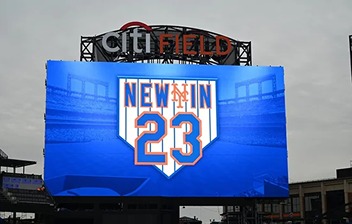
Samsung shows the other side of the practice. Merritt paired product launches with conspicuous settings - Formula 1, Major League Baseball's opening day and the New York Mets among them - while increasing customer storytelling. The program generated 1,120 earned-media stories and a 62 percent competitive share of voice. An enterprise display is not innately dramatic. The places where it becomes useful can be.
One long-running client publicly reported that retainer range as its scope grew. Two reviewed project engagements were listed between $200,000 and $999,000. There is no public standard rate card; the mix of PR, creative, digital and research changes the bill.
The mid-sized middle
Merritt describes itself as small enough to be agile and large enough to serve a national or global brand. That is positioning, certainly, but it also identifies the market gap. A client can hire a global network with offices everywhere, a specialist boutique with a narrow craft, or an internal team that knows the company intimately. Merritt sells the middle: specialist market fluency plus multiple execution disciplines under one roof.
The business is privately held and woman-owned. Public estimates place it in the tens of millions of dollars in annual revenue, while the supplied company record estimates $12.2 million. It serves venture-backed startups and familiar enterprises including Microsoft, Samsung, Deloitte and Booz Allen Hamilton. Public reviews suggest the buyer is not shopping for a cheap press release. This is considered, ongoing professional service sold through retainers and substantial projects.
More than a decade ago, Jayson Schkloven pushed the agency beyond its PR roots by creating a marketing and digital practice. That decision changed the answer Merritt could give when publicity was not the whole problem. If the message was right but the website lost the visitor, or attention arrived without sales enablement, the agency could stay in the room. Its current structure is the institutional memory of that shift.
Begin with the buyer's problem in the buyer's language, especially in regulated or technical markets.
Give one evidence-rich asset many jobs instead of giving many thin assets one brief appearance.
Specialization helps only when the agency keeps learning. Old expertise becomes jargon with better manners.
The model is a poor fit for low-consideration products, tiny one-off budgets or teams unwilling to share technical access.
What survives the next fashion
Merritt now publishes about generative search, AI-assisted creative work and influencing the answers produced by large language models. This sounds new because the interface is new. The underlying job is familiar. Know which sources an audience trusts. Make the company's expertise easy to retrieve. Give the claim enough evidence to travel without its author standing beside it.
There are conditions under which the method loses its edge. It will not rescue an undifferentiated product whose leaders refuse a sharper position. It cannot manufacture customer proof that does not exist. It becomes expensive theater when sales and marketing hoard separate definitions of success. And a domain-led agency is less useful when the purchase is impulsive, local or governed mainly by price.
But in a long sales cycle, where several people must understand and defend a complicated purchase, translation compounds. The sentence gets shorter. The category gets clearer. The asset becomes a sales conversation, a media story and a search result. Merritt Group's product is not attention in the abstract. It is the moment technical truth becomes easy enough for someone else to carry.