Before Echo-Factory sold anyone on a robotic arm bound for Mars, it sold photographs. Mike Schaffer had become an advertising photographer because it was the only kind of photography he liked. Weddings, landscapes, editorial assignments - none held him. Commercial work did. Then the pictures left his studio and entered the machinery of an ad agency. He often disliked what emerged.
The irritation was productive. About a year after opening his own studio, Schaffer decided he wanted responsibility for the entire campaign, not merely the photograph inside it. Clients were already nudging him in that direction. Kapco, an aircraft-parts distributor, asked whether he could do more. His answer was yes. He persuaded a creative director to join him, assembled roughly four people in what he later called a commercial garage in Upland, California, and built the rest while working.

This is the first useful thing about Echo-Factory: it began with dissatisfaction at the handoff. The person making the image could see that the larger argument was muddled. So he moved upstream, toward the question, and downstream, toward distribution. The company that resulted now groups its work into strategy, creative and media. In practical terms, that means customer interviews and market analysis can lead to a name, a website, a film, an event, paid search, trade-show ads or a public-relations push. The medium follows the problem.
A cabinet of difficult things
The agency's client shelf is pleasingly odd. There are hospital systems and rural clinics, aircraft component makers, an industrial insulation product, a cybersecurity insurer and the City of Pasadena. It has helped businesses through 31 merger and acquisition events. Kapco eventually became Proponent, now described as the world's largest independent distributor of commercial aircraft parts, and remains an Echo-Factory client more than 15 years later.
These categories share a hidden geometry. Their products are consequential but rarely impulsive. A procurement manager does not buy an FAA-approved replacement part because an influencer unboxed it. A patient must understand a service before choosing a clinic. Employees of five newly combined manufacturers need a reason to believe the merger is more than a new logo. The sales cycle is long, the audience is narrow and a vague message wastes money quickly.

For Jet Parts Engineering, the immediate problem was consolidation. A dominant competitor had bought another large player, leaving JPE in second place and under a longer shadow. Echo-Factory began with interviews - buyers, procurement teams and engineers - then positioned JPE as a credible, cost-effective alternative to original-equipment parts. It aimed programmatic ads, LinkedIn placements and paid search at specific decision-makers, including people attending important aerospace events. Placements, messages and budgets were adjusted as the data arrived.
The campaign also recorded more than 49,000 engaged users and a 19%+ absolute brand lift. The telling change appeared in sales conversations. Where buyers had once asked who JPE was, they began saying they had heard about the company. Advertising had not closed the technical sale. It had removed the awkward first minute.
“I want more people to know who we are and what we do.”Anu Goel, CEO of Jet Parts Engineering
Precision before personality
Echo-Factory can be funny. For AlkeGel industrial insulation, it borrowed the conversational setup of the old “I'm a Mac” spots. One material bends on a yoga mat; another arrives in a hazmat suit. The jokes communicate flexibility, cleanliness and performance in heat. The production stayed lean, shot with a small crew in a Pasadena studio. There is no disclosed budget and no numerical outcome, only the agency's report of strong engagement. It is best read as evidence of tone, not return.
The more persuasive cases are instrumented. A campaign for Proponent's ProCart marketplace segmented airlines, maintenance providers and manufacturers rather than treating “aerospace” as one crowd. It produced 1.7 million impressions and 52,400 clicks, with a reported 20.36-times average return on ad spend through ProCart. Existing users completed 308 orders; 29 new customers signed up.
One niche B2B campaign, from attention to order
*Completed orders reported for existing logged-in customers. Bar widths are illustrative, not proportionate.In rural Northern California, MCHC Health Centers had a different scarcity problem: a two-county service area of about 150,000 people and hard-to-fill clinical jobs. The agency built ongoing patient outreach and recruitment campaigns. Average monthly reach rose from 19,000 unique users to roughly 80,000. Qualified clicks to job postings tripled year over year, and MCHC hired an optometrist for a new clinic. The same mechanism appears again - define the scarce audience, make the offer intelligible, and measure a behavior that matters to operations.
The city becomes a client
Echo-Factory moved to Pasadena in 2014, attracted by a local mixture of ArtCenter, Caltech, the Jet Propulsion Laboratory and a walkable commercial center. A decade later, that location became expertise. Pasadena hired the agency to market the city's deep-tech economy to founders, executives and investors elsewhere in Southern California. The line was “The City of Futures, Not Fads.” The ads contrasted face filters with curing blindness, and meme apps with Mars robots.
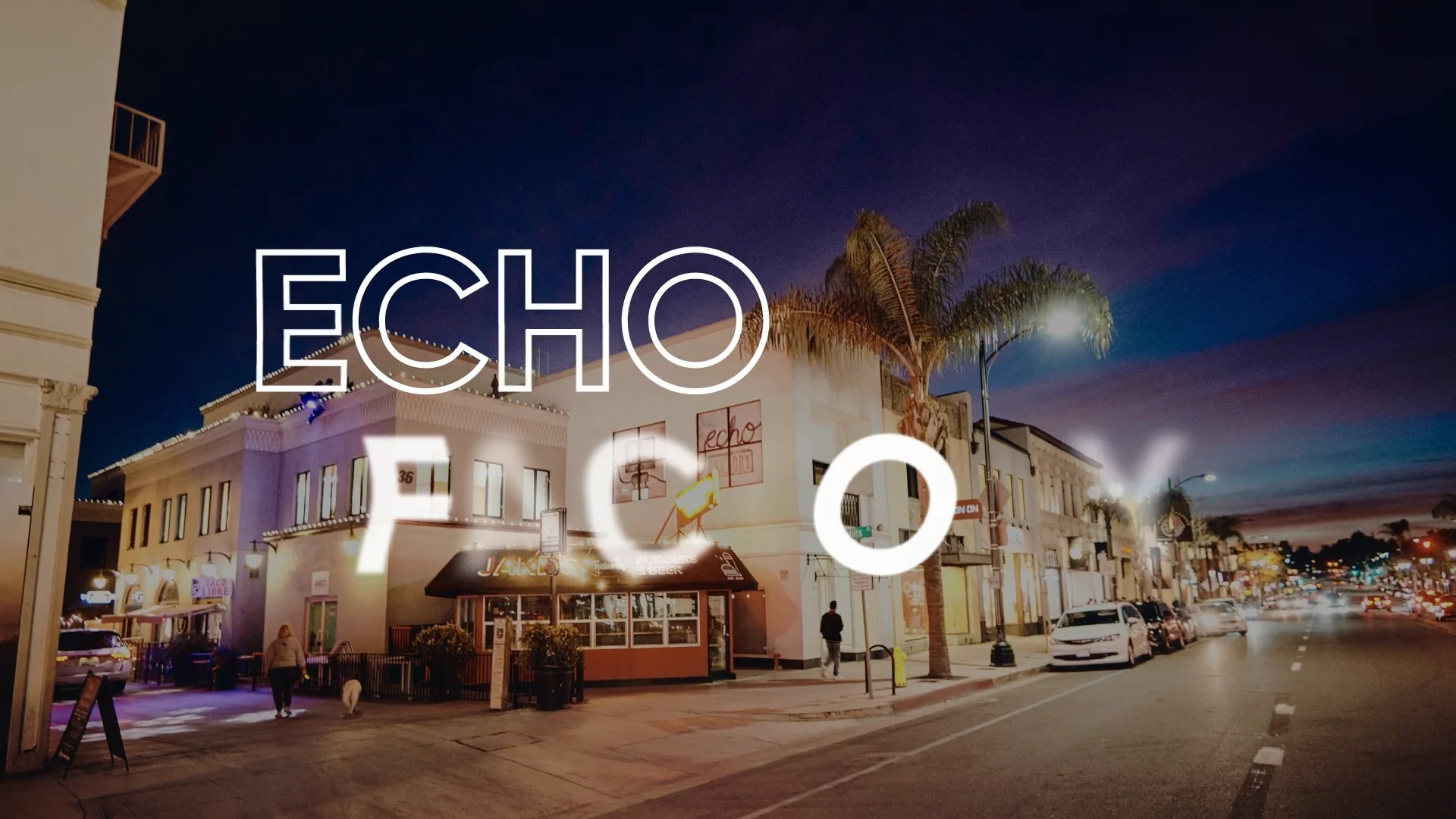
The test campaign's best-performing creative produced a reported 33.9% absolute lift and 103.6% relative lift in perception. High-frequency viewers showed the strongest shift, and innovation-oriented ZIP codes responded best. Those findings changed the next media plan: broader rollout, deeper frequency and more weight in the markets already moving. It is a modest but important distinction. “Data-driven” did not mean decorating a retrospective with a dashboard. The first buy was structured to decide the second.
A method worth stealing
Echo-Factory is not a software platform and has no magical distribution advantage. Its business is fees for judgment and execution - a strategy assignment, a website or campaign, sometimes widening into retained support. It competes with in-house teams, specialist studios and larger Los Angeles agencies. Its useful position is in the middle: broad enough to carry an idea from interview to media buy, small enough that the handoffs which annoyed Schaffer at the beginning do not multiply beyond recognition.
The copyable sequence
- Interview the people who make, buy and reject the product.
- Name the precise obstacle - obscurity, mistrust, adoption or internal confusion.
- Translate the technical advantage into plain language without stripping away proof.
- Place the message where the real decision-makers gather, online and off.
- Measure perception and action early enough to alter the next round.
Precision has prerequisites. This model is strongest when buyers can be identified, the offer has a defensible advantage and the client can connect exposure to a meaningful action. It becomes less useful when the audience is truly undifferentiated, tracking is impossible, the product experience contradicts the promise or leadership will not allow research to change the brief. A narrow campaign cannot rescue a weak proposition; it merely finds the disappointed people more efficiently.
The founder's original complaint was that other agencies made the picture worse after he took it. Echo-Factory's answer has been to keep asking what happens before and after the picture. Who needs to see it? What must they understand? What should they do next? It is a practical philosophy for an agency whose subjects include spacecraft mechanisms, community medicine and the future of its own city. The hard thing is rarely making noise. It is locating the exact misunderstanding that growth requires you to remove.
Keep exploring