He wrote his PhD thesis on using electrons as quantum bits at Cambridge. Now he's using the same systems-level thinking to rewire how America saves for retirement. As CEO of Human Interest, Schneble is closing the gap between Wall Street's retirement infrastructure and the 45 million small-business workers who've never had access to it.
Jeff Schneble's Cambridge thesis was about electrons behaving as quantum bits in semiconductor devices. The practical applications were theoretical; the career path was not. What he was really learning - without knowing it yet - was how to look at a complex, entangled system and figure out which intervention changes everything.
Retirement savings in America is exactly that kind of problem. The numbers are staggering: a $28 trillion gap between what Americans have saved and what they'll need. The cause isn't apathy - it's access. Roughly half of American workers don't have a retirement plan through their employer, and the reason is almost always the same: their employer is too small to navigate the cost and complexity of setting one up. The 401(k) industry was built for the Fortune 500 and never quite bothered to translate for anyone else.
"The big incumbents haven't figured out how to make plans affordable and accessible for smaller companies. We knew that to make a permanent dent in this country's retirement crisis, we had to do something different."
- Jeff SchnebleSchneble arrived at Human Interest through an unusual door. After earning a PhD in physics from Cambridge and an MBA from Harvard Business School, he spent years as an Operating Executive at Silver Lake Partners, holding interim executive roles at companies as different as GoDaddy and Vantage Data Centers. He wasn't a founder. He was a fixer - someone who parachuted into businesses and made them work better. That hands-on operational DNA turned out to be exactly what a fast-growing fintech startup needed from its leader.
He joined Wing Venture Capital as a partner in 2015 and led the firm's investment in Human Interest's Series A in 2017. Two years later, he crossed from investor to operator by becoming the company's CEO - a rare move that gave him a running start. He'd already studied the company from the outside. Now he'd build it from within.
In 2024, Human Interest reportedly added 1 in 4 of every new 401(k) plan started in the United States. That's not a market share number - it's a movement.
What followed under Schneble's leadership was a steady, compounding build. Human Interest grew past $100 million in annual recurring revenue. Then past $200 million. It raised a $267 million Series E in July 2024, achieving a $1.33 billion valuation. By October 2025, after Morgan Stanley Tactical Value put in another $100 million, the company was valued at $3 billion. And Schneble publicly committed to an IPO timeline: "We'll definitely be ready in less than two years."
The company now serves over 45,000 small and medium-sized businesses - the electricians, the restaurant groups, the logistics companies, the startups - who'd never had access to a real retirement plan before. Human Interest doesn't just set up the 401(k) and hand over the keys. It handles the administration, the compliance testing, the DOL audit defense, the payroll integrations. It makes the invisible parts invisible so small business owners can stop worrying about the plan they offer and start worrying about their actual business.
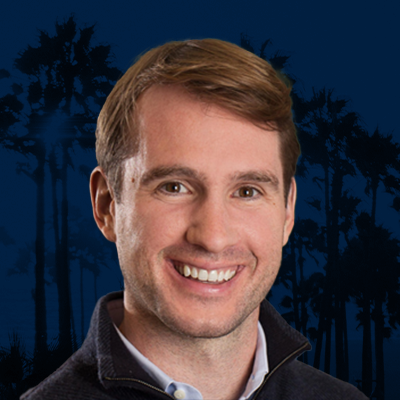
There's a thread that runs from Schneble's Cambridge lab work to the company he runs today. In semiconductor physics, the challenge is building systems precise enough to control individual particles - systems where the margin for error is vanishingly small and the consequences of getting it wrong compound fast. Sound familiar? That's also what retirement plan administration looks like for a small business that can't afford a compliance team.
After Cambridge and Harvard, Schneble didn't go straight into finance or startups. He went to Silver Lake Partners, the private equity firm, as an Operating Executive on their Value Creation team. The job was essentially a rotating series of interim executive assignments - spending time at GoDaddy, Mercury Payment Systems, Vantage Data Centers, Fathom - finding the leverage points inside established companies and pulling them. It's the kind of experience that turns a smart person into an effective one.
Wing Venture Capital came next. As a partner, Schneble made bets on early-stage companies across enterprise software and fintech. One of those bets was Human Interest in 2017. He led the Series A. He joined the board. He understood the market, the product, the team. And when the moment came to find a CEO who could take the company from scrappy startup to scaled platform, he was already inside the building.
Taking the CEO chair in February 2019 - after years as an investor - is not how most fintech companies find their leaders. But it turned out to be the right kind of unusual. Schneble arrived with capital relationships already in place, a board that trusted him, and an investor's instinct for where the market was heading. He also arrived with no illusions about how hard the work would be.
The retirement industry is not known for speed. The incumbents - Fidelity, Vanguard, Empower - built their infrastructure for large employers and have little incentive to commoditize their own margins to serve a dentist's office with seven employees. Human Interest saw this not as a problem but as a gap wide enough to build a company in. The bet was technology: if you could automate the compliance, the recordkeeping, the DOL audits, the payroll integrations, you could serve the small employer market at a price point the legacy players couldn't match.
It's working. The company's growth figures - 71% year-over-year revenue growth in 2024, $200 million in ARR expected by end of 2025, a $3 billion valuation - are the kind of numbers that happen when a structural gap meets a company that's actually figured out the solution.
"If we want to close America's $28 trillion retirement savings gap, then we have to make it easier for small- and medium-sized businesses to offer retirement savings plans, and we have to make saving automatic for employees."
- Jeff SchnebleWhen Schneble led Human Interest's Series A from Wing Venture Capital in 2017, he wasn't planning to run the company. He was planning to back it. Two years later, when the question arose of who should lead the next phase of growth, the answer turned out to be the person who'd already spent two years studying it from a board seat - who understood the cap table, the team, the product gaps, and the market dynamics better than almost any outside candidate could. It's one of the cleaner origin stories in Silicon Valley CEO history: invest deeply, learn everything, then cross the aisle.
The $28 trillion retirement savings gap is not a number Schneble invented, but it's one he's made central to Human Interest's identity. The figure refers to the estimated shortfall between what Americans have saved for retirement and what they'll need. Schneble comes back to it constantly - in press releases, in investor presentations, in media interviews. It works because it's simultaneously massive and specific. It tells the story of the problem before you have to explain the product.
One of Schneble's consistent public positions is that retirement access is a workers' rights issue, not just a finance product. He's pointed specifically to delivery drivers, logistics workers, and hourly employees - people who've been excluded from the employer-sponsored retirement system not because they don't want to save, but because no one has made it easy for their employers to offer the option. Human Interest's PartnerConnect platform, launched in 2025, extends that logic to financial advisors, making it practical for them to bring retirement plans to clients who previously weren't worth the administrative overhead.
The primary cause of this retirement savings gap is a lack of access to financial tools that help people save, especially through work.JEFF SCHNEBLE
The actual cost of withdrawing capital now is much higher than people may realize. Ten thousand dollars withdrawn now is actually more than $40,000 over time, assuming a 5 percent average return over 30 years.JEFF SCHNEBLE
We want to bring retirement benefits to people in all lines of work.JEFF SCHNEBLE
We'll definitely be ready [for an IPO] in less than two years.JEFF SCHNEBLE, 2024
YOUTUBE • JULY 2023
CHEDDAR NEWS • MAY 2019
His Cambridge PhD thesis was about controlling electrons as quantum bits - one of the most technically demanding research areas in physics, and a universe away from 401(k) recordkeeping.
He led Human Interest's Series A from the investor side in 2017, joined the board, and then became CEO in 2019 - a three-year runway that most incoming CEOs never get.
At Silver Lake Partners, he held interim executive roles at four completely different companies before ever running a startup. By the time he became CEO, he'd already run pieces of four others.
Human Interest reportedly added 1 in 4 of all new 401(k) plans started in the U.S. in 2024. The market share figure is striking; the policy implication is bigger.
The company's total funding has now crossed $1 billion - from a Y Combinator-backed startup to a unicorn with a $3 billion valuation, all without going public.
Schneble has specifically called out delivery workers, logistics workers, and hourly employees as underserved populations. This isn't marketing - it's embedded in Human Interest's product strategy.