vibe-coding
(36)
iBusiness and the paperwork problem
A lending company learned to automate its own paperwork. Now iBusiness wants banks to build software around the way they actually work.
Anything Can Build Your App. Apple Still Holds the Keys.
Anything’s App Store dispute exposes the gap between making an app and getting it into users’ hands. The current iPhone and Android workflows show exactly where the builder’s work ends and the owner’s launch begins.

Anton Osika and the Software Everyone Was Supposed to Build
A particle-physics detour, two Swedish AI startups and an open-source experiment led Anton Osika to a deceptively simple question: what if an idea were enough to start building software?

Riley Brown Has Always Followed the Next Interesting Problem
He tried poker, books, crypto and the creator economy before finding a new question to pursue: what happens when anyone can make software? The AI educator now builds companies around the tools he once explained on camera.

Alex Finn Turned an Algorithm Obsession Into a Software Company
He learned the rules of X, built an audience by explaining them, then made the tool he had wanted for himself. Now Alex Finn is testing how far one person can take an AI-built company.

Fabian Hedin and the Long Road From a Minecraft Server to Lovable
A Minecraft server taught Fabian Hedin to code. A property software venture taught him to build for other people. At Lovable, he is trying to make both lessons available to anyone with an idea.

Joel Soo Makes Software's New Question: Who Gets to Build?
At Lovable, the Boston operator's job begins where the software demo ends: inside rooms where people who never called themselves developers start making tools of their own.

Blackbox AI Wants Every Model in One Room
The coding assistant that began by rescuing snippets now conducts whole rooms of rival models. It is fast, useful, sprawling - and worth trying with both hands on the wheel.
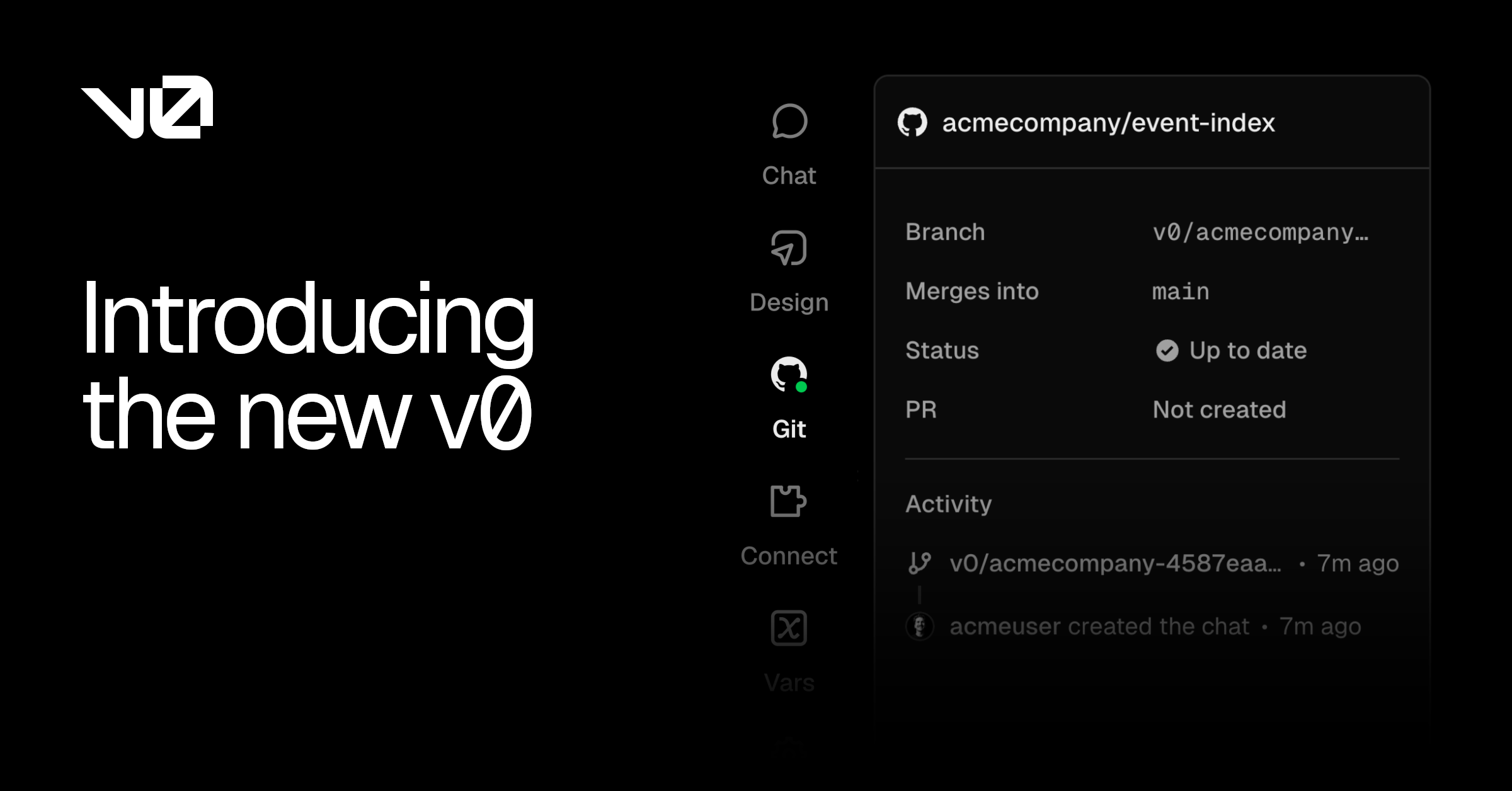
v0 Turned the Blank Page Into a Working App
Vercel's app-building agent is particularly useful when a rough idea needs to become something clickable before the meeting ends. The catch is equally modern: every ambitious conversation has a meter running.

The Postgres Company That Let AI Write the Signups
It started as the open-source answer to Firebase. Then AI coding agents adopted it as their default backend, and Supabase doubled its valuation to $10.5 billion in eight months.
The town that refused to demolish its own future
In 2014, two Cape Girardeau residents talked the city out of demolishing a downtown building and started southeast Missouri's first tech incubator inside it. A decade later, Codefi trains AI workers, builds startups as a co-founder, and pulls venture capital into places the coasts forget.

Wilson Spearman
Wilson Spearman is the co-founder and CEO of CreativeMode (YC S24), an AI-powered, no-code platform that lets anyone build Minecraft mods without writing code. An MIT computer science graduate who worked on AI cloud infrastructure at Crusoe and procurement tools at Settle, he now leads a small San Francisco team that has helped players create hundreds of thousands of mods - by the company's account, more Minecraft mods in nine months than in the game's previous seventeen years combined. When he is not shipping software, he is an aspiring ski mountaineer chasing alpine glacier routes.

stagewise
stagewise is a frontend coding agent that lives inside your running web app on localhost. Instead of switching between a browser and an IDE, developers click on a UI element, describe the change in plain language, and stagewise edits the actual source code in the local codebase. Started by Julian Goetze and Glenn Toews and part of Y Combinator's Summer 2025 batch, it began as an open-source, framework-agnostic toolbar that has been downloaded more than 130,000 times and starred over 4,800 times on GitHub.
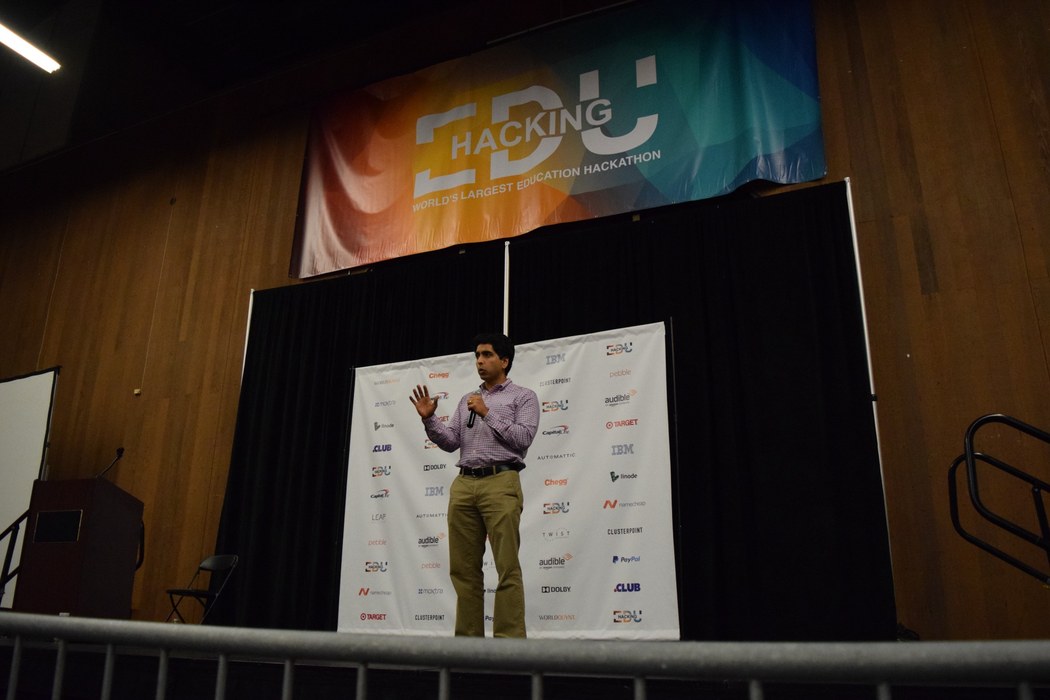
Sal Khan on Job Shock: How AI Will Reshape Work and Learning
In this podcast interview, Khan Academy founder Sal Khan discusses his forthcoming book 'Job Shock' and his growing concern that AI-driven automation will dislocate entire categories of workers—call center staff, drivers, and even software engineers, designers, and product managers—over the next three to five years. He argues that safe jobs are those that lean into human connection (teaching, nursing, hospitality, sales), describes how Khan Academy is transforming internally with AI agents (running a ~$1.2M/year Anthropic bill), and unveils the Constellation Institute, a new accredited program offering a full degree for under $10,000 that emphasizes 'durable skills' like communication, collaboration, creativity, and critical thinking, co-designed with employers such as McKinsey, Bain, Google, Microsoft, Replit, and Accenture.
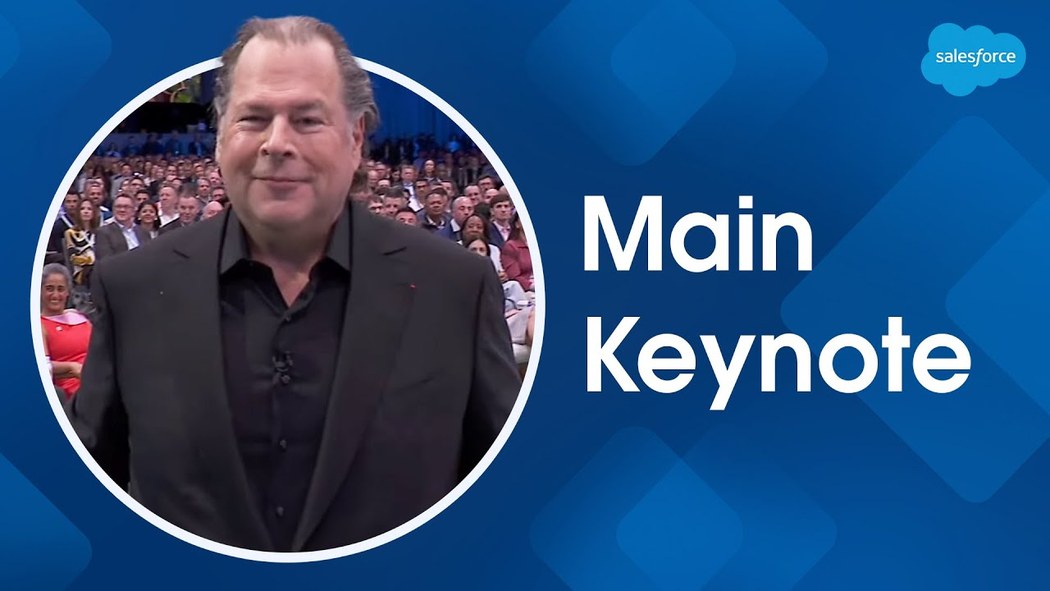
Dreamforce 2025 Keynote: The Agentic Enterprise
At Dreamforce 2025 in San Francisco, Salesforce CEO and Chair Mark Benioff unveiled the Agentforce 360 platform and declared the arrival of 'the agentic enterprise' — a new era where humans and AI agents drive customer success together. The keynote positioned Agentforce as the fastest-growing product in Salesforce history, having handled more than 1.5 million customer service conversations in nine months. Benioff framed the moment around a central choice: whether AI replaces people or elevates them, arguing that AI built on trust and deep data context amplifies human potential. The keynote featured new products including Agentforce Vibes (vibe-coding), Data 360, Agentforce Voice, and Agent Script, alongside five customer stories from Williams-Sonoma, Pandora, PepsiCo, FedEx, and Dell.
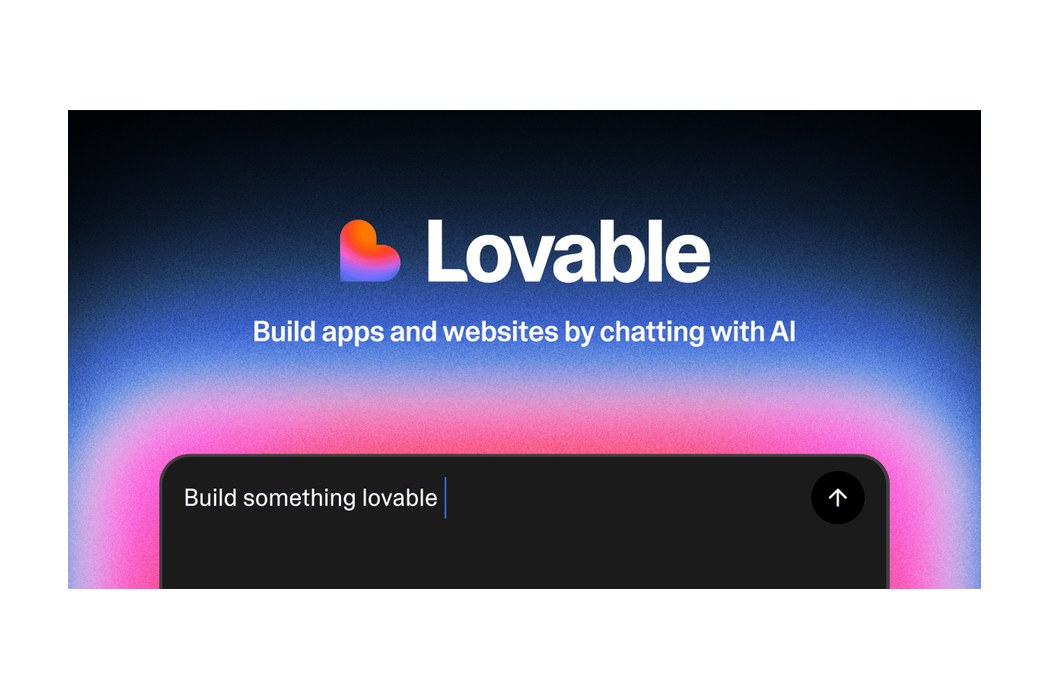
Lovable puts the idea person in charge
Two failed launches taught Lovable that a clever demo was not enough. Its next act gave people with a problem a way to build the software that solves it.

Superblocks
Superblocks is a New York-based enterprise software company that lets organizations build, deploy, and govern AI-generated internal applications. Its AI agent, Clark, turns natural-language prompts into full-stack apps backed by extensible React code, while enforcing an enterprise's existing security policies, data permissions, design standards, and audit requirements. The company positions itself as the governed, IT-controlled answer to consumer 'vibe coding' tools, serving teams that need to ship internal software quickly without introducing security and compliance risk.

Emergent
Emergent is an AI app builder that turns plain-language ideas into working, monetizable software. Its autonomous coding agents handle design, coding, testing, deployment, and scaling behind the scenes, giving non-technical users something that feels like a cloud-based engineering team. Founded by twin brothers Mukund and Madhav Jha and backed by Khosla Ventures, SoftBank, Lightspeed, Google, and Y Combinator, Emergent reached roughly $50M in ARR within seven months of launch and counts more than 5 million users across 190+ countries.

Sekai
Sekai is a San Francisco Bay Area consumer platform where anyone can build software just by describing it. Users type a prompt and get a playable, shareable mini-app - a game, quiz, utility, poll or interactive story - in seconds, then play, remix and share what others make. Founded in 2024 by serial entrepreneur Lucky Zhang, Sekai (Japanese for 'world') began as an AI anime fan-fiction tool and pivoted into general-purpose app creation as AI coding models improved. By mid-2026 users had created more than 15 million mini-apps, with roughly 200,000 new ones a day, and the company had raised about $26 million across Seed and Series A rounds from Khosla Ventures, Connect Ventures, a16z speedrun, Mayfield and others.

Supernova
Supernova is an AI-powered platform that turns a company's design system into structured context that both people and AI coding agents can use. Founded in Prague and now building a U.S. headquarters in San Francisco, it centralizes design tokens, component APIs, documentation and rules as a single source of truth, then feeds that context into tools like Figma, Storybook, Cursor, GitHub Copilot and Claude Code so product teams can prototype, hand off and ship features faster. A Y Combinator alum, it is used by hundreds of organizations including Air France, KLM, Kraft Heinz, Paramount, Mozilla, LaunchDarkly and Skyscanner.

Marius Meiners
Marius Meiners is the co-founder and CEO of Peec AI, a Berlin company that tells brands whether ChatGPT, Perplexity, and Gemini mention them - and how. A former top-100 League of Legends player who later worked in venture capital and M&A at PwC before joining Antler's Berlin cohort, he vibe-coded Peec's first prototype in a day and a half with V0 after not writing code for four years, signed eight letters of intent before building the real product, and priced it at 85 euros a month while competitors charged 500-plus. Peec launched in February 2025 and crossed roughly 10 million dollars in annualized revenue about 15 months later, raising about 29 million dollars from investors including Singular, 20VC, and Antler.

Nicolai Baldin
Nicolai Baldin is the co-founder and CEO of Synthesized, a London and New York-based DataOps and AI-powered test data automation platform he launched after a PhD in machine learning and statistics at the University of Cambridge. Synthesized generates synthetic, compliant, production-like data that enterprises use to test software, train models, and share information across regulatory boundaries. In September 2025 the company raised a $20M Series A led by Redalpine to expand into automated software testing for the age of 'vibe coding.'

Jabali
Jabali is a generative-AI game engine that lets people build and publish playable 2D and 3D games by describing them in plain language, no coding required. Founded in 2023 by former Meta, Amazon, Zynga and Microsoft gaming executives alongside AI researchers, the company wants to do for game creation what ChatGPT did for writing. It raised a $5M seed round led by BITKRAFT Ventures with Sony Innovation Fund and Sapphire Sport participating, and opened its Jabali Studio platform in early access in October 2025.

Shuttle
Shuttle is a Rust-native cloud platform that lets developers ship backends without writing infrastructure files. You annotate what you need in code - a database, secrets, a web server - and Shuttle provisions it and deploys to the cloud. Founded in 2019 and shaped by Y Combinator's Summer 2020 batch, the company is now repositioning as an 'AI platform engineer' that handles the deployment step where AI coding tools like Cursor, Copilot and Lovable leave off. It has drawn more than 20,000 developers and over 120,000 deployments, and raised a $6M seed round in October 2025.

TestSprite
TestSprite is a Seattle-based startup building an autonomous AI testing agent that validates AI-generated code. Its agent plugs into AI IDEs like Cursor, Claude Code, and VS Code via an MCP server, then autonomously writes test plans, generates and executes tests in the cloud, diagnoses failures, and feeds fixes back to the coding agent. Founded in 2023, TestSprite has raised $8.2M total, including a $6.7M seed led by Trilogy Equity Partners in October 2025, and serves 35,000+ users. It positions itself as the 'testing backbone' of the AI-native development era.

Woz
Woz is a San Francisco AI platform that acts like a technical cofounder in the cloud - designing, coding, testing, deploying, and maintaining production-ready mobile apps for non-technical founders. Unlike no-code tools that stop at prototypes, Woz combines specialized AI agents with human engineering review to ship real, business-ready apps straight to the app store. Founded by MIT engineers Ben Collins and Brad Eckert, the YC W25 company raised $6M in seed funding in October 2025.

Nodar Daneliya
Nodar Daneliya is the co-founder and CEO of Shuttle, an open-source cloud platform that lets developers build and deploy backends without writing infrastructure files. A former quant trader and investment banker who taught himself the cloud, he traded London trading desks and Harvard finance classes for a Rust developer-tools company that more than 20,000 engineers now use across 120,000+ deployments. After raising a $6M seed round in October 2025, he is pointing Shuttle squarely at the messiest part of AI coding: what happens after the AI writes the code and someone still has to ship it.

Anything starts where the demo stops.
An AI app builder learned that generating code was only the beginning. The real work was getting ordinary people all the way to a product someone could use - and pay for.

Dhruv Amin
Dhruv Amin is the co-founder and co-CEO of Anything (formerly Create), a San Francisco AI app-building platform that turns plain English into working software, complete with databases, payments, and App Store submission. A Stanford computer scientist and former early YouTube product manager, he and co-founder Marcus Lowe shut down a profitable $2M-a-year freelance-developer marketplace in 2023 because they believed AI would make it obsolete, then rebuilt from scratch. The bet paid off: Anything hit a $2M annual revenue run rate within two weeks of its 2025 relaunch and raised an $11M Series A at a $100M valuation.

Windsurf
Windsurf (formerly Codeium, originally Exafunction) is a Mountain View-based AI coding company that built one of the first agentic AI-native IDEs, powered by its Cascade agent. Founded in 2021 by MIT classmates Varun Mohan and Douglas Chen, it grew to over 1 million developers and $82M ARR before a dramatic July 2025 split: Google paid roughly $2.4B to hire its founders and license its technology, while Cognition (maker of Devin) acquired the remaining product, brand, team, and customer base. In June 2026, Cognition relaunched the Windsurf IDE as Devin Desktop, an agent command center for managing local and cloud coding agents.