ai-chips
(18)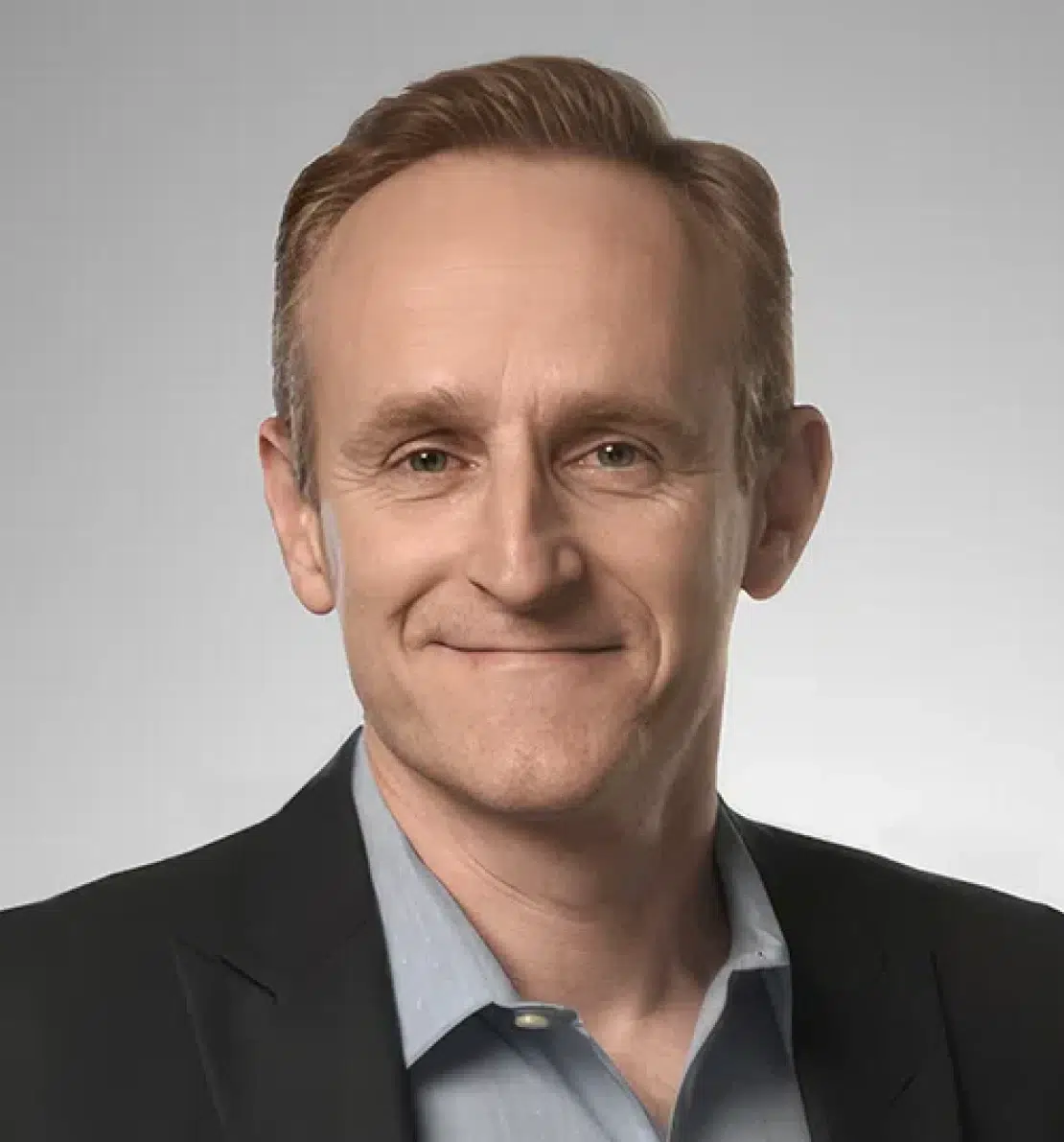
Michal Siwinski Makes the Invisible Traffic Inside AI Chips Legible
The chips powering AI, cars and data centers are becoming cities in miniature. Michal Siwinski has built a career explaining why their roads, rules and security matter as much as their engines.

Global Unichip Corporation (GUC)
The Taiwanese design house that quietly builds other people's AI chips - and reserved 60,000 CoWoS wafers to keep doing it.

Applied Materials
The company behind the machines that build almost every chip you own - and the atomic-scale materials engineering that keeps Moore's Law alive.

Teradyne
Most people never see a Teradyne machine, yet its testers stand between ambitious chip designs and the devices we trust. Now the 66-year-old Massachusetts company is applying the same factory-floor discipline to AI hardware, advanced packaging and robots that work beside people.

Broadcom
Broadcom Inc. (NASDAQ: AVGO) is one of the world's largest semiconductor and infrastructure-software companies, headquartered in Palo Alto, California. Led by President and CEO Hock Tan since 2006, it designs custom AI accelerators, Ethernet switching and routing silicon, wireless and broadband chips, and optical components, while also running a large enterprise-software business anchored by VMware, Symantec, CA and Brocade. Its products connect and power much of the modern internet, from smartphones and set-top boxes to the hyperscale data centers training today's largest AI models.
NVIDIA
NVIDIA is an American technology company that designs graphics processing units (GPUs) and the accelerated-computing platforms built around them. Founded in 1993 to chase realistic 3D graphics for video games, it turned its parallel-processing chips and the CUDA software layer into the dominant engine of the modern AI boom. Today its data-center systems train and run most of the world's large AI models, and the company sits at the center of the semiconductor industry with a market value above $5 trillion.
ESWIN Computing
ESWIN Computing is a Beijing-based chip company building system-on-chip products around the open RISC-V architecture. It designs edge-computing and AI SoCs - most notably the EIC77 series - pairs them with its own NPU and software stack, and sells them as chips and developer boards for smart home, automotive, industrial, and PC-class computing. It is the IC-and-solutions arm of the larger Beijing ESWIN Technology Group founded by former BOE chairman Wang Dongsheng.

Movellus Inc.
Movellus is a San Jose semiconductor IP company that builds the invisible plumbing of advanced chips - the clocks, sensors, droop-response systems and on-die voltage regulators that keep high-performance silicon running fast without melting or missing a beat. Its flagship Aeonic platform reimagines traditional analog blocks as synthesizable, digital IP that can be dropped into an SoC design and ported across process nodes from 40nm down to TSMC 3nm. Founded in 2014 out of University of Michigan research, the company sells to teams building everything from ultra-low-power edge-AI devices to cloud datacenter and AI accelerators, and raised a $23M Series B in 2022.
Tensordyne
Tensordyne is a Sunnyvale- and Munich-based AI hardware company building inference systems that use a hardware-native logarithmic number system to cut the cost and power of running large AI models. Formerly the computer-vision startup Recogni, it rebranded in September 2025 and in June 2026 unveiled Napier (TDN), a 3nm, air-cooled inference platform it claims delivers roughly 13x the throughput and 17x the efficiency of Nvidia's GB300 NVL72 rack. The company positions itself as a direct challenger to Nvidia in the market for profitable, high-throughput generative-AI inference.
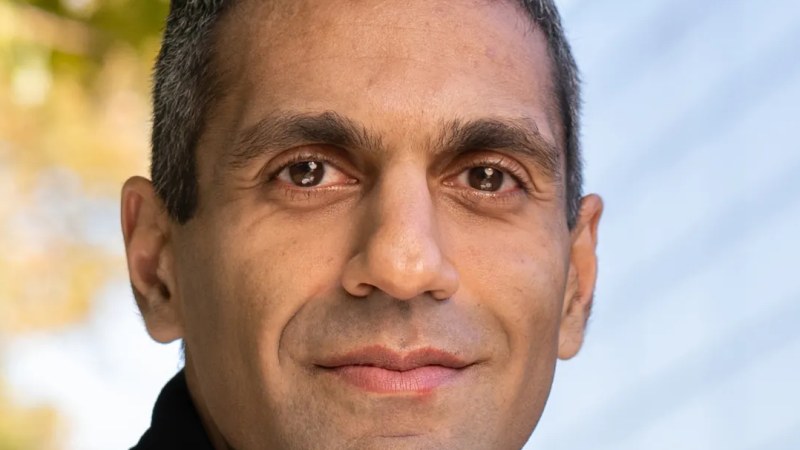
Naveen Verma
Naveen Verma is the co-founder and CEO of EnCharge AI and a professor of electrical and computer engineering at Princeton University. He spent roughly six years de-risking a single, stubborn idea - computing with electric charge stored in metal capacitors instead of noisy transistors - before spinning it out of his lab in 2022. The result is analog in-memory computing hardware that his company says runs AI inference at roughly 20 times less energy than a typical GPU, aimed squarely at putting powerful AI on laptops and edge devices rather than in power-hungry data centers. EnCharge has raised more than $144 million, including an oversubscribed $100M+ Series B led by Tiger Global in early 2025, and shipped its first commercial accelerator, the EN100.

Noah Sturcken
Noah Sturcken is the founder and CEO of Ferric, a New York semiconductor company building the world's smallest, most efficient power converters. A Columbia PhD who turned his dissertation into a company, he pioneered integrated voltage regulators (IVRs) that bury thin-film magnetic inductors inside the chip itself, shrinking power delivery by more than 10x. As AI processors grow ever hungrier for clean, dense power, Ferric's tech sits exactly where the bottleneck is - and partners like Marvell are now building it into custom AI silicon.
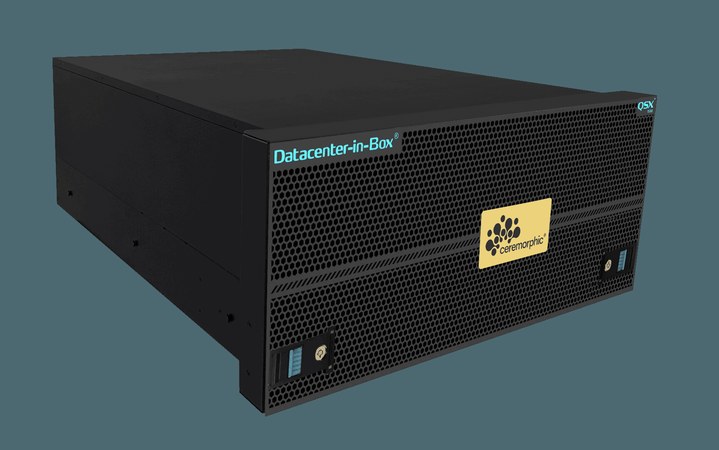
Ceremorphic, Inc.
Ceremorphic is a San Jose-based fabless semiconductor startup building energy-efficient AI supercomputing silicon. Founded in 2020 by serial entrepreneur Venkat Mattela, the company taped out a first-of-its-kind 5nm HPC/AI chip on TSMC's most advanced node and is applying the same Hierarchical Learning Processor architecture to data center AI, robotics, automotive, and analog-AI-driven drug discovery.

MatX
MatX is a Mountain View semiconductor company building chips designed exclusively for large language models. Founded in 2022 by ex-Google TPU engineers Reiner Pope and Mike Gunter, it aims to deliver an order-of-magnitude more performance-per-dollar for frontier model training and inference than current GPUs.

Farhat Jahangir
Farhat Jahangir is the Founder, President & CEO of GS Microelectronics (GSME), a San Jose-based semiconductor solutions company he founded around 2021-2022. With 25+ years in semiconductor manufacturing, operations, and chip design, he previously served as VP & General Manager at ON Semiconductor and SVP of Manufacturing at Quantenna Communications, where he helped steer the company through its 2016 IPO and a $1.1B acquisition. GSME raised a $35M Series B in January 2026, backed by Maverick Silicon, and has since made two strategic acquisitions - Sinble Technology Vietnam and Muse Semiconductor - to build a vertically integrated semiconductor services platform spanning chip design, MPW services, and advanced process node capabilities.

Reiner Pope
Reiner Pope is the co-founder and CEO of MatX, an AI chip startup based in Mountain View, California, designing purpose-built silicon for large language models. A former Google Senior Staff Software Engineer who led AI software development for Google's TPUs and served as Efficiency Lead for PaLM, Pope left Google one week before ChatGPT launched to build what he calls 'the best chips for LLMs that physics allows.' MatX has raised approximately $604M to date, including a $500M Series B led by Jane Street and Situational Awareness LP, and is building a hybrid SRAM-HBM chip architecture targeting the world's leading AI labs.

SambaNova Systems
SambaNova Systems is a Palo Alto AI company building purpose-built chips and a full-stack platform for fast, efficient inference on the largest open-source models, taking direct aim at Nvidia in the enterprise AI market.

Rodrigo Liang
Rodrigo Liang is the co-founder and CEO of SambaNova Systems, an AI infrastructure company he built from the ground up in 2017 alongside Stanford professors Kunle Olukotun and Chris Ré. Born in Taipei, raised in Brazil, and trained in electrical engineering at Stanford, Liang spent two decades designing high-performance processors at Hewlett-Packard, Sun Microsystems, and Oracle before betting that the entire computing paradigm for AI needed to be reimagined. SambaNova's Reconfigurable Dataflow Unit (RDU) is the architectural expression of that conviction - chips designed around data movement rather than instructions - and in February 2026 the company announced the SN50, claiming it runs agentic AI 5x faster than competing chips at 3x lower cost, backed by $350M in Series E funding and a strategic partnership with Intel.

Dylan Patel
Dylan Patel is the founder and chief analyst of SemiAnalysis, a boutique AI infrastructure research and consulting firm he started as a solo blog on his 24th birthday. Growing up working night shifts at his immigrant parents' motel in rural Georgia, he taught himself semiconductor analysis while toggling between RuneScape and chip-geek forums. Today SemiAnalysis has 85+ employees, 260,000+ subscribers, and is on track to surpass $100 million in revenue in 2026 - making Patel one of the most influential voices in AI infrastructure, cited by Jensen Huang at GTC and referenced by Sam Altman.