gpu
(40)
Li Jianwen and the art of changing a chipmaker's mind
Before founding Denglin Technology, Li Jianwen paused an attractive idea and went looking for a better one. His path from GPU engineer to company builder runs through customer visits, software decisions and the less glamorous business of delivering chips.

The compiler legend who wants to break AI free from a single chip
Chris Lattner built the compilers inside every iPhone and Mac. His next act, Modular, is a bet that AI shouldn't be chained to one company's chips - and Qualcomm just paid billions to own it.
Code Ocean
Code Ocean is a New York-based B2B SaaS platform that makes computational research reproducible, traceable and collaborative. Its flagship Compute Capsule bundles code, data and the exact software environment together so an analysis runs identically today or years from now. Used by pharma, biotech and leading research institutes, and integrated with journals like Nature and IEEE, Code Ocean is building a trusted virtual lab where both scientists and AI agents can run real analyses with full version control, lineage and compliance.
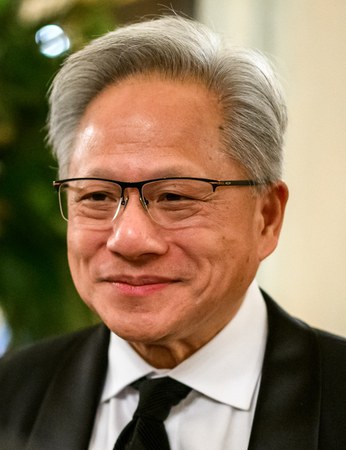
Only in America: My Conversation with Jensen Huang
In an interview for the 'Only in America' series, former Secretary of State Condoleezza Rice sits down with Nvidia founding CEO Jensen Huang at Nvidia's new California campus. Huang recounts his journey from a nine-year-old immigrant sent from Thailand to a boarding school in Oneida, Kentucky, through Oregon State University and Stanford, to founding Nvidia on a business plan many considered impossible. He reflects on the chicken-and-egg problem of introducing a new computing architecture, the decades of grit before AI validated his vision, cautious optimism about artificial intelligence, and why he considers himself the embodiment of the American dream.

Daytona
Daytona builds programmatic, composable computers for AI agents. Its stateful sandboxes spin up in under 90 milliseconds, run untrusted AI-generated code in full isolation, and can be started, paused, or snapshotted on demand. Founded by Ivan Burazin and Vedran Jukic, the company pivoted from developer-environment management into agent-native infrastructure in 2025 and raised a $24M Series A led by FirstMark Capital in February 2026. Customers include LangChain, Writer, Turing, and SambaNova.
Inferact
Inferact is a Berkeley- and San Francisco-based AI infrastructure company founded by the creators and core maintainers of vLLM, the most widely used open-source engine for running large language models. The company commercializes vLLM - which at any moment powers inference on more than 400,000 GPUs worldwide - by funneling paid engineering resources back into the open project while building a next-generation commercial 'universal inference layer' meant to make AI inference cheaper and faster. Inferact launched publicly in January 2026 with a $150 million seed round at an $800 million valuation, co-led by Andreessen Horowitz and Lightspeed.

OpenInfer
OpenInfer is a San Mateo-based AI infrastructure startup building an 'Inference OS for the agentic era' - software that runs large AI models and agents directly on the CPUs, GPUs and NPUs enterprises already own, from edge devices to private data centers, without cloud lock-in. Founded by ex-Meta and Roblox systems engineers Behnam Bastani and Reza Nourai, its OpenInfer Engine claims 2-3x faster inference than Llama.cpp and Ollama on distilled DeepSeek models and works as a drop-in replacement for existing endpoints. The company raised an $8M seed round in February 2025 and has since shipped Jean, a private email-native agentic AI system, and orchestration layers for heterogeneous compute.

RadixArk
RadixArk is an AI infrastructure company spun out of the team behind SGLang, the open-source inference engine that serves trillions of tokens a day for the likes of Google, Microsoft, NVIDIA, Oracle and xAI. Founded by Ying Sheng and Banghua Zhu, RadixArk keeps SGLang and its reinforcement-learning framework Miles free and open while selling managed hosting and tooling on top, aiming to make building, training and running frontier models at least 10x cheaper and 10x more accessible. It launched publicly in May 2026 with a $100M seed round led by Accel and Spark Capital at a $400M valuation.

FriendliAI
FriendliAI is a San Francisco-based AI inference cloud built by the researchers who invented continuous batching - the technique now standard across the industry. Its platform serves open-weight and custom generative AI models in production with high throughput, lower GPU costs, and 99.99% reliability, used by customers including LG and Twelve Labs.

Gimlet Labs, Inc.
Gimlet Labs is a San Francisco applied research company building the first multi-silicon inference cloud - software that runs AI workloads simultaneously across CPUs, GPUs, and specialized accelerators. Founded by ex-Google and ex-NVIDIA engineers behind the Pixie observability project, Gimlet ships Gimlet Cloud (serverless agent inference) and kforge (autonomous kernel generation from PyTorch). The company exited stealth in October 2025 with eight-figure revenue and raised an $80M Series A led by Menlo Ventures in March 2026.
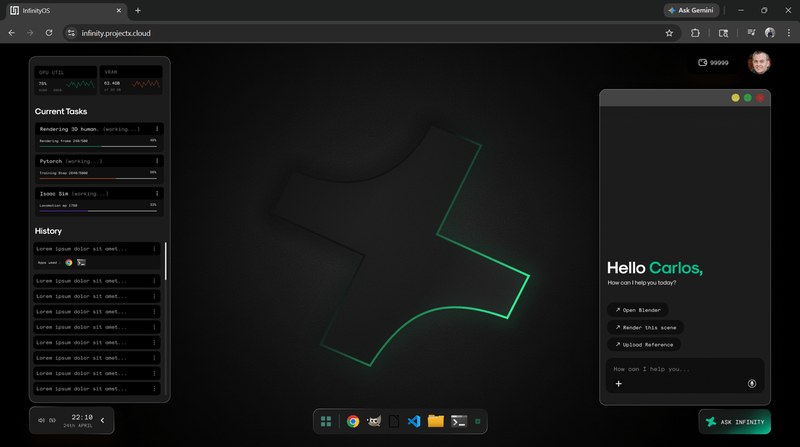
ProjectX
ProjectX is a San Francisco-based, Y Combinator-backed startup building Infinity (InfinityOS) - a cloud-native, distributed operating system where every app runs on its own independent compute and GPU inside a single browser tab. Designed for the multi-agent, GPU-native era, it lets humans and AI agents run Blender, Unreal, Isaac Sim, DaVinci, and VS Code side-by-side in one shared workspace.

Coiled
Coiled is a lightweight cloud compute platform that lets Python users scale data science, machine learning, and AI workloads from a laptop to thousands of cloud machines without Docker or Kubernetes. Founded in 2020 by Matthew Rocklin, the creator of the open-source Dask library, Coiled runs inside a customer's own AWS, GCP, or Azure account, handling provisioning, autoscaling, environment replication, and cost visibility so data teams can run Dask clusters, serverless functions, and batch jobs with minimal friction.
Spiral
Spiral is a New York-based data infrastructure company building a database reimagined from the ground up for the AI era - what it calls the 'Third Age of Data,' when machines, not humans, are the primary consumers of data. Built on Vortex, an open-source columnar file format donated to the Linux Foundation, Spiral streams data directly from object storage into GPU memory, unifies governance across every data type from tiny embeddings to massive video, and aims to keep expensive GPUs saturated instead of idle. Founded by ex-Palantir and ex-Citadel engineers, it emerged from stealth in September 2025 with $22M in Seed and Series A funding led by General Catalyst and Amplify Partners.
Dongsoo Han
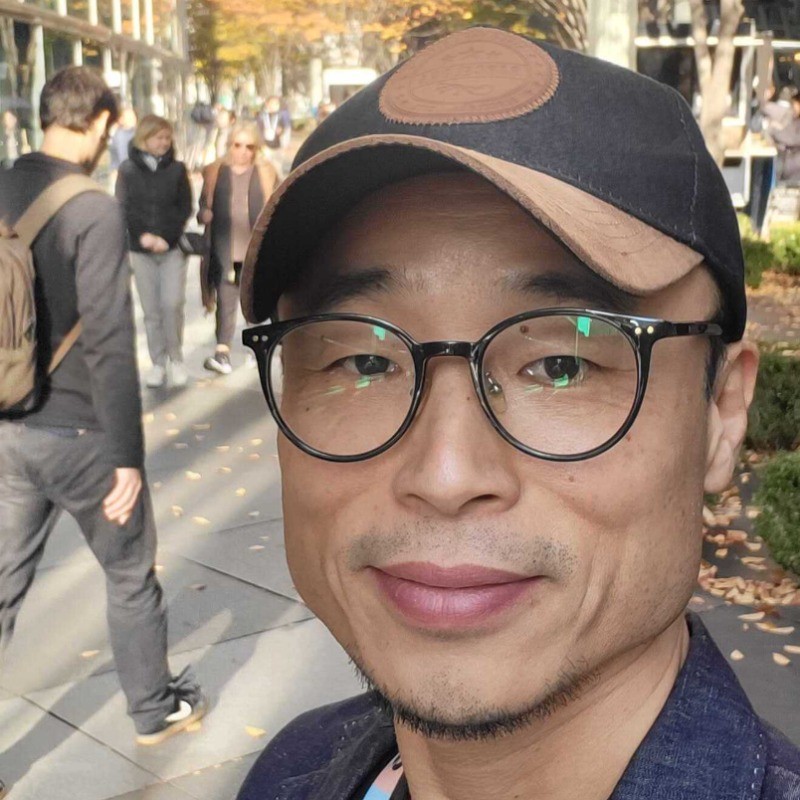
Dongsoo Han is the founder and CEO of z-emotion, a 3D garment simulation company building software that lets fashion brands design, fit, and render clothing entirely in 3D. A computer graphics engineer with 25+ years in simulation and gaming, he built the hair physics that became AMD's TressFX, the first playable real-time hair in a video game (Tomb Raider). He later realized a thread in 3D space moves much like a strand of hair, and turned that insight into z-emotion's products z-weave, z-fit, z-maya, and zeavric, used in projects with brands like Louis Vuitton and Nike.

Christina Olmsted
Christina Olmsted is Vice President of AI and Data Center Marketing at NVIDIA, where she leads global marketing and PR teams at the epicenter of the AI revolution. With nearly a decade at NVIDIA and 15 years prior at Cisco, she built and championed campaigns that repositioned entire computing paradigms - from Cisco's Internet of Everything brand movement to NVIDIA's AI and accelerated computing narrative. A UC Berkeley dual-degree alumna with a flair for connecting technology to human impact, she operates at the intersection of deep technical product marketing and culture-shaping storytelling.

Darrin Chen
Darrin Chen is the VP of Global Partners (NPN) GTM & Operations at NVIDIA, where he leads go-to-market strategy and operations for the NVIDIA Partner Network - the company's global partner ecosystem spanning solution providers, systems integrators, and channel partners. With 30+ years in technology from storage to networking to AI infrastructure, Chen joined NVIDIA through the 2020 acquisition of Mellanox Technologies, where he had spent over a decade building worldwide channel programs. In mid-2023, NVIDIA expanded his mandate as it split its global channel chief role in two, tapping Chen to oversee its entire NPN program as the company transformed into a full-stack AI computing company.

Jason Paul
Jason Paul is Vice President of GeForce Platform Marketing at NVIDIA, where he has worked since 2003. Over more than two decades, he has led the marketing and launch of every major GeForce GPU generation, pioneered NVIDIA's SHIELD gaming ecosystem, championed GameWorks VR, and now spearheads the company's consumer AI push connecting RTX hardware to over 100 million Windows users. Educated at UCLA and Stanford (MBA), Paul sits at the crossroads of gaming hardware, software platforms, and the emerging era of on-device AI.
Lisa Lahde
Lisa Lahde is Vice President of Marketing at NVIDIA, where she leads campaign marketing for priority industries and the Omniverse platform. A veteran tech marketer with roots in social media and community management, she joined NVIDIA around 2016 and has helped shape the company's storytelling around AI, autonomous systems, and the industrial metaverse. She produced NVIDIA's 'I Am AI' docuseries, contributed to Forbes BrandVoice as an AI innovator profiler, and moderated the OpenUSD session at GTC 2024 in San Jose. Outside the GPU giant's orbit, she runs the persona of @JewelryHunter - a longtime indie fashion enthusiast who blogged about emerging jewelry designers.
Sampson Han
Sampson Han is Vice President of AI and Data Center Marketing at NVIDIA, the Santa Clara-based technology powerhouse behind the GPU revolution driving modern artificial intelligence. Operating at the intersection of cutting-edge silicon and the enterprise market, Han oversees marketing strategy for NVIDIA's data center and AI product portfolio - the very infrastructure powering the global AI buildout. He works within one of the most influential technology companies in history, helping define how hyperscalers, enterprises, and sovereign AI initiatives understand and adopt NVIDIA's data center solutions.

Stephanie Johnson
Stephanie Johnson is Vice President of Global Consumer Marketing at NVIDIA, leading go-to-market strategy for GeForce NOW, NVIDIA Studio, and SHIELD. With over two decades in entertainment and gaming marketing - from Take2 Interactive to Warner Bros. Interactive Entertainment - she joined NVIDIA around 2018 and has been instrumental in scaling GeForce NOW from beta to more than 30 million users. Recognized by the Silicon Valley YWCA in 2024 for outstanding professional achievements, Johnson operates at the intersection of gaming, creative tools, and generative AI, shaping how millions of consumers experience NVIDIA's products.
Anyscale
Anyscale is the company behind Ray, the open-source distributed computing framework used to train and serve some of the world's largest AI systems. Founded by the creators of Ray at UC Berkeley's RISELab, Anyscale provides a managed compute platform that lets enterprises scale Python and AI workloads across any cloud, with the performance of bare metal and the ergonomics of a notebook.

Armada
Armada is a San Francisco-based edge computing company that builds ruggedized, containerized data centers - the Galleon family and the megawatt-scale Leviathan - paired with Starlink connectivity and an AI orchestration platform. Its mission is to put AI and compute everywhere the cloud can't reach: oil rigs, mines, ships, forward operating bases, and remote industrial sites.
WEKA
WEKA builds a software-defined data platform engineered for AI and HPC workloads, feeding GPUs and CPUs with low-latency, high-throughput storage across on-prem, cloud, edge and hybrid environments. Its NeuralMesh architecture underpins hundreds of the world's largest AI deployments, including model builders, hyperscale neoclouds, and Fortune 50 enterprises.

FlexAI
FlexAI is a Paris-based AI infrastructure company building a 'universal AI compute' layer that lets teams deploy, train, and serve models across diverse GPU architectures and cloud providers without wrestling with the underlying hardware. Founded in 2023 by former Intel, NVIDIA, Apple, and Tesla veterans, it raised a $30M seed round in April 2024 and is positioning itself as Europe's answer to the GPU-as-a-service crunch.

Xscape Photonics Inc
Xscape Photonics is a Santa Clara-based deep-tech startup building next-generation silicon photonic solutions to solve the escape bandwidth crisis inside AI data centers. Founded in 2022 by a team of Columbia University researchers and industry veterans, the company's proprietary ChromX platform and FalconX laser module deliver multi-wavelength optical connectivity that can increase data throughput by 10x while cutting power by 10x compared to conventional solutions. Backed by $95 million in total funding from NVIDIA, Cisco, and others, Xscape is building the photonic fabric that will underpin the next generation of agentic AI infrastructure.

Byung-Gon Chun
Byung-Gon Chun is the CEO and Co-founder of FriendliAI, and a professor of Computer Science and Engineering at Seoul National University currently on leave. A systems researcher turned founder, he is best known for inventing continuous batching - the scheduling technique that became the default standard in every major LLM inference engine, from vLLM to TensorRT-LLM. His lab published the foundational ORCA paper at OSDI 2022, and he then turned that academic insight into FriendliAI, an enterprise AI inference platform that raised $26.7M and supports over 550,000 models from Hugging Face. With a career spanning Intel, Yahoo!, Microsoft, and Facebook, Chun brings rare depth across both research and production AI infrastructure.

Cory Li
Cory Li is the CEO and co-founder of Spellbrush, the San Francisco-based generative AI studio behind niji-journey - the world's leading AI anime art platform built in collaboration with Midjourney. A MIT-trained bioengineer turned AI entrepreneur, Li previously co-founded Benchling (YC S12), the biotech R&D platform that went on to become a unicorn. At Spellbrush (YC W18), he leads a 31-person team building AI-powered anime games and creative tools - from WaifuLabs' anime portrait generator to Arrowmancer, an anime RPG where players design characters using generative AI, to niji-journey's mobile app with millions of users.

Rounak Adhikary
Rounak Adhikary is a 23-year-old founder and CEO of ProjectX (YC X26), a San Francisco-based startup building Infinity - the first cloud-native distributed OS that lets users run GPU-intensive apps like Blender, DaVinci Resolve, and Unreal Engine from any browser, on any device, with under 20ms latency and no setup required. Born in Kalyani, West Bengal, India, he started his first tech consulting company at 19, won the World Trade Center Innovation Award at IIT Bombay's Eureka! competition against 17,000+ startups, and went on to represent India at Princeton's Tiger Launch. Backed by Google Cloud and Y Combinator, ProjectX aims to make infinite compute accessible to anyone, anywhere.

Brijesh Tripathi
Brijesh Tripathi is the CEO and Co-Founder of FlexAI, a Paris-based AI infrastructure startup that raised $30M in seed funding in April 2024. A veteran of NVIDIA, Apple, Tesla, and Intel, he deployed Aurora (one of the world's largest supercomputers) and managed 50,000+ GPUs at Intel before co-founding FlexAI to democratize access to AI compute through a Workload-as-a-Service platform that routes AI workloads across any hardware - cloud or on-prem - without vendor lock-in.

Zain Asgar
Zain Asgar is the Co-Founder and CEO of Gimlet Labs, a San Francisco-based AI infrastructure company building the world's first multi-silicon inference cloud. With a PhD from Stanford in electrical engineering focused on GPU energy modeling, Asgar previously led engineering at Google AI (where his work became Google Lens) and founded Pixie Labs, a Kubernetes-native observability platform acquired by New Relic in 2020. At Gimlet Labs, he is tackling one of AI's most pressing infrastructure challenges: making AI inference 3-10x more efficient by intelligently routing workloads across heterogeneous hardware including NVIDIA, AMD, Intel, ARM, and specialized accelerators like Cerebras.