The Engineer Who Decided the Grid Was the Problem
The hydrogen tank arrived at the Mountain View data center in May 2024. No drama. No ceremonies. The facility just - switched on. No utility cable running to the building, no diesel generator humming outside, no cooling towers gulping municipal water. Just Yuval Bachar's team, a hydrogen fuel cell array, and 3.6 million GPU cores running silent and zero-emission inside two rack spaces.
That was ECL-MV1, the world's first off-grid hydrogen-powered AI data center. Bachar had been warning the industry for years that the grid was a liability - too slow to build, too dirty to defend, too fragile for AI's appetite. Nobody built the alternative, so he did.
Bachar didn't come to this from a clean-tech background. He came from the engine room. He studied electrical engineering at Technion - Israel Institute of Technology, one of the world's most rigorous technical programs, graduating in 1992. What followed was a 30-year education in how the internet actually works, from the inside out. Juniper Networks in the early networking wars. Cisco, where he spent years in the CTO office as Senior Director of Engineering and won three Pioneer Awards - a recognition reserved for work that moves the company forward in ways it didn't anticipate. Facebook, where he led data center networking hardware for the infrastructure that was, at the time, serving two billion people's photos, messages, and arguments.
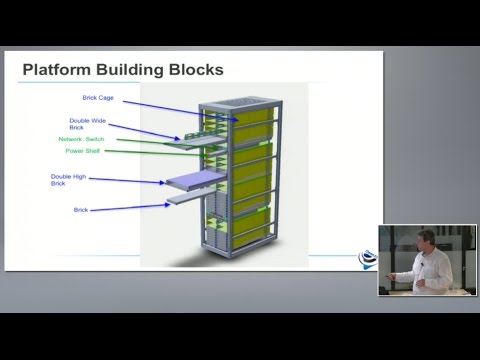
At LinkedIn, from 2015 to 2019, something shifted. Bachar wasn't just building infrastructure - he was rethinking its rules. In 2016, alongside other engineers, he co-founded Open19: an open hardware standard for data center racks that freed operators from vendor lock-in and gave the entire industry a shared template. Open19 eventually moved to the Linux Foundation, where it became a global standard deployed by leading providers worldwide. Bachar served as president of the Open19 Foundation. Eight U.S. patents in data center, networking, and system design followed - an intellectual property portfolio built not by a lone inventor but by someone who had worked at the intersection of scale and constraint for three decades.
His last stop before going independent was Microsoft Azure, where he served as Principal Hardware Architect of the Azure Platform. The view from there - overseeing infrastructure for one of the world's largest clouds - clarified something. The existing model had a ceiling. Grid dependency meant approval timelines measured in years. Power purchase agreements that took longer to sign than it took SpaceX to reach orbit. Water-intensive cooling systems that strained local municipalities. And a delivery timeline - three to four years from order to operating data center - that made the industry structurally incapable of keeping up with demand.
In 2021, Bachar founded EdgeCloudLink. The company he built starts from a different assumption: that the power source and the data center should be a single, deployable unit. ECL's hydrogen fuel cells generate electricity for the servers and produce water as a byproduct - the same water used to cool the racks. No grid hookup. No cooling tower. No emissions. The water that isn't used for cooling is returned to the local community. The modular architecture means a site can go from purchase order to operational in nine months. The platform is built to support racks running at 150 kW, a density designed for GPU clusters that would overwhelm most conventional facilities.
ECL's work with Lambda sets a new bar for sustainable AI factory power and proves that off-grid, zero-emission, high-performance data centers are not just aspirational, but operational, at scale.
- Yuval Bachar, ECL Founder & CEOThe proof came fast. Lambda, the GPU cloud provider, installed the first hydrogen-powered NVIDIA GB300 NVL72 systems at ECL-MV1. Each unit weighs 4,000 pounds and receives 142 kW of compute power. The installation took roughly two hours - a number that tells you something about how ECL's modular design differs from the rest of the industry. Lambda liked what it saw so much that it doubled its footprint at the facility from 50 percent to 100 percent. Supermicro co-signed the milestone.
By September 2024, Bachar announced ECL's next bet: TerraSite-TX1, a 1-gigawatt AI factory on 600-plus acres east of Houston. The math behind the site is blunt. The AI industry needs an estimated 50 to 100 gigawatts of new power capacity in the next five years. The grid cannot provide it fast enough. Texas, with its proximity to industrial hydrogen production from Gulf Coast refineries and its regulatory flexibility, is where Bachar is making his stand. Phase 1 - 50 megawatts, roughly $450 million - was targeted for summer 2025. The full build, $8 billion across the entire gigawatt campus, is funded through ECL and financial partners. Lambda is the first tenant.
On hydrogen safety, Bachar is characteristically direct: "The refineries in the area of Houston are heavy, heavy users of hydrogen. If it was dangerous and not manageable, they would not use it." He started ECL before the AI boom made power scarcity a boardroom topic. When he founded the company in 2021, the urgency wasn't driven by large language models - it was driven by his read of infrastructure economics. The AI wave arrived, and ECL was already in position.
ECL's hydrogen supply strategy is also pragmatic rather than ideologically pure. The company plans to blend gray and blue hydrogen initially, transitioning to green hydrogen as production scales. Bachar describes ECL as a major off-taker in the hydrogen market - a position that gives the company leverage to incentivize suppliers toward cleaner production methods. It's infrastructure diplomacy applied to the energy transition.
The company has won more than 15 major sustainability and innovation awards in 2024 and 2025, including DCD Awards in both years, Stevie Awards for sustainability, and the Data Centre World Innovation Challenge. ECL has around 84 employees and operates from Mountain View, California, with expansion planned across multiple U.S. sites. Total funding stands at approximately $20 million from investors including Hyperwise Ventures, Molex Ventures, and Bachmanity Capital. ECL is now raising $1.2 billion for the next phase.
Bachar's trajectory - from Technion in Haifa to a 600-acre AI factory in Texas - follows a logic that only looks inevitable in retrospect. He spent 30 years learning exactly why data centers work the way they do. Then he built the version that doesn't have to.