cpaas
(35)
The People Who Built the Phone Switch Want to Run the Conversation
FreeSWITCH helped teach the internet to make phone calls. SignalWire is trying to teach those calls what to do next - and to keep the AI close enough to hear the answer.

The Call Center That Started Listening
Ozonetel began by moving business calls to the cloud. Its more interesting bet is that the conversations themselves can tell a company what to fix next.

tyntec turns the humble message into serious business
A WhatsApp conversation can sell a jacket. A network signal can help verify a customer. Tyntec has spent two decades connecting those everyday moments to the machinery of mobile telecoms.

Meg Powell Is Making the Invisible Infrastructure of Conversation Matter
After moving through agency work, lottery technology, customer intelligence and digital health, Meg Powell arrived at Bandwidth and rebuilt marketing around a deceptively simple idea: the pipes beneath a conversation shape the experience above them.

Bandwidth Built the Phone Network Your Software Forgot It Needed
Most communications software companies rent the road. Bandwidth spent decades laying its own - then turned that network into APIs for Google, Microsoft, Zoom and the coming wave of voice AI.

IntelePeer Spent 23 Years Plumbing the Phone Network. Then It Gave Its AI Business a New Name.
The Florida communications company did not wake up as an AI startup. It spent two decades building the pipes, watched customers stumble over automation, and finally spun its agentic-AI operation into Aqurio - a bet that reliability and workflow knowledge matter more than a charming demo.

The Quiet Infrastructure Behind 15 Billion Customer Connections
Every OTP, delivery alert and WhatsApp reply looks simple on a phone. CEQUENS has spent 15 years making the carrier routes, compliance rules and software behind those moments disappear.

Sophie Cheng
The new Sinch CMO has spent her career turning complicated technology into useful customer choices. Her next problem is harder: making AI communication earn trust after the demo ends.

The Companies Behind Every Bill, Text and Contract You Get
Apryse, Conga, Compart, Sefas, ISIS Papyrus, Plumsail, Customer.io and Bird rarely appear on a customer's screen by name. Together they run the plumbing that turns raw data into the statements, reminders and messages that land in your inbox every day.

RingCentral
The company that dragged the office phone into the cloud is now betting the whole switchboard on AI agents that answer, route, and read the room.

8x8
One company built its whole pitch on erasing the line between the phone on your desk and the call center that answers your customers. Here is how 8x8 turned four decades of telephony into an AI-driven customer-experience platform.
Sinch
The Swedish company you have never heard of sends the one-time passcodes, delivery alerts and marketing texts that reach your phone billions of times a day. This is how Sinch turned invisible infrastructure into a global business.

Six Companies Run Your Messages and Your Paperwork
Braze and Iterable send the emails, Twilio sends the texts, and Plumsail, Experlogix and Newgen quietly generate the contracts. Here is the invisible software running your relationship with almost every company you deal with.

The Quiet Software War Over Every Bill You Receive
Doxim, Intense Technologies, Infobip and Templafy don't make headlines, but they quietly decide how your bank, insurer and phone company talk to you - and the market for that plumbing is racing past $2 billion.
Infobip
How a self-funded SMS gateway from a Croatian fishing town became the plumbing behind hundreds of billions of texts, WhatsApp messages and login codes.

Gupshup
It spent nearly two decades sending text messages nobody thought about. Now Gupshup wants those same pipes to carry AI agents that sell, support and close - one conversation at a time.

Bird
The Dutch company that rebuilt telecom's plumbing now carries a claimed 40% of the world's commercial messages - and spent two years trying to delete Twilio's margins with a 90% price cut. Bird's next bet is that the software placing those calls will be an AI agent, not a marketer.
AVOXI
AVOXI delivers unmatched cloud voice coverage that's orchestrated by software. It's the only platform you'll ever need.

Vonage
Vonage is a cloud communications company that lets businesses and developers add voice, video, SMS, messaging and network-based verification to their apps and customer operations. Once a pioneer of home internet phone service, it reinvented itself as a platform business built on APIs, unified communications and contact-center software, and is now a wholly owned subsidiary of Ericsson operating as its Global Communications Platform.
Twilio
Twilio is a cloud communications company that gives software developers programmable APIs to add messaging, voice, email, video, and authentication to their applications. Founded in 2008 and headquartered in San Francisco, it has grown from a pay-as-you-go SMS and voice API into a broad customer-engagement platform that pairs those channels with Segment's customer data platform and a growing set of AI-driven tools. Twilio is publicly traded on the NYSE under the ticker TWLO and serves developers and enterprises across nearly every industry.

Wati
Wati is an AI-powered customer engagement platform built on the WhatsApp Business API. Founded in 2020, it gives small and medium businesses a low-code way to run marketing, sales, and support conversations at scale - a shared team inbox, no-code chatbot builder, broadcast campaigns, and AI support agents trained on a company's own documents. Wati serves more than 16,000 businesses across 100+ countries and is backed by Tiger Global, Sequoia, DST Global, and Shopify.

Telerivet
Telerivet is a cloud communications platform that lets organizations send, automate, and orchestrate messages across SMS, WhatsApp, Voice, USSD, Viber and more - in any market, including the places bigger providers ignore. Born from a Peace Corps insight in Tanzania that most people have a phone but not the internet, it now powers enterprises, governments, NGOs and universities across 150+ countries with a drag-and-drop rules engine, APIs, and a phone-as-gateway model that reaches customers where the network is thin.

Clickatell
Clickatell is a chat commerce and messaging platform that helps brands talk to and transact with customers across SMS, WhatsApp and other channels. Founded in 2000 in Cape Town, it was the first company to wire businesses on the internet to consumers on mobile phones using SMS in four lines of code. Twenty-five years later it powers chat banking, tokenized WhatsApp payments and Chat-2-Pay with Visa for over 10,000 customers worldwide.

Pieter de Villiers
Pieter de Villiers is the Co-Founder and CEO of Clickatell, the company that invented the world's first SMS API in 2000 with four lines of code and went on to pioneer chat banking and chat commerce globally. Based in Stellenbosch, South Africa, he led Clickatell to become the first African startup backed by Sequoia Capital, raised over $118 million in total funding, and built a platform that processes roughly 9 billion messages monthly for more than 10,000 enterprise clients across 220+ countries. He also chairs SiMODiSA, a non-profit focused on digital skills development and startup acceleration in Africa.
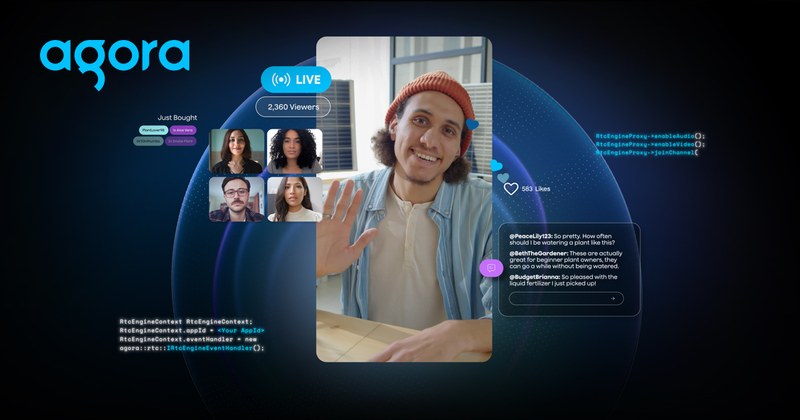
Agora
Agora is a real-time engagement platform that gives developers simple APIs and SDKs to embed live voice, video, interactive streaming, chat, and conversational AI into apps and devices. Trusted by more than 1,700 organizations across social, live shopping, education, telehealth, and gaming, Agora's network reaches devices worldwide with sub-second latency. The company trades on Nasdaq under the ticker API.

Caitlin Epstein
Caitlin Epstein is VP of Corporate Communications at Twilio, the cloud communications platform powering customer engagement for businesses worldwide. Since joining in 2015, she helped navigate Twilio through its IPO and became one of tech PR's sharpest voices on human-centered storytelling - best known for turning a CEO's breakfast burrito delivery into a Forbes-covered $3 billion acquisition narrative.

Adam Morgan
Adam Morgan is VP of Brand at Twilio, where he led the company's 'Be a Builder' brand refresh in 2024 - repositioning Twilio from a developer platform to a movement for all builders. With 29 years in creativity, strategy, and storytelling, he previously served as Executive Creative Director at Adobe for 8.5 years and Senior Director of Brand + Creative at Splunk/Cisco. He is the author of 'Sorry Spock, Emotions Drive Business' (Morgan James Publishing), host of the Real Creative Leadership podcast, and was named to AdWeek's Creative 100 in 2020. He holds a Master's in Marketing Strategy from Northwestern University and lives in Lehi, Utah.

Disha Rustogi
Disha Rustogi is the Vice President of Product Marketing at Twilio, where she leads global Product Marketing and Go-To-Market Enablement teams. With 15+ years of marketing leadership at household-name tech companies — Microsoft, Adobe, Atlassian — she has shaped how enterprise software gets positioned, launched, and sold to the world. Now at Twilio, she is at the forefront of the agentic AI communications era, helping define how companies build intelligent customer experiences using Twilio's platform.
Julie Poutre
Julie Poutre is Vice President of Americas Field Marketing at Twilio, the cloud communications platform behind a significant portion of the world's digital interactions. Based in San Francisco, she leads the regional field marketing operation that drives pipeline and revenue across the Americas. Over nearly a decade at Twilio, she has risen from Senior Manager through Director and Senior Director roles to her current VP position, building one of the most sophisticated field marketing engines in enterprise SaaS. Before Twilio, she spent nearly a decade at Infoblox — moving from global events coordinator to Sr. Channel Programs Manager — where she honed the craft of building partner programs and generating qualified sales leads at scale.

Nicholas Kontopoulos
Nicholas Kontopoulos is the Vice President of Marketing for Asia Pacific & Japan at Twilio, the cloud communications platform. Based in Singapore, he brings over 30 years of marketing and business leadership experience across APAC, with prior senior roles at Adobe (DX), SAP, Magento, and Capita. A recognized thought leader in customer experience and AI-driven marketing, he is a frequent speaker, published author, and LinkedIn Power Profile holder known for challenging marketing orthodoxy across the region.