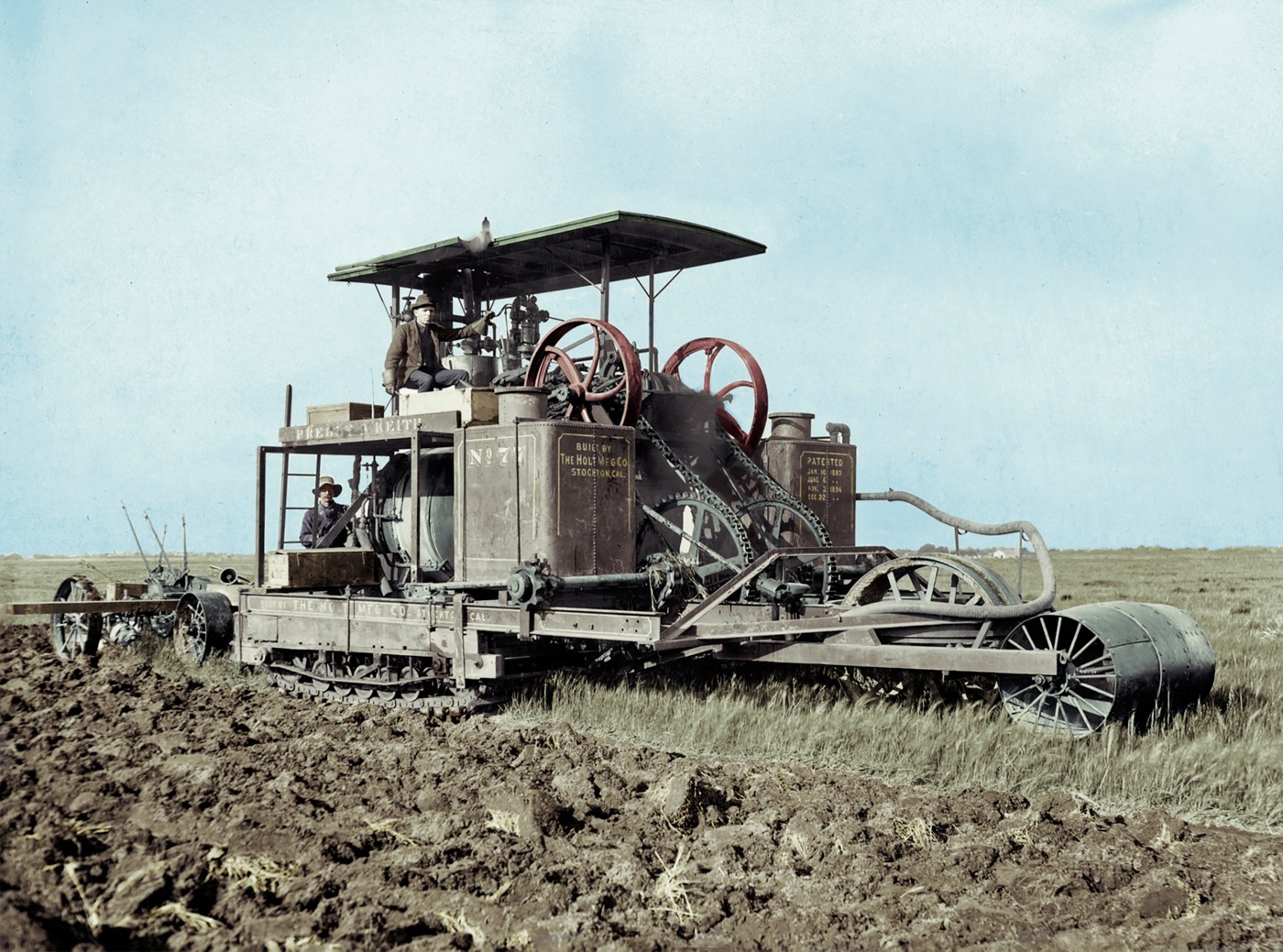
Before Caterpillar could move mountains, somebody had to solve the problem of mud. In California, the wheels of Benjamin Holt’s steam tractors sank into soft ground. The engine could provide the power. The soil declined to cooperate. In 1904, Holt tested a tractor with tracks, spreading its weight over more ground.
It is a useful place to begin with a company whose machines now work in mines, quarries and construction sites around the world. Caterpillar’s history keeps returning to the same practical question: what is stopping the customer from getting the job done?
- Build the machine, then support its working life.
- Make parts, financing and maintenance part of the offer.
- Learn the customer’s site before scaling the technology.
01 The merger was a repair job
The company itself arrived in 1925, through the merger of Holt Manufacturing and C.L. Best Tractor. The romance of invention helps explain the machinery. A postwar tractor surplus helps explain the marriage.
During World War I, Holt concentrated on government production. Best developed its domestic business and designs. Afterward, surplus machines depressed the market for new tractors. Holt brought factories, an international reputation and the Caterpillar name. Best brought an advanced product line and dealer relationships. Each had something the other needed.
Those dealers mattered early. Caterpillar’s history records air delivery of parts by 1928. Think about the implied customer promise: the machine works far from the factory, but help must still reach it. A century later, that problem remains an organizing principle.
02 The sale that keeps going
Today’s product range spans excavators, dozers, loaders and mining trucks, alongside engines, generator sets, turbines and locomotives. Customers include small contractors, quarry operators, mining groups and businesses that need dependable power. Cat Financial adds financing and leasing. VisionLink brings supported equipment data, including mixed-brand fleets, into tools for utilization, maintenance and productivity.
The economic unit worth watching is the machine’s working life. Caterpillar sells equipment and parts, earns service-related revenue and offers digital subscriptions and financial products. Dealers supply local knowledge, technicians and rental options. In 2025, Caterpillar reported $24 billion in services revenue, a measure that includes aftermarket parts and other service-related business.
Services revenue, including aftermarket parts.
A measure of the relationship beyond delivery.
Komatsu, Deere, Volvo and other rivals also sell capable machines and support. Caterpillar’s case rests on how its engineering, distribution and ownership services work together. For a buyer, the useful comparison is cost per productive hour, including fuel, maintenance and interruptions. A cheaper purchase can become expensive if it cannot finish the shift.
Cat Reman makes that logic tangible. A customer returns a used component, or “core,” for inspection and a deposit refund. Useful material goes through remanufacturing. Caterpillar says customers typically pay 45-85% of the price of new with a core return, subject to eligibility and condition. The old part becomes inventory for another working life.
- 01WorkA component earns its keep.
- 02ReturnAn eligible core earns credit.
- 03RebuildInspect, recover, remanufacture.
03 Four trucks, one very useful lesson
Autonomy offers a revealing test of this approach. At Luck Stone’s Bull Run quarry in Virginia, Caterpillar adapted autonomous hauling to four 100-ton Cat 777 trucks working one shift. This was a different assignment from automating hundreds of trucks in a mine operating around the clock.
The collaboration was announced in December 2022; the autonomous deployment followed in November 2024. Caterpillar embedded people at the site to understand quarry operations. The work involved traffic, roles and routines as well as the trucks themselves.
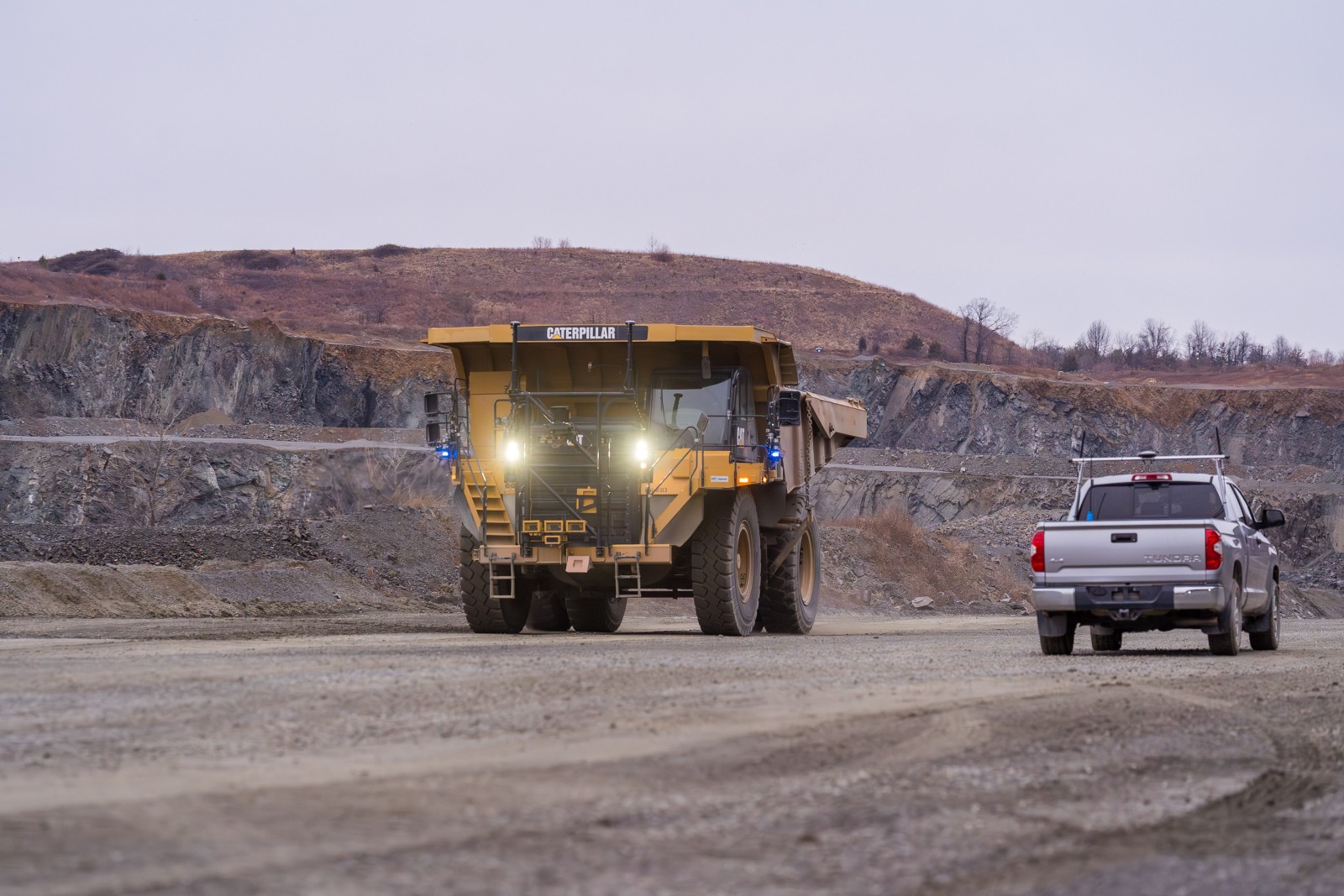
“We embedded our team on the site to focus on people, process and technology prior to deploying the machines.”
Jaime Mineart / Caterpillar / January 2026
By September 2026, the companies reported more than 3.5 million tons hauled autonomously at Bull Run and announced expansion to two more Virginia operations. That sequence is instructive: learn in a specific setting, accumulate operating experience, then expand. A changing construction site still brings different traffic and scheduling demands. The quarry result supplies experience; each new setting requires its own engineering.
04 The battery brings the mine with it
Electrification poses a related problem. In November 2022, Caterpillar demonstrated a battery-electric 793 mining-truck prototype at its Tucson Proving Ground. Early Learner participants included BHP, Rio Tinto, Freeport-McMoRan, Newmont and Teck. The loaded truck climbed a 10% grade and recovered energy on the descent.
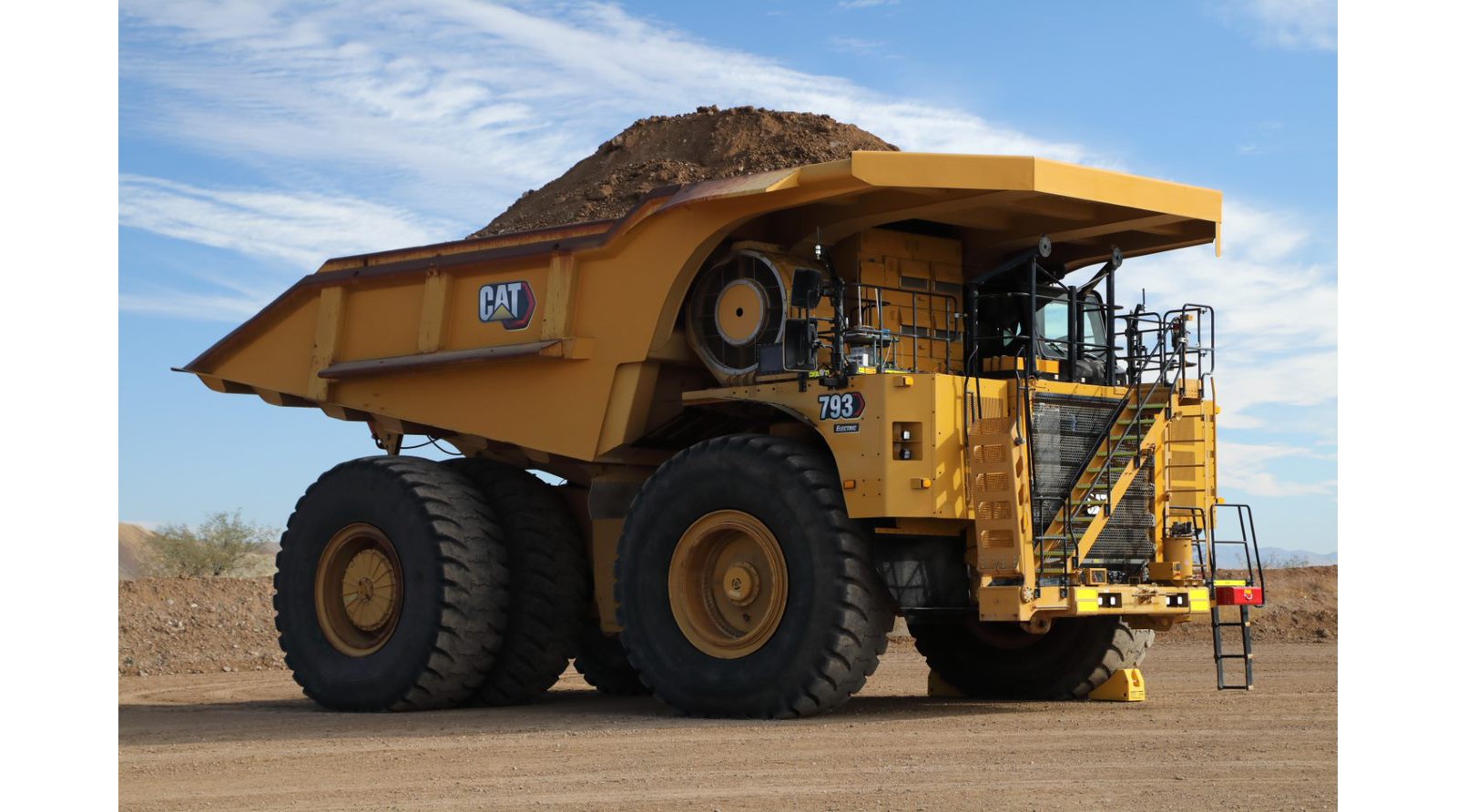
A demonstration proves particular capabilities under particular conditions. A mine also needs charging, power supply and operating plans that fit production. Caterpillar’s proving-ground investment includes energy infrastructure for that reason. BHP’s own account of the trial preparation raises mine planning, power demand, charging, skills and safety together. Replacing the engine changes the surrounding operation.
05 Small machines. A billion-dollar decision.
The work costs real money. Caterpillar recorded $2.148 billion in research and development expense in 2025. In September 2026, it announced approximately $1 billion of intended North Carolina manufacturing investment, including a new Sanford facility for compact track loaders and telehandlers. Small contractors matter alongside giant mines.
The financial picture has movement in both directions. Sales and revenues reached $67.6 billion in 2025, while operating margin fell from 20.2% to 16.5%. In the second quarter of 2026, sales and revenues rose 24% to $20.5 billion. Scale does not remove the work of managing costs.
More revenue can arrive with less margin. The operating details still count.
There is something here other businesses can copy: stay close enough to customers to see what happens after delivery. That requires support customers will use and economics they can justify. A lightly used machine may not warrant elaborate technology. A returned core must qualify. An electric fleet needs adequate power. The yellow machine makes the sale visible. Keeping it useful gives the customer a reason to return.