The idea was sitting still. In Dubai's construction economy, heavy machines worth small fortunes could spend their days parked, while contractors elsewhere hunted for equipment to rent. Arjun Mohan saw both sides because an interruption had placed him there. He had gone to Canada, studied management, chased startup ideas in San Francisco and imagined his future in technology. Then a family emergency in 2017 brought him back to the UAE, where he had grown up, to help with his father's construction business.
The return was practical, not romantic. Construction was under pressure. Cash was tight. Companies that owned unused equipment rented it out because an idle excavator could at least be persuaded to pay its way. Mohan noticed a market hiding inside this improvised habit: nearby supply and demand, separated by phone calls, personal networks and the stubborn opacity of the trade.
He had spent enough time in software to recognize a marketplace. In May 2018, he founded TENDERD to match contractors needing machines with owners who had them to spare. The premise sounded almost indecently neat - an Airbnb-like exchange for bulldozers, cranes, dump trucks and backhoe loaders. Heavy equipment, however, does not arrive with fresh towels and a key under the mat. It arrives with operators, insurance, inspection records, fuel bills, maintenance needs and an ability to ruin a project schedule before lunch.
Silicon Valley, via the construction yard
Mohan had moved from the UAE to Canada in 1998. He studied at the University of Toronto and later completed a master's degree in management at Western University's Ivey Business School. With university friends, he went west. They lived in hostels and hacker houses in San Francisco, trying one startup idea after another. “We kind-of just bunked together and tried to figure out the start-up world,” he later recalled.
One venture, Eureka King, helped publishers target readers with relevant content. It produced clever technology and troublesome cash flow: enterprise customers took their time signing contracts while bills observed no such courtesy. A conversational AI feature was spun into archie.ai, run by his friends with Mohan remaining a silent partner. The lesson was less glamorous than the code. A promising product is not a business until someone pays, and timing can defeat intelligence with impeccable manners.
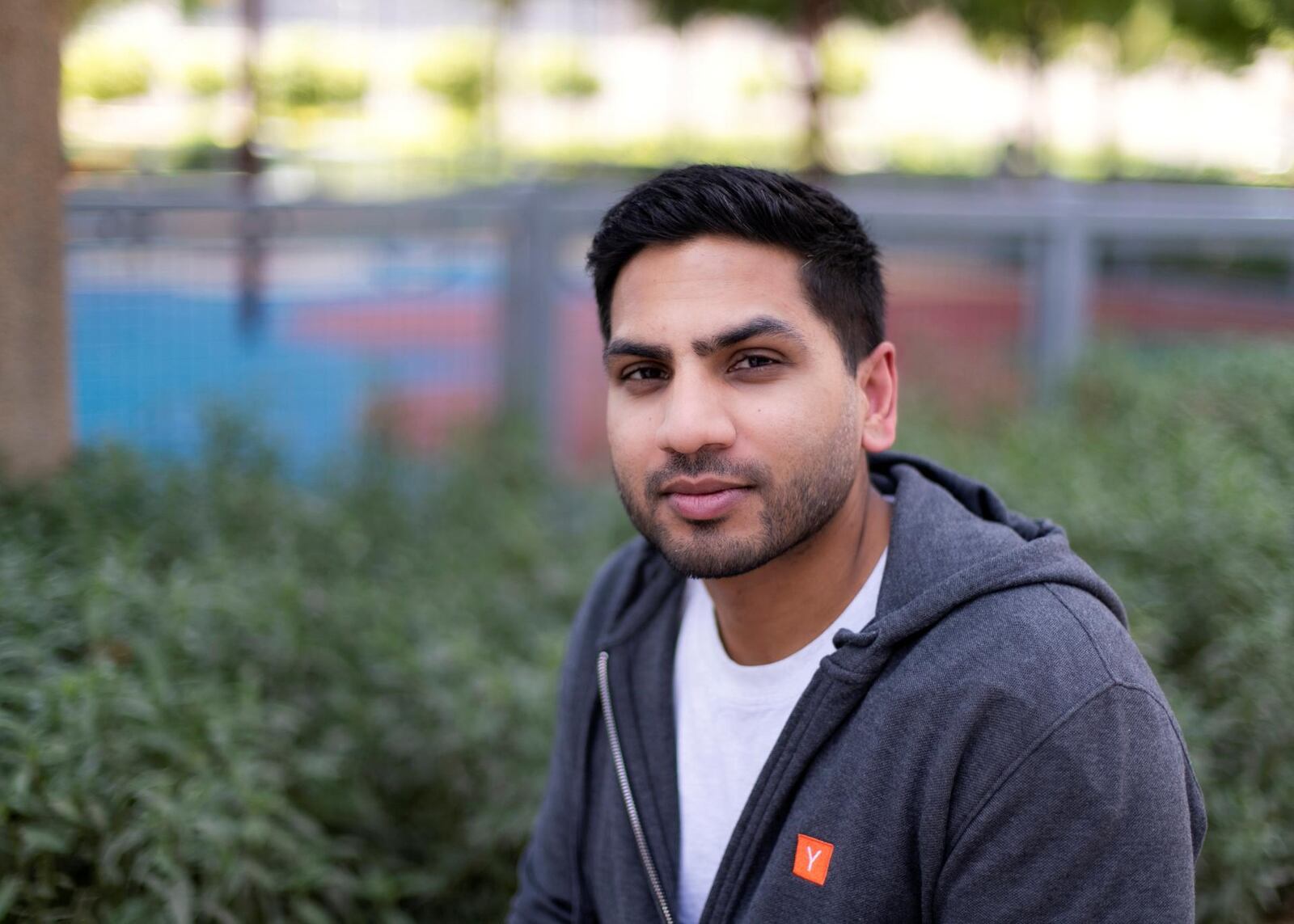
Back in Dubai, the old industry supplied a clearer invoice. Contractors needed equipment. Owners needed utilization. TENDERD won a place in Y Combinator's Summer 2018 batch, and Mohan spent three months refining the proposition before returning with two colleagues to sign up both sides of the market. By the end of that year, the company had attracted a reported $5.8 million from a collection of investors that included Y Combinator, regional funds and well-known Silicon Valley founders.
“Many of these construction companies were managing their capital equipment in the same manner as a hundred years ago.”Arjun Mohan
Capital arrived faster than institutional trust. Mohan and his young team walked into offices where careers had been built over decades and suggested that software could improve the handling of machines. He recalled being thrown out of big construction companies by veterans who considered the idea a joke. One of those companies later became a customer. The reversal is tidy in retrospect. It was probably less tidy in the corridor outside.
A marketplace grows a nervous system
The first TENDERD solved the question of procurement. A purchasing manager could request a machine without repeating a long quotation ritual across suppliers. The next problem began when the machine reached the site. A project director might oversee one hundred pieces of equipment: some owned, some rented, some supplied by several different companies. Knowing where everything was constituted an achievement. Knowing whether it was productive required an entirely different business.
TENDERD began attaching IoT devices to machines and connecting existing telematics through software interfaces. Location was only the first signal. Engine hours, fuel consumption, operator behaviour, maintenance and idle time could turn a yellow dot on a map into an account of how a project was running. The marketplace was acquiring a nervous system.
How a silent machine becomes a management signal
The most vivid version used machine vision. A camera aimed at an excavator's bucket or a blade could classify material, estimate the volume moved, measure cycle times and calculate cost per cubic metre. Imagine a patient observer standing beside every machine, counting every load without ever needing water or becoming bored. Software could also see why a machine was idle. An excavator might be healthy but waiting because too few trucks had been assigned to carry away the earth. The unit of analysis was no longer the machine alone. It was the flow of work around it.
This was the pivot hiding inside the original idea. Renting idle assets improved utilization between projects. Measuring them improved utilization every hour they were in service. TENDERD Track launched as a subscription software product in 2021, offering modules for GPS, fuel, performance, maintenance and communication. Over time, the company described itself less as a rental marketplace and more as a fleet and equipment operations platform.
“It’s not just about the equipment; it’s also about the flow of work.”Arjun Mohan
The climate argument inside the cost argument
For Mohan, the efficiency case and the environmental case meet at the fuel tank. In an early interview, he estimated diesel at more than 40 percent of monthly equipment-rental costs. A machine that burns fuel while idling is wasting money and producing avoidable emissions with the same turn of the engine. Better scheduling, better allocation and earlier maintenance can serve the operations manager and the sustainability report at once.
His formulation is deliberately compatible with development: “We can protect our environment without compromising human development.” Heavy industries remain the physical foundation beneath cities, transport and trade. Asking them to vanish is theatre. Giving them a precise account of fuel, work and waste is management. TENDERD says its current platform can unify mixed fleets across construction, logistics, mining, energy and marine operations, bringing tracking, maintenance, safety and emissions into the same view.
In June 2024, the company announced a $30 million Series A led by A.P. Moller Holding, parent of the group that includes Maersk. Quadri Ventures and Stripe product leader Saurya Prakash joined the round, while Wa'ed Ventures, Nakhla Ventures, SOMA Capital and Liquid 2 Ventures reinvested. The investor list mapped neatly onto the company's broadening terrain: logistics, ports, energy, construction and technology.
A family emergency returns Mohan to the UAE and the construction trade he had not planned to enter.
TENDERD launches as an equipment marketplace and joins Y Combinator.
TENDERD Track launches as subscription software for fleet operations.
A $30 million Series A backs the company's industrial AI expansion.
Mohan speaks about AI agents, autonomous construction and offshore safety workflows.
From seeing to acting
Mohan now speaks about an industrial progression from tracking to intelligence to autonomy. The vocabulary has changed since the marketplace days, but the logic is continuous. First locate the asset. Then understand its condition and output. Then let software recommend, coordinate or carry out the next action. At 2026 industry events, he discussed AI agents for construction, autonomous equipment and safety systems that can detect an event, alert a responsible person, assign follow-up and verify that the response occurred.
The practical detail matters. In September 2026, he described a focused offshore safety forum where TENDERD presented AI crane cameras and safety agents. The audience was small, he wrote, but unusually relevant. “The size of the audience does not determine the value of the event,” he observed. For a founder once dismissed as an inexperienced outsider, it is a revealing measure of progress: fewer people can be more useful when every person understands the weight on the hook.
There is also a note of restraint in his public discussion of automation. Traditional industries develop teething problems as they move toward autonomous operations. Equipment may be easier to automate than passenger cars because a job site contains fewer uncontrolled variables, yet the route begins with existing fleets and existing workers. Intelligence arrives by degrees: a sensor, an alert, a better schedule, a prevented breakdown.
Mohan's career has followed the same pattern. The grand plan in Silicon Valley did not deliver TENDERD. A return home did. The elegant marketplace did not remain the whole company. The messier operational problem made it larger. Even the contractor who ended the meeting early eventually supplied a second answer.
Heavy machinery is easy to admire and difficult to know. It is loud, expensive and extremely good at appearing busy. Mohan's enduring proposition is that appearance should yield to evidence. The excavator can say where it is, how long it worked, what it moved, what it cost and what it emitted. Once a machine can give that account, sitting still becomes harder to hide.