A factory is an excellent place to cure software of its vanity. The machines do not applaud. The inventory record does not care how fluent the agent sounded. A purchase order either agrees with what arrived or it does not; a production schedule either respects the available people, parts and machines or it becomes expensive fiction. This unglamorous border between a confident answer and a completed job is where Datta Kaligotla has chosen to build.
Kaligotla is the co-founder and CEO of Faraday, a two-person San Francisco company in Y Combinator's Fall 2026 batch. Its advertised territory is broad - manufacturers, distributors, business applications, hardware and robots - but its governing idea is narrow enough to be useful. Industrial intelligence must remain connected to the operation. Models need data; agents need tools and guardrails; people need approval gates; every action needs to leave the underlying systems in a sensible state.
There is a neatness to this destination because Kaligotla publicly described the problem before he announced the company. In November 2025, he published an essay arguing that the next great AI infrastructure bottleneck might not be the chips attracting geopolitical attention. It might be the software everyone was rapidly writing on top of them. Coding assistants would help teams ship faster. Agentic applications would send more requests, in patterns humans would never produce. Old backends would absorb the novelty until they could not.
“This will be one of the biggest issues in software over the next couple decades.”Datta Kaligotla, writing in 2025
His remedies were prosaic and therefore convincing: end-to-end performance testing, simulations that reproduce real payloads, and earlier detection of code that fails at scale. Less magic, more rehearsal. By 2026 the concern had become a company whose product vocabulary includes simulation, evaluation loops and synchronized systems. Founders are fond of discovering a grand narrative after the cap table is signed. Kaligotla left his draft online a year early.
A résumé with several kinds of gravity
His route to industrial software did not run straight through a single industry. Public biographies list enterprise engineering work connected to Microsoft, Endeavor and Boeing, quantitative work at Pretium Capital, and a founding-engineer role on Handshake's AI effort. Each setting applies a different kind of pressure. Enterprise systems accumulate rules. Financial work punishes loose measurement. A career platform has human expectations on both sides of every recommendation. Aerospace, even as a brief stop, is not a natural habitat for shrugging.
Before all of that came Maryland. His formal name, Sreedatta Kaligotla, appears in Poolesville High School's 2020 commencement program and among the University of Maryland's December 2023 science graduates. His public profile records early machine-learning and computer-vision work, along with three project awards in 2019. The dates make the velocity conspicuous: student projects, university, a set of large organizations, a startup scaling AI, and then a company of his own.
There is a temptation to read such a list as precocity alone. The more revealing pattern is repetition. Each chapter put computation next to a consequential human system: education, enterprise operations, finance and now manufacturing. These are not places where a model gets to remain an amusing specimen. Somebody has to decide whether to rely on it, and somebody else usually owns the mess when the answer is wrong. Kaligotla kept moving closer to that decision.
In 2022, while at Maryland, Kaligotla joined the Dingman Center's New Venture Practicum with a project called Grassroot. The program asked students to test business models, revenue streams and routes to market - useful training for an engineer who would later have to sell reliability, not merely build it.
The public sentence that best captures his temperament is simpler than any title: “Love building things while talking to smart and interesting people.” It contains both halves of company-making. Building without conversation can produce immaculate answers to questions nobody asked. Conversation without building is just a meeting with better snacks. Kaligotla's career suggests an appetite for moving between the whiteboard and the stubborn object on the other side of it.
Handshake, and the education of the end-to-end agent
At Handshake, the career platform, Kaligotla worked as a founding engineer on its AI effort. Recent public activity shows him alongside colleagues building internal agents intended to complete an entire workflow. One example was a quarterly-business-review agent designed to return a week to sellers every quarter. The value proposition was time, not novelty: take a recurring piece of organizational labor and carry it from beginning to end.
That phrase, end to end, matters. A chatbot can stop when it has produced text. An agent acting inside a company inherits the burden of consequences. It must know which record is authoritative, whose consent is required, what changed while it was working and how to recover when an assumption turns out to be yesterday's news. The final five percent of a workflow has an impish habit of containing eighty percent of the politics.
Kaligotla's later writing sharpened the standard. In a recent comment about enterprise AI economics, he argued that companies should not deploy AI merely to say that they had. There must be tangible return. At Faraday, he wrote, that means outcomes such as faster quotes, better production schedules and fewer manual handoffs. This is a refreshingly unfashionable way to describe intelligence: by the chores it finishes.
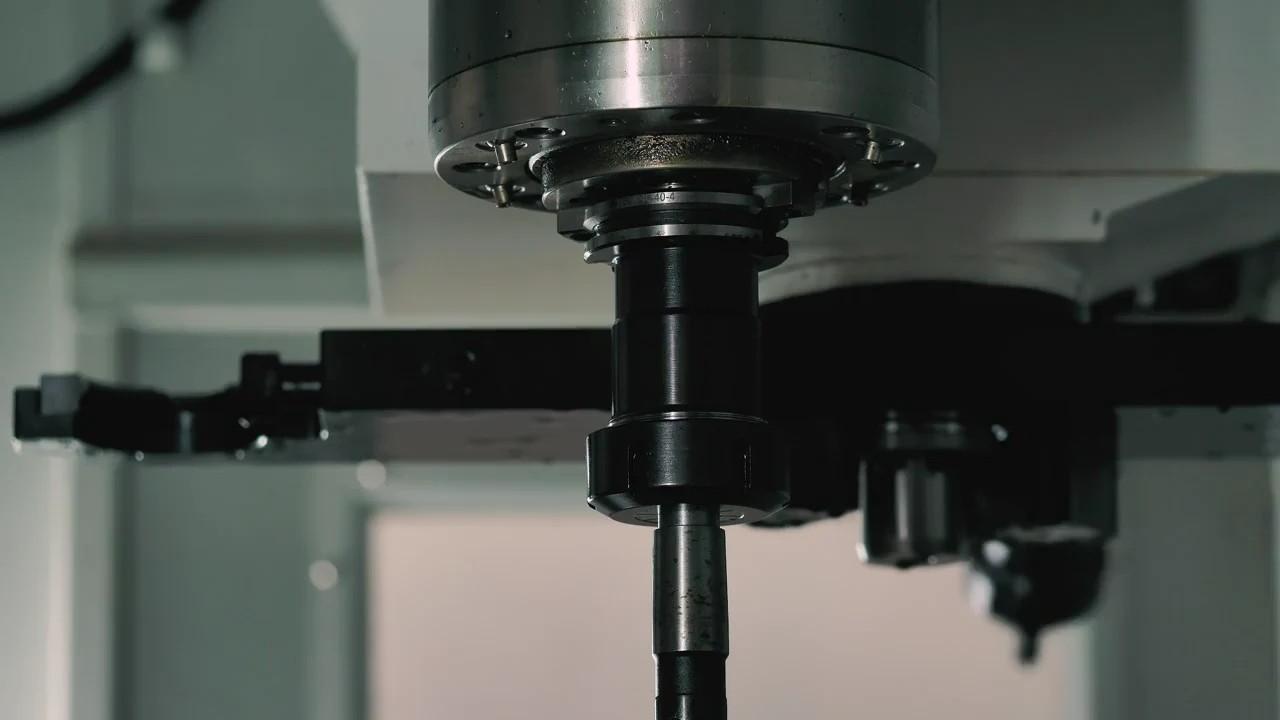
The benchmark is the biography
Faraday's public industrial benchmark may reveal more about its founders than a page of adjectives. It contains 74 task episodes across 33 scenario families. Six models were run inside sandbox companies. The tasks span manufacturing, supply chain, logistics, engineering, ERP, manufacturing execution systems and finance. They require a model to follow dependencies across departments, reconcile conflicting records, seek approvals and carry work through to completion.
Crucially, the evaluators inspected both the actions the models took and the resulting state of the system. This is the industrial version of checking the kitchen after admiring the menu. An agent may produce a plausible explanation while failing to update inventory, or correctly change one record while leaving another in contradiction. Faraday's test asks whether the company left behind by the agent still makes sense.
A scenario family is also a more honest unit of difficulty than a trivia question. Real work branches. The expected shipment is late; a customer changes quantity; the preferred machine is unavailable; an approval arrives after the schedule has moved. A capable system must preserve the thread across all of it. The agent cannot merely know what a purchase order is. It has to notice which purchase order, compare it with the receiving record, understand the permitted action and leave an audit trail another person can follow.
The company describes this as a unified control layer. Its use cases run from inventory and production scheduling to engineering reviews, demand forecasts, maintenance, pricing, order entry and accounts payable. The list sounds almost comically miscellaneous until one notices what joins it: each job crosses boundaries. A price depends on costs and demand. A schedule depends on materials and people. An invoice depends on a purchase order and a receiving record. Intelligence lives in the handoff.
Building where the exceptions live
Kaligotla's co-founder, Oscar Rangel, brings a complementary history in manufacturing systems, medical devices and projects for astronauts. Faraday's public roster is still only the two of them. The compact team makes the scope look faintly unreasonable, which is a traditional startup arrangement, but it also forces a useful discipline: choose a problem important enough that customers will reveal the messy truth of their operation.
Faraday asks prospective customers to bring the hard operational problem, explain what stands in the way and identify where autonomous decisions must earn trust before deployment. “Earn” is the important verb. Trust in a factory cannot be painted onto a dashboard. It accumulates when the system respects permissions, exposes uncertainty, routes an exception to the right person and does tomorrow what it managed to do today.
This makes Kaligotla's work less a story about replacing people than about arranging accountability among them, their software and their machines. Humans remain in approval loops. Agents receive guardrails. Operational context determines what they are allowed to do. Robots become another participant in the same shared runtime, rather than a metallic island at the edge of the network.
It also explains why Faraday's language keeps returning to coordination. The model is one component, not the entire show. Data supplies current facts. Applications carry established workflows. The harness constrains behavior and measures it. Robots turn decisions into motion. People set policy and intervene when the situation escapes the map. The engineering challenge is not to crown a winner among them. It is to make the relay boringly dependable.
An agent earns its place in the operation one correct handoff at a time.
There is an appealing continuity here. The student founder testing a venture model at Maryland became an engineer working inside large systems, then a founding engineer teaching agents to finish company workflows, then a CEO testing models against fictional companies before letting them touch real ones. The scale changed. The instinct did not. Build the thing, place it under pressure, and pay attention when reality objects.
Faraday is young, and industrial software is famously indifferent to charming origin stories. It will be judged by deployments, uptime and economics. Kaligotla appears to welcome that severity. His own public argument is that enterprise AI needs measurable outcomes. Faster quotes. Better schedules. Fewer handoffs. The standard he has chosen leaves little room for interpretive dance.
For now, the clearest picture of Datta Kaligotla is not the conventional founder portrait. It is the moment after an agent acts: the approval recorded, the inventory reconciled, the machine still running, the person in charge able to see why. The demo has ended. The shift has begun.