There is a peculiar thing about an idle excavator: it can do nothing rather expensively. The machine occupies space, ties up capital and, if its engine is running, consumes fuel. From a distance, a construction site may look reassuringly busy. From the accounts department, the same scene can look like a collection of unanswered questions. Which machines are earning their keep? Which are waiting? And who actually knows?
- TENDERD began in equipment rentals and expanded into fleet intelligence.
- Its software connects location, utilization, fuel, safety and maintenance.
- The opportunity: make existing machinery work better before adding more.
TENDERD has built its business around those questions. The Dubai company uses AI and connected-device data to help heavy-industry operators understand equipment, vehicles and worksites. Its subject is unusually tangible for a software business: engines, cranes, welding machines, compressors and the costly intervals between useful tasks. The attraction is less glamorous than a robot excavator, but rather easier to put on a purchasing agenda.
The rental was only the beginning
Arjun Mohan founded TENDERD in 2018. It started as a marketplace for heavy-equipment rentals and joined Y Combinator’s Summer 2018 batch. The premise was straightforward: equipment sitting idle at one business could be useful to another. A contractor needed a machine; somebody else had one available. Software could help bring the two together.
That transaction left another job unfinished. Once equipment reached the site, somebody still had to manage it. In January 2021, TENDERD added TenderdTrack, subscription software for fleet operations. The business had moved further into the working day, from arranging access to machinery to helping customers understand its use.
Acceptance took persuasion. Recalling early sales visits in a 2023 interview, Mohan said, “I have, in fact, been thrown out of offices”. His account is a useful corrective to the tidy startup tale in which an obvious improvement immediately finds grateful buyers. Experienced contractors had reasons to question a young software team. An equipment owner’s skepticism is itself part of the market.
The engine is on. Is the work?
The current platform collects several operational views in one place. Track supplies location and geofencing. Productivity examines utilization. Fuel tools monitor consumption and flag anomalies. Maintenance keeps inspection records, service histories and reminders. Safety tools offer driver monitoring and alerts; emissions tools support environmental reporting. Allocation, logistics, financials and business-intelligence modules extend the same picture into planning and costs.
Consider an illustrative decision. A manager sees that equipment is regularly idle in one area while another crew needs capacity. Location identifies the asset; utilization provides context; allocation helps organize a move. The software makes the decision easier to investigate. A manager still has to establish why the equipment is waiting and whether moving it would help.
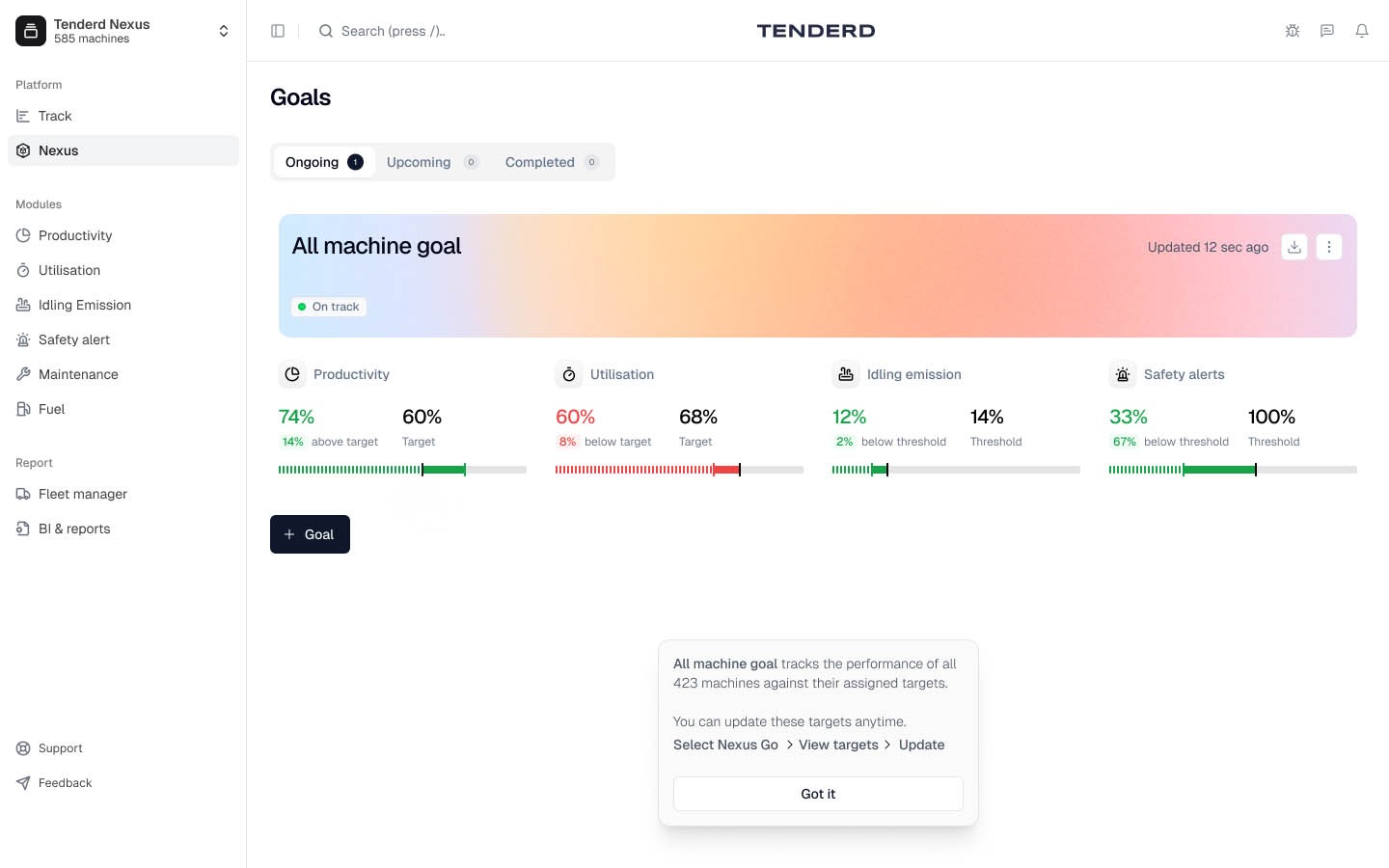
That breadth puts TENDERD among fleet-management and industrial telematics suppliers. A.P. Moller Holding describes its investment as a heavy-equipment software platform serving the GCC. The distinctive emphasis is the mixed industrial fleet: equipment that drives, lifts, welds or remains stationary. Samsara and Trackunit also offer mixed-fleet visibility, so that capability alone does not distinguish TENDERD. Its Gulf customer deployments and combined operational reporting give buyers a more specific basis for comparison. The question is how well each supplier handles the actual assets, reporting needs and service arrangements.
“I have, in fact, been thrown out of offices”
Arjun Mohan, recalling early sales visits
Three customers, three different yardsticks
TENDERD’s published deployments make the proposition more specific. Its AD Ports example reports a 30% increase in equipment utilization. That is a capacity-management result: better use of assets already available. It is also a different question from whether equipment happens to be visible on a map.
AD Ports
SAJCO
McDermott
SAJCO’s work at King Salman Energy Park in Saudi Arabia presents an environmental and safety problem. Excavation equipment needed monitoring, crews needed coordination and compliance reporting took time. TENDERD describes real-time emissions tracking, safety monitoring and automated reporting, with a reported 37.3% reduction in total emissions and a 15.4% decrease in idling emissions.
McDermott’s fabrication fleet included welding machines, generators, compressors, forklifts and cranes. Its problems included unexpected failures and unpredictable repair costs. TENDERD reports a 27% reduction in equipment downtime after introducing monitoring, along with an 18% improvement in uptime. Those figures describe different measures; they should not be added together. They point to a practical relationship between visibility and preventive maintenance.
A dashboard still needs a mechanic
The physical side matters. In September 2021, TENDERD announced an agreement with Mobil and German Gulf to provide on-demand maintenance services. The arrangement joined asset-management software with field service and maintenance products. An alert can tell somebody to investigate a machine. It cannot change the oil by admiring the problem.
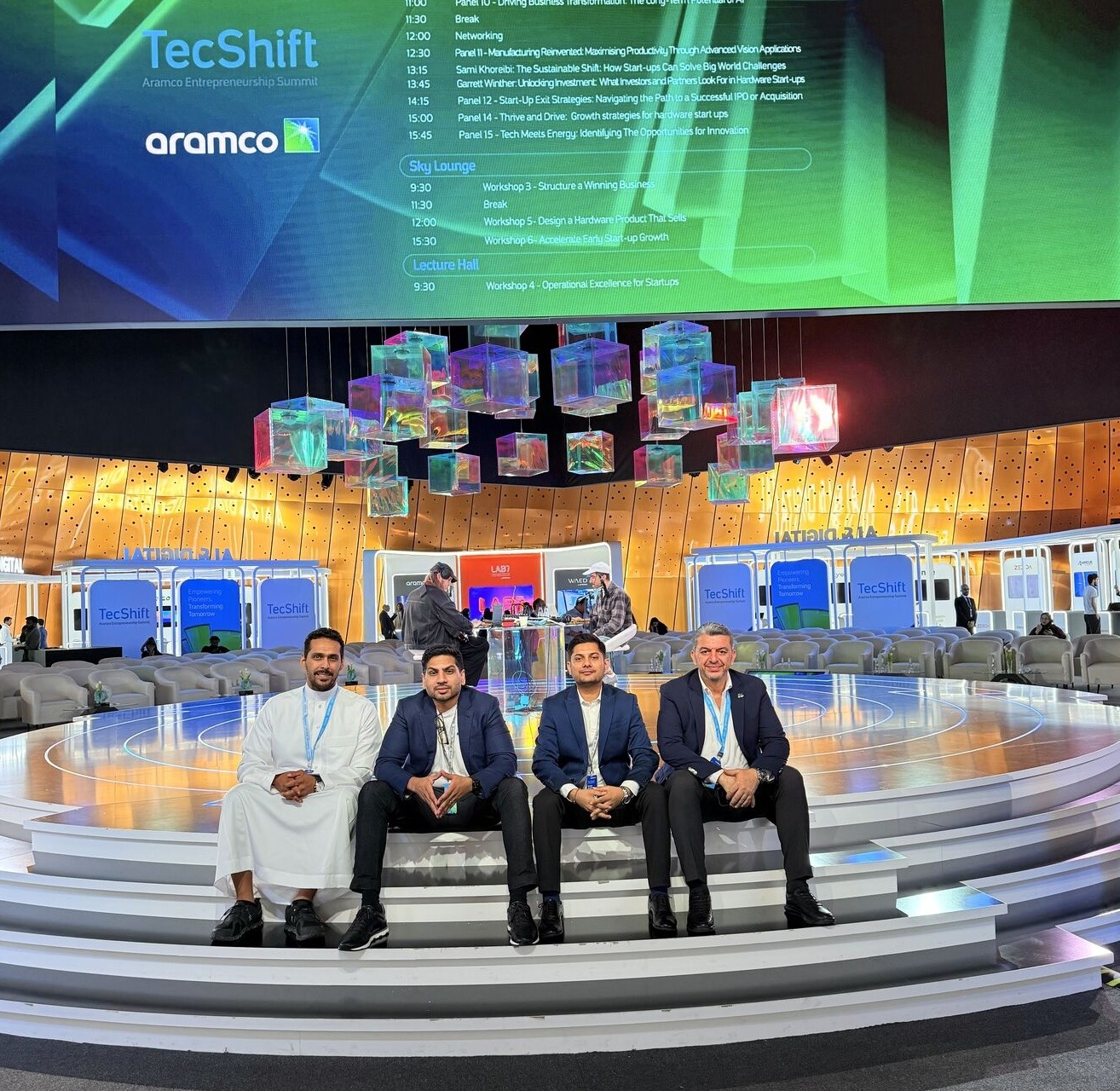
The commercial offer reflects that combination. TENDERD’s product terms cover cloud software, apps, hardware and professional services. Customers buy a defined license scope through order forms. Its pricing inquiry invites a conversation about the fleet and required solution. For a buyer, the useful cost question includes devices, installation, integration and training, alongside the software subscription.
On June 11, 2024, TENDERD announced a $30 million Series A led by A.P. Moller Holding. Quadri Ventures joined existing backers including Wa’ed Ventures, Nakhla Ventures, SOMA Capital and Liquid 2 Ventures. The money was intended for technology development and international expansion. Industrial investors brought a relevant perspective: fleets, ports and energy operations make equipment efficiency a recurring concern.
Count first. Buy second.
A sensible lesson to draw is to measure existing capacity before buying more. Begin with a specific loss: idle fuel, repeated breakdowns or equipment assigned to the wrong job. Establish a baseline, connect the relevant assets and decide who will respond. Then examine whether the operating result improves enough to justify the deployment cost.
machine data
a costly pattern
an action
the result
That is an operational interpretation, rather than a promise attached to the software. Poor data or ignored alerts can leave the bill unchanged. A useful dashboard needs someone with the authority to reschedule work, service equipment or coach an operator. TENDERD’s appeal rests on making those choices better informed. The excavator may still wait. At least its waiting can become a question someone is expected to answer.
Follow the machinery
TENDERD website · Request a demo · Company blog · Company news
LinkedIn · X · Instagram · Facebook · YouTube channel
A.P. Moller’s investment announcement · Explore the deployments