Jean Savage had packed for a promotion. In 2002, after years at Parker Hannifin, she was preparing to move from Alabama back to Ohio. Her two sons wanted to stay. Football practice was about to begin; another relocation had considerably less appeal. Before leaving, she stopped for an interview at Progress Rail. Her suits were already in the luggage. She went in casually dressed, finished the conversation, and resumed the drive.
An hour later came an offer. Savage turned around. A decision made with her family in mind carried her into the railroad business and, eventually, to the chief executive’s office at Trinity Industries in Dallas. The route to the top had acquired a rather useful bend.
Business biographies tend to straighten such roads after the fact. The destination makes the detours look inevitable. Savage’s story is more interesting with the uncertainty left in: an engineer accepting unfamiliar work, learning another industry, and discovering that a change of direction could enlarge a career.
An engineer learns to read the whole machine
Savage graduated from the University of Cincinnati in 1987. Her education had included co-op assignments at Delco Remy in Indiana, where she worked with computer-aided design, robotics, and vision systems. Alternating study with factory work gave her opportunities to see engineering decisions meet production demands. She also took part in ROTC.
That combination matters to the way her later career reads. There is the technical question of how a machine works, then the organizational question of how people make it work together. Her subsequent responsibilities would repeatedly require both. She later earned a master’s degree in engineering management at the University of Dayton.
At Parker, where she worked from 1988 to 2002, she held engineering and general management roles. By the time she entered rail, she had experience beyond designing equipment: she had been responsible for operating businesses. Her technical training had become a starting point for broader responsibility.

Her service included nine years as an Army Reserve intelligence officer. Across engineering, military service, and manufacturing, the recurring task was to understand the situation before deciding what to do. A degree can certify knowledge at a particular moment. Moving between these settings requires a willingness to keep acquiring it.
Quality control, then a much wider view
Progress Rail hired Savage as vice president for quality and continuous improvement in 2002. She subsequently took on responsibilities involving freight-car repair, parts, and operations. Caterpillar acquired Progress Rail in 2006, placing her work inside a much larger industrial organization.
From 2014 to 2017 she was Caterpillar’s chief technology officer and vice president of its Innovation and Technology Development division. She then led Surface Mining & Technology. The assignment reached from product design and development through operations and sales, bringing technology into direct contact with customers’ operating needs.
Consider the range implied by those jobs. Repair asks what has gone wrong. Quality asks how to stop it recurring. Technology asks what might work differently. General management asks which of those possibilities can survive a budget. Savage’s career moved through all four conversations, giving her several ways to interrogate the same proposal.
- 1988Parker Hannifin
Engineering & management - 2002Progress Rail
Quality & operations - 2014Caterpillar
Chief technology officer - 2020Trinity Industries
CEO & president
Her advice about changing industries is correspondingly practical. Understand the business drivers before making changes. General principles may travel; their application requires local knowledge. It is an appealingly inconvenient rule for an incoming executive. The impressive new plan has to wait while someone listens.
The job that joined two businesses
Savage joined Trinity’s board in November 2018. Her appointment as CEO and president took effect on February 17, 2020. She became the first woman and first non-family member to lead the company. She had already spent time studying Trinity from the boardroom before taking responsibility for its daily operation.
Trinity’s business combines railcar manufacturing with leasing and services. That creates a particular management puzzle. A factory’s output is one measure of activity; the usefulness and economics of equipment over years is another. The same railcar appears in both stories, first as something made and then as an asset that must keep earning its place.
The company today describes itself as a railcar lessor supported by manufacturing and service capabilities. Its two principal reporting segments cover leasing and management services, and rail products. For Savage, the work includes making those capabilities useful together to the shipper who needs goods delivered.
That customer has little reason to admire an organizational chart. Equipment, maintenance, financing, and shipment information become valuable through the job they help accomplish. The managerial challenge is to arrange them around that job. It is a systems problem of a kind an engineer can recognize, even when the components have office doors.
A freight car with something to say
In a 2024 industry conversation, Savage described the potential to turn railcars into sources of information through telemetry. Sensors and communications devices could help railroads, owners, and shippers understand changes in a car’s location and condition. She also identified generative AI as an area for investment and collaboration.
The ambition is easy to follow without borrowing the vocabulary of a software pitch. A shipment has a location. Its customer needs to make decisions. Better information should help connect the two. The hard part is building a system that works across organizations, equipment, and the daily complications of freight.
A conceptual view of the telemetry opportunity Savage has described. It illustrates a process, not a measured performance result.
RailPulse addresses that shared problem through an industry joint venture. TrinityRail helped found the collaboration, which seeks an open architecture for railcar telematics across North America. Cooperation is central to the proposition: information becomes more useful when it can cross the boundaries that a shipment crosses.
This helps explain why Savage’s interest reaches beyond producing additional cars. Easier shipment visibility can make equipment more useful to the people paying for it. The commercial question is whether the experience of using rail becomes sufficiently convenient to attract more business. Technology still has to earn its keep.
The numbers keep the argument honest
Trinity’s second-quarter 2026 results show the mixture of progress and friction behind that strategy. Lease-fleet utilization stood at 97.3 percent. The company delivered 1,570 railcars and reported a $1.6 billion new-car backlog. It also acquired a 32 percent interest in the Touax Texmaco railcar-leasing joint venture in India.
The same quarter included operational difficulties in Rail Products, where margins fell short of management’s expectations. Reported earnings also benefited from a $132 million non-cash pretax gain connected with a railcar partnership transaction. Those details belong beside the headline figures; otherwise, an account of industrial execution can become an exercise in selective arithmetic.
The picture is of an executive managing equipment, capital, demand, and execution at once. A promising technology agenda cannot cancel the work of running factories. Strong utilization cannot answer every question about manufacturing. Savage’s remit requires attention to both the longer argument for rail and the next delivery.
Giving someone the business to run
When Savage discusses women’s advancement, she gets specific about assignments. Potential leaders need experience running a profit-and-loss account, she argues, alongside work in functional departments. Deliberately rotating people through operating roles gives them opportunities to develop the knowledge needed to lead an entire company.
That is a more concrete proposition than merely encouraging ambition. Someone has to receive responsibility, encounter the consequences of decisions, and acquire the experience later demanded of a candidate. Her own movement through engineering and operating jobs supplies a practical example of the sequence.
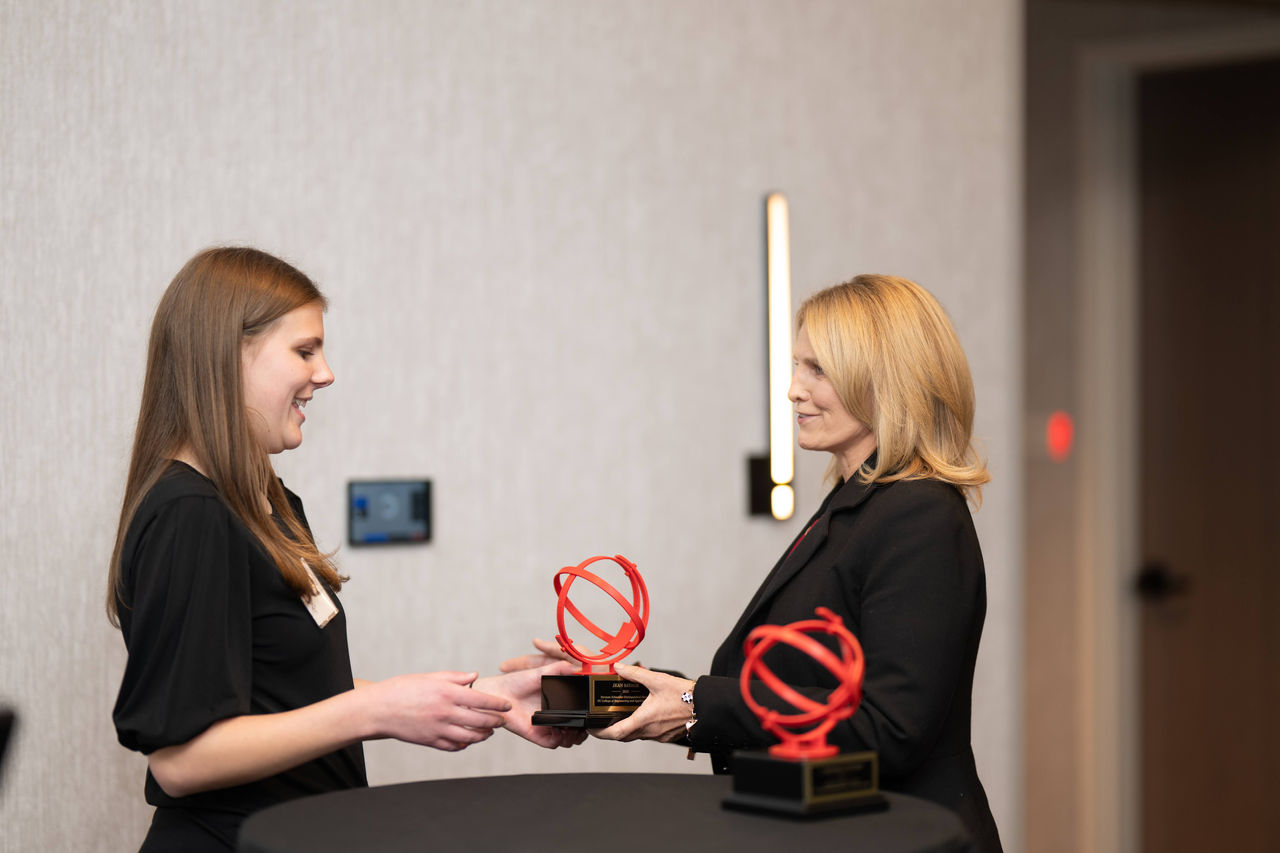
Recognition followed. The League of Railway Women named her its 2022 Railway Woman of the Year, announced in January 2023. The award recognized her work on operations, inclusion, sustainability, and volunteering. In 2024, Parker elected her to its board, returning her to the company where she had spent fourteen years, now in a different seat.
The glove, the chocolate, the unfinished work
There are less corporate ways to locate Savage’s personality. Her favorite childhood possession was a softball glove from her parents. She began playing at four. She enjoys travel with family and friends, favors beaches, and names Prague, London, and Amsterdam among her European favorites. Chocolate receives an uncomplicated endorsement.
Her enthusiasm for The Who stretches across much of her life; she has called their farewell tour her favorite concert. For an executive whose working subjects include fleet economics and engineering, these details offer a welcome reminder that a person contains interests that do not require a slide deck.
In Dallas, her commitments also include United Way, where she chaired the 2022-2023 annual campaign. In October 2026 she spoke to students at Hardin-Simmons University about risk, respect, listening, and the role of faith in her life. She returned to a familiar theme: learning continues after the title arrives.
“You’re never done. You can always get better.”
Jean Savage · October 2026
It is a useful place to leave a career that began with engineering and refused to stay within a single discipline. The move to rail emerged from a family decision. The later jobs demanded unfamiliar knowledge. Today the work asks how an established mode of transportation can become easier for customers to choose. There are still decisions ahead, and room to change direction.