Under Baltimore, a freight railroad ran into a problem that no amount of clever scheduling could solve. The Howard Street Tunnel, opened in 1895, was too low for two shipping containers stacked on a railcar. Here was CSX, with about 20,000 route miles at its disposal, negotiating with inches. A container could cross an ocean, reach a port and encounter a ceiling designed for another century.
- CSX sells freight movement across the eastern United States and into Canada.
- Its advantage is an established network of tracks, terminals, ports and connecting railroads.
- Baltimore’s tunnel upgrade reveals the bargain: spend heavily today to make tomorrow’s route more useful.
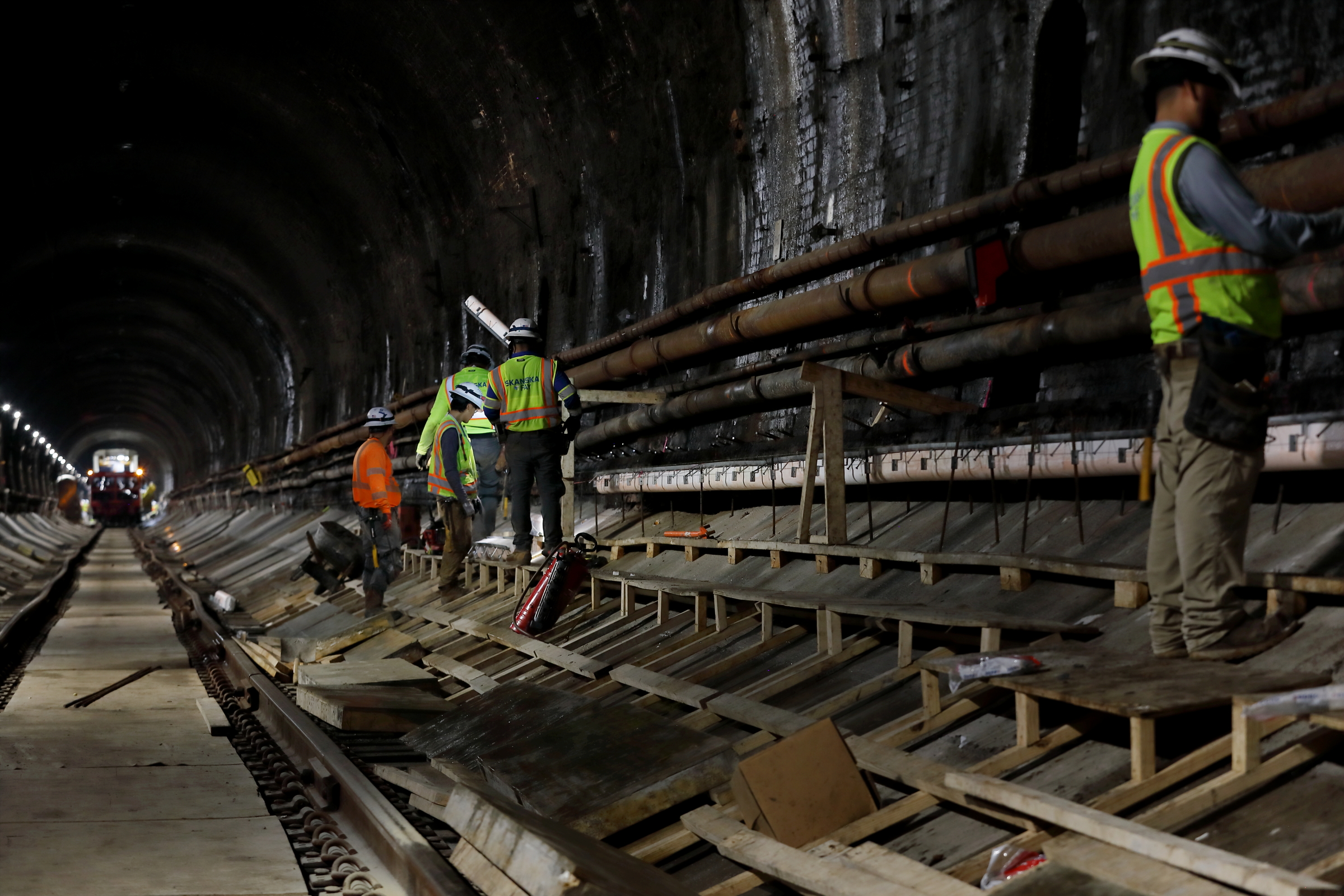
The solution was wonderfully literal. Crews lowered the tunnel floor. They preserved the old arch while creating room underneath it. But the larger story is about everything outside the tunnel: bridges, terminals, customers, construction detours and the difference between capacity on a diagram and a shipment arriving when somebody needs it.
A network made of other networks
CSX emerged from combination. Incorporated in 1978, it brought Chessie System and Seaboard Coast Line Industries together in 1980. Its ancestry includes the Baltimore & Ohio, chartered in 1827. This is a company whose origin story involves assembling existing routes into something more useful than the pieces.
That remains the business. CSX’s network covers 26 states, Washington, D.C., and parts of Ontario and Quebec. It has access to more than 70 ocean, river and lake port terminals. Its connections reach industrial plants, farming communities and population centers across the eastern United States. Geography is part of the product.
A chemical producer buys carload transportation. An automaker needs vehicles or components moved. A retailer’s goods travel in intermodal containers, with trucks handling the connections around a rail journey. TRANSFLO transfers bulk commodities between railcars and trucks, allowing a customer without its own rail siding to participate. Quality Carriers adds bulk chemical trucking.
The expertise lies in coordinating these movements: assigning equipment, sorting cars, maintaining track, handling commodities and making connections. Norfolk Southern offers an eastern rail alternative; trucks compete for freight whose timing, distance or destination favors the highway. For a shipper, the useful comparison is the complete journey, including transfers and waiting.
The price of another container
The Howard Street project makes that coordination visible. The tunnel was the principal obstruction, but bridges elsewhere on the corridor also needed clearance work. Fixing one structure could not make the whole route ready. The September 2025 reopening restored the tunnel to service; it did not mean every remaining obstacle had disappeared.
The builders had an unusually constrained workshop. Skanska and Fay, working with engineering partners Hatch and WRA, excavated the floor beneath the existing arch. A custom railcar-mounted gantry crane helped install nearly 1,200 precast concrete slabs. Crews worked around the clock during a seven-and-a-half-month construction period. The useful invention was a method that fit the place.
The bill needs a date attached. The program announced at the 2021 groundbreaking was $466 million. Maryland’s fiscal 2026 transportation plan put the overall estimated program cost at $495 million, including public and other funding. That plan reported a $71 million reduction from its previous estimate, tied to accelerating construction through a temporary tunnel closure.
There is the uncomfortable arithmetic: stopping service can help finish an improvement sooner. Meanwhile, freight must take another route. CSX’s infrastructure filing describes upgrading Cumberland Yard to accommodate rerouted traffic. The lesson for an operations manager is specific: price the temporary workaround as carefully as the permanent improvement.
Revenue double-stack trains began moving through the Baltimore corridor on May 4, 2026, according to CSX’s spokesperson. Officials celebrated at the port in June. The gap between reopening, usable corridor and public ceremony matters. Each describes a different kind of completion.
When the timetable meets the customer
CSX has already experienced what happens when operational change creates trouble at the receiving end. In 2017, its transition to scheduled railroading drew shipper complaints. At a Surface Transportation Board listening session, chemical producer Occi-Chem described longer journeys, erratic car movements and reduced switching. It said it had scheduled more than 100 truck shipments to keep customers operating.
From inside a railroad, moving equipment more efficiently looks like progress. From inside a factory, an unreliable delivery can make the production schedule unravel. Both observations can be true. CSX’s stated customer-service principle is refreshingly testable:
“Do what we say we are going to do.”CSX customer-service guiding principle
That promise belongs beside the financial measures. CSX earns freight revenue through rates and contracts, with fuel surcharges and additional charges such as demurrage when customers hold cars beyond the allowed time. It must keep expensive physical assets productive while providing a service customers can build their own schedules around.
How to buy a useful mile
Steve Angel became chief executive in September 2025. The latest figures show improvement: third-quarter 2026 revenue reached $4.02 billion, up 12%, while volume increased 5%. Reported operating income rose 44%; against the adjusted prior-year result, the increase was 25%. Those comparisons are different because the earlier quarter included a goodwill impairment.
It would be premature to credit one tunnel for those results. CSX attributed revenue growth to fuel surcharges, volume and pricing. New infrastructure creates an opportunity; filling it profitably requires customers. The May 2026 upgrade of Southeast Mexico Express with CPKC shows another route to growth: coordinate across carriers to improve an existing service.
For a prospective shipper, start with origin, destination, commodity, volume and delivery window. Use ShipCSX to plan, ship, trace and pay; investigate intermodal or transloading if the endpoints lack track. Compare the full cost, including handling and local trucking. A short, urgent or awkwardly located shipment may favor a truck throughout.
For everyone else, Baltimore offers a useful habit: inspect the narrowest part of the system before buying more of everything around it. Then inspect the next narrowest part. CSX’s tunnel had to get deeper before its network could become more useful. The hard part was making all the other pieces agree.