A container is a remarkably undramatic invention. Put goods inside it, close the doors, and change the vehicle underneath. The cargo need not attend the meeting. Yet the moment that box leaves a truck for a train, somebody must coordinate equipment, appointments, information and the truck waiting at the other end. Hub Group built its business in that interval.
- Hub connects rail, trucks, warehouses and delivery for business shippers.
- Its specialty is making several transport stages behave like one service.
- Walmart’s new consolidation program shows the appeal; its 2026 restatement shows a separate problem of control.
In 1971, Phillip and Joyce Yeager started Hub City Terminals in a windowless office above a flower shop outside Chicago. Phillip had spent 19 years with the Pennsylvania Railroad. Their early business was arranging intermodal freight as a shipper’s agent. They understood a railway’s usefulness to a customer who did not particularly wish to become a railway expert.
That is still a useful way to understand the company. The customer wants inventory delivered. Hub works out how the journey should happen. Its buyers include retailers, consumer goods manufacturers, food-and-beverage companies and industrial shippers. A box of groceries and an appliance have different demands, but both become expensive when the next stage is waiting for the previous one.

The truck at either end
Hub went public in 1996 and introduced its own fleet of 2,000 intermodal containers in 1998. Buying Comtrak in 2006 strengthened the trucking connection. The trajectory matters: an intermediary gradually acquired more control over the physical work. Containers, drivers and trucking operations sit alongside relationships with outside carriers and railroads, notably Union Pacific and Norfolk Southern.
This is an asset-backed logistics business. Hub sells transportation and related services, buys capacity where needed, and operates equipment where ownership helps. Dedicated trucking supplies recurring customer operations; brokerage finds outside truck capacity; managed transportation handles planning and execution. Warehousing, fulfillment and final-mile services extend the relationship beyond the rail ramp. The customer can buy a particular service or a wider arrangement.
The vehicle changes. The cargo stays in its container.
There is a software layer, too. Hub reports putting GPS into its intermodal containers in 2013. Hub Connect lets customers schedule shipments, track loads and review documents. Door sensors and connected devices supply information about equipment and freight. Their value is practical: a location update helps only if somebody can use it to make the next appointment or resolve an exception.
“continuing to be the conduit between customers and intermodal”
Phil Yeager, in a 2020 Union Pacific interview
The distinction from a truck-only carrier is the choice of modes. The distinction from a pure broker is the owned equipment and operating capacity. Neither grants immunity from competition. A shipper can choose another logistics provider, hire carriers directly or keep management in-house. Hub’s proposition must survive a comparison of cost, service and the administrative work the customer retains.
Walmart makes the case in 42 places
Consider a supplier selling into Walmart. Hub’s existing Walmart consolidation program, operating since 2003, combines smaller orders from hundreds of suppliers into full truckloads. The problem extends beyond finding a truck: retailers care whether orders arrive on time, in full and in acceptable condition. A low transport rate is poor consolation for a missed receiving window.
In May 2026, Walmart announced Prepaid Consolidation. Suppliers send goods under a single national purchase order to one location; Walmart then combines inventory and distributes it across 42 regional distribution centers. Walmart named Hub Group, C.H. Robinson and RJW Logistics as approved third-party providers. Hub therefore has a specific role in an actual purchasing system, with named alternatives beside it.
Suppliers deliver centrally. Walmart allocates inventory across its network.
For a supplier, the appeal is fewer separate inbound arrangements. For Hub, the work draws on transportation, warehouse coordination and visibility. This also explains its acquisitions: CaseStack expanded retail consolidation; Forward Air Final Mile added appliance delivery and installation capability. The company has followed customers into adjacent tasks that a successful shipment leaves behind.
A $51.8 million cold bet
In September 2025, Hub closed the purchase of Marten Transport’s intermodal assets. Marten confirmed a $51.8 million cash price for equipment, including more than 1,200 refrigerated containers, and contracts. Hub said the addition more than doubled its temperature-controlled fleet. The deal bought physical capacity and commercial relationships, including food-and-beverage shippers, rather than a fashionable new label for the business.
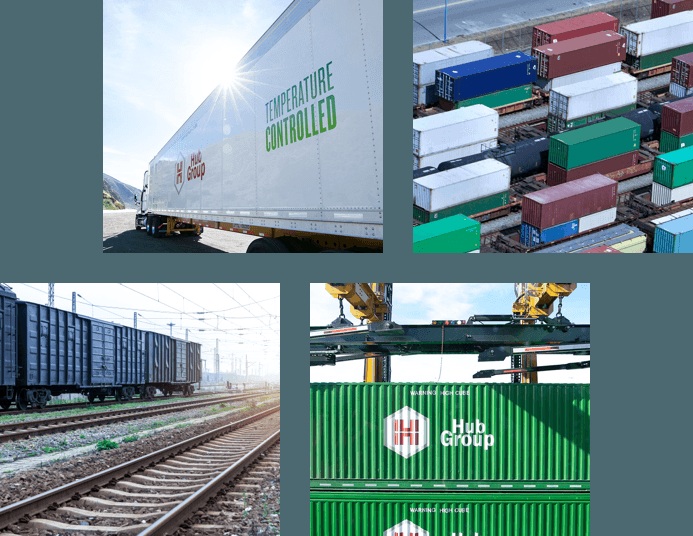
Cold freight makes the operating question sharper. Equipment must suit the product, and the route must suit the delivery promise. More containers help when there is useful work for them. Empty repositioning, awkward truck legs or unreliable rail service can consume the advantage. The same arithmetic applies to warehouses: space is an asset until there is too much of it.
The numbers need their own handoff
Hub’s current difficulty concerns its accounts. In February 2026, it disclosed understated purchased transportation costs and accounts payable in the first nine months of 2025. In May, the restatement expanded to 2023 and 2024 annual financial statements. The company said those statements should no longer be relied upon. Old profit figures cannot responsibly serve as proof that the operating strategy succeeded.
September brought David Yeager’s return as CEO and a Nasdaq Staff Delisting Determination over overdue reports. The September 17 announcement said receipt did not immediately suspend trading or delist shares; Hub intended to appeal. Separately, its preliminary first-half update anticipated an operating loss, citing higher fuel, rail and drayage costs, excess consolidation-and-fulfillment capacity and accounting-review expenses.
The lesson a reader can borrow is specific. Map the whole journey, assign responsibility at every handoff, and count the waiting alongside the mileage. Compare total delivered cost against the promised date. A route with poor rail access or no tolerance for the timetable may favor a direct truck. Hub’s history shows the commercial value of connecting stages; its present predicament makes accurate measurement part of that same discipline.