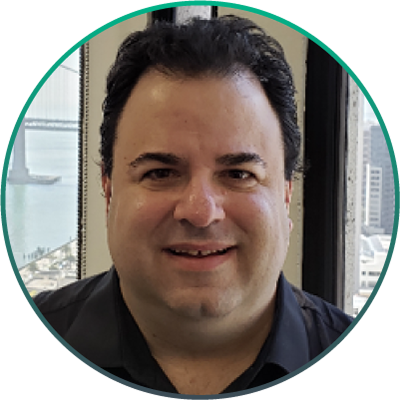
The man at the dock never really left it
Walk into Cargomatic's Long Beach office, a few blocks from one of the busiest port complexes on Earth, and you will find a CEO who can read a freight manifest the way other people read a menu. Richard Gerstein runs Cargomatic, the company trying to make moving a pallet across town as simple as ordering a car. His job today is to convince shippers that the smartest truck in America is not a new one. It is the half-empty one already driving past their warehouse.
That idea has a name in the industry - matching freight to capacity - and it is the quiet engine under Cargomatic. The company connects drivers and shippers across Los Angeles, San Francisco, Seattle, Chicago, New York and New Jersey, the corridors where local goods pile up and trucks circle looking for loads. Gerstein joined in 2017 and has spent the years since rebuilding the place into what he describes as a leading provider of local LTL, drayage and white glove freight services.
The origin story is unusually literal. Gerstein grew up in Chicago around his father's less-than-truckload business, the kind of operation where pallets get broken down and consolidated and re-loaded a dozen times a day. He learned the trade on the docks - not the boardroom version, the actual concrete-and-forklift version. Kids who grow up around freight either run from it forever or never escape its gravity. He never escaped.
From the dock to the database
What separates Gerstein from a third-generation trucker is what he did with the knowledge. He went to UC Berkeley and stacked two degrees that read like a thesis statement for his entire career: a bachelor's in Political Economy of Industrialized Societies and a master's in Transportation Engineering. One half of his brain studies how economies move goods; the other half studies the physics of the trucks doing the moving.
In 1992 he put both halves to work and founded IntelliTrans, a technology company built for the unglamorous heavyweight end of logistics - bulk and break-bulk freight, the rail cars and barges and railyards that move raw material rather than retail boxes. IntelliTrans specialized in multi-modal supply chain optimization and visibility, which is industry language for a simple, hard problem: knowing where your stuff actually is when it is crossing the country by three different modes of transport. He ran it as President for more than two decades.
Building a successful company always starts with the foundation, and after our Series B funding, my primary focus has been to find the best talent I could and bring them to Cargomatic.
Why Cargomatic, and why now
By the time Gerstein took over Cargomatic, the company had a clever app and a hard truth: a marketplace is only as good as the people running it. His first move was not a flashy product launch. It was hiring. Following a Series B funding round, he rebuilt the executive team almost from scratch, betting that the foundation mattered more than the headline. It is a deeply un-Silicon-Valley instinct - slow down, get the people right, then scale - and it tracks with a man who spent his childhood watching what happens when the loading dock is short-staffed.
The wager is on geography. National long-haul trucking is a brutal, commoditized game. Local and regional freight - the drayage move from the port to the warehouse, the white glove delivery that needs two people and a careful touch, the short LTL hop across a metro - is messier, more fragmented, and far harder to automate. Which is exactly why Gerstein likes it. Fragmentation is opportunity. Every empty mile a local truck drives is, to him, a small economic crime worth solving.
Drayage sits at the center of the strategy. It is the short, deceptively complicated haul that takes a container off a ship and gets it to its first inland stop, and it is notorious for delays, idle trucks and finger-pointing. Cargomatic's pitch is to make that handoff smooth and visible - the same visibility obsession Gerstein chased at IntelliTrans, now pointed at the chaos of the port instead of the order of the rail yard.
The operator's temperament
Gerstein is not a founder who sells a dream and disappears. He is an operator, and the difference shows. He talks about foundations, talent and execution rather than disruption and moonshots. He took the title of Chairman as well as CEO, the posture of someone settling in rather than passing through. After 22 years building one company, he clearly plays a long game, and he seems comfortable with the idea that logistics rewards patience over noise.
There is a tidy symmetry to where he landed. Cargomatic is headquartered in Long Beach, gateway to the San Pedro Bay ports, where a meaningful slice of everything America buys first touches dry land. A man who learned freight on a Chicago dock now sits at the edge of the country's largest container complex, trying to make the trucks that leave it a little less empty. The setting could not be more on the nose.
The American supply chain spent the early 2020s in the headlines for all the wrong reasons - backed-up ports, ships parked offshore, shelves running thin. For most people that was a crisis. For someone who has spent a lifetime around the choreography of cargo, it was simply the part of the iceberg that finally surfaced. Gerstein's bet is that the fix is not bigger ships or more highways. It is software that knows where the empty space is and the discipline to fill it, one local load at a time.
He is not promising to reinvent transportation. He is promising to make the boring, regional, last-leg part of it work better than it ever has - and after a lifetime on the dock, he knows exactly how broken it can be.
Notes, clippings & fun facts
Two UC Berkeley degrees: political economy and transportation engineering. The rare exec who can argue trade policy and stress-test a bridge.
His father ran an LTL trucking business. Richard's career was practically written on a loading dock in Chicago.
Spent 20+ years in bulk and break-bulk - rail and barge freight - before moving to the app-driven local world.
Cargomatic's HQ sits in Long Beach, next to one of the busiest port complexes on the planet. A drayage company at the source.
First move as CEO after the Series B was not a product - it was rebuilding the entire executive team.
Took the Chairman title alongside CEO - the body language of someone settling in for the long haul.