The revealing number in Werner Enterprises’ latest transformation is 17. When the carrier bought FirstFleet in January 2026, the acquired company’s ten largest customers had been customers for an average of 17 years. Trucks wear out. A relationship that survives that many budgets, managers and business cycles has a different sort of mileage. Werner paid $282.8 million, including real estate, for a business whose appeal included knowing where the trucks would be needed again tomorrow.
- Werner moves freight and runs fleets for businesses across North America.
- FirstFleet added recurring work in groceries, bakery goods and packaging.
- Expansion came alongside a retreat from underperforming one-way freight.
A fleet with an appointment book
CL Werner began in 1956 with one truck, driving it himself. The familiar founder story encourages us to count the vehicles that followed. By the 1970s, Maytag had become the company’s first Fortune 500 customer. Werner went public in 1986. Yet the FirstFleet deal suggests another way to read that history: each truck needed a customer, and the quality of the customer’s demand mattered as much as the machine.
A dedicated fleet is an appointment book on wheels. Trucks and drivers serve a particular customer’s operating needs. One-way truckload work handles freight moving through changing routes and schedules. Both move goods. The difference is how much can be planned before the dispatcher’s day begins. For a shipper, dedicated service also transfers the daily bother of running a fleet to someone who does it for a living.
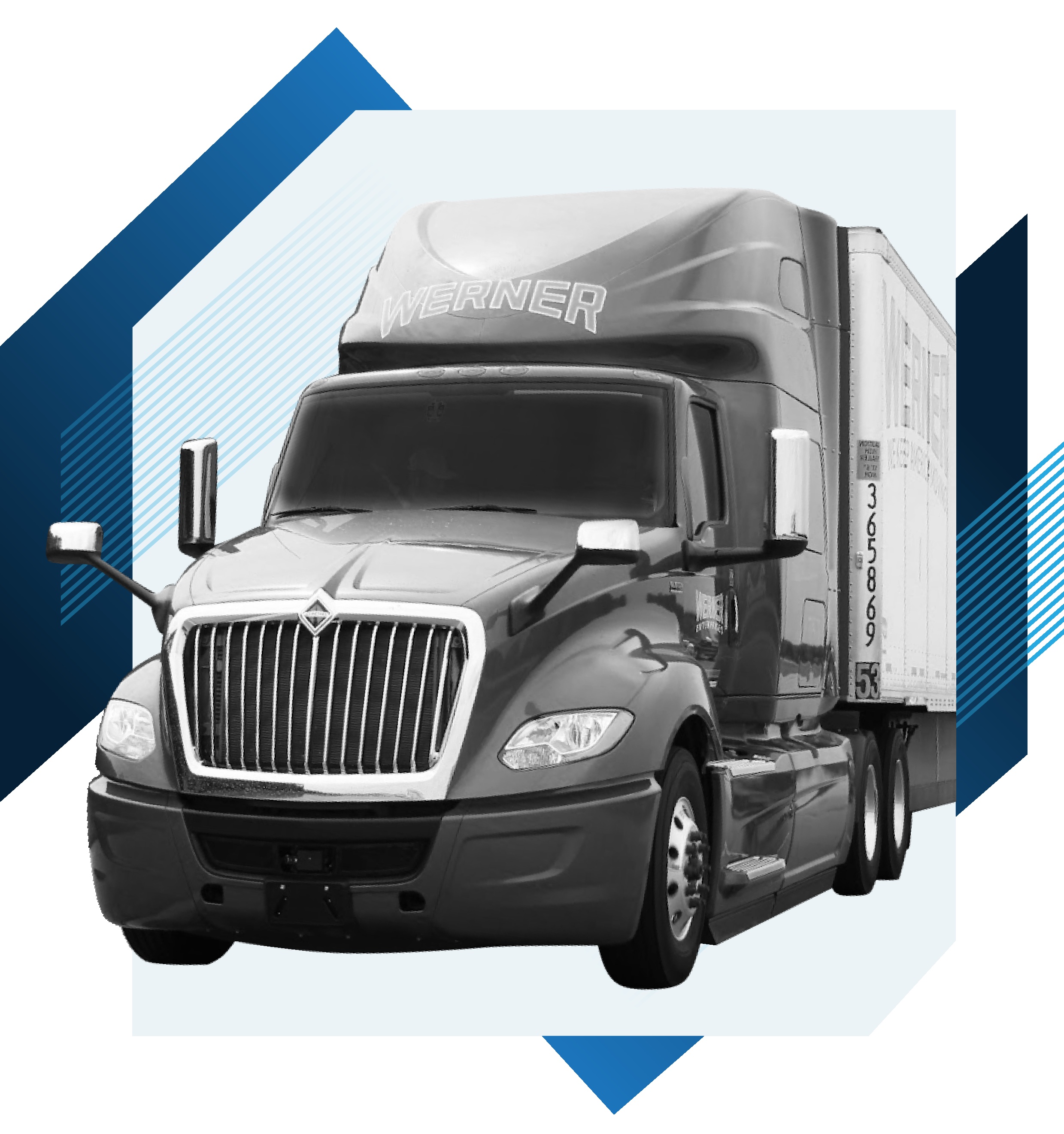
FirstFleet brought roughly 2,400 tractors and 11,000 trailers, with expertise in grocery, bakery products and corrugated packaging. Those are revealing choices. The attraction is the possibility of recurring demand for everyday goods. Management expected about $18 million in annual synergies within two years. That was a target at announcement, rather than money already sitting in the bank.
The grocery aisle is the customer
Werner’s customers are businesses with physical promises to keep: a stocked store, a supplied factory, a delivery at somebody’s door. Retail and consumer-products companies dominate its largest-customer mix. Dollar General alone supplied 11% of total revenue in 2025. You may never book a Werner truck and still encounter the consequences of its work while shopping.
The menu extends beyond dedicated fleets. One-way truckload covers changing shipping needs; expedited services address urgent freight; temperature-controlled equipment handles sensitive loads. Brokerage arranges transportation with other carriers. Intermodal combines rail and road. Final-mile services take large or heavy items toward their residential or commercial destination, including white-glove options. These are different answers to the same practical problem: the shipment must fit the journey.
The business earns transportation revenue, with operating costs attached to equipment, people and purchased capacity. It competes with J.B. Hunt, Schneider, Ryder and Penske in dedicated carriage, among others. Werner’s particular proposition combines its own trucking capacity, logistics services and connected operating tools. A buyer should compare the actual lane, delivery window and service obligation. A handsome fleet photograph cannot answer those questions.
The margin broke before the ambition did
In 2025, Werner recorded approximately $2.97 billion in revenue and $11.7 million in operating income. The operating margin was 0.4%. Revenue fell about 2%; operating income fell 82%. That imbalance is the unpleasant arithmetic of a fleet business: a small weakening in sales can leave a much larger hole after the costs of keeping the operation available.
Werner began restructuring One-Way Truckload in the fourth quarter of 2025. It identified selective regional and short-haul freight to exit, integrated acquired one-way operations further, and shifted toward specialized, expedited and team capacity. Cumulative restructuring and impairment charges reached $48.3 million by June 2026. Those accounting charges include asset write-downs; they are not simply a cheque for that amount.
Dedicated takes more of the wheel.
The 2026 picture offers progress with a qualification. Second-quarter revenue reached $933.9 million. Adjusted operating income rose 67% to $27.6 million, while reported operating income fell 74% to $16.9 million. The two measures tell different comparison stories. Dedicated trucks represented 80% of the trucking segment’s quarter-end fleet, against 65% a year earlier. More predictable freight now occupies a larger place in the machinery.
“Our organic Dedicated business is growing”Derek Leathers, chairman and CEO / July 2026
The paperwork was an early clue
Werner’s interest in technology predates fashionable freight software. Federal regulators had monitored its GPS-based recording of driver hours since June 1998. In 2004, the regulator granted an exemption permitting those records instead of handwritten logs, judging the arrangement to provide equivalent or greater safety. The mundane administrative task was a place to experiment.
That instinct appears in newer tools. In a Platform Science case study, nearly 80% of the driver data Werner’s back office needed passed through PS Workflow. Werner announced a Mastery Logistics Systems partnership and investment in 2020 for cloud transportation management. Its Bridge platform, announced in 2023, addressed quotes, booking and shipment visibility. The practical test is whether a driver or dispatcher has less work to repeat.
There is a useful distinction here between information and control. Seeing a delayed shipment sooner gives a customer time to respond; it does not remove traffic, weather or a missed loading slot. Software becomes valuable when the operation can act on what it reveals. That is why fleet management, dispatch experience and driver training belong in the same buying decision as the tracking screen.
Borrow the arithmetic
For someone considering fleet outsourcing, Werner’s story suggests a useful sequence: map the recurring routes, count the empty miles, identify delivery constraints, then compare the full operating cost. Include recruitment, maintenance and administrative time. A dedicated arrangement needs sufficient repeatable demand to justify reserved capacity. Erratic volume or poorly matched return journeys can undo the attractive spreadsheet.
Long relationships also create dependence. Werner’s ten largest customers represented half its 2025 revenue. Dedicated contracts generally run two to five years, with annual rate renegotiation and termination provisions. An appointment book can lose appointments. The lesson to copy is the discipline of choosing freight that fits the operation, and testing its economics before expanding. Seventy years after one driver bought one truck, the interesting question remains what work deserves the next one.
Explore Werner’s services · Werner Bridge · Stories, guides & videos · Company news