Consider the truck that has not moved yet. The cargo is ready. A customer has asked for a price. Somewhere, an email waits for a person to read it, extract the details, and do something useful. There is no spectacular breakdown here. Just a small pause, multiplied across a working day. C.H. Robinson has discovered that this interval is a rather good place to put artificial intelligence.
- Robinson connects business shippers with independent freight carriers.
- Its AI turns routine emails into quotes, orders, and appointments.
- Faster service comes alongside restructuring and workforce reductions.
- The useful lesson: measure the wait before the work begins.
The truck has not moved yet
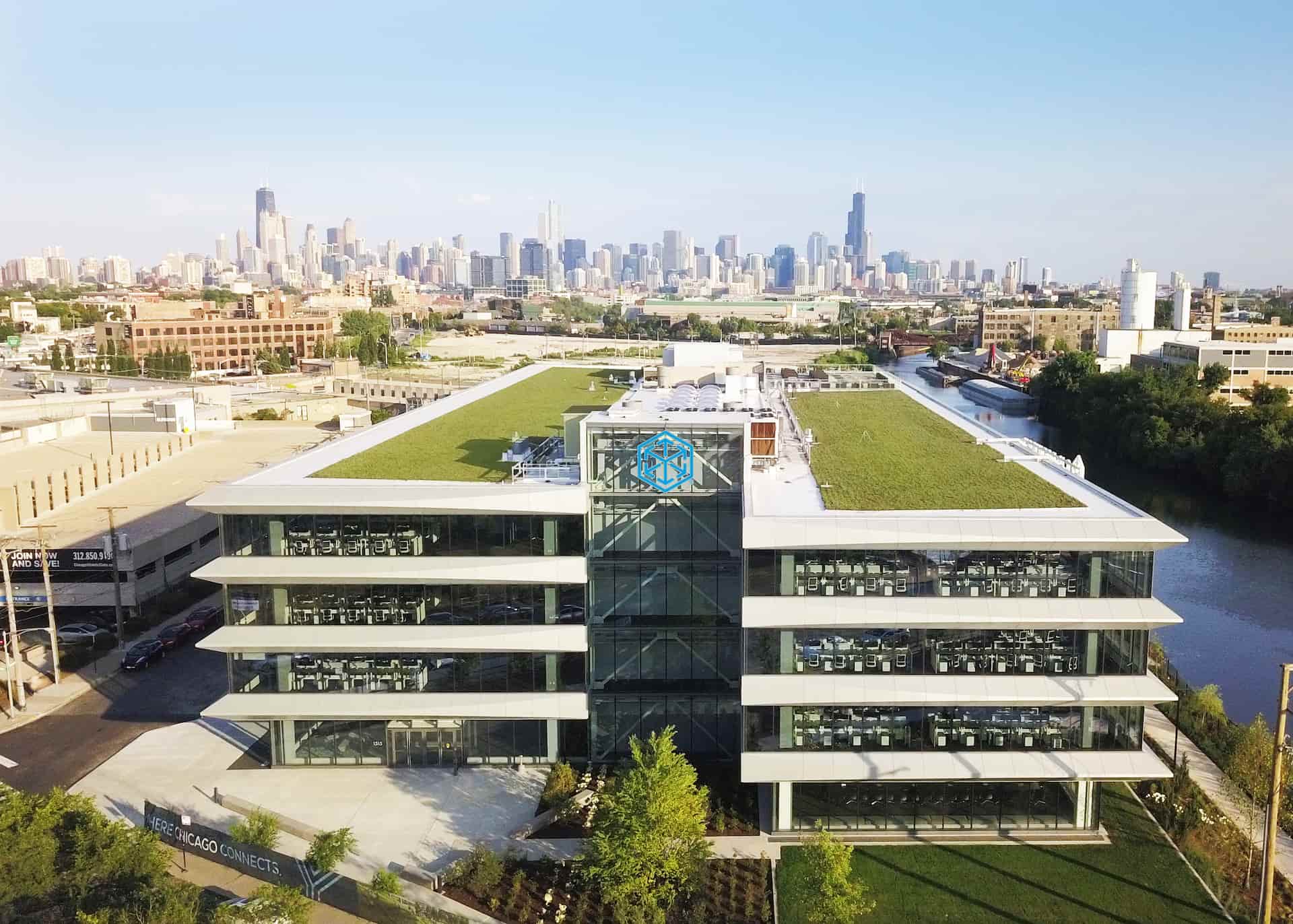
To understand this company, start with produce. In 1905, Charles Henry Robinson’s business incorporated as a produce broker in Grand Forks, North Dakota. By 1945, it was arranging produce transportation, primarily by rail. Fruit has a stern view of administrative delay. The company eventually expanded into trucking, intermodal transport, and global forwarding, but the original business survives through Robinson Fresh, which sources and markets perishables.
A broker occupies an awkwardly useful position. A manufacturer needs capacity on a particular route. A carrier needs a load that fits its equipment and schedule. Robinson brings them together, charging the customer and paying the transportation provider. The difference helps fund coordination, expertise, and profit. It also sells managed logistics and technology services. The business is exposed to freight prices, carrier costs, and the expense of making each transaction happen.
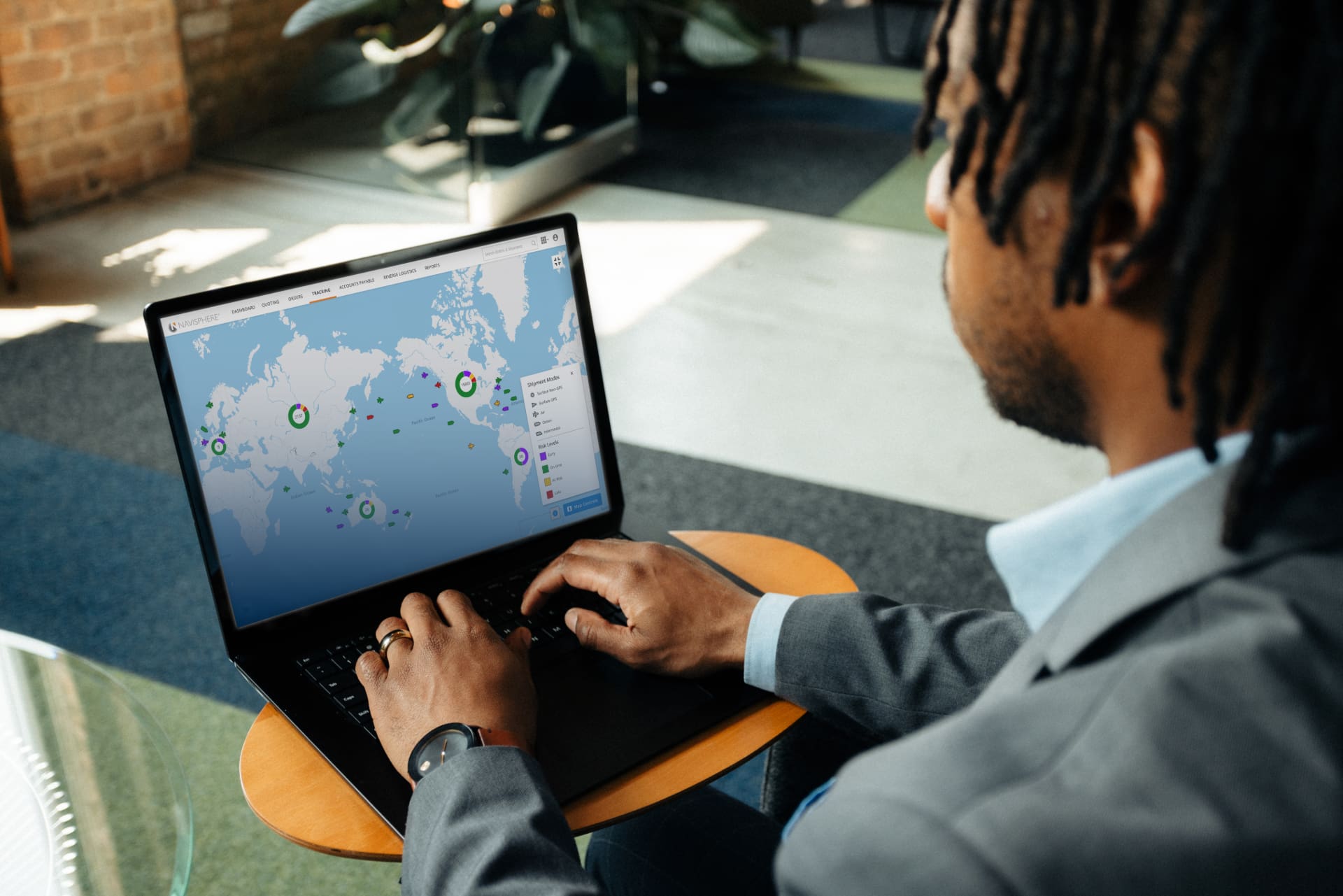
For shippers, the menu includes full truckloads, shared-truck shipments known as LTL, ocean and air freight, customs brokerage, and cross-border coordination. A business can buy help with one shipment or hand over substantial transportation management. Carriers can search for loads, make offers, book freight, and provide updates through Navisphere Carrier. Robinson sits between the businesses making goods and the companies physically moving them.
A broker learns to read the inbox
Robinson already had transportation software. Navisphere launched in 2012. Yet, as Microsoft’s account of the company explains, tens of thousands of customer emails still arrived daily. The hard part was variability: customers expressed similar needs in different ways, with rules that employees knew and software had to learn. A form can insist on tidy boxes. An inbox has no such manners.
Generative AI gave Robinson another way into the problem. Its technology classifies a request, assembles the shipment details, identifies missing information, and performs the relevant steps. Microsoft describes Azure AI services, databases, and a human feedback loop supporting the system. Mark Albrecht, Robinson’s vice president of artificial intelligence, identified “Building a comprehensive knowledge base” as part of the scaling unlock. Customer knowledge had to become usable by machines.
- 01ReadIdentify the request
- 02CheckAssemble details and gaps
- 03ActQuote, order, or schedule
- 04LearnUse human feedback
By April 2025, Robinson reported more than three million shipping tasks completed by generative AI. In March 2026, it reported quote delivery in 32 seconds and order processing in 90 seconds. Its own truckload analysis associated AI-enabled orders and appointments with 11% faster average speed to market and 7% better average on-time pickups. Those are company-reported relationships, rather than proof that every customer will get the same result.
The customer stakes are tangible. Henry Schein, a healthcare distributor, has worked with Robinson for more than two decades. Robinson’s case study reports over $1.2 million in domestic network optimization savings and more than $500,000 in annual consolidation savings. These are reported outcomes from a particular relationship, not a price list. They illustrate why a shipping customer might value accumulated knowledge as much as an attractive freight rate.
The savings come with a bill
Dave Bozeman became CEO in June 2023. The subsequent changes included fewer technology priorities, a Lean operating model, and an exit from European road freight: that operation transferred to sennder in February 2025. European forwarding and managed services remained. Focus, in this instance, meant choosing which work deserved Robinson’s attention.
“Changing the culture of a company is hard work.”Dave Bozeman / Q4 2025 earnings summary
The annual filing records a less flattering detail: the 2024 reprioritization included impairments of internally developed software. Some projects had to be written down. That restructuring produced $45.7 million in charges. A separate 2025 program incurred $30.4 million that year, primarily for workforce reductions. Another $27.7 million followed in the first half of 2026. These are restructuring figures, not a complete AI development budget.
Company-reported quarter results. Profit rose to $255.7 million.
For customers, pricing remains a shipment quote or negotiated contract, shaped by route, mode, timing, capacity, and freight requirements. For competitors such as RXO, TQL, and Uber Freight, Robinson’s proposition combines an established network, multiple transport modes, and software with operational execution. The argument rests on their combined usefulness. A long history alone will not persuade a shipper whose delivery is late.
Faster paperwork still needs a safe truck
There are physical limits to an administrative improvement. An unusual load, missing customer rules, or scarce capacity can still require judgment. A quick response does not reopen a port. Readers borrowing the approach should document exceptions and retain people who can handle them, then measure the whole transaction rather than celebrate how quickly software answered.
Carrier selection carries responsibilities, too. In July 2026, a Dallas County jury returned a $604 million verdict in Lipe v. Lupus Superior, involving Robinson and a carrier. Robinson disputes the verdict and said it would appeal. FreightWaves reported on September 8 that the judge had not yet affirmed it. The outcome matters to a business built around arranging transportation through other companies.
The portable lesson is modest and demanding: find a repeated queue, make its hidden rules explicit, and connect automation to the next action. Robinson’s customers need a quote to become a booked, collected, delivered shipment. Every handoff offers another chance to wait. The company’s experiment begins by asking how many of those waits anyone actually needs.