Freight is a business of ordinary objects developing urgent personalities. A pallet misses its appointment. A trade-show booth needs a white-glove delivery. A load that looked sensible on Tuesday suddenly needs an air charter on Thursday. The shipper does not want to become a transportation scholar. It wants a price, a plan, a visible trail and a person who knows what happened. FreightSaver built its company in that narrow, valuable gap between software and somebody picking up the phone.
Founded in Huntington Beach in 2014 by logistics veterans Ryan Renne and Buster Schwab, FreightSaver became a third-party logistics provider, or 3PL. It does not need to own the truck. It coordinates outside carriers, matches the shipment to a mode, negotiates and books capacity, tracks the movement and manages the paper blizzard around it. The menu runs from full truckload and less-than-truckload to expedited, final-mile, oversized and specialized projects. Managed transportation goes further: FreightSaver can run one troublesome mode, one shipping location or the client's whole transportation network.
The company aimed at small and midsize businesses - organizations with enough freight to feel the pain, but not enough appetite to assemble a deep carrier bench, a transportation-management system and a round-the-clock operations team. That positioning landed. In 2018, just four years after launch, FreightSaver reached No. 110 on the Inc. 5000. By 2025 it had offices in California, Utah, Michigan and Ohio and roughly 50 employees. Then Echo Global Logistics bought it. The price was not disclosed.
The product was relief, with a login
FreightSaver's portal, FreightTrack, is not mysterious. That is a compliment. Customers can quote a shipment, compare carrier choices, book it, retrieve a bill of lading, watch status changes, search references and open a shipment profile. The profile holds carrier information, origin and destination, commodity details, pricing, labels and alerts. Quote history remembers the roads not taken. Shipment history, reports and carrier summaries help an operator spot patterns instead of reconstructing last quarter from an inbox.
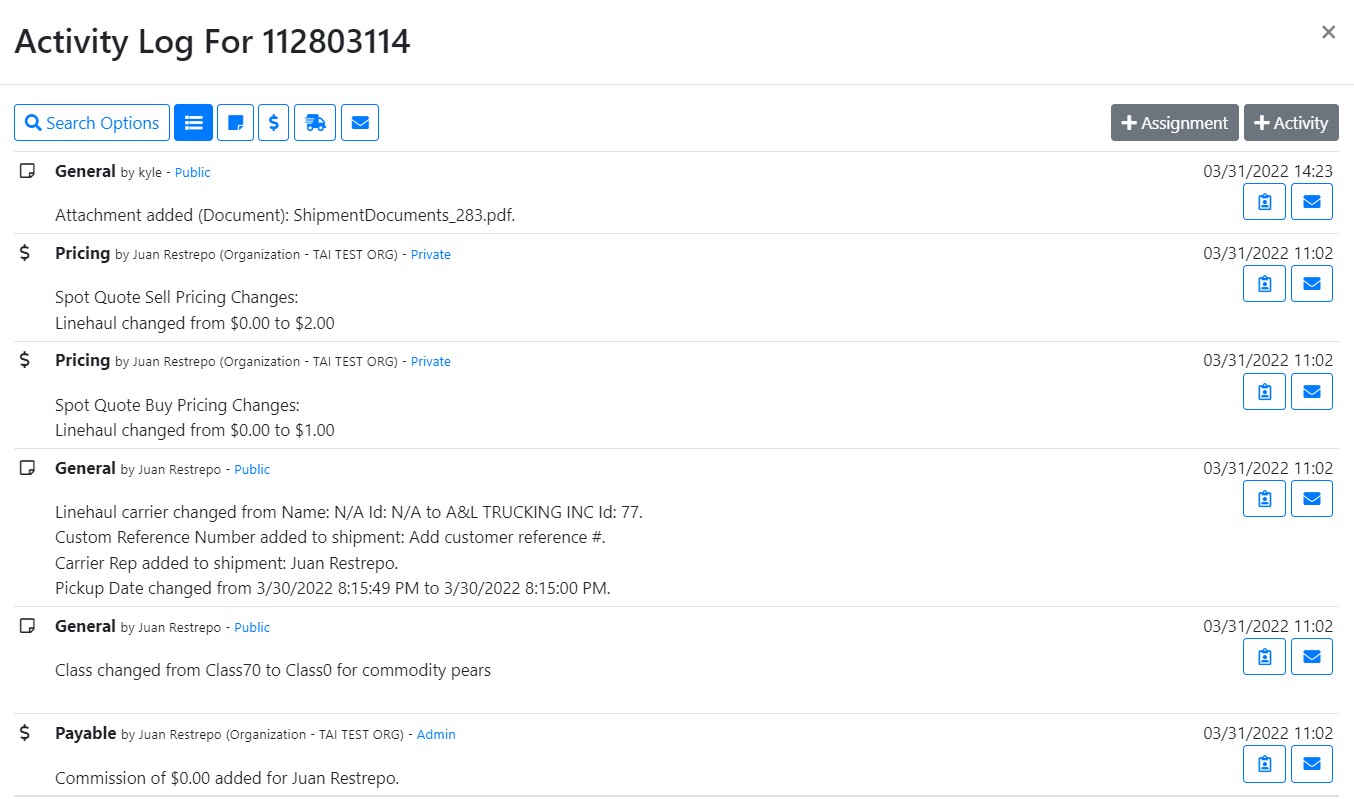
The activity log is the revealing feature. It records documents, pricing changes, carrier assignments, pickup times and notes. In a pretty consumer app, this would be administrative clutter. In freight, it is the plot. When a delivery goes sideways, the customer needs to know who changed what and when. The portal gives both shipper and account team a shared operational truth.
But FreightSaver never pretended the screen was sufficient. Its service pages pair technology with dedicated teams, carrier compliance, claims management, freight-bill audit, custom reporting and 24/7/365 operations. The expedited group can arrange next-flight-out, hand carry, air charter, same-day delivery or expedited ground. Specialized service includes inside delivery, setup and debris removal. In other words: automate the repeatable load; put humans on the weird one.
The managed-freight loop
How it made money - and why it was different
FreightSaver operates an asset-light model. It arranges transportation through a network of carriers rather than building a giant owned fleet. The brokerage earns a margin between what the shipper pays and what transportation costs; managed-transportation work can add ongoing service fees. Public rate cards do not exist because the cargo, lane, timing, mode and contract all move the number. The company's provided business data estimates annual revenue at $18 million, but FreightSaver has not published a verified figure.
What did the service cost a customer? There is no honest universal number. A dry-van truckload on a familiar lane, a partial load with density-based classification and a hand-carried emergency are different products wearing the same word: freight. FreightSaver's workflow generated a “Smart Quote” from shipment details and let a user select among available carriers. Managed-transportation economics would depend on scope, volume and contract. The useful buying question is therefore not whether one quote is lowest. It is whether the total bill - linehaul, accessorials, claims, labor, missed appointments and time spent chasing updates - improves after the broker takes over. FreightSaver's freight-bill audits, variance management and quarterly reviews were built to keep that larger calculation visible.
Competitors are everywhere: C.H. Robinson, Uber Freight, RXO, TQL, GlobalTranz, regional brokers, direct carrier contracts and the customer's own logistics department. FreightSaver's differentiation was not a mode nobody else could move. It was a packaging choice. Large broker technology can feel anonymous. A tiny brokerage can feel attentive but lack leverage and systems. FreightSaver tried to occupy the middle - usable software, multiple modes and an account team that knew the customer.
That is also why the managed-transportation offer matters. A customer could begin with one mode or location rather than outsource everything on day one. FreightSaver could then add reporting, quarterly reviews, KPI management and process automation. The sale expands when trust expands. This is less like buying a shipping label and more like hiring an external transportation department in pieces.
What failed first? The small-company ceiling
There is no public story of a product collapse or a desperate sale. The constraint visible in the acquisition is more ordinary: scale. A 50-person 3PL can be responsive; it cannot casually reproduce the reach of Echo, which entered the deal with more than 60 North American locations, 35,000 clients and a network of over 50,000 transportation providers. As customers add modes, geographies and exceptions, carrier depth and working infrastructure become part of service quality.
What changed the founders' minds was not publicly framed as a failure. Renne called Echo a natural next step. Schwab pointed to its scale, resources and vision. Their adviser described a competitive, rigorous sale process; the transaction terms stayed private. The practical bargain is plain enough. Echo got managed-transportation customers, sales expertise, five offices and a team trained to hustle. FreightSaver got more modes, more technology and a much deeper carrier network without spending years building each one.
Acquisitions usually make “same team, more resources” promises. This one has at least one useful follow-up. In early 2026, Echo CEO Doug Waggoner said integration of FreightSaver's roughly 50 people had not missed a beat and the operation was growing. That is not a full scorecard. It is evidence that the first months did not produce a publicly visible service seizure.
The part worth stealing
FreightSaver's transferable idea is to productize accountability. First, pick a customer whose problem is too complex for a commodity tool but too small for a custom department. Second, put the routine workflow in one shared system. Third, make exceptions visible and give them an owner. Fourth, turn the accumulated history into reviews that expose savings, bad lanes, weak carriers and recurring errors. Finally, let customers enter narrowly and expand only after the operating proof arrives.
A marketing agency could do this with campaign approvals and revision history. An IT provider could do it with tickets, assets and incident logs. A finance consultancy could do it with close checklists and variance reports. The portal is not the whole product; it is the window through which the client watches the service happen. The human team remains responsible for the weather.
Copy it when
- Work recurs often enough to standardize.
- Exceptions are expensive and emotionally loud.
- Customers need visibility but also judgment.
- History can improve purchasing and operations.
Skip it when
- Volume is occasional or mostly simple parcel.
- The cheapest spot quote is the only buying rule.
- The service cannot produce repeatable data.
- Customers will not share demand or shipment history.
The model also strains when every shipment is a snowflake. White-glove projects and hand-carry emergencies can command attention and margin, but too much bespoke work resists automation. It can fail when shipment volume is too low to create buying leverage, when the customer withholds clean data, or when service teams grow faster than their operating discipline. And after an acquisition, it fails if the local people lose authority while the new parent adds process. High touch without empowered hands is just hold music.
Where FreightSaver fits now
FreightSaver now sits inside Echo rather than beside the industry's giants. Its website points customers toward Echo's broader transportation and technology menu while keeping the FreightSaver service names, knowledge base and support channels in view. That hybrid status is the experiment: can a founder-built, relationship-heavy brokerage retain its texture inside a much larger platform?
For shippers, the pitch remains practical. Use one team for routine truckload, LTL, urgent air, awkward final mile and network management. See the shipment, keep the documents, study the results. Call a human when the pallet develops a personality. FreightSaver's story is not that software replaced freight brokers. It is that software made a good broker easier to trust - and that trust became valuable enough for a bigger network to buy.
Continue the route