Imagine a manufacturer with three pallets ready to leave and a customer waiting two states away. The order is too bulky for an ordinary parcel run, too small to justify renting an entire trailer. The expensive object in this story is the space around the goods. FedEx Freight makes its living finding other people’s goods to put there.
- Businesses share trailer capacity through less-than-truckload shipping.
- Priority buys speed; Economy lets customers trade time for savings.
- The company became independent of FedEx on June 1, 2026.
- Accurate pallet measurements can matter as much as the advertised rate.
A truck full of other people’s deadlines
That is the premise of less-than-truckload, or LTL, transportation. Several shippers occupy the same trailer. Freight moves through service centers, gets sorted, and continues toward its destination. The customer buys a journey for a shipment, rather than possession of the vehicle. Shared capacity makes an awkward middle-sized order commercially manageable.
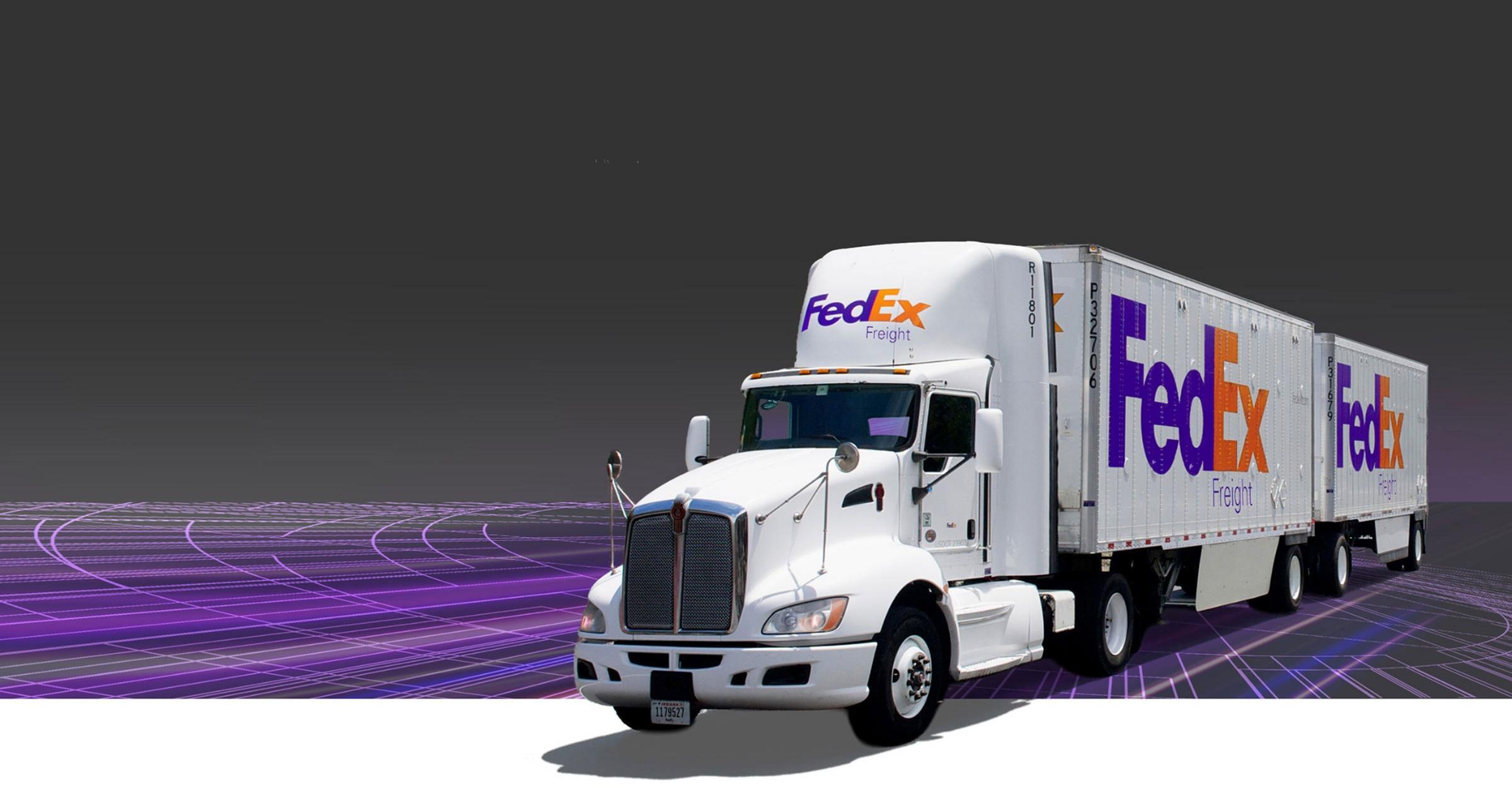
FedEx Freight sits in that middle: manufacturers replenishing customers, distributors moving stock, retailers receiving goods, and businesses selling items too large for the doorstep parcel routine. Its network spans the United States, Canada, and Mexico. The competitors are freight specialists such as Old Dominion, XPO, Saia, Estes, and ABF. The famous name on the trailer can obscure the rather different business inside it.
Two speeds, one set of wheels
The company was assembled through acquisitions. Viking supplied western roots; American Freightways extended the reach; Watkins Motor Lines added a national operation. A contemporaneous FedEx filing dates the Freight holding company to 2001. This origin matters because it makes Freight a network-building story, with inherited terminals and operating habits to reconcile.
In January 2011, FedEx combined Freight and National LTL into one network. It offered two services through that network: Priority for time-sensitive shipments, Economy for customers willing to wait. The combination incurred $133 million in program costs, including severance, lease terminations, and asset impairments. Simplification arrived with a distinctly unsimple bill.
Today, Priority typically takes one to three days; Economy, three to six, depending on the route. Freight Direct addresses a different nuisance: getting heavy goods to a residence or business, sometimes through the door. Retail Flex handles contractual delivery windows and complete shipments. Subsidiary FedEx Custom Critical covers expedited movements with added security, temperature management, or specialized handling.
The distinction is useful for a buyer. An extra day might be harmless for inventory replenishment and costly for a production stoppage. A sofa arriving at a house presents a different unloading problem from components arriving at a staffed dock. The service menu gives those differences a price and an operating procedure.
Independence comes with an invoice
On June 1, 2026, Freight became an independent public company, trading as FDXF. FedEx distributed 80.1% of its shares to shareholders and retained 19.9% at separation. Customers still saw the FedEx Freight name. Behind it, decisions about investment and performance now belonged to a separate company.
“This is the right time to pursue a separation as we respond to the unique dynamics of the LTL market.”Raj Subramaniam, FedEx CEO, December 2024
The board’s explanation followed a portfolio assessment: parcel and freight businesses would benefit from investment and operating strategies tailored to their own markets. Commercial cooperation could continue through agreements. It was an argument about who should make decisions and where capital should go, rather than a claim that familiar freight services needed replacing.
Freight recognized $492 million in spin-off-related costs in fiscal 2026. Separately, it paid FedEx approximately $4.1 billion as a cash dividend connected with the separation, financed through debt proceeds and borrowings. These are different financial events. The first is an expense of becoming independent; the second is money transferred to the former parent.
Revenue can rise while the dock gets quieter
The immediate test is demand. In fiscal 2026’s fourth quarter, average daily shipments fell 5.9%, to 86,700. Revenue nevertheless rose 4.8%, to $2.4 billion. Fuel surcharges and heavier shipments helped explain the increase. A bigger revenue number, by itself, does not tell you how busy the network has become.
Adjusted operating margin fell to 15.1% from the previous year’s 20.8% operating margin; the current reported margin was 6.6%. Separation costs and weaker volumes both weighed on results. For the full fiscal year, segment revenue was $8.8 billion. Those historical segment figures need care when discussing a company that has only just begun reporting independently.
The practical inference is straightforward. Shared trailers depend on freight being available to share. Service centers, equipment, and people still need paying when fewer shipments arrive. Scale supplies options; volume helps pay for them. Independence changes the corporate arrangement faster than it changes that arithmetic.
Measure the pallet, then the promise
For a shipper, the useful work begins before pickup. Weigh and measure the complete handling unit, establish its freight class, and specify extra requirements. FedEx Freight says inaccurate quote information can lead to re-rating and additional fees. Fuel surcharges and delivery services also affect cost. There is no honest universal price for “a pallet.”
Compare the total quote against the cost of delay. Check whether the receiving location has a dock; request a liftgate if needed. Protect the goods for the journey and use pallet-level tracking. FedEx Freight assigns individual pallets their own 12-digit tracking numbers, a small detail that becomes useful when an order contains several handling units.
Standard LTL deserves reconsideration when goods fill a trailer, fit ordinary parcel service, or require unusually controlled handling. A fragile, urgent, or temperature-sensitive load may justify another service. The transferable habit is to describe the shipment honestly before buying its journey. Freight dislikes surprises, particularly surprises about size.
The people who make the arithmetic work
Technology now has a commercial seat. In September 2026, Michael Rodgers’s remit expanded to Chief Commercial and Technology Officer, bringing sales and customer experience alongside technology. That makes operational sense: a booking system, an accurate bill, and a shipment a customer can track are part of the service being sold.

The expertise also lives behind the wheel. Freight sent 111 drivers to the 2026 National Truck Driving Championships, where competitors face an exam, inspection, and driving challenge. A new NASCAR Truck Series naming deal starts in 2027. Racing will make the brand louder. The quieter achievement remains getting somebody else’s three pallets to the right dock.