In 2020, UPS Freight brought in approximately $3 billion and was roughly at operating break-even. A business can be very busy doing almost nothing for its owner. The trucks move. The invoices arrive. The profit, with exquisite discretion, declines to attend.
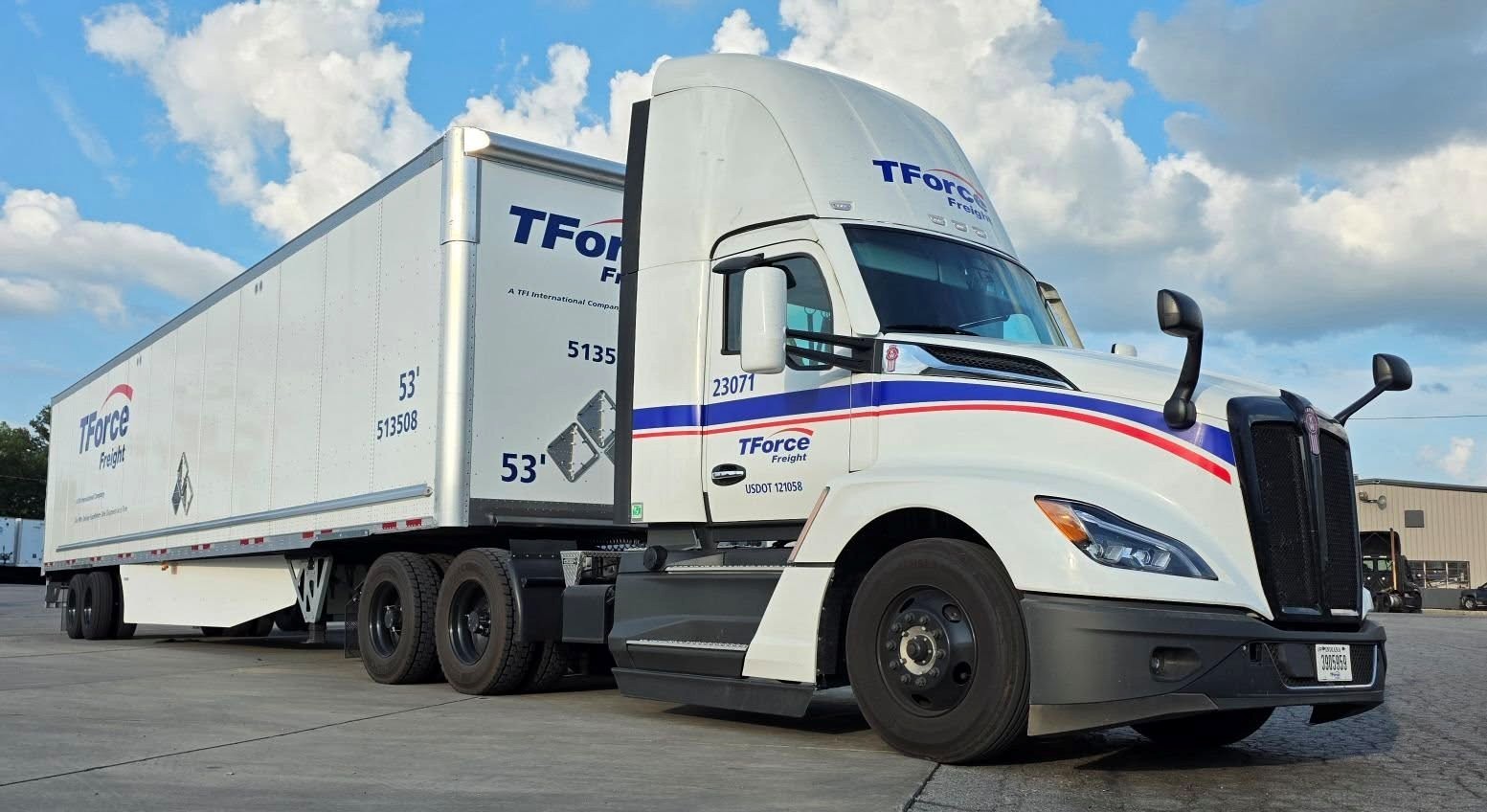
TFI International bought that business for $800 million in April 2021. Its LTL operation became TForce Freight. The interesting purchase was a network whose economics might improve under different management. To understand the wager, start with the space inside a trailer.
- TForce sells shared truck capacity for freight too substantial for ordinary parcel shipping.
- TFI bought a large network with thin operating returns.
- Repricing helped; costs and pickup productivity remained stubborn.
- For shippers, the useful test is the complete price and service on their own lane.
A seat on a shared truck
Less-than-truckload shipping is a practical compromise. A manufacturer has several pallets to deliver, without enough cargo to justify buying an entire truck. An LTL carrier combines that freight with other customers’ shipments, moving it through terminals toward separate destinations. Everyone buys a portion of the journey.
The customers include retailers replenishing inventory, distributors supplying businesses, manufacturers moving goods, freight brokers arranging transportation, and exhibitors sending booths to trade shows. They need capacity, predictable transit and help with awkward details. A convention display arriving after the visitors leave is an unusually expensive sculpture.
TForce advertises more than 13,000 one- and two-day lanes, with regional, interregional and long-haul service. Its published network includes 178-plus North American facilities. Standard LTL handles ordinary schedules; paid guaranteed delivery and Specialized Solutions address deadlines. Cross-border and offshore services extend its reach beyond the contiguous United States.
Three owners, one stubborn business
The lineage starts in 1935, when J. Harwood Cochrane founded Overnite Transportation with one tractor, one trailer and one straight truck. He sold it to Union Pacific for $1.2 billion in 1986. UPS bought Overnite, including Motor Cargo, for $1.25 billion in 2005. The UPS Freight name followed in 2006.
Those transactions involved different businesses at different moments. Their prices are no neat scorecard of decline. But the 2021 sale did expose a change in priorities: UPS described its strategy as “better not bigger”. TFI wanted the freight operation that UPS was prepared to release.
Cash-free, debt-free purchase price before adjustments. The acquired UPS Freight business generated approximately $3 billion in 2020 revenue.
About 90% of the acquired business was assigned to TFI’s LTL segment; dedicated truckload assets went into its truckload segment. UPS retained responsibility for pre-closing pension obligations and certain other liabilities. The headline price, therefore, describes a specific deal structure. It is no estimate of what recreating the network would cost.
The easy fixes ran out
Early changes included shedding or repricing freight that did not make money. By February 2022, management was talking about greater pickup density and fewer miles. Alain Bédard, TFI’s chief executive, gave the issue a wonderfully blunt description:
“Me, I like to pick up freight”Alain Bédard · February 2022
The distinction matters. A pickup truck travelling between distant customers consumes fuel, tires and paid time before collecting another shipment. An attractive rate cannot cure an unnecessarily expensive route. For anyone running a service business, the copyable idea is to measure the cost of serving an account alongside its sales.
What ran out first was the supply of easy commercial fixes. In October 2023, the U.S. LTL unit’s adjusted operating ratio was 90.8%, while shipments had fallen 7.5% year over year. Management shifted emphasis toward costs and better visibility for terminal managers. Selling harder was insufficient to solve the operating problem.
An operating ratio compares operating expenses with revenue. The adjusted version uses the company’s specified exclusions. A lower percentage leaves more room between sales and operating costs. It is a useful measure for a carrier because another full trailer means little if collecting, sorting and delivering its contents consumes nearly everything customers pay.
Labor belongs in this story, too. The 2023 Teamsters agreement covered approximately 7,800 workers and runs through July 2028. It increased pay and benefits and added safety and work-rule protections. Efficiency plans must operate within those negotiated commitments. A spreadsheet cannot negotiate on the company’s behalf.
The useful ghost of UPS
One distinctive offering survived the ownership change: UPS Ground with Freight Pricing. TForce remains an authorized reseller. Eligible multiple-package shipments can travel through UPS’s parcel network, with side-by-side pricing against LTL. The advertised sweet spot is 151 to 500 pounds in aggregate, within the contiguous United States.
That gives a small business a useful question before choosing a carrier: should these boxes be on a pallet at all? The answer depends on individual package limits, dimensions and the quote. Larger loads can use volume pricing on selected lanes. Density-based rating offers another option, using weight and dimensions instead of freight classification.
MyLTL supplies shipping documents, billing, notifications and reports; API and EDI connections put shipment information into customers’ systems. These tools support the physical service. The commercial product remains transportation, sold through contracts and tariffs, with fuel surcharges, accessorials and premium-service charges.
Progress needs a narrower claim
In October 2025, TForce reported the largest service-performance improvement among major LTL carriers in the Mastio survey. That measures improvement rather than an overall first-place ranking. It is encouraging evidence of customer-perceived progress, with a more modest meaning than the headline might suggest.
TFI’s broader LTL segment reported 7.5% more shipments in the second quarter of 2026 and an adjusted operating ratio of 88.5%, versus 89.5% a year earlier. Those are parent-segment figures, not standalone TForce results. They offer context for a continuing turnaround, rather than grounds to declare the work finished.

Before the pallet leaves
TForce competes with carriers including Old Dominion, XPO, Estes, Saia and ABF. Its useful proposition combines an established network, several service levels and the UPS parcel alternative. For a buyer, differentiation becomes concrete when a carrier can serve the required lane at an acceptable total cost.
Measure the shipment, describe the delivery location and compare complete quotes. Shared-trailer service may be unsuitable when cargo needs exclusive capacity or the schedule permits no terminal transfers. Specialized Solutions can arrange alternatives. Its published guarantee allows eligible freight-charge cancellation, subject to conditions; it excludes consequential damages. Recovered freight charges cannot recover a missed opening night.