Imagine following a container through a freight yard. The box is ordinary: ribbed steel, painted letters, doors somebody has sealed. Its contents can stay put while the box changes vehicles. Around it, locomotives, trucks, cranes and dispatchers perform an elaborate negotiation over space and time. That negotiation is much of what Norfolk Southern sells. The locomotive gets the photograph. The connection earns the money.
- Freight rail works when distance, volume and terminal access justify the transfers.
- Norfolk Southern reported $12.18 billion in railway revenue in 2025.
- Its proposed $85 billion Union Pacific combination remains under regulatory review.
The box changes vehicles
Norfolk Southern moves agricultural products, chemicals, automobiles, forest products, coal and consumer goods. Some travel in specialized railcars; others ride in containers. Its customers include manufacturers, commodity shippers, ocean carriers and logistics companies. The common problem is physical: a large quantity of something must reach somewhere else at a workable cost.
Intermodal shipping divides that problem among vehicles. Trucks handle the local legs. Trains carry containers between terminals. Ships connect overseas markets. Norfolk Southern provides the eastern rail network and terminal connections, while partners supply other pieces. A business without tracks outside its warehouse can still participate through intermodal service or a transload facility.
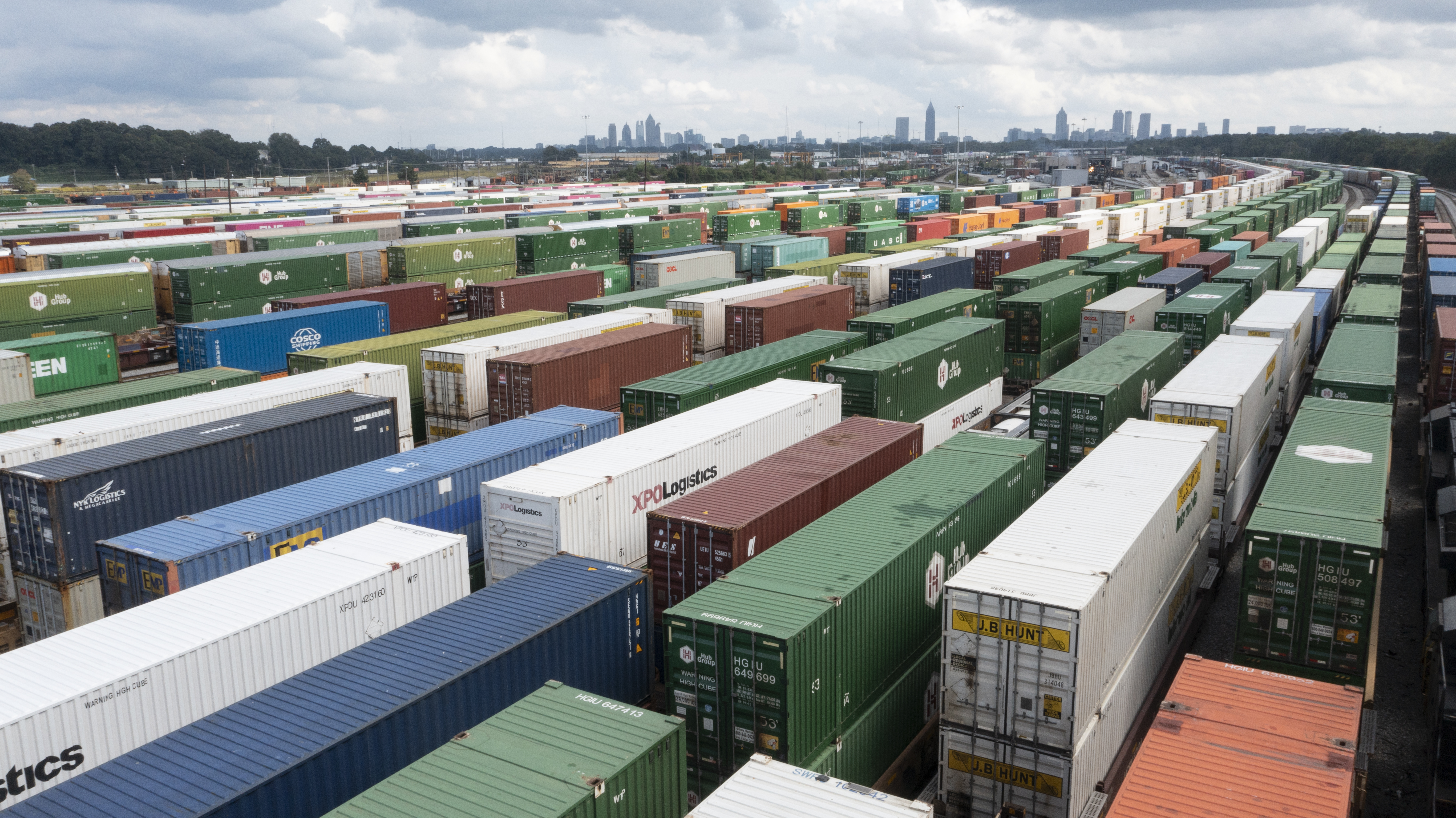
The useful starting point is the whole lane. Ask where the freight begins, where it ends, how much moves, and how urgently it must arrive. Norfolk Southern’s AccessNS portal supports shipment tracking and pricing requests. ExpressNS+ helps terminal users with gate and pickup information. These tools address the administrative work around the movement.
Illustrative route. Terminals connect the legs; each transfer needs time.
The expensive part stays put
The modern combination began in 1982, bringing Norfolk and Western and Southern Railway under common control. Their geography remains the asset. Norfolk Southern connects eastern industrial markets with Atlantic ports and other railroads. CSX offers a competing eastern network. Trucks offer a different bargain: more routing flexibility, often with fewer transfers.
Customers pay freight rates under contracts or tariffs, with fuel surcharges and other charges where applicable. The bill depends on the commodity, equipment, route and service. There is no useful universal price for “a train shipment.” A cheap rail leg can become an expensive delivery if drayage, storage or a missed connection consumes the saving.
Norfolk Southern’s 2025 annual report recorded $12.18 billion in railway revenue and $2.204 billion in property additions. Those additions fund the physical business. Tracks, bridges, equipment and terminals need continuing expenditure before the next customer can enjoy the network. Rail’s operating efficiency rests on infrastructure that is expensive to maintain.
Property additions - approximately 18% of annual railway revenue.
The operating plan has also been shaped by shareholder pressure. During the 2024 contest with activist investor Ancora, Norfolk Southern said it had listened to investors in hiring a chief operating officer experienced in precision scheduled railroading. That admission matters more than the corporate sparring: management was adjusting how it pursued productivity while defending a strategy that balanced service and growth. It shows a company responding to criticism with a specific leadership choice. It does not establish that every subsequent improvement came from that appointment, or that the debate over staffing and efficiency was settled.
A newer connection illustrates the model. Gainesville Inland Port opened in May 2026, with Norfolk Southern providing its exclusive rail service to Savannah. For Northeast Georgia businesses, the port connection moves inland. Whether a shipper benefits still depends on the actual lane, terminal charges and delivery window. Geography provides the opportunity; coordination determines its usefulness.
A bearing, then a breakdown
On February 3, 2023, a Norfolk Southern train derailed in East Palestine, Ohio. The NTSB identified the initiating failure: a wheel bearing overheated, an axle separated, and the train derailed. Wayside monitoring did not provide enough warning to prevent the accident. A small component exposed a much larger weakness in detection and response.
The investigation also found that the subsequent venting and burning of vinyl chloride was unnecessary to prevent tank-car failure. The incident commander had received incomplete and misleading information from Norfolk Southern officials and contractors. The failure extended from machinery into the information people used to make an urgent decision.
In April 2024, Norfolk Southern announced a $600 million agreement to settle consolidated class-action claims. That figure describes a particular settlement, rather than the complete cost of the derailment. Cleanup, legal obligations and the community’s experience cannot responsibly be compressed into one neat price tag. The cost of a broken connection reaches well beyond delayed freight.
Eleven miles between questions
Norfolk Southern’s January 2026 safety update reported 1,184 hot-bearing detectors across its network, following 265 installations over three years. Average spacing on core routes had fallen to just over eleven miles. It also reported ten digital train inspection portals and twenty-five locomotives equipped for automated track geometry measurement.
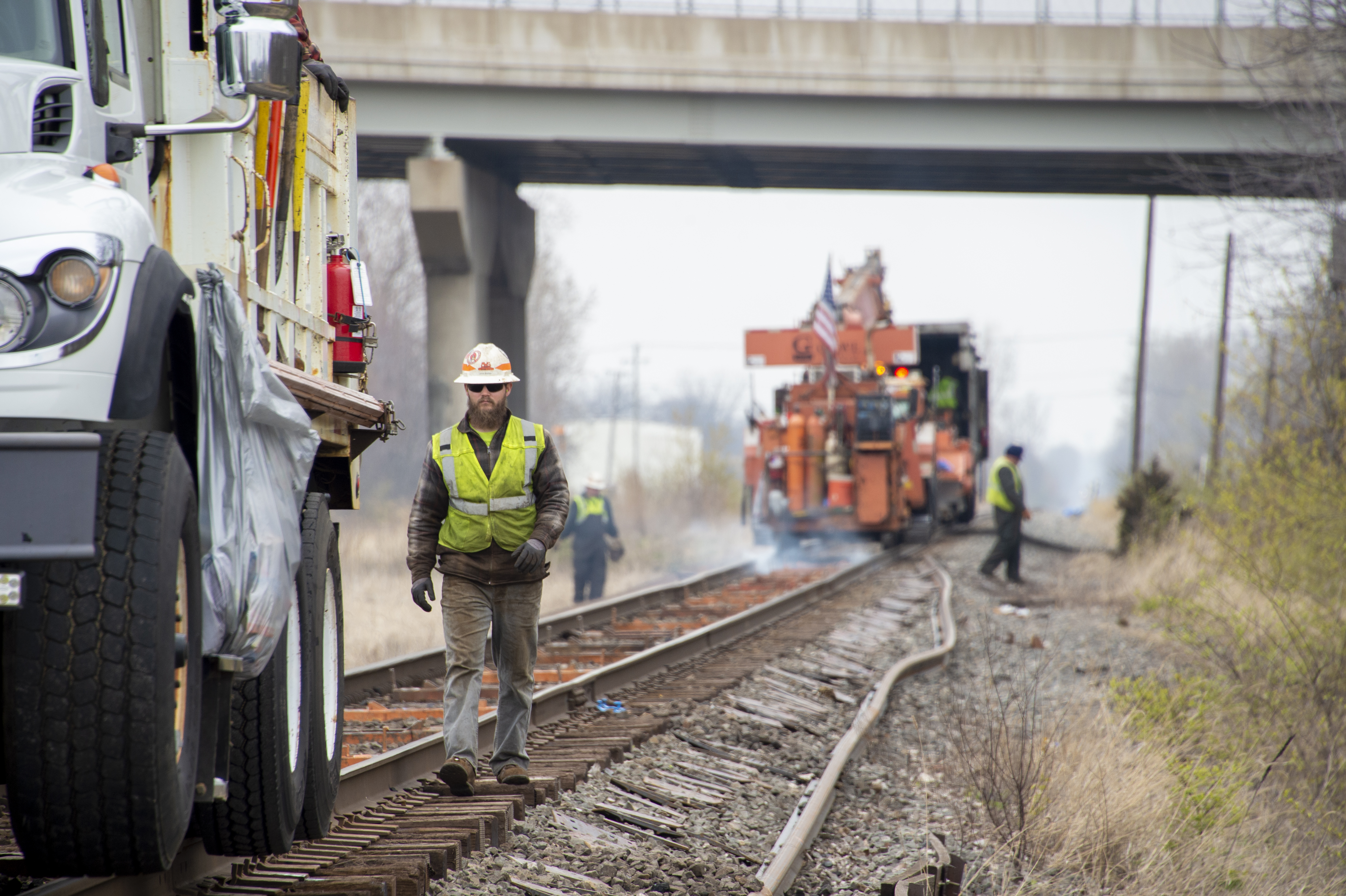
Equipment is one layer. The company says every employee has Stop Work Authority and describes a culture of speaking up. Its reported 2025 accident-rate reduction is encouraging, but a company’s annual improvement does not establish that every risk has been controlled. The practical lesson is to connect a signal to a timely, authorized response.
“Everything starts with safety.”Norfolk Southern’s published strategy
That lesson travels beyond rail. Put detection where deterioration can be noticed, establish who acts, and preserve enough time for intervention. For Norfolk Southern, the work also includes emergency preparation: an October 2026 announcement described a $20 million grant and four railcars for a planned East Palestine training center operated by Youngstown State University.
The $85 billion transfer
In July 2025, Union Pacific agreed to acquire Norfolk Southern in a transaction valuing it at $85 billion, including debt. The operating argument is straightforward: combine western and eastern networks, and remove some interchanges where freight passes between railroads. The companies promise faster journeys. That outcome still requires approval and successful integration.
Regulators found the original application incomplete in January 2026. A revised filing entered review, and the Surface Transportation Board later established a schedule with final briefs due in May 2027. As of October 22, 2026, the merger remains pending. Acceptance for review and rejection of dismissal motions do not amount to approval.
For a shipper, the decision remains refreshingly concrete. Rail needs sufficient distance, suitable freight, usable terminals and a schedule that accommodates transfers. A short, urgent trip may favor a truck. For everyone else, Norfolk Southern offers a useful question: how much of your cost sits in the movement, and how much sits between movements?