Shelley Simpson took the job because it paid about two dollars an hour more than the preschool where she had worked through college. She was going to have a pleasant summer, earn some money, and move on. The company was J.B. Hunt. The year was 1994. The summer, as career plans go, has proved unusually durable.
Three decades later, on July 1, 2024, she became its president and chief executive officer. There is a temptation to read that backward, as though the young customer service representative had arrived with a succession plan tucked under her arm. Her own account is rather more enjoyable: she had expected a different kind of job, was surprised by the hourly pay, and needed something to do while pursuing an insurance position.
Her father supplied the useful complication. Take the work seriously, he advised, even if you intend to leave. The people there might someday become customers. It was a modest instruction about behaving properly in a temporary job. Simpson gave it a rather thorough trial.
A trucking education, without changing employers
The address stayed in northwest Arkansas; the work kept changing. Simpson moved through pricing for truck and intermodal operations, economic analysis, finance and administration. A marketing graduate of the University of Arkansas, she acquired a practical education in the less decorative parts of business: what a service costs, what a customer will pay, and what happens between the promise and the delivery.
Those jobs matter to the story because transportation is full of things that look straightforward from a distance. A truck needs a load. A customer needs a truck. Put them together and send an invoice. Yet the right truck must be in the right place, at the right time, with the right equipment. Geography has a way of interrupting a neat spreadsheet.
In 2006, J.B. Hunt's leadership was examining opportunities for growth. Customers wanted service on routes beyond the company's own network. The answer became Integrated Capacity Solutions, or ICS, a brokerage business connecting customers with outside carriers. Simpson helped create it and became its president in 2007. The company could arrange transportation even when the truck belonged to somebody else.
The early figures make the experiment tangible. ICS started with 18 employees. By the time a January 2009 profile appeared, it had 350, including employees in 11 field offices. Revenue exceeded $200 million in 2008, more than double the previous year's figure. An idea had acquired a payroll, a national presence and customers who came back.
A historical snapshot of the business Simpson helped build. Bars share a zero baseline.
There was an internal adjustment, too. People accustomed to delivering with company equipment had to trust qualified outside carriers to meet expectations. Brokerage expanded the available answers to a customer's problem. A familiar logo on the door was no longer the only way to get the load delivered.
When ICS launched, the ambition was to build a billion-dollar business. That target was reached a decade later. Simpson's apprenticeship had become an exercise in persuading a trucking company to think beyond its own trucks.
The customer has no use for an empty mile
Her responsibilities accumulated. Chief marketing officer in 2011. President of the Truckload business in 2014. Chief commercial officer and president of Highway Services in 2017. The titles describe different views of the same commercial puzzle: how to make transportation work better for the person paying for it.
That puzzle also shaped J.B. Hunt 360, the digital platform launched in April 2017. Simpson led its strategic direction and launch. It brought freight quoting, booking and access to capacity into an online marketplace. Experience with customers and carriers supplied the question; software offered a way to answer it more efficiently.
“What does a marketplace need? It needs buyers and sellers.”
Shelley Simpson, on the thinking behind J.B. Hunt 360
There is something pleasingly unadorned about that explanation. A marketplace can have an elaborate name, but it still needs the two parties. The opportunity was to make information more visible and transactions easier. Simpson's commercial responsibilities included marketing, sales, customer experience and external product development, putting those parties within the same field of view.
A brokerage desk and a digital platform belong to the same sequence in her career. Each widens the company's ability to find available capacity and match it with freight. Each asks employees to consider possibilities beyond the equipment immediately in front of them. The physical shipment remains stubbornly physical. Better information helps people decide how it should travel.
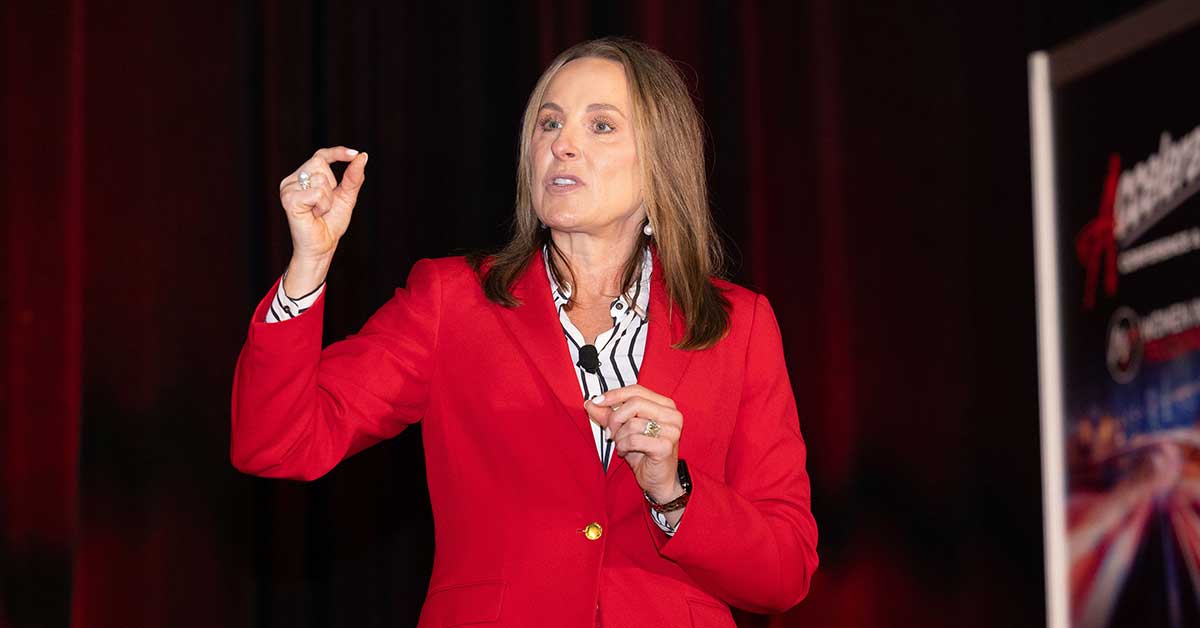
The promotion that went the other way
A tidy career timeline leaves out a revealing interruption. Simpson stepped back from a vice president role and worked part time for nearly two years when her twin daughters were young and her son was two and a half. She has spoken about considering leaving work when she had children. The climb included a deliberate reduction in responsibility.
That detail changes the texture of the familiar corporate ascent. Ambition did not require every year to look bigger than the last. Family arrangements were part of the working life, rather than an inconvenient paragraph to remove from the executive biography. She later took on responsibility for people and human resources in 2020, alongside her commercial work.
She has also described asking for regular feedback, including peer reviews and employee engagement surveys. Reading the comments could be uncomfortable. It was useful precisely because it showed her where she needed to improve. The person in charge still needed somebody willing to mark the homework.
Her career has involved long relationships as well as new jobs. In 2015 she pointed out that people she had met during her first month at the company were still close colleagues. For someone who originally meant to leave after a summer, that is a considerable return on learning people's names.
Who gets to have the next idea?
In November 2023, Simpson received the Influential Woman in Trucking award at the Accelerate! conference in Dallas. Women In Trucking recognized her leadership and her commitment to expanding opportunities for women in transportation. In 2024, AWESOME, the network for women in supply chain leadership, named her a recipient of its Legendary Leadership Award.
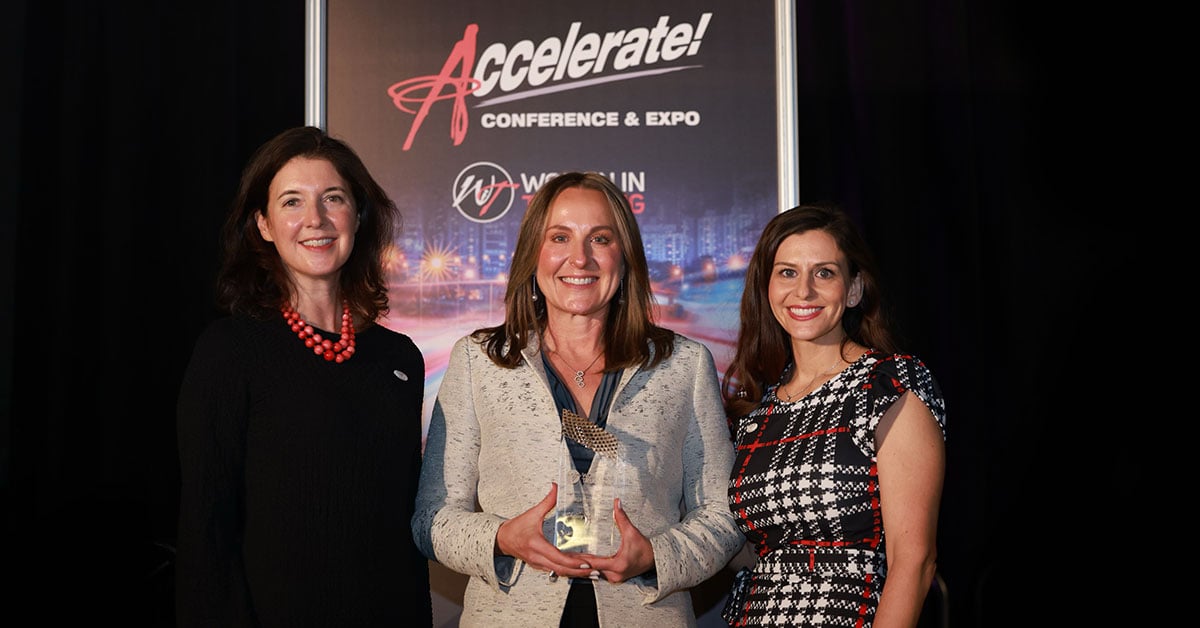
Recognition is one way an organization signals who belongs. Another is deciding whose suggestion gets heard. J.B. Hunt's ELEVATION program, launched in 2015, gives employees a channel for proposing improvements. By April 2025, more than 33,000 ideas had been submitted. The practical details are more interesting than the round number.
One shop supervisor, Bradon, identified a recurring battery issue, checked it with technicians and submitted a proposal to improve the process. Another employee, Perry, worked on a better way to connect with approved vendors to locate trailers before they were considered lost. Both ideas were approved. At a recognition event, Bradon was photographed with Simpson holding his certificate.
These are small windows into the work she now oversees. A driver, mechanic or planner sees problems a corporate presentation may never capture. A company that collects those observations has more chances to fix something. Simpson's own entry point makes the arrangement particularly apt: the next useful contribution might come from someone whose current title sounds quite modest.
The summer reaches the executive office
Simpson became company president in August 2022, overseeing business units, emerging technology, developing services and people. The CEO appointment followed in 2024. She succeeded John N. Roberts III, who became executive chairman. Kirk Thompson and Wayne Garrison moved into advisory roles as honorary founding directors. Her promotion took place within a succession that kept earlier generations close.
Johnelle Hunt, the company's co-founder, welcomed the changes. Simpson emphasized the earlier leaders' ability to develop other leaders and the stability that could create. After 30 years inside the company, she knew the people attached to the titles. She also became the first woman to serve as its chief executive.
The work continues to carry ordinary commercial consequences. In the third quarter of 2026, J.B. Hunt reported revenue of $3.68 billion, up 20% from a year earlier, while operating income rose 2% to $247.1 million. Intermodal loads increased 8%. Growth and profitability moved at different speeds, a useful reminder of how much judgment remains after a shipment has been won.
Simpson's stated ambition is the company's vision: to create the most efficient transportation network in North America. The years behind her suggest how she approaches that assignment. Learn the numbers. Understand the customer's request. Give the person closest to the problem a hearing. Be willing to use somebody else's truck.
In 2025, her university invited her back as a commencement speaker. The marketing graduate who had once needed a summer job now had a career worth describing to the next graduating class. Thirty years is a long time to stay somewhere temporarily. It is also enough time to discover how much work can fit inside a single company.
Further reading & listening