A railcar sitting still is an unusually expensive container. Someone financed the steel. Someone must inspect the valves, maintain the wheels, and arrange its next assignment. The cargo owner, meanwhile, would quite like to know where it is. Look at Trinity Industries through that stationary car and a familiar manufacturer becomes a more interesting business: a company trying to earn its place in the decisions that surround a shipment.
- Trinity builds railcars, leases them, and helps keep them working.
- Its customers move chemicals, grain, metals, vehicles, and other freight across North America.
- Rentals and services soften manufacturing’s swings, but require substantial capital and maintenance.
The useful question is how much of a customer’s headache the company can take on. A car is one purchase. Keeping a fleet available, compliant, correctly sized, and visible becomes a relationship. Trinity’s bet is that the relationship can outlast the order.
A factory with a second clock
Trinity has corporate roots dating to 1933. Early predecessor Trinity Steel made butane tanks in a Dallas County mule barn. Decades of industrial expansion followed. Then came a deliberate narrowing: in November 2018, Trinity separated its infrastructure businesses into Arcosa, giving the remaining company a clearer focus on rail manufacturing, leasing, and services.
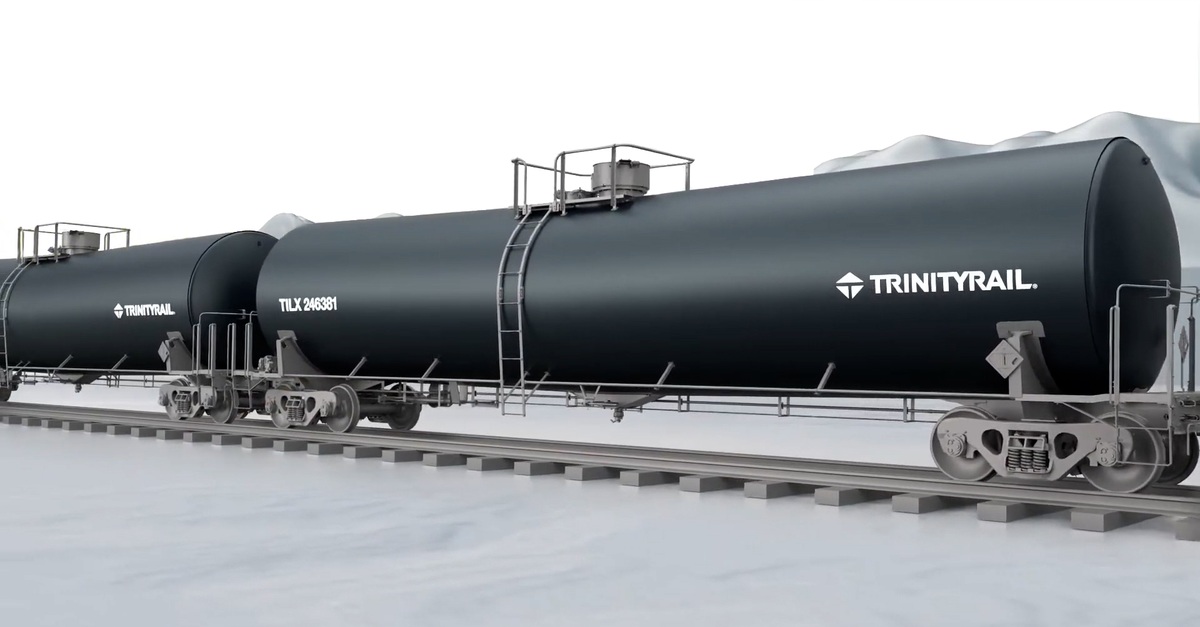
That decision explains today’s arrangement. Under the TrinityRail name, the company offers tank cars, hoppers, boxcars, gondolas, autoracks, and flat and intermodal cars. Each answers a different loading problem. Grain and automobiles do not need the same container; pressurized gases introduce another set of engineering requirements. Breadth matters when the customer’s cargo determines the equipment.
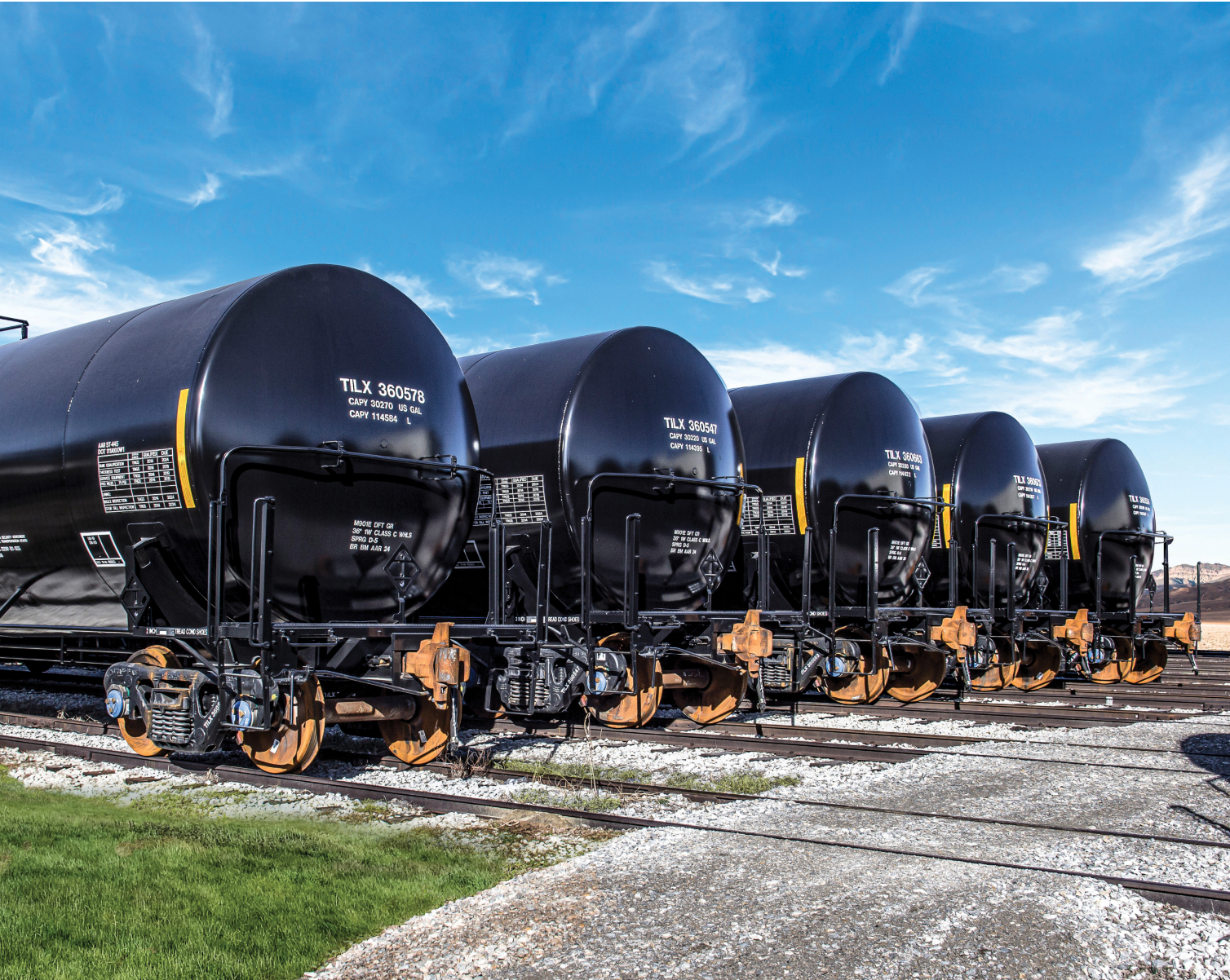
The second clock starts with the lease. Trinity offers full-service rentals, with maintenance support, alongside other lease arrangements. Customers can obtain equipment without purchasing the entire asset upfront. Trinity also manages cars for outside investors, collecting fees while those investors own the equipment. Its expertise stretches from fabrication and compliance testing to repairs, conversions, and fleet administration.
The two clocks showed their differences in 2025. Manufacturing revenue fell from $1.94 billion to $952 million. Leasing and services revenue rose from $1.14 billion to $1.20 billion. Total company revenue still fell 30%. The recurring business provided a cushion; the factory’s exposure to new orders remained painfully visible.
Fiscal years 2024 and 2025. Bars share one scale; values rounded.
The customer who also competes
Consider GATX. It competes for railcar leasing customers. It also buys Trinity’s products. A six-year supply agreement disclosed in 2022 covered 15,000 newly built tank and freight cars, representing approximately $1.8 billion in Trinity’s backlog. The rival across the negotiating table can be the customer filling the production schedule.
The overlap reveals Trinity’s position in the market. Industrial shippers need equipment. Railroads and other lessors need equipment too. A manufacturer with its own leasing operation can serve all three. Alternatives include Greenbrier in manufacturing and related services, and GATX or Union Tank Car in leasing. Trinity’s pitch combines those capabilities with maintenance, parts, and logistics in one commercial relationship.
There is a useful complication here: integration alone does not establish better pricing or service. A shipper still needs to compare available car types, lease terms, repair coverage, and support. The practical attraction is fewer handoffs between the people supplying an asset and the people responsible for keeping it useful.
For a buyer comparing proposals, that suggests a simple exercise: price the equipment and the continuing obligations together. A low monthly rental deserves a second look if the customer carries more of the repair burden.
The $70 million question
In March 2023, Trinity announced it was buying RSI Logistics for $70 million. A subsequent filing put the aggregate purchase price at $72.1 million. RSI brought software, logistics services, terminals, and intermodal transportation. At acquisition, it supported 46 Fortune 500 customers. Trinity was buying capabilities around the movement of freight.
“Make rail a more compelling mode of transportation.”Jean Savage, CEO, on the RSI acquisition / March 2023
RSI’s Rail Command handles shipment tracking, fleet control, freight processing, and reporting. Rail Impact helps analyze rates and routing. Terminal and transloading services address the transfer between rail and other transportation. For a shipper, those are connected problems: finding a car, finding the shipment, checking the bill, and reaching a destination beyond the siding.
- 01Build + lease
- 02Maintain + modify
- 03Track + manage
- 04Transfer + deliver
Equipment, service, and logistics form the TrinityRail offering.
TrinityRail also helped found RailPulse with Norfolk Southern, GATX, Genesee & Wyoming, and Watco. The effort pursues shared telematics infrastructure for railcar location and condition data. Its logic is cooperative: a shipment’s usefulness does not improve because its equipment owners use incompatible information. Commercial rivals have reasons to agree on the plumbing.
Steel still sends the bill
The price of this model extends far beyond software. In 2025, Trinity’s lease-fleet capital spending totaled $749.3 million. Portfolio-sale proceeds reduced net fleet investment to $350 million. Owning recurring income means financing assets, maintaining them, and finding their next users.
Recent results show where pressure appears. June 2026 lease utilization reached 97.3%, but a production interruption helped push Rail Products’ quarterly operating margin down to 1.3%. Company operating profit also included a $131.6 million non-cash partnership divestiture gain. Treating that gain as ordinary rental performance would give the business a misleading gloss.
Trade policy adds another variable. In October 2026, Trinity said it would defend against UTLX’s petition targeting railway tank-car imports from Mexico. The allegations remained contested. The dispute illustrates how manufacturing across the border exposes the model to decisions made outside a factory or leasing office.
Follow the expense after the sale
Trinity’s shift is visible in its decisions: separate infrastructure, concentrate on rail, then acquire services that address adjacent shipping problems. Its stated purpose, “Delivering Goods for the Good of All,” rests on very concrete work. Its published culture priorities include employee safety and an ideas program that gathers suggestions from employees.
There is something another business can copy here. Map the costs your customer faces after buying your product. Decide which you can manage well enough to charge for repeatedly. The approach needs customers who value continuity, assets with continuing demand, and enough capital to carry them. Weak freight demand, costly downtime, unsuitable routes, or repairs that outrun rental income can spoil the arithmetic. The long game still has to pay its bills.