The problem was the pine. In the 1890s, James Lide Coker and his son were trying to turn South Carolina trees into paper. The trees were plentiful. The paper was another matter. Resin clogged the process, producing material that was practically unusable. Coker wrote to an associate: “As for our mill, it looks very dark and uncertain.” A packaging company’s origin story begins with a material that would not behave.
- Sonoco sells the package and the engineering that makes it work.
- The Pringles redesign changed a small component with consequences for an entire production system.
- Its recent acquisitions and sales concentrate the business around metal and paper packaging.
The resin came first
Aging the logs helped solve the resin problem. It did not immediately solve the business problem. By 1897, Coker was nearly broke. Then came a more useful question: who needed something his paper could become? Southern textile mills wound yarn around wooden cones. Wood was heavy and expensive. Paper offered another way.
In 1899, Southern Novelty Company began making paper cones in an unused tobacco warehouse. Workers used hand-operated, foot-powered machines. In the following year, output reached at least 7.5 million cones. Initial capitalization was $6,000. The numbers describe an unglamorous discovery: a material becomes a business when somebody has a recurring reason to buy it.
The name contracted to Sonoco in 1923, taking two letters from each word. The underlying idea travelled further. Today, the company supplies consumer brands and industrial manufacturers with food cans, aerosol containers, rigid paper packaging, recycled paperboard, protective components, tubes and cores. Its products sit around food and inside machines, doing work that usually attracts attention only when it goes wrong.
Keep the crunch. Change the bottom.
Consider the Pringles tube. The cylinder is part of the product’s identity: a stack of curved crisps, a lid, a familiar silhouette. Replacing the package wholesale would disturb a useful arrangement. Sonoco and Kellanova Europe worked on a more precise intervention. They replaced the steel bottom with a paper-fiber bottom.
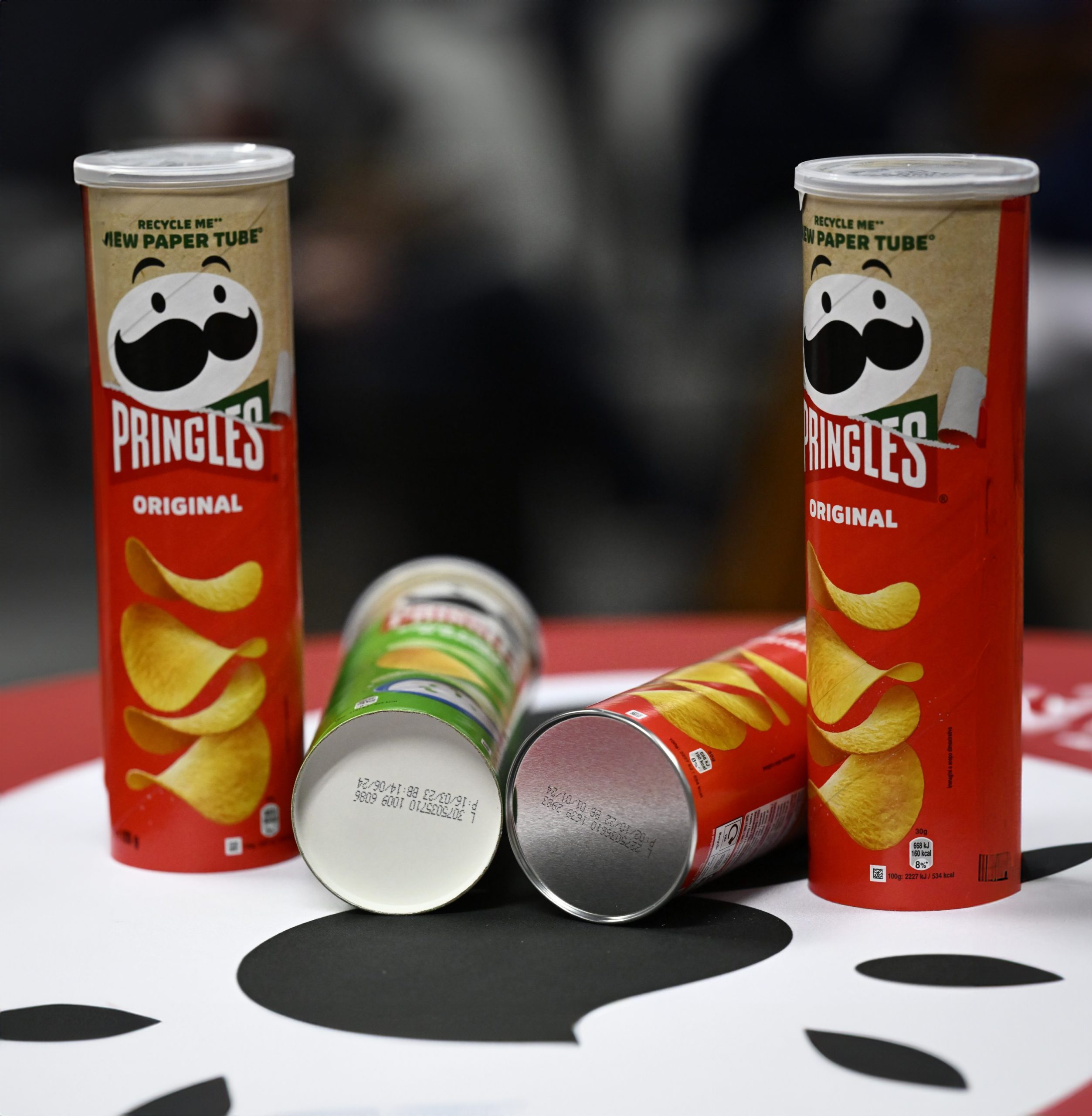
The redesigned tube retained the shape and a recyclable plastic lid. Its suitability for standard paper mills was evaluated using the 4evergreen alliance’s protocol. The European launch followed trials of a steel can in Italy in 2019 and a paper tube in Britain in 2020. Those trials show alternatives being explored; they do not establish that either was a failure.
By September 2024, the new tube was available across Ireland. Sonoco’s announcement described a package made from 90% paper, tested to protect the crisps and keep them fresh for 15 months. It also cited €100 million invested in new technology for the change. That was the programme’s reported investment, not a disclosed Sonoco-only bill. A small alteration can require a large commitment behind the shelf.
The expensive part is failure
For a manufacturer choosing Sonoco, the purchase begins with a problem. A snack brand needs protection from moisture and breakage. A film converter needs a core that survives winding. An appliance manufacturer needs a shipment to arrive intact. Sonoco earns revenue by manufacturing the physical answer and supporting it with design, testing and, in parts of its business, recycling services.
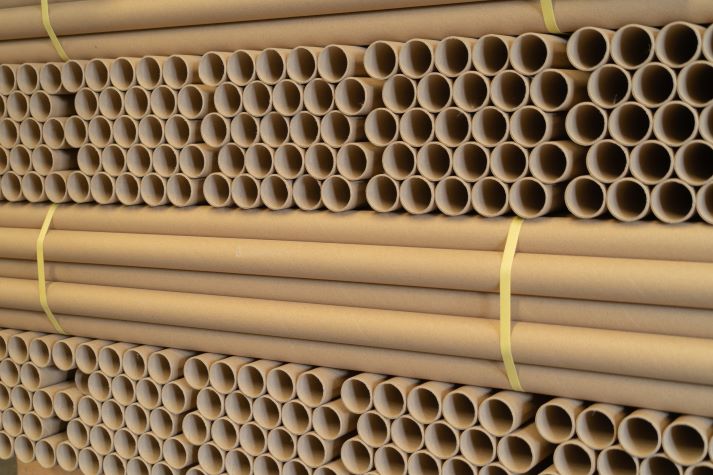
The paper core is a particularly revealing product. It looks like an empty tube. On a production line, it must tolerate torque, pressure and the interaction with a machine’s chuck. Sonoco offers testing for torque and crush performance, along with designs intended to reduce core damage and downtime. Its paper mills, adhesives and converting operations give it several parts of that problem to work on together.
There is a laboratory version of this discipline, too. Sonoco’s protective-packaging services include vibration, drop, compression and climatic testing. Customers can examine a design before trusting it with a distribution network. That combination of materials, manufacturing and validation helps explain its position against suppliers such as Silgan, Crown and Trivium in metal packaging. The relevant contest is application-specific: cost, protection, equipment compatibility and dependable supply.
Buying focus, paying for it
Sonoco has also changed its own container. In December 2024, it completed the Eviosys acquisition, expanding its European metal-packaging footprint. The deal was announced at roughly $3.9 billion; final net cash consideration was about $3.8 billion. Financing included senior notes, term loans and cash. Scale arrived with a repayment obligation.
Eviosys announced acquisition value
Closed December 2024
TFP sale price
Closed April 2025
In April 2025, Sonoco sold its Thermoformed and Flexibles Packaging business to TOPPAN for about $1.8 billion, directing approximately $1.5 billion in after-tax proceeds toward debt reduction. ThermoSafe followed in November. These exits explain why older descriptions of Sonoco’s healthcare and flexible-packaging portfolio can mislead. Management wanted a simpler company with more concentrated investment.
Focus does not remove exposure. On October 21, 2026, Sonoco reported quarterly sales of about $2 billion and a $732 million GAAP net loss, including an $829 million non-cash goodwill impairment across Consumer EMEA/APAC and Industrial APAC. Adjusted net income was $167 million. Management said drought hurt harvests and food-can demand, while operating costs rose. A can factory depends, in part, on what happens in a field.
Start with the constraint
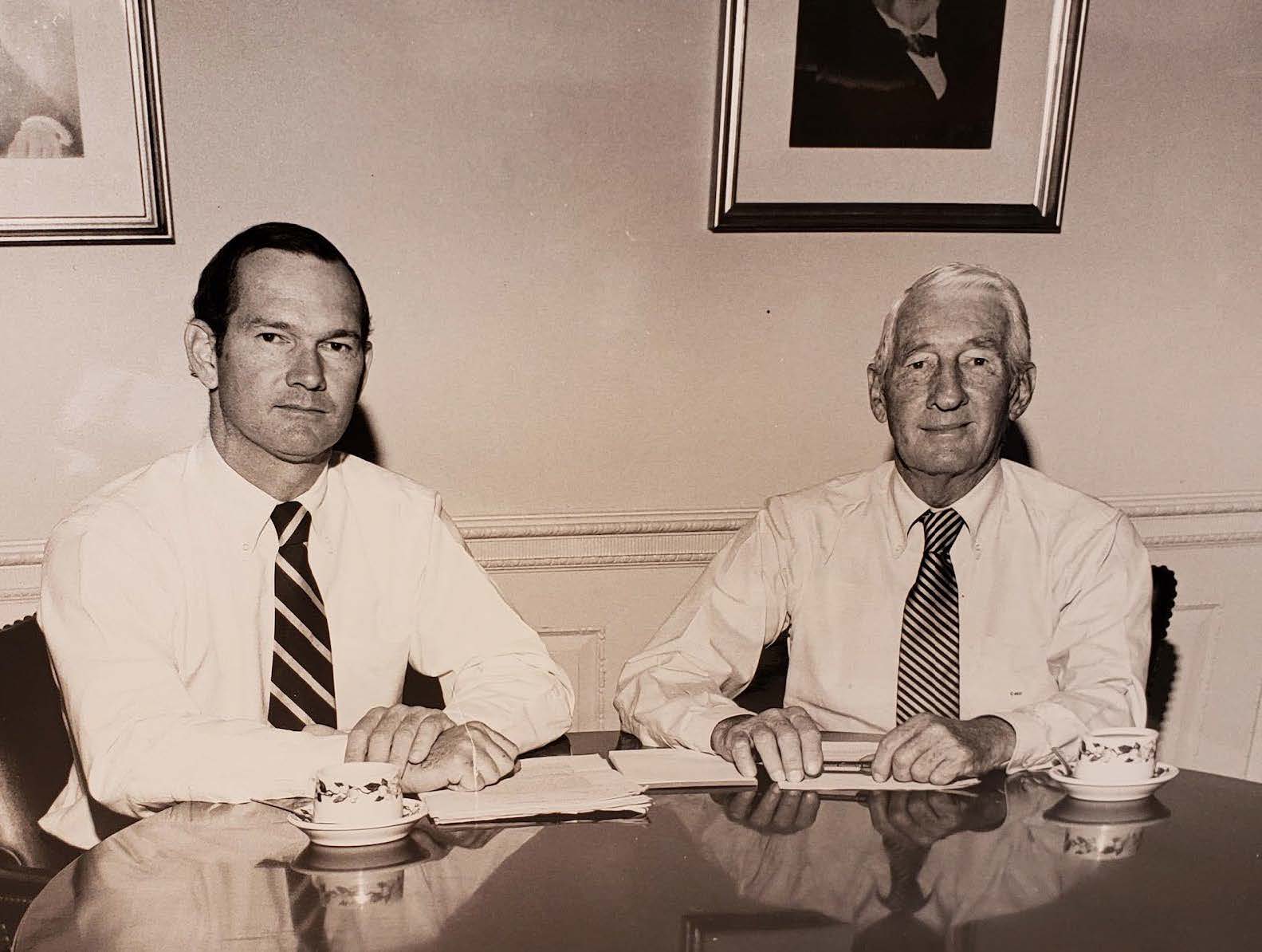
“People build businesses.”Sonoco’s people philosophy
The lesson readers can copy is practical. Find the customer’s expensive difficulty. Develop the change together. Test it against the machine, the product and its destination after use. Sonoco’s stated people philosophy, “People build businesses,” fits that collaborative work, although a company’s account of its culture is a statement of intent rather than proof of every employee’s experience.
Material substitution has conditions. A paper package still needs the right barrier and seal; a filling line must handle it; a local recycling system must accept it. Sonoco’s own metal-bottom paper can carries a How2Recycle “Check Locally” qualification. The pine, the cone and the snack tube all suggest the same useful habit: begin with the stubborn detail. Then find out what the whole system needs.