A fire alarm spends most of its life waiting. So does a sprinkler. A building can look perfectly healthy while the equipment meant to protect its occupants quietly needs attention. The interesting business question is who gets called before anything happens. APi Group has spent years making itself that company.
- The work: fire protection, security, elevators, and specialty services.
- The idea: start with inspections, earn the repair and maintenance relationship.
- The catch: repeat visits still need profitable contracts and capable people.
Its name suggests something you might plug into software. The actual work involves people turning up at buildings: testing alarms, inspecting fire systems, maintaining elevators, integrating security equipment. APi also handles infrastructure, utility, mechanical, and fabrication work. The common thread is equipment and infrastructure that somebody must keep working after the construction crew leaves.
The customer who has to call again
Consider the difference between installing a system and taking responsibility for its upkeep. Installation has a finish line. Inspection creates another appointment. A test can reveal a deficiency; a deficiency can require a repair; the repaired system still needs future attention. APi calls its approach inspection-first. The order matters because a modest initial job can become a continuing customer relationship.
Many of these services are required by law or contract. That gives the business a useful starting point: customers have obligations beyond deciding whether this is a convenient year to spend money. Yet the inspection itself does not guarantee the next job. APi must document the problem in terms a customer can understand, offer a credible solution, and deliver work that makes the customer comfortable calling again.
- 01InspectTest and document
- 02CorrectRepair deficiencies
- 03ReturnMaintain and monitor
The customers range from single-location businesses to multinational companies and public bodies. Hospitals, manufacturers, distribution facilities, utilities, schools, and commercial properties all appear within its served markets. A facility manager can use APi’s service-provider finder to locate an operating company. The practical purchase is technical work, documentation, and ongoing support for systems whose failure could interrupt a building’s use.
This places APi between specialist local contractors and larger service organizations. Its own investor presentation groups Cintas, Johnson Controls, FirstService, and Otis among Safety Services peers. The comparison depends on the assignment. An elevator contract and a sprinkler inspection draw different bidders. APi’s distinguishing proposition is the combination of local operating businesses, broader resources, and a deliberate emphasis on service after installation.
The $3.1 billion change of scale
APi’s beginnings were considerably smaller. It traces its roots to a 1926 insulation division inside the Reuben L. Anderson-Cherne mechanical business in Saint Paul. Lee Anderson later pushed diversification. Fire protection arrived through Viking Automatic Sprinkler in 1985. What looks today like a coherent service portfolio accumulated through decisions made across decades.
Two transactions changed its scale. J2 acquired APi for approximately $2.9 billion in 2019. In January 2022, APi completed its acquisition of Chubb Fire & Security from Carrier at a $3.1 billion enterprise value: $2.9 billion cash plus approximately $200 million in assumed liabilities and other adjustments. An $800 million preferred-equity investment from Blackstone- and Viking-affiliated funds helped finance the purchase.
Chubb brought an international service network and a much bigger installed customer base. It also brought work to do inside the business. By November 2023, APi was describing loss-making international branches and low-value contracts. Its response included operational improvements, changes to the branch footprint, higher pricing, and pruning contracts. Buying recurring revenue did not make every recurring dollar attractive.
“Our results reflect continued strength in inspection, service, and monitoring revenues”Russ Becker / Q2 2026 results
The repair effort had its own price. In that November update, APi raised its targeted annual run-rate benefits to $125 million and said it expected to spend up to $125 million to capture them. Those were management targets. Its subsequent annual report says the Chubb restructuring program ended in June 2025. The lesson is less glamorous than the acquisition announcement: contracts and branches determine whether scale pays.
The recent numbers suggest the broader approach is finding customers. Second-quarter 2026 revenue reached $2.254 billion, with organic growth of 10.1%. Reported net income was $99 million. Those measures answer different questions: revenue records the work sold, while net income reflects what remained after the costs counted under accounting rules. A service story needs both.
The person at the panel
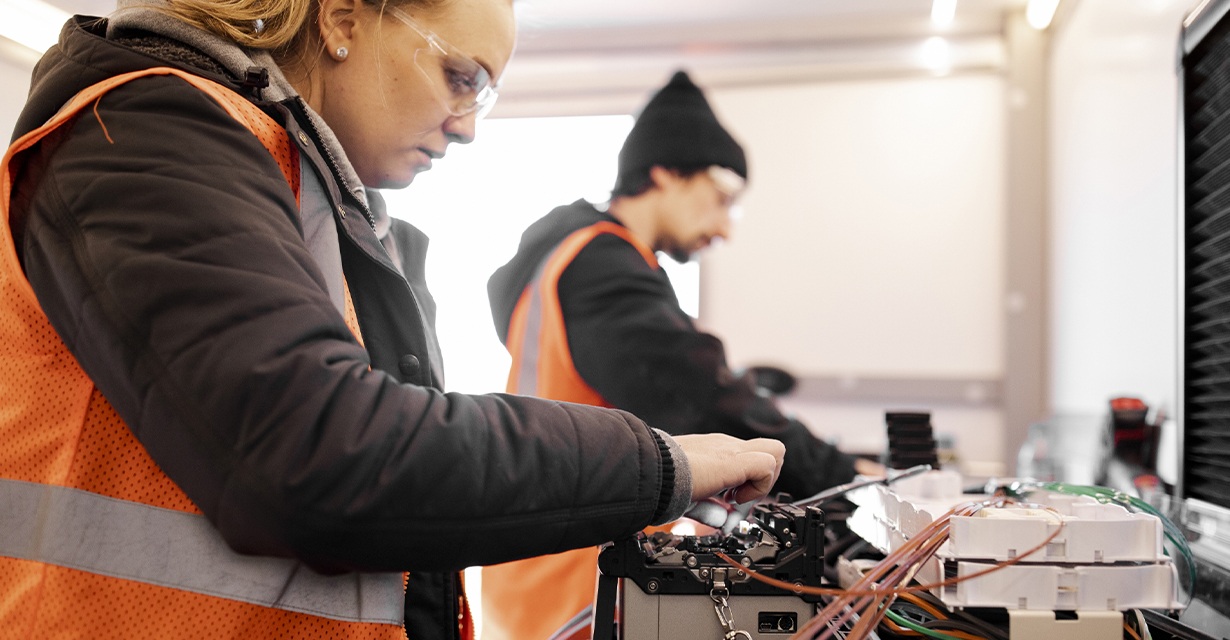
APi describes its enduring purpose as “Building Great Leaders®.” In a field-service company, that phrase has a practical test. Someone on site must recognize a deficiency, explain it, and know when work is unsafe. APi’s inspection-careers materials explicitly give teammates the authority and responsibility to stop unsafe work.
The group emphasizes local entrepreneurship alongside shared knowledge and resources. That arrangement offers a plausible advantage: people near the customer retain judgment while drawing on a larger organization. It also requires discipline. A familiar local name cannot compensate indefinitely for poor work, weak pricing, or an unfilled technician position.
Buying the next visit
The acquisition pattern keeps returning to the same idea. In 2024, APi announced the roughly $570 million Elevated transaction to enter elevator and escalator services. During 2026, it completed CertaSite, Onyx-Fire, and WTech purchases, extending fire-safety capabilities across the Midwest, Canada, and Europe. September’s Evergreen acquisition added North American electronic-security expertise.
The expected contributions help explain the pace. APi said Onyx-Fire would bring approximately $190 million in annual revenue, WTech about $175 million, and Evergreen about $55 million. These are expected annual contributions, rather than revenue already reported for a full year under APi ownership. Each purchase adds another set of customer relationships and another integration assignment.
The financial destination is explicit: at least $10 billion in revenue and a 16%-plus adjusted EBITDA margin by 2028, with a longer-term ambition for more than 60% of revenue from inspection, service, and monitoring. These remain targets. The 2025 adjusted EBITDA margin was 13.2%.
That ambition still depends on people choosing and renewing contracts. An owner may need an inspection without accepting the same provider’s repair proposal. A new acquisition can broaden coverage while adding inconsistent processes. Required demand helps fill the opportunity list; the quality of the visit determines whether that opportunity becomes a durable account.
Other operators can copy the question behind the strategy: what does the customer need after the first delivery? The answer must support repeat work, fair pricing, and skilled delivery. Without those conditions, an inspection becomes an isolated transaction. APi’s proposition rests on making the next visit useful enough that the customer wants the same company back.