A server is an oddly helpless object. Give it electricity and cooling, and it can process the instructions behind a hospital appointment, a bank transfer or an AI response. Take either away, and its usefulness disappears. The companies selling computation get the attention. EMCOR Group works on the conditions that make computation possible.
- The work: electrical systems, mechanical construction, fire protection and the maintenance that follows.
- The engine: regional operating companies backed by a national group.
- The stakes: $17.14 billion in remaining contracted work at June 2026, with execution still to come.
This is a company best understood through the parts of a building visitors rarely see. Switchgear. Chilled-water piping. Ventilation. Controls. The customer might be a data-center operator, a manufacturer, a hospital or a public agency. What connects them is a practical problem: expensive activities depend on systems that must work together, often while the building remains occupied.
The cloud needs a mechanical room
EMCOR’s construction division concentrates on electrical, mechanical and fire protection work. Its building-services businesses handle facilities management, energy improvements and maintenance. Industrial services adds plant maintenance, engineering, fabrication and related work. These are overlapping capabilities, sold through project and service contracts rather than a single product with a price tag.
That distinction matters. An owner can hire an EMCOR company to install infrastructure, return for a retrofit, or keep equipment operating through a maintenance agreement. Construction brings large assignments. Service creates repeated contact with the people responsible for the building. Both require knowledge that becomes useful only when it reaches the job site.
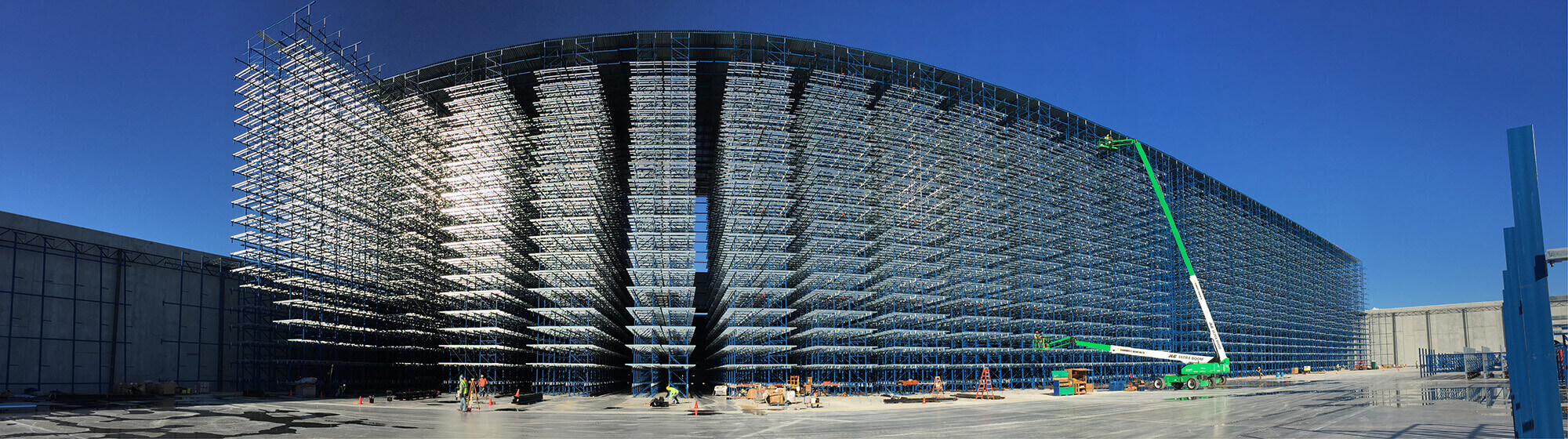
The numbers reveal where the weight sits. Mechanical construction supplied 42% of 2025 revenue; electrical construction supplied 30%. Together, those businesses accounted for nearly three quarters of the group. Building and industrial services added other sources of demand. EMCOR sold its UK operation in December 2025, making its stated focus more firmly American.
Buy the company. Keep the people.
In February 2025, EMCOR acquired Miller Electric, a Jacksonville-based contractor with a substantial Southeastern presence. The announced price was $865 million in cash, subject to adjustments. The annual report subsequently recorded approximately $876.8 million in total cash consideration. EMCOR funded the purchase with cash on hand.
At announcement, Miller had 21 branches and more than 1,000 clients. About 90% of its revenue came from Florida and the greater Southeast, a region where EMCOR said its electrical construction presence was limited. This was a purchase of geographic access and technical capability in markets including healthcare, manufacturing and data centers.
Then comes the useful detail: Miller’s leadership stayed. Henry Brown continued as CEO, and the business remained headquartered in Jacksonville. EMCOR could add resources without discarding the team that knew the customers and the work. Guzzi called the approach local execution, national reach
. The phrase describes the deal more clearly than its purchase price does.
“local execution, national reach”Tony Guzzi, on the Miller Electric acquisition
There is history behind that preference for focus. EMCOR emerged from the reorganization of JWP, a predecessor whose diversification had ended in bankruptcy. Under Frank MacInnis, the business returned to construction and facilities services. Its current name brings electrical and mechanical together. The origin is a reminder that accumulating companies and building a coherent business are separate achievements.
EMCOR also has a mechanism for moving knowledge between businesses. Its Productivity Plus program shares products and processes that have proved useful in practice. That is a less visible benefit of belonging to the group: one company can learn from another without waiting to encounter the same problem. Safety, quality and productivity sit together in the company’s description of how the work should be organized.
The compressor gets a vote
For a less abstract view of the work, consider two Molina Healthcare office towers in Long Beach. Their HVAC equipment was aging. Cooling capacity was insufficient. Compressors failed frequently. The problem had become an operating constraint, and EMCOR Services Mesa Energy undertook a two-phase mechanical retrofit.
The buildings stayed occupied. Crews worked nights and weekends. The solution combined replacement cooling equipment with ice-based thermal energy storage, shifting cooling demand away from peak periods. EMCOR’s case study reports a roughly $997,500 utility rebate and expected annual operating-cost reductions of $248,842. Those are estimated benefits for this particular project, rather than a general promise of savings.
The lesson for a facility owner is concrete: specify the operational problem before selecting equipment. Here, capacity, reliability, utility demand and installation scheduling belonged in the same conversation. A cheaper machine alone would not describe the assignment. The work had to fit around the people still using both towers.

Chapel Electric faced a related scheduling challenge on a solar program at JPMorgan Chase branches in Ohio, working for Black & Veatch. It installed more than 4,000 photovoltaic panels while banks remained open. Multiple roof types required different installation and electrical tie-in solutions. The customer was buying continuity alongside construction.
A bigger toolbox needs judgment
EMCOR competes with specialists such as Comfort Systems USA and IES, as well as local contractors. In building services, alternatives include facilities firms and equipment manufacturers. Its breadth offers customers more capabilities, but a national balance sheet cannot substitute for the right crew, an accurate estimate or a well-managed schedule.
That is also the limit of copying its approach. Keeping local expertise makes sense when managers can execute and the parent can support them. It becomes less useful if labor is unavailable, projects are underpriced or customers postpone spending. For buyers, the sensible questions concern staffing, relevant experience and responsibility when systems meet.
By June 2026, EMCOR’s remaining performance obligations had reached $17.14 billion. That measures contracted work still to be performed, rather than money already earned. The distinction brings the story back to its beginning: somebody must arrive, install the system and make it work. The cloud still needs a crew.
Follow the work
EMCOR website ↗ · Construction services ↗ · Company news ↗ · Investor presentations ↗
LinkedIn · X · Instagram · Facebook · EMCOR videos on YouTube ↗