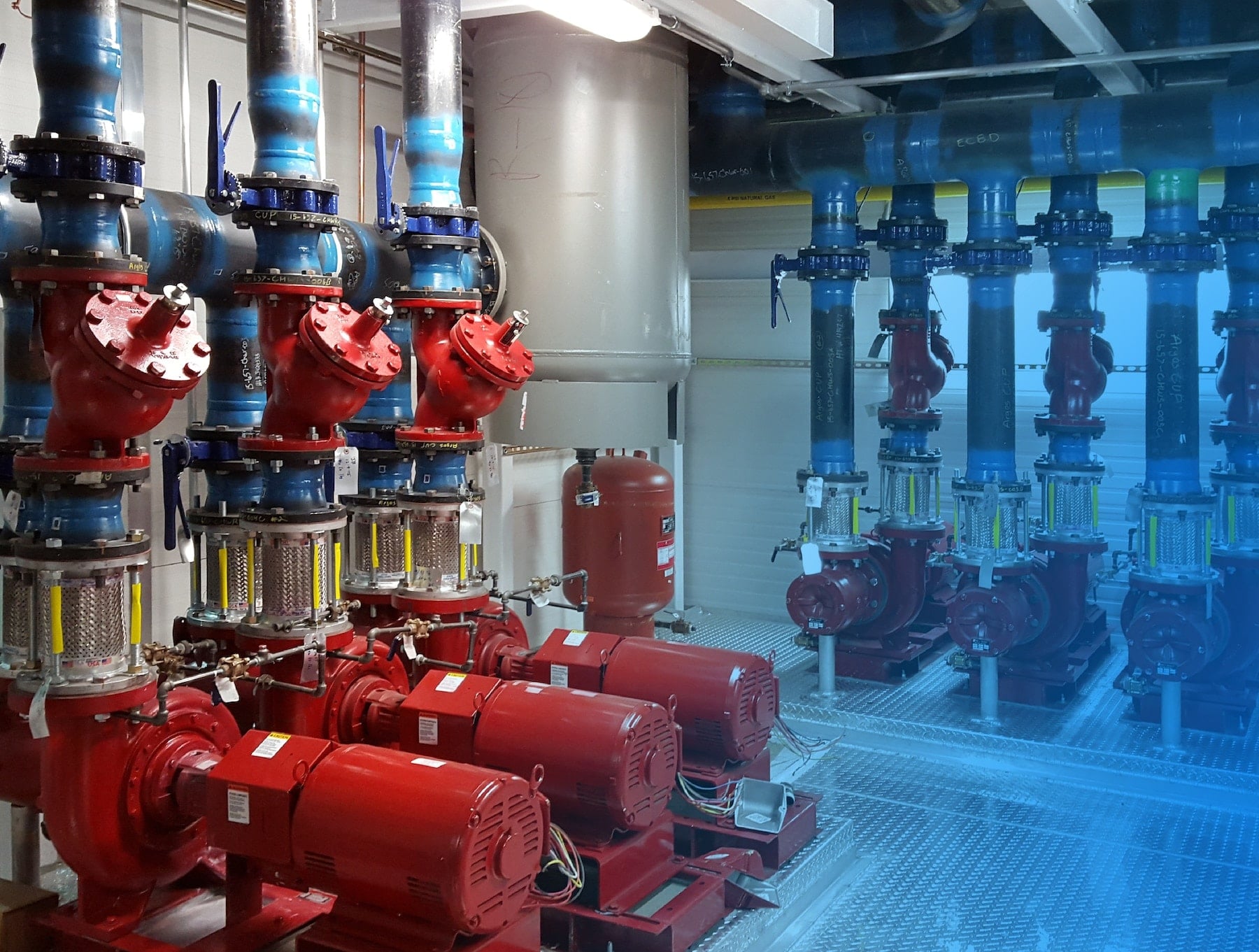
Consider the cloud from underneath. Somewhere below the software, a pump is moving water. A cable is carrying power. A technician has to make both behave. Comfort Systems USA works in this physical layer of the digital economy, where an elegant idea eventually needs a flange that fits.
- The work: cooling, power, plumbing, controls, and the systems connecting them.
- The method: local contractors, shared expertise, and factory-built modules.
- The tension: a growing order book still has to become finished work.
Its customers have practical worries. A hospital needs dependable building systems. A manufacturer needs process piping. A data center needs cooling and electrical capacity before its expensive equipment can earn its keep. Comfort Systems designs, installs, services, and replaces the infrastructure behind those requirements. The buyer might be the building owner, a developer, or the general contractor managing the job.
This puts the company between equipment manufacturers and the people who operate buildings. It sells the expertise required to turn components into working systems. Maintenance agreements, emergency repairs, retrofits, and manufacturer-independent building controls extend that relationship beyond construction. A building can be finished and still require decades of attention.
01First, learn to get smaller
The origin was a bet on fragmentation. Formed in December 1996, Comfort Systems brought together 12 businesses alongside its 1997 stock-market debut. Fred Ferreira, its organizing founder and first chief executive, saw an opportunity to assemble local HVAC expertise into a national operation. Investors could buy the collection; customers could buy the work.
Then the collecting got ahead of the operating. By mid-2000, according to then-CEO Bill Murdy’s later account, debt had reached roughly $346 million. Cash flow and profitability were under pressure. Buying another contractor had become easier to understand than making the assembled company run well. The downturn exposed the difference.
Management conserved working capital and cut debt, but a planned high-yield financing was disrupted around September 2001. In March 2002, Comfort Systems sold 19 operations to EMCOR in a $186.25 million transaction, including assumed notes. Proceeds reduced debt. The uncomfortable detail is also the useful one: part of today’s competitor once belonged to Comfort Systems.
The lesson here is an interpretation of that history: acquiring a workforce does not automatically create a functioning organization. Growth needs an operating reason. For anyone assembling smaller businesses, the question worth copying is specific: what can these companies do together that they could not reliably do alone?
02Build it twice. Once on a screen.
One answer is to discover construction problems before construction. Comfort Systems maintains a shared Building Information Modeling database connecting estimating, coordination, prefabrication, installation, procurement, and labor tracking. A pipe routed through the wrong space is much cheaper to reconsider in a model than after people have fabricated and installed it.
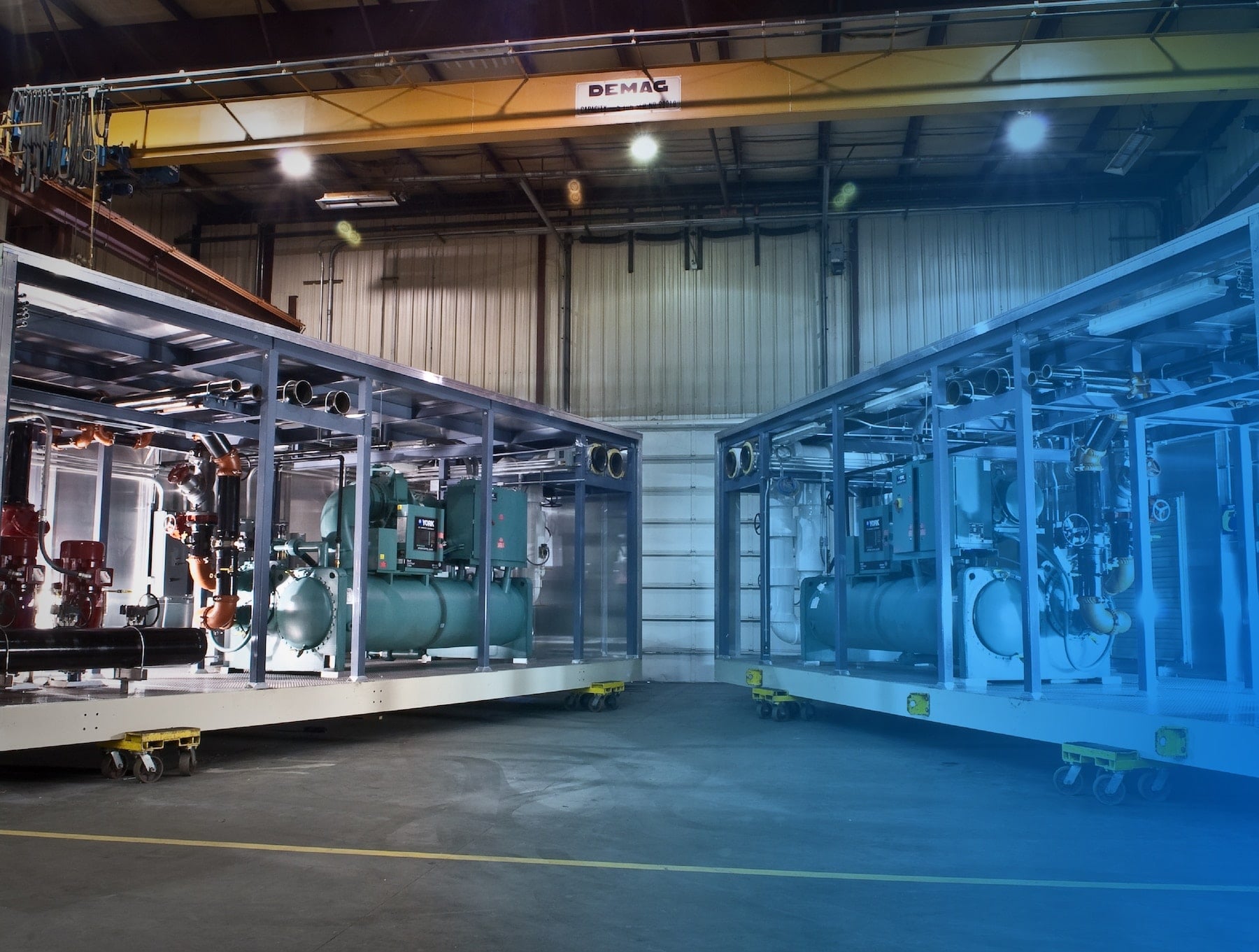
Another answer is to change where work happens. Its modular operations build mechanical and electrical assemblies off-site while construction continues at the destination. The product list includes central utility plants, electrical solutions, air handlers, and data halls. Engineering, fabrication, and factory testing turn a complicated site task into something that can arrive partly finished.
The company advertises up to 40% less preparation and construction time for its modular approach. Read “up to” carefully. Modules still need coordinated interfaces, transport, access, and a site ready to receive them. The useful principle is parallel work. It suits a project whose design and logistics allow that parallelism; constant redesign can eat the advantage.
03A network with a memory
The operating model combines local management with resources shared across the group. That matters in a trade where customers, crews, and job sites are local, but a useful technical answer may sit elsewhere. National scale becomes more persuasive when it helps the person solving a problem on Tuesday morning.
In 2022, Comfort Systems partnered with XOi on the FIX Technical Support Center. Remote assistance and visual job documentation give technicians a way to consult expertise beyond their immediate crew. Its stated values begin with safety and include honesty, respect, innovation, and collaboration. The practical test of those words is whether knowledge travels when somebody needs it.
Acquisitions also added specific skills. Walker, acquired in 2019, expanded electrical capabilities in Texas. Summit Industrial, acquired in 2024, brought complex industrial and modular work, including semiconductor projects. Against alternatives such as EMCOR and regional specialists, the proposition is breadth, coordination, and capacity. A buyer still has to judge the particular team doing the work.
04The order book still needs work boots
Demand has rewarded the approach. Annual revenue reached $9.10 billion in 2025. In the second quarter of 2026, revenue was $3.27 billion, compared with $2.17 billion a year earlier. Backlog stood at $14.06 billion on June 30. Those are different measures: sales already delivered, and contracted work still waiting to become revenue.
The business earns money through project contracts and service work. Much project work is fixed-price, which makes estimating consequential: unexpected labor or material costs can consume profit. Maintenance offers repeat business, but the group remains heavily exposed to project execution. A full order book cannot weld a joint or correct a bad estimate.
There is no useful single price for this work. At the end of 2025, projects in process had an average contract price of approximately $2.9 million. That describes a portfolio, not a quote for a cooling plant. Scope, site conditions, and delivery responsibilities matter more to a buyer than the average. Comparing bids means comparing those assumptions too.

“Strong ongoing demand together with our capabilities and reputation produced solid sequential and year over year backlog growth.”
Second-quarter 2026 results
For a prospective customer, the sensible next step is to bring scope, drawings, schedule, and operating requirements to the relevant local company. Ask what can be fabricated early, who coordinates the trades, and who maintains the finished system. For everyone else, Comfort Systems offers a reminder about progress: somebody has to make the ambitious building work.