building-automation
(22)
Deb Noller Wants Buildings to Stop Merely Complaining - and Start Fixing Themselves
The software engineer from New Zealand has spent two decades teaching commercial buildings to reveal what they waste. Her next wager is that the useful building will not just spot a fault - it will quietly correct it.

David Lamarche Knows the Hard Part of Transformation Is Human
Levio's CMO built a career connecting technical systems, customer journeys and the people asked to change. His most revealing lesson begins with a surprisingly small question: can we keep our chairs?

How GDI Turned a Broom Into a C$2.5 Billion Building Machine - and What Operators Can Copy
GDI spent a century moving from janitorial work into the machinery, data and energy systems behind a building. Its playbook is unflashy, acquisition-heavy and surprisingly useful: own more of the work, make one person accountable and know when to sell the pieces that no longer fit.
The Two Engineers Who Turned Locked Doors Into a Software Problem
Justin Dagen and Jason Higley spent 15 years wiring up access control for Fortune 100 campuses. Then they built the off-the-shelf product they wished existed - and sold it to the company chasing the same doors.
Leviton Turned a Light Socket Into a 120-Year Hardware Empire - Here’s the Expansion Playbook
The family-owned manufacturer began with a part for gas lamps. Its real trick was learning when to abandon the product category - without abandoning the customer, the channel, or the wall.
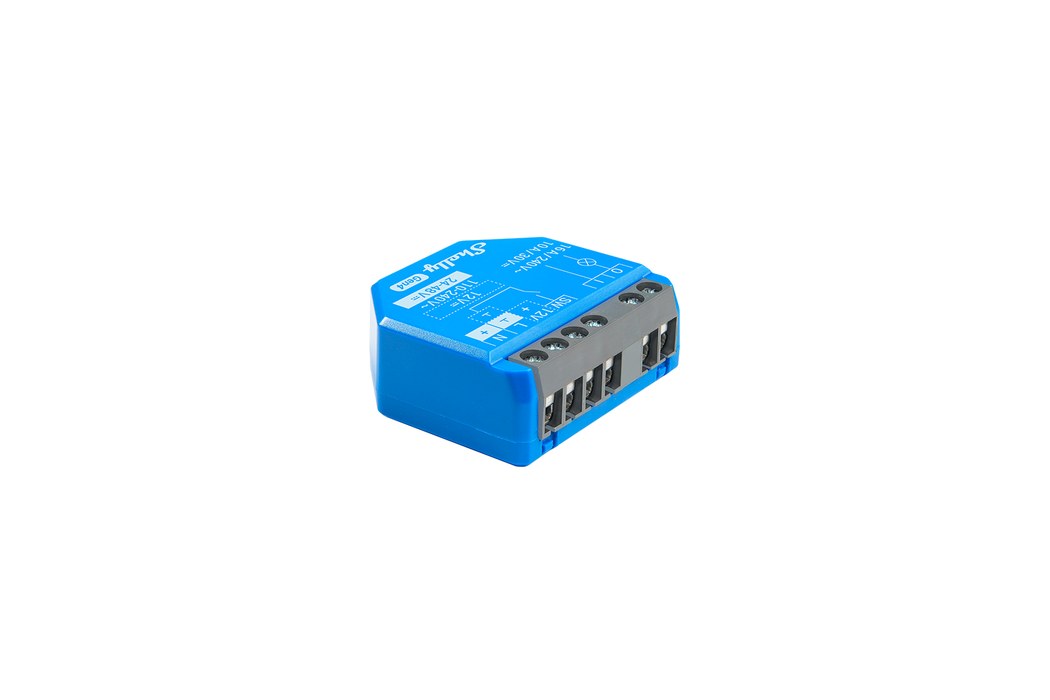
The $12 Relay That Wants to Run Your Whole House
Shelly's tiny relays slip behind the switches you already own and quietly automate the house - no hub, no subscription, and a following of DIY installers who treat local control like a religion.

Switch Automation Learned the Hard Part of Smart Buildings Is the Part Nobody Sees
The Denver proptech company connects old controls, new sensors and portfolio software in one operational layer. Its useful lesson is wonderfully unglamorous: before a building can become intelligent, someone has to make its data trustworthy.

Zan Compute Put Sensors in the Restroom. Now It Wants AI to Run the Cleaning Shift.
The Santa Clara company spent a decade teaching buildings to notice an empty soap dispenser. Its next bet is harder: turning those signals into schedules, work orders and decisions that cleaning teams will actually use.

Deepak Aatresh Is Teaching Buildings to Think Like Chips
A magazine article pulled him toward microprocessors. A construction time-lapse sent him in a new direction. Deepak Aatresh has spent the years since translating the logic of silicon into a language for buildings.

Fifth Wall Built a Venture Fund With a Customer List Attached
The Los Angeles firm turned real estate's slow technology adoption into a distribution strategy: owners supply capital and operating problems, while startups bring the software, hardware and climate tools.

The Company Behind the Gauge on the Wall
Dwyer Instruments has been making the little pressure gauges bolted to industrial walls since 1931. In 2022 it swallowed OMEGA Engineering - a company twice its public profile - and became a measurement conglomerate hiding in plain sight.

The 140-Year-Old Thermostat Company Cooling the AI Boom
Johnson Controls began with a classroom that was too hot. Today, its chillers, controls and service crews sit at the intersection of two expensive problems: buildings use too much energy, and AI infrastructure produces too much heat.

Trane Technologies
The company behind Trane and Thermo King is turning a century of cooling know-how into an energy-management business for buildings, refrigerated fleets and AI data centers. Its wager is simple: the cheapest new energy is often the energy a machine stops wasting.

Honeywell Technologies
After spinning off aerospace and advanced materials, Honeywell is smaller, sharper and focused on one difficult job: teaching the physical world to run with less waste, fewer surprises and more autonomy.

INTEREL
INTEREL is a Dubai-based smart building technology company that builds the hardware, operating system and IoT infrastructure hotels and multifamily properties use to control HVAC, lighting, shades and guest services from a single connected platform. Its 'Hotel of Things' ecosystem pairs a portfolio of smart thermostats and room controllers with INTEREL OS and the connectBsmart connectivity framework, letting properties automate energy use, integrate door locks, voice assistants and property-management systems, and cut water and power consumption. Founded in 2010, INTEREL has installed roughly 500,000 devices across more than 45 countries and now operates within the Siemens Xcelerator ecosystem.

Verustruct
Verustruct is a New Haven-based construction-technology company building a gantry-less 3D printing system to make affordable, sustainable housing at scale. Founded by former SpaceX engineer Nick Callegari, its patent-pending translational slipform printer extrudes load-bearing walls with embedded mechanical, electrical, and plumbing systems, then scales itself up layer by layer, sidestepping the bulky gantry frames that cap the size of most additive-construction projects. Organized as a public benefit corporation, Verustruct aims to cut home construction cost by roughly half and emissions by around 40 percent.

Patrick Callahan
Patrick Callahan is the CEO of Alquist 3D, a Greeley, Colorado company at the front of the 3D concrete printing industry. A West Point-era Army infantry officer turned defense-industry executive, he took the helm in October 2023 and steered the startup from emerging-technology curiosity into a commercial force, landing a landmark partnership with Walmart to 3D print store expansions across the country. He pairs two decades of defense business development - where he captured hundreds of millions in contracts at Critical Solutions International and AirBoss Defense Group - with a mission to make building faster, cheaper, and safer.
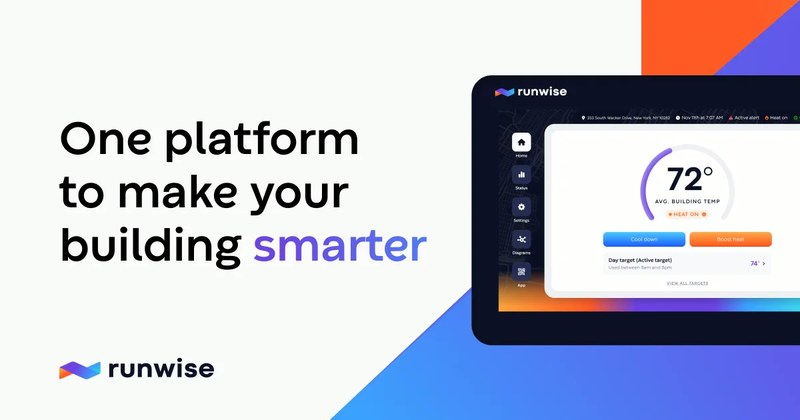
Runwise
Runwise is a New York-based smart-building company that retrofits aging heating, cooling, water, and electrical systems with proprietary wireless hardware, sensors, and cloud software. Its platform learns each building's behavior and automatically runs core systems at the minimum needed, cutting fuel use 20-25%, lowering carbon emissions, and helping owners comply with climate laws like NYC's Local Law 97. Used in over 10,000 buildings across the U.S., Runwise has saved customers more than $100 million in energy costs and positions itself as the operating system for buildings still running on 1960s technology.

Jeffrey Carleton
Jeffrey Carleton is the co-founder and CEO of Runwise, a New York-based smart-building company that pairs proprietary wireless sensors with cloud software to cut the energy that boilers, cooling, electric and water systems waste. Drawing on seven years spent running 150 New York apartment buildings, he turned a hands-on operator's frustration with 1960s heating controls into a platform now deployed in more than 10,000 buildings, serving roughly 1,000 customers and saving over $100 million in energy costs. In June 2025 Runwise raised a $55 million Series B led by Menlo Ventures, bringing total funding to $79 million, around a thesis Carleton states bluntly: every building needs to be rebuilt with software, not bricks.

Terry Heath
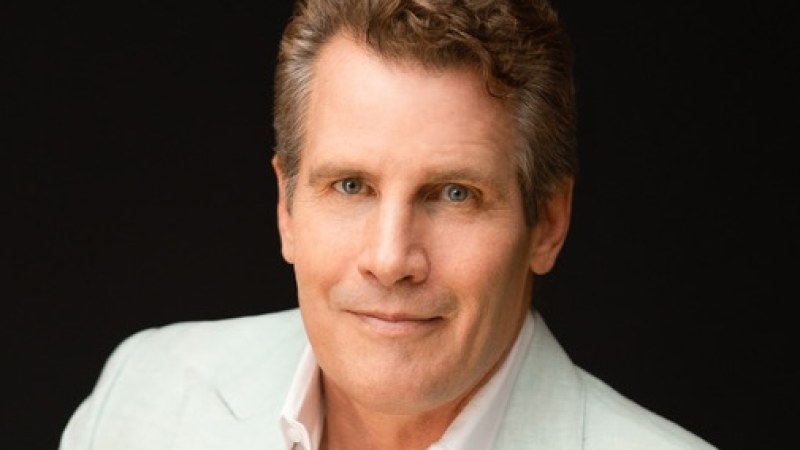
Terry Heath is the founder and CEO of Sciens Building Solutions, a Pleasanton, California-based fire and life safety integrator he built from a whiteboard plan in 2016 into one of the largest independent platforms of its kind in the United States. A former Royal Navy electrical engineer who came to America via Siemens, Heath has stitched together more than sixteen acquisitions and now runs a roughly 1,800-person company headquartered in the East Bay.
Scott Cahill
Scott Cahill is the co-founder and former CEO of LEXI, an intelligent enterprise IoT platform headquartered in Lebanon, Ohio. He built the company from a smart lighting passion project into a universal wireless building automation system that claims up to 90% cost savings over competitors. Over 7.5 years he led LEXI through a $2.6M seed round, a $3.5M pre-Series A, and multiple equity crowdfunding campaigns, accumulating $5.5M raised and a $30M valuation by 2024. In 2024 he handed the CEO role to Hans Bukow to accelerate LEXI toward IPO, while remaining as an advisor.

Honghao Deng
Honghao Deng is the CEO and co-founder of Butlr, a San Francisco-based Physical AI company that uses anonymous thermal sensors to understand how spaces are occupied - without cameras or personal data. A Harvard GSD MDes graduate and MIT Media Lab researcher, Deng spun Butlr out of MIT in 2019 alongside co-founder Jiani Zeng. The company has raised over $105M in venture funding, deployed 30,000+ sensors across 22 countries, and processes 1 billion data points daily. Deng is a Forbes 30 Under 30 honoree (2022), a World Economic Forum Technology Pioneer, and the inventor of 'Illusory Material' - a multi-material 3D printing breakthrough named one of TIME Magazine's 100 Best Inventions of 2021.